How to Choose the Right Power Rack for a Commercial Gym
Choosing the right power rack for a commercial gym is a foundational decision that directly affects member safety, training versatility, floor efficiency, and long-term operating costs. For gym owners, chain operators, distributors, and project contractors, a power rack is not simply a piece of strength equipment—it is a core load-bearing structure that defines how free-weight training is delivered across different user groups and usage intensities.
In a commercial environment, power racks must withstand continuous high-load use, accommodate diverse training styles, comply with regional safety standards, and integrate seamlessly into the overall gym layout. Selecting the wrong configuration can lead to premature wear, safety risks, inefficient space utilization, and increased maintenance costs. This article explains how to choose the right power rack for a commercial gym from a professional, B2B, manufacturer-level perspective, focusing on engineering logic, operational realities, and long-term value rather than consumer-level features.
What Is a Power Rack and How It Works in a Commercial Gym
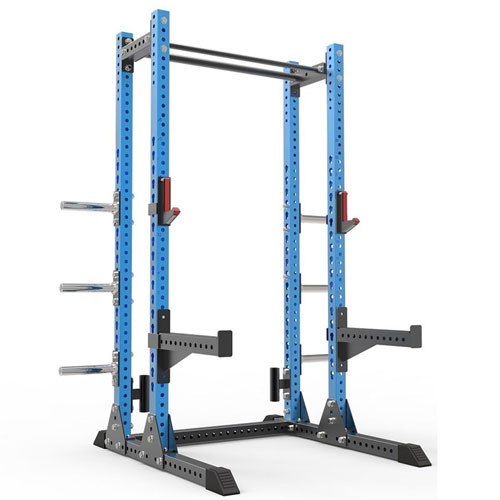
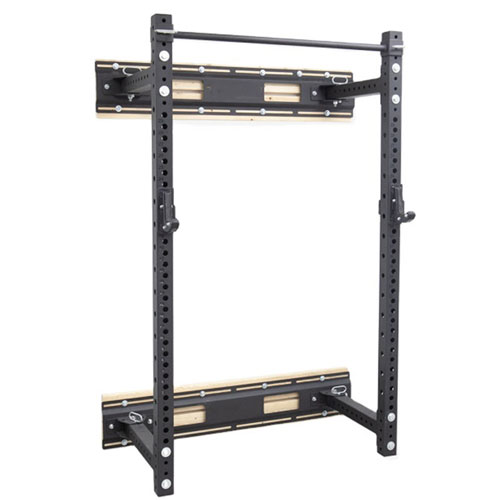
A power rack, also referred to as a power cage or squat rack system, is a steel-framed strength training structure designed to support heavy compound lifts such as squats, bench presses, overhead presses, and rack pulls. In a commercial gym, the power rack functions as a controlled training station that allows users to lift maximal or near-maximal loads with integrated safety mechanisms.
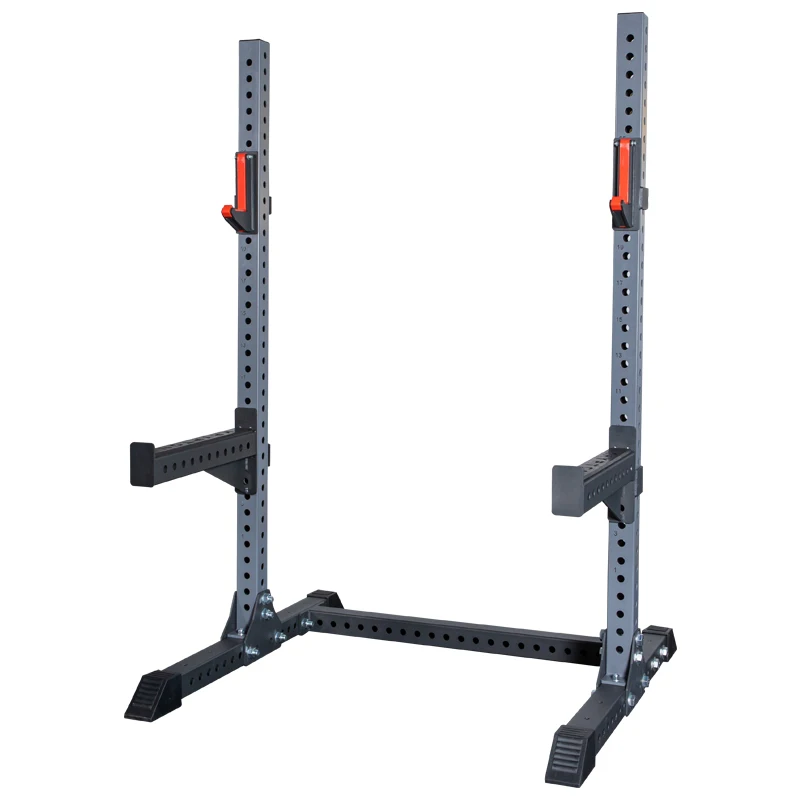
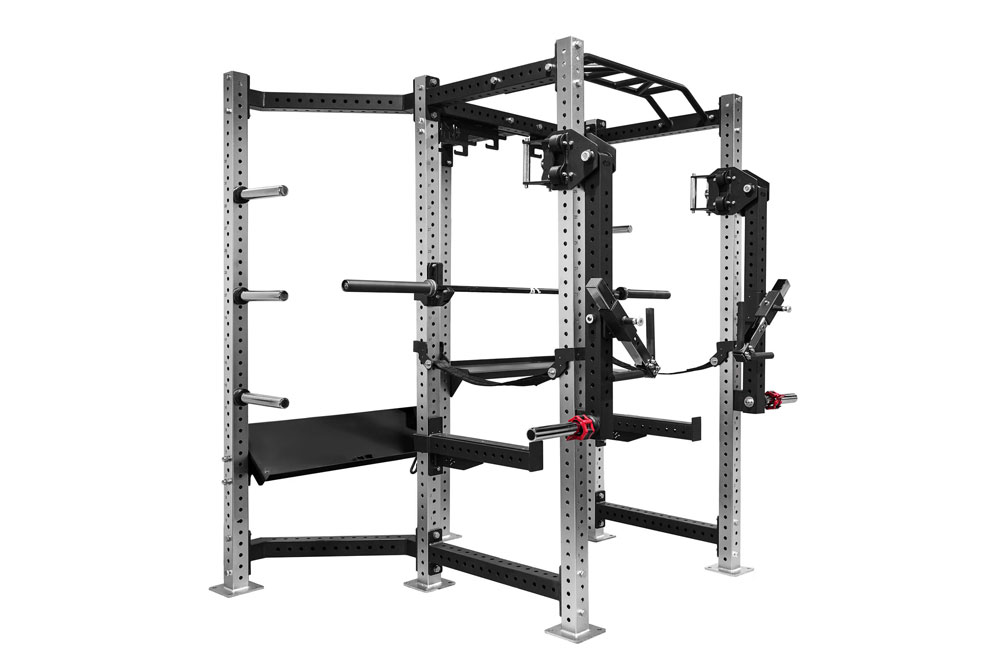
The basic structure consists of four vertical uprights connected by crossmembers, forming a rigid frame. Adjustable J-hooks support the barbell, while safety arms or safety straps are positioned below the lifting height to catch the bar if a lift fails. Commercial power racks are typically manufactured from heavy-gauge rectangular or square steel tubing and anchored to the floor or connected to adjacent rigs to ensure structural stability.
In professional gym environments, power racks often serve as modular platforms. They may be expanded with pull-up bars, plate storage, landmine attachments, belt squat systems, or integrated cable units. This modularity allows operators to scale training capacity without redesigning the entire strength area.
Industry Problems a Commercial Power Rack Solves
Understanding how to choose the right power rack for a commercial gym starts with recognizing the operational problems it is designed to solve.
Safety and Liability Management
In high-traffic gyms, equipment-related incidents can result in serious injury and legal exposure. Commercial-grade power racks provide engineered safety systems—such as reinforced safeties, controlled hole spacing, and load-rated hardware—that significantly reduce risk during heavy lifting. Proper rack selection directly supports duty-of-care obligations.
Equipment Longevity Under High Utilization
Unlike home or light-commercial equipment, power racks in commercial gyms are subjected to continuous daily use by users of varying experience levels. Inferior materials or inadequate welding can lead to frame deformation, hardware failure, or coating degradation. Industrial-grade racks are designed to maintain structural integrity over many years of intensive use.
Space Efficiency and Zoning
A well-selected power rack supports efficient zoning of free-weight areas. Multi-station racks and rig-based systems allow multiple users to train simultaneously within a defined footprint, reducing congestion and improving traffic flow.
Training Versatility Across User Profiles
Commercial gyms serve beginners, general fitness members, athletes, and strength specialists. The right power rack supports progressive training for all levels, from basic squats to advanced Olympic lifting variations, without requiring multiple dedicated machines.
Key Structural Features and Technical Advantages
When evaluating how to choose the right power rack for a commercial gym, structural and engineering details should take priority over surface-level aesthetics.
Steel Specification and Frame Geometry
Commercial power racks are typically manufactured from 11-gauge or thicker steel tubing. Common upright dimensions include 75×75 mm or 80×80 mm square tubing, which provides superior torsional rigidity compared to lighter profiles. Thicker steel ensures load stability and minimizes frame flex under heavy dynamic loads.
Hole Spacing and Upright Precision
Hole spacing determines adjustability and safety precision. Westside hole spacing (25 mm increments through the bench zone) allows fine-tuned bar height adjustments, reducing shoulder strain and improving lift setup consistency. Laser-cut uprights ensure alignment accuracy and long-term hardware compatibility.
Load Rating and Safety Components
Commercial racks should have clearly defined static and dynamic load ratings. Safety arms, straps, and pins must be independently load-tested, not assumed based on frame strength alone. In professional installations, safety components are often the first point of failure if improperly engineered.
Finish and Corrosion Protection
Powder-coated finishes with proper pre-treatment processes protect against corrosion, chipping, and wear from repeated bar contact. In humid or coastal regions, additional surface treatments or stainless hardware may be specified to extend service life.
Typical Applications and Commercial Gym Scenarios
Power racks are deployed differently depending on the gym’s business model and target users. Understanding these scenarios helps clarify how to choose the right power rack for a commercial gym.
Independent Commercial Gyms
Independent gyms typically require versatile racks that balance cost efficiency with durability. Standalone power racks with optional attachments allow gradual upgrades as membership grows.
Chain and Franchise Gyms
Chain gyms prioritize standardization and repeatability. Power racks must meet uniform specifications across multiple locations, integrate branding elements, and comply with regional regulations. Modular rack systems simplify future expansion and replacement logistics.
Performance Training Facilities
Athlete-focused facilities often require heavy-duty racks with extended height, reinforced pull-up structures, and compatibility with Olympic lifting platforms. Precision manufacturing and higher load ratings are critical in these environments.
Institutional and Corporate Gyms
Facilities in universities, military bases, and corporate campuses emphasize safety, durability, and compliance. Power racks in these settings are often specified with conservative load ratings and enhanced safety features.
Capacity Options and Selection Guidance
Selecting the correct capacity is a critical step in how to choose the right power rack for a commercial gym.
Single-Station Power Racks
Single racks are suitable for smaller gyms or facilities with limited floor space. They offer dedicated lifting zones but require careful spacing to avoid bottlenecks during peak hours.
Multi-Station Racks and Rigs
Multi-station systems connect multiple rack bays into a single structure. These systems maximize user throughput and are ideal for high-volume gyms, CrossFit-style facilities, and training centers with group sessions.
Ceiling Height and Clearance Considerations
Rack height must account for overhead lifts, pull-ups, and potential attachments. Commercial installations typically require ceiling heights of 3.6–4.5 meters, depending on rack configuration and user demographics.
Floor Load and Anchoring Requirements
Concrete thickness and load-bearing capacity should be evaluated before installation. Floor anchoring is recommended for most commercial racks to ensure stability under dynamic loading.
Buyer Benefits for Commercial Operators
From a business perspective, understanding how to choose the right power rack for a commercial gym means aligning equipment decisions with operational outcomes.
Reduced Maintenance and Replacement Costs
Industrial-grade racks reduce long-term maintenance requirements. High-quality welds, hardware, and coatings minimize downtime and replacement cycles.
Improved Member Experience and Retention
Reliable, well-designed racks enhance training confidence and perceived gym quality. Members are more likely to remain loyal to facilities that provide safe, professional-grade equipment.
Scalability and Future Expansion
Modular rack systems allow gyms to expand training capacity without replacing existing equipment. This scalability supports business growth while protecting initial capital investment.
Operational Efficiency
Well-planned rack layouts improve traffic flow, reduce waiting times, and allow staff to supervise training areas more effectively.
Customization and Engineering Support
For large-scale projects, customization is a defining factor in how to choose the right power rack for a commercial gym.
Dimensional and Structural Customization
Manufacturers can adjust rack height, depth, and bay spacing to match facility constraints. Structural reinforcements may be added for specific training demands or regional safety codes.
Functional Attachments and Integration
Custom attachments such as belt squat systems, jammer arms, cable columns, and storage modules allow gyms to differentiate their offerings without overcrowding the floor.
Branding and Aesthetic Integration
Color matching, logo plates, and laser-cut branding elements help gyms maintain visual consistency across locations while using standardized equipment platforms.
Project-Level Engineering Support
Experienced manufacturers provide layout optimization, load calculations, and installation guidance. This support is particularly valuable for turnkey gym projects and international deployments.
Standards, Certifications, and Compliance
Compliance is a non-negotiable aspect of how to choose the right power rack for a commercial gym.
CE and Regional Safety Standards
For many markets, CE conformity indicates that equipment meets essential health and safety requirements. Load-bearing structures must be designed and tested according to applicable machinery directives.
ISO Manufacturing Systems
ISO-certified manufacturing processes demonstrate consistency in material sourcing, welding procedures, and quality control. This consistency is critical for large-volume orders and repeat installations.
Design Principles for Commercial Use
While power racks are not food-processing equipment, professional design principles—such as risk assessment, load testing, and documentation—mirror those used in regulated industrial sectors.
Conclusion: Making the Right Power Rack Decision
Understanding how to choose the right power rack for a commercial gym requires looking beyond surface features and focusing on structural integrity, safety engineering, operational efficiency, and long-term value. For professional gym operators and project buyers, the right rack is not simply a piece of equipment—it is a load-bearing system that supports business growth, member safety, and training quality.
Working with an experienced commercial fitness equipment manufacturer ensures that power racks are engineered for real-world usage, compliant with relevant standards, and adaptable to evolving facility needs. If you are planning a new gym, upgrading an existing strength area, or standardizing equipment across multiple locations, engaging with a supplier that provides engineering support and customization options will significantly reduce risk and improve outcomes.
For tailored guidance on selecting and configuring power racks for your commercial gym project, consult with a manufacturer that understands industrial-grade design, high-volume usage, and the practical realities of commercial fitness facilities.