Choosing the Best Squat Rack for Kipping Pull Ups Guide
Balancing SKU Diversity with High-Intensity Movement Demands
Many facility owners fall into the trap of prioritizing a high volume of diverse SKUs to fill floor space, often sourcing lightweight, multi-purpose racks that lack the necessary structural integrity. While a wide variety of equipment looks impressive in a showroom, it often leads to high replacement costs when the gear fails to withstand high-intensity movement demands. Instead of chasing quantity, savvy buyers focus on a strategic mix of versatile, heavy-duty stations that can handle the violent kinetic energy of dynamic training.
When sourcing the best squat rack for kipping pull ups, the goal is to find a balance between equipment variety and uncompromising rig stability for gymnastics. A facility filled with thin-gauge steel racks may offer a diverse aesthetic, but it will suffer from wobbling and bolt fatigue during high-velocity swings. For long-term ROI, procurement professionals should prioritize high-gauge steel and reinforced connection points. This ensures that whether your clients are performing standard lifts or explosive rhythmic movements, the equipment remains a stable, safe foundation rather than a maintenance liability.
To maximize your procurement budget, you must decide between lightweight modular setups and integrated heavy-duty systems. Modular units offer excellent space efficiency and lower upfront costs, making them ideal for boutique studios with limited footprints. However, for high-traffic commercial gyms, an integrated system featuring a heavy duty pull up bar is often the superior investment. While the initial capital expenditure may be higher, the long-term durability of a professional-grade rig significantly reduces the frequency of repairs and component replacement.
When evaluating your ROI, consider the total cost of ownership rather than just the purchase price. Lightweight functional training equipment may save space initially, but the increased maintenance requirements caused by constant vibration and kinetic shock can quickly erode your margins. For facilities specializing in gymnastics or CrossFit-style training, investing in a robust, unified structure ensures that your gear survives the rigors of high-intensity use, protecting both your equipment lifecycle and your facility's reputation for safety.
Developing a smart investment strategy requires looking beyond the initial invoice to the total lifecycle of the hardware. While budget-friendly, thinner-gauge options might lower your entry cost, they often fail to provide the necessary stability required for rhythmic, high-momentum movements. This lack of rigidity can lead to premature wear on bolts and structural fatigue, ultimately compromising user safety and increasing operational downtime.
To achieve true facility longevity, we recommend prioritizing capital expenditure toward the most critical contact points: the uprights and the heavy duty pull up bar. A high-quality, reinforced rig serves as a foundational asset that can withstand the constant kinetic shock of dynamic training. By selecting equipment engineered for high-impact use, you minimize the need for frequent maintenance and part replacements. This approach ensures that your functional training equipment remains a reliable, high-performing centerpiece of your facility for years, rather than a recurring expense.
Engineering Rig Stability for Gymnastics and Dynamic Loads
When sourcing equipment for high-performance facilities, many buyers overlook the physics of movement. Standard power racks are designed for static weight, but gymnastics-style movements introduce a dynamic load that changes the center of gravity mid-rep. During a kipping motion, the athlete generates significant momentum, creating lateral forces that a basic rack simply cannot absorb. Without proper engineering, this results in intense structural vibration, which eventually leads to weld fatigue and hardware loosening.
To ensure long-term durability, your facility requires a heavy duty pull up bar integrated into a frame with superior cross-sectional thickness. The best squat rack for kipping pull ups must prioritize high-grade steel and reinforced junctions to maintain rig stability for gymnastics. If the frame lacks the mass and rigidity to dampen these oscillations, you risk premature equipment failure and increased liability. For distributors and gym owners, investing in high-gauge steel construction is not just a quality preference—it is a fundamental requirement for safety and structural longevity.
Selecting the right structural configuration is essential for balancing space efficiency with the rigorous demands of functional training equipment. Depending on your facility's layout and the intensity of your programming, you will likely choose between two primary designs: standalone units or modular/wall-mounted systems. Each offers a different approach to weight distribution and long-term stability.
Standalone racks offer a larger footprint and can be positioned anywhere, making them ideal for boutique studios. However, for high-volume commercial gyms, modular or wall-mounted systems often provide superior rig stability for gymnastics because they leverage the building's structure to dampen lateral movement. To prevent the rack from shifting during high-momentum reps, look for designs that incorporate extensive cross-member reinforcement. A robust, interconnected system ensures that the kinetic energy from a kipping athlete is distributed across the entire frame rather than localized at a single joint. For procurement professionals, prioritizing these reinforced, integrated designs is the most effective way to mitigate wear and ensure the equipment survives the high-intensity cycles typical of modern training environments.
Beyond frame thickness, true long-term durability is determined by how the unit interfaces with your facility's floor. For any high-traffic environment, anchoring is non-negotiable. We recommend that buyers insist on heavy-duty anchoring kits that utilize high-grade bolt grade specifications (such as Grade 8 or higher) to prevent the rack from shifting under the violent oscillations of rhythmic movements. A rack that is merely "heavy" is not enough; it must be physically integrated into the subfloor to maintain structural integrity.
Furthermore, high-quality functional training equipment should incorporate advanced vibration dampening features. This includes high-density rubber end caps and precision-engineered bushings that absorb kinetic energy rather than transferring it into the steel joints. When evaluating a potential supplier, ensure their best squat rack for kipping pull ups meets rigorous safety standards regarding hardware resilience. By prioritizing high-spec fasteners and vibration-resistant mounting, you protect your investment from the micro-fractures and loosening that often plague lower-tier commercial installations.
Structural Integrity of the Heavy Duty Pull Up Bar
When sourcing equipment for high-traffic functional training zones, the primary concern is not just static weight capacity, but how the frame reacts to dynamic load. Kipping movements generate significant lateral and vertical forces that can compromise inferior structures. To ensure long-term rig stability for gymnastics, it is essential to prioritize high-gauge steel construction. We recommend looking for a minimum of 11-gauge or even 7-gauge steel for the uprights and crossmembers to prevent frame deflection during high-intensity oscillations.
A premium heavy duty pull up bar must be integrated into a chassis designed for maximum structural integrity. Thin-walled tubing often leads to micro-fractures or wobbling over time, which increases liability in a commercial setting. By selecting equipment manufactured with heavy-duty steel profiles, distributors and facility owners can guarantee that the best squat rack for kipping pull ups remains a safe, steadfast anchor for athletes, regardless of the intensity of their movement patterns.
Choosing between a standalone unit and a modular system often comes down to a strategic trade-off between stability vs. footprint. While a single standalone rack might offer a compact solution for smaller boutique studios, it often lacks the necessary weight distribution to handle the violent kinetic energy produced during advanced gymnastics. For high-performance environments, we suggest evaluating the following two configurations:
| Configuration Type | Ideal Use Case | Stability Profile |
|---|---|---|
| Standalone Rack | Personal training or small home studios | Moderate; susceptible to lateral sway during high-intensity swings |
| Modular Rig System | Large-scale CrossFit boxes or commercial gyms | Superior; interconnected frames dissipate energy across the entire structure |
When investing in functional training equipment, a modular rig is generally the superior choice for high-volume facilities. Because the components are bolted together into a unified system, the best squat rack for kipping pull ups becomes part of a larger, more stable architecture. This interconnectedness ensures that the dynamic energy from one athlete does not cause excessive vibration or structural fatigue, providing a much higher level of safety and durability for long-term commercial use.
Beyond the thickness of the steel, the true indicator of long-term durability lies in the precision of the fabrication. For equipment intended to withstand high-intensity training, the quality of the welding and the strength of the connection points are non-negotiable. In many lower-tier manufacturing processes, weak welds or insufficient bolt-hole tolerances can lead to "play" within the frame. This minor looseness eventually evolves into dangerous wobbling, which compromises the rig stability for gymnastics and increases the risk of hardware failure.
When evaluating potential suppliers, we advise scrutinizing the welding consistency and the density of the bolting points. A high-quality heavy duty pull up bar should feature deep-penetration welds that seamlessly integrate the crossmembers with the uprights. Furthermore, the use of high-tensile bolts and reinforced gussets at critical junctions ensures that the structure adheres to strict safety standards. Investing in gear with superior assembly quality minimizes maintenance overhead and ensures that your functional training equipment remains a reliable asset for years of rigorous use.
Optimizing Functional Training Equipment for High-Traffic Facilities
For facility owners and gym developers, the true cost of equipment is not the initial purchase price, but the total cost of ownership. When athletes perform dynamic movements, the kinetic energy generated places immense strain on your inventory. Selecting the best squat rack for kipping pull ups requires a shift in mindset from buying a single unit to investing in long-term structural integrity. Without sufficient rig stability for gymnastics, the constant oscillation from high-frequency, high-impact movements can lead to bolt loosening, weld fatigue, and premature replacement cycles.
Investing in high-grade functional training equipment engineered for high-intensity usage ensures that your capital expenditure yields a higher return. While lower-cost alternatives might seem attractive for initial setup, the frequent maintenance and eventual replacement of substandard racks quickly erode your profit margins. A robust, heavy-duty build protects your brand reputation by ensuring user safety and reducing downtime.
| Procurement Factor | Standard Commercial Rack | Premium Gymnastics-Grade Rig |
|---|---|---|
| Primary Use Case | Static Strength Training | Dynamic/Kipping Movements |
| Maintenance Frequency | Moderate (Periodic Bolt Checks) | Low (Engineered for Vibration) |
| Long-Term ROI | Standard Lifespan | High (Extended Asset Life) |
| Structural Focus | Weight Loading | Rig Stability & Oscillation Control |
When evaluating your procurement options, consider the specific mechanical stresses of your training environment. A standard rack may suffice for traditional lifting, but a heavy duty pull up bar designed for high-volume gymnastics must withstand lateral oscillations. If your facility focuses on CrossFit or high-intensity interval training (HIIT), the vibration tolerance of your equipment becomes a critical factor in determining your long-term maintenance frequency.
To maximize your ROI, we recommend categorizing your needs based on athlete movement patterns. Choosing a model with reinforced cross-members and high-tensile steel will reduce the need for constant technical adjustments. Below is a comparison to help you align your budget with the durability requirements of your specific facility type.
| Facility Tier | Budget vs. Durability Profile | Recommended Equipment Type |
|---|---|---|
| Boutique Studio | Moderate Budget / High Aesthetic Focus | Standard functional training equipment with reinforced uprights. |
| High-Traffic CrossFit Box | High Budget / Maximum Durability Required | Industrial-grade rig with a heavy duty pull up bar and specialized damping. |
| Commercial Full-Scale Gym | Scalable Budget / Versatility Priority | Modular systems designed for both static lifting and dynamic gymnastics. |
Ultimately, the best squat rack for kipping pull ups is one that minimizes operational downtime. By prioritizing structural density and vibration resistance during the sourcing phase, you protect your investment against the wear and tear of high-impact functional training.
To safeguard your investment and ensure long-term facility longevity, a proactive maintenance protocol is non-negotiable. Even the highest-quality heavy duty pull up bar requires regular attention to mitigate the effects of high-frequency oscillation. We recommend implementing a quarterly safety inspection schedule that goes beyond visual checks. Focus specifically on bolt tightening at all connection points; the lateral forces generated during kipping movements can gradually loosen hardware, potentially compromising the rig stability for gymnastics.
During these inspections, look closely for signs of wear and tear, such as paint chipping at weld points or slight deformations in the uprights. Addressing these minor issues early prevents minor fatigue from escalating into structural failure. By maintaining a disciplined oversight routine, you ensure that your functional training equipment remains a safe, reliable asset, effectively extending the lifecycle of your capital expenditure and maximizing your overall ROI.
Material Specifications and Load-Bearing Reliability
When sourcing equipment for high-performance facilities, the difference between a standard rack and the best squat rack for kipping pull ups lies in the metallurgical integrity of the frame. Kipping movements generate intense dynamic load patterns that differ significantly from static weightlifting. If the frame lacks sufficient structural rigidity, the repetitive swinging motion will eventually lead to metal fatigue or even catastrophic failure.
To mitigate these risks, procurement specialists must prioritize the steel gauge of the uprights and the pull-up bar itself. For commercial-grade functional training equipment, we generally recommend a minimum of 11-gauge steel. A heavy duty pull up bar must not only support the athlete's body weight but also withstand the centrifugal force generated during high-velocity repetitions. Ensuring your supplier utilizes high-tensile steel and reinforced welding techniques is essential for maintaining long-term rig stability for gymnastics and protecting your facility's investment against high-impact wear.
Understanding the structural disparity between basic lifting stations and specialized gymnastics systems is crucial for long-term facility management. While a standard rack may suffice for stationary movements, it often lacks the necessary footprint and cross-bracing required for high-intensity rhythmic swinging. To assist in your selection process, we have outlined the primary differences between standard configurations and professional-grade rigs designed for extreme movement.
| Dimensions & Build | Steel Thickness | Stability Type | Best Use Case |
|---|---|---|---|
| Single Station / Compact | 12-gauge to 14-gauge | Static/Fixed Footprint | Standard Strength Training |
| Modular Multi-Station | 11-gauge or Thicker | High-Level rig stability for gymnastics | High-Intensity functional training equipment |
| Full Rig / Integrated System | Heavy-Duty Reinforced | Dynamic/Multi-Directional | The best squat rack for kipping pull ups |
When evaluating a heavy duty pull up bar, remember that a larger footprint and integrated cross-members are not just luxury features—they are essential for dampening vibrations and preventing lateral sway during explosive movements.
Prioritizing Long-Term Durability and Surface Integrity
Beyond the raw steel gauge, true durability is defined by how a piece of equipment survives the relentless friction of high-intensity training. For any facility manager, long-term facility maintenance costs are often driven by surface degradation and joint loosening. When selecting the best squat rack for kipping pull ups, you must look closely at the weld quality. Inconsistent or brittle welds are a major red flag; they often fail to provide the necessary vibration resistance required to absorb the rhythmic shockwaves produced during rapid kipping cycles.
Furthermore, the quality of the powder coating plays a vital role in the equipment's lifecycle. A premium, multi-stage powder coating does more than just look professional; it acts as a defensive shield against oxidation and moisture, preventing rust from compromising the structural integrity of the functional training equipment. High-quality finishes ensure that the heavy duty pull up bar remains smooth and resistant to chipping, even under the constant grip changes and sweat exposure typical of professional gymnastics training. Investing in superior manufacturing standards today prevents the premature structural fatigue that often plagues lower-tier imports.
Footprint and Installation Considerations for Commercial Spaces
When planning a high-performance facility, the physical footprint of your equipment is just as critical as the structural integrity of the steel itself. Selecting the best squat rack for kipping pull ups requires more than just measuring the base dimensions; you must account for the dynamic radius of human movement. Unlike static lifting, gymnastics-based movements involve significant lateral and longitudinal momentum. Therefore, we recommend establishing strict safety buffer zones around every rig to prevent collisions with nearby obstacles or other athletes.
To ensure maximum rig stability for gymnastics, your floor plan must accommodate the full clearance for swinging motion. This means leaving at least 1.5 to 2 meters of unobstructed space in every direction from the center of the pull-up bar. Neglecting this spatial requirement can lead to equipment damage or user injury. For distributors and gym owners, investing in a layout that prioritizes these clearance zones ensures that your functional training equipment remains a safe, long-term asset for high-intensity training environments.
Beyond the immediate clearance zones, your decision regarding the installation method will dictate both the long-term durability of your facility and your available floor area. When sourcing functional training equipment, you must choose between a floor-mounted vs ceiling-suspended configuration based on your specific architectural constraints and the intensity of the movements performed.
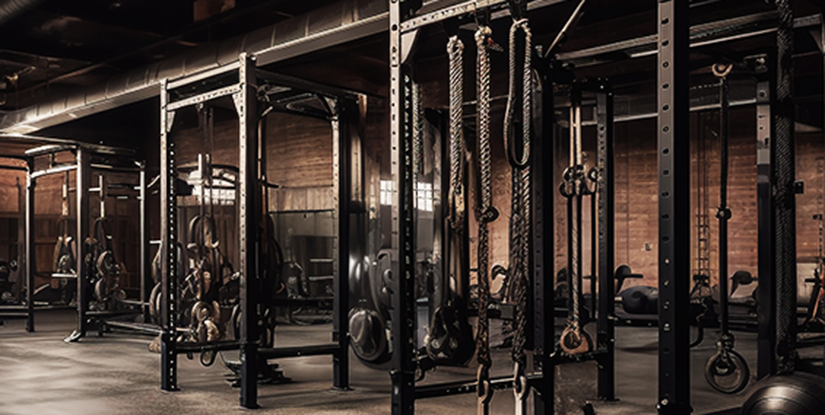
A floor-mounted setup is the industry standard for high-traffic zones because it provides a lower center of gravity, which is essential for a heavy duty pull up bar subjected to rhythmic swinging. While these units offer superior rig stability for gymnastics, they occupy a permanent footprint on your floor surface. Conversely, ceiling-suspended systems are excellent for space optimization in boutique studios, as they keep the floor clear for other activities, though they require specialized structural reinforcement in the building's ceiling to handle dynamic loads.
| Installation Type | Space Impact | Stability Profile | Best Use Case |
|---|---|---|---|
| Floor-Mounted | Higher (Fixed Footprint) | Maximum (High Inertia) | Large CrossFit Boxes / High-Volume Gyms |
| Ceiling-Suspended | Minimal (Open Floor) | Moderate (Structural Dependent) | Boutique Studios / Multi-Purpose Training Zones |
For distributors looking to provide high-value solutions, understanding these installation nuances is key to helping clients select the best squat rack for kipping pull ups that fits their specific structural capacity and square footage.
To maintain long-term facility durability, we strongly advise that all heavy-duty installations be overseen by a qualified installation professional. Even the most robust heavy duty pull up bar can suffer from bolt loosening or misalignment if not anchored correctly to the subfloor. In high-traffic zones, the constant vibration from rhythmic movements can compromise the structural integrity of the entire rig over time if the mounting is insufficient.
When managing large-scale procurement, do not overlook the importance of professional leveling and torque verification during the setup phase. A properly installed system ensures that the best squat rack for kipping pull ups performs consistently under heavy dynamic loads, protecting both your investment and your clients. By prioritizing professional installation and high-grade anchoring, you mitigate the risks associated with rapid wear and tear, ensuring your functional training equipment remains a reliable centerpiece of your facility for years to come.
Long-Term Value and Maintenance Cycles
When sourcing high-performance gear, procurement professionals must look beyond the initial purchase price and consider the physics of movement. High-intensity gymnastics movements generate significant kinetic energy that translates into repetitive lateral stress. If your facility lacks proper rig stability for gymnastics, this energy isn't just absorbed by the athlete—it is absorbed by the steel. Over time, this constant oscillation can lead to structural fatigue, compromising the safety of the unit and the longevity of your facility's assets.
Investing in a heavy duty pull up bar designed for high-impact oscillations ensures that your equipment can withstand the rigors of professional training cycles. From a lifecycle management perspective, choosing a high-spec best squat rack for kipping pull ups acts as a long-term investment. Rather than facing frequent component replacements or premature decommissioning due to weld failure or frame warping, a premium-grade rig minimizes downtime. For distributors and gym owners, prioritizing structural integrity means lower total cost of ownership and a more reliable training environment for your members.
To maximize your return on investment, it is essential to categorize your equipment based on expected usage intensity. In high-traffic commercial environments, the wear and tear on functional training equipment is significantly higher than in standard strength training setups. We recommend implementing structured maintenance cycles to proactively address bolt tension and weld integrity before minor issues escalate into costly repairs.
The following comparison helps illustrate how different usage levels impact the cost-per-use ratio of your facility's assets:
| Usage Intensity | Primary Stress Factor | Maintenance Frequency | Asset Longevity |
|---|---|---|---|
| Moderate (Standard Lifting) | Vertical Loading | Bi-annually | High |
| High (Kipping & Gymnastics) | Lateral/Dynamic Oscillation | Quarterly | Variable (Depends on Rig Quality) |
When selecting the best squat rack for kipping pull ups, prioritize units with reinforced crossmembers. While the upfront cost may be higher, the reduced frequency of hardware replacement and the extended lifespan of the frame ensure a superior long-term financial outcome for your facility.
To preserve the structural integrity of your functional training equipment, we suggest a rigorous approach to routine checkups. Because high-momentum movements exert unique lateral forces, standard maintenance schedules often fall short. A proactive safety protocol should include monthly bolt tightening sessions to ensure that vibration hasn't loosened critical connections within the frame. Even the highest-quality heavy duty pull up bar requires regular inspection to ensure that the hardware remains seated under constant oscillation.
Beyond the fasteners, facility managers should perform visual weld inspection to identify any micro-fractures caused by repetitive kinetic stress. Furthermore, monitoring powder coating integrity is vital; any chips or scratches in the finish can expose the raw steel to oxidation, which eventually weakens the structural surface. By integrating these safety protocols into your facility's operational workflow, you protect your capital investment and ensure that your best squat rack for kipping pull ups remains a safe, reliable asset for years to come.