How to Choose the Best Bench Press Squat Rack for Home Gyms
Defining Your Training Standards: A Pre-Purchase Checklist
Many buyers make the mistake of prioritizing low upfront costs or aesthetic appeal over long-term structural integrity, often resulting in equipment that fails under heavy loads. A more professional approach involves auditing your specific environment before sourcing. When searching for the best bench press squat rack, you must first reconcile your physical space constraints with your long-term training goals to ensure a high return on investment.
The fundamental decision often comes down to a power rack vs squat stand. While a squat stand offers a minimal footprint and lower shipping costs, it lacks the 360-degree structural support of a full cage. Conversely, a full power rack maximizes versatility by allowing for diverse accessory attachments, though it requires a larger dedicated area. For those building high-end home gym strength equipment, balancing these dimensions is critical to ensuring the station remains a permanent, stable fixture rather than a temporary solution.
To make an informed decision, you should evaluate your procurement through the lens of long-term utility rather than just the initial price tag. A high-quality heavy duty weightlifting station is an investment in both safety and performance. We recommend categorizing your needs based on the following framework to determine which configuration offers the highest cost-per-use and stability for your specific training environment.
| Consideration | Squat Stand Setup | Full Power Rack Setup |
|---|---|---|
| Training Frequency | Light to Moderate | High-Intensity / Daily |
| Stability Profile | Requires weight plates | Maximum structural rigidity |
| Maintenance | Minimal | Occasional bolt tightening |
| Space Requirement | Compact / Minimalist | Expansive / Dedicated Area |
| ROI Potential | Short-term budget focus | Long-term durability focus |
When selecting the best bench press squat rack, remember that durability is often a byproduct of steel gauge thickness and welding quality. If your goal is to build a professional-grade home gym strength equipment collection, prioritize a model that can withstand heavy progressive overload without compromising its structural integrity over time.
Ultimately, viewing your purchase as a long-term investment rather than a one-time expense is the key to true long-term value. While budget-friendly alternatives might seem attractive during initial procurement, they frequently lack the high-quality steel and precision engineering required for heavy compound movements. Choosing a premium heavy duty weightlifting station ensures that your longevity is not cut short by structural fatigue or metal deformation.
Beyond mere strength, essential safety features—such as robust J-cups, adjustable spotter arms, and high-grade hardware—provide the necessary peace of mind during maximal lifts. When sourcing home gym strength equipment, prioritize manufacturers that utilize thick-gauge steel and rigorous quality control. Investing in a superior best bench press squat rack today prevents the recurring costs of replacing substandard gear and ensures your training space remains a safe, professional-grade environment for years to come.
Structural Integrity and Safety: What to Look for in a Heavy Duty Weightlifting Station
When sourcing home gym strength equipment, the most common mistake is overlooking the fundamental metallurgy of the frame. A high-quality best bench press squat rack is more than just a metal structure; it is a safety system. For long-term reliability, the steel gauge is the most critical specification. In the commercial and premium residential sectors, we typically recommend 11-gauge steel over the thinner 14-gauge alternatives found in budget-tier models. While 14-gauge steel may suffice for light aerobic use, a true heavy duty weightlifting station requires the density of 11-gauge steel to ensure structural stability under maximum load.
The thickness of the steel directly dictates the weight capacity and the prevention of frame deflection during heavy sets. If you are procuring equipment for a client or a high-end home studio, prioritizing higher gauge steel ensures the unit can withstand years of high-intensity training without wobbling or structural fatigue.
| Steel Specification | Typical Usage Scenario | Durability Profile | Stability Level |
|---|---|---|---|
| 11-Gauge Steel | Professional/Heavy Home Gym | High (Long-term investment) | Maximum Rigidity |
| 14-Gauge Steel | Light Residential/Entry Level | Moderate (Standard wear) | Basic Stability |
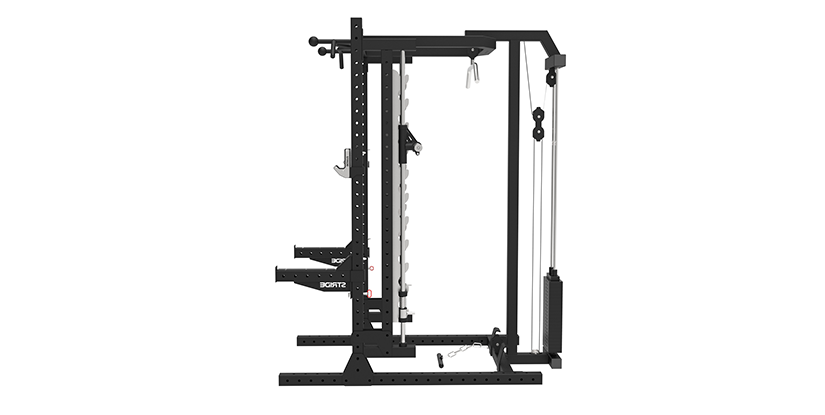
Beyond material thickness, the configuration of your station dictates its functional limits. When deciding between a power rack vs squat stand, you must weigh the necessity of absolute stability against available floor space. A full power rack offers a complete cage structure, providing superior lateral stability and a much larger footprint. This design is ideal for users performing heavy compound movements where any slight imbalance could be dangerous. The integrated uprights act as a comprehensive safety net, offering multiple safety catches at various heights to catch the bar during failed reps.
Conversely, a squat stand is a more compact heavy duty weightlifting station designed for efficiency. While it requires less room, it lacks the enclosed protection of a full cage. For those prioritizing a high-performance best bench press squat rack experience, the power rack is the gold standard for safety. However, if your goal is a minimalist setup with high-quality home gym strength equipment, a premium stand may suffice, provided it features robust base plates to compensate for the reduced structural enclosure.
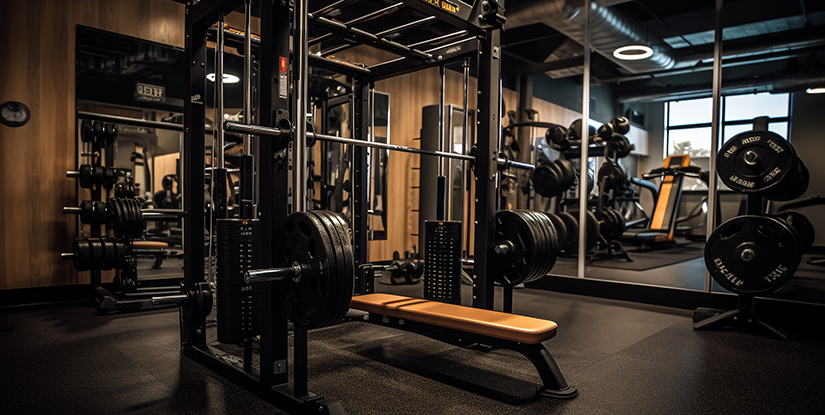
To help you decide which configuration aligns with your specific training goals and spatial constraints, we have synthesized a comparison below. Choosing the right best bench press squat rack depends heavily on the intended intensity level and the physical footprint available in your facility.
| Configuration Type | Stability Profile | Space Requirement | Intensity Level |
|---|---|---|---|
| Power Rack (Full Cage) | Maximum / High Rigidity | Large Footprint | Advanced / Professional |
| Squat Stand (Open Design) | Moderate / Variable | Compact / Minimalist | Beginner to Intermediate |
| Half Rack (Hybrid) | High / Solid Base | Medium Footprint | Intermediate to Advanced |
When sourcing home gym strength equipment for long-term use, remember that a power rack vs squat stand debate is ultimately a trade-off between safety margins and square footage. For those building a serious heavy duty weightlifting station for heavy compound lifts, the added structural overhead of a full cage is a worthwhile investment in safety and equipment longevity.
Maximizing Footprint: Choosing Between a Power Rack vs Squat Stand
When planning a home training environment, the most critical decision involves the fundamental trade-off between stability vs mobility. As a procurement professional, I often advise clients that the best bench press squat rack isn't necessarily the largest one, but the one that fits the architectural constraints of the room. A power rack vs squat stand debate usually boils down to how much square footage you are willing to commit to your heavy duty weightlifting station.
A full power rack offers unparalleled structural integrity and safety, but it requires a significant footprint. These units are essentially a cage, providing a permanent, high-stability environment for heavy compound lifts. Conversely, if you are working with limited dimensions, a squat stand serves as a highly efficient, space-saving alternative. While a stand offers greater mobility and a smaller physical presence, it lacks the integrated safety features and multi-angle support found in a full rack system. Choosing correctly ensures your home gym strength equipment investment complements your available square footage without compromising your training goals.
To assist in your selection process, we have categorized the primary differences between these two configurations. This comparison focuses on how each model impacts your training environment and long-term utility.
| Feature Comparison | Full Power Rack | Squat Stand |
|---|---|---|
| Typical Dimensions | Large footprint; requires high ceiling clearance. | Compact; adaptable to smaller rooms. |
| Safety Features | Maximum; includes integrated spotter arms and rear cages. | Moderate; relies on adjustable uprights and safety pins. |
| Versatility | High; supports diverse home gym strength equipment attachments. | Focused; optimized for primary barbell movements. |
| User Profile | Serious lifters seeking a heavy duty weightlifting station. | Intermediate enthusiasts prioritizing space efficiency. |
When searching for the best bench press squat rack for a specialized setup, consider your long-term scaling plans. If your goal is a comprehensive, multi-functional facility, the structural rigidity of a full rack is the gold standard. However, if your priority is a streamlined, mobile setup, a stand provides an excellent entry point into high-quality lifting.
Precision Measurement: Avoiding Installation Pitfalls
Before finalizing your order, you must move beyond simple floor space calculations. A common oversight in procurement is failing to account for the safety zone required around the equipment. To ensure your home gym strength equipment operates safely, you must measure the total clearance needed for barbell rotation and lateral movement. A standard barbell is typically 7 feet long; if your heavy duty weightlifting station is placed too close to a wall, the plates may strike the surface during a lift, compromising stability.
Furthermore, verticality is often neglected. Always verify your ceiling height before selecting a full power rack. You must account for the height of the rack itself plus the additional clearance required for the lifter to stand upright under a loaded bar. We recommend leaving at least 12 to 18 inches of buffer above the highest adjustment point to prevent structural interference. By prioritizing these spatial dimensions, you ensure that your best bench press squat rack remains a functional asset rather than a logistical constraint.
Essential Compatibility: Integrating Your Bench Press with Existing Home Gym Strength Equipment
When planning your layout, the financial implications extend far beyond the initial sticker price. Choosing between a power rack vs squat stand involves a strategic decision regarding cost-efficiency and your future training needs. A squat stand offers a lower entry point and a smaller footprint, making it an attractive option for those starting with a minimal home gym strength equipment collection. However, this lower upfront cost often comes with hidden long-term trade-offs in versatility and safety features.
In contrast, investing in a full power rack serves as a robust long-term investment for serious lifters. While the initial capital outlay is higher, the integrated safety catch systems and multi-functional design prevent the need for frequent equipment upgrades as your strength grows. From a procurement perspective, selecting a high-quality rack now ensures that your best bench press squat rack remains compatible with advanced attachments and heavier loads, preventing the wasted expense of replacing entry-level gear prematurely.
Understanding the tiered investment landscape is crucial for optimizing your budget. Generally, the market is divided into three distinct categories, each offering a different price-to-durability ratio depending on your training intensity and long-term goals.
Tiered Pricing and Value Propositions
At the entry level, budget-friendly options often consist of lightweight squat stands or basic bench setups. These are excellent for casual users or those with limited space, but they may lack the structural integrity required for high-volume heavy lifting. While the initial cost is low, these units often have a shorter lifespan when subjected to rigorous use.
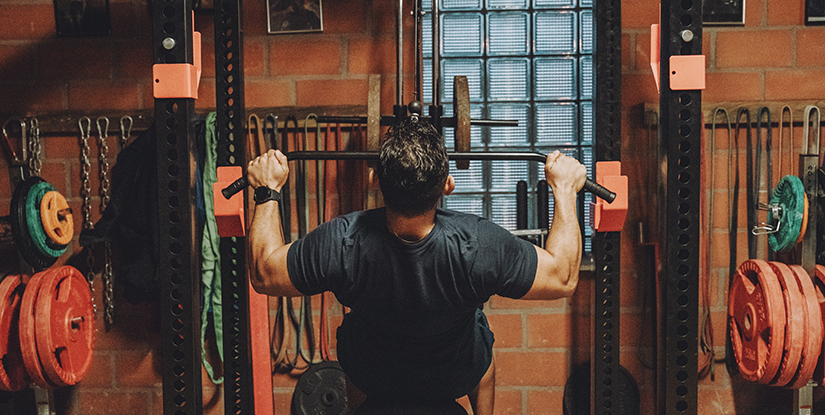
For those seeking a professional-grade experience, a premium heavy duty weightlifting station represents the gold standard. Although these units command a higher price point, they are engineered with thicker steel gauges and advanced powder coating to withstand decades of wear. When searching for the best bench press squat rack, we recommend viewing these high-end models as a long-term asset rather than a simple purchase. By prioritizing structural stability and modularity now, you avoid the recurring costs of replacing underpowered equipment as your personal strength milestones increase.
The Hidden Costs of Compatibility
A common oversight in procurement is neglecting the technical compatibility of your existing gear with a new station. One of the most critical factors is the barbell sleeve diameter. If you invest in a high-end heavy duty weightlifting station but own standard 25mm Olympic bars, or conversely, if you purchase a rack designed for 25mm bars but own 50mm Olympic weight plates, you face immediate functional failure. This mismatch can lead to unexpected expenses in replacing your entire barbell collection to match the new home gym strength equipment.
Furthermore, consider the modularity of your best bench press squat rack. Many users forget to budget for accessory attachments such as dip stations, landmines, or pull-up bars. While these add immense value, they often require specific proprietary mounting systems. When calculating your total cost of ownership, ensure the rack's upright dimensions and hole spacing can accommodate the specialized tools you intend to use. Failing to verify these specifications early can turn a cost-effective upgrade into a series of expensive, disjointed purchases.
Optimizing Long-Term Utility through Modular Upgrades
When investing in high-end home gym strength equipment, the most significant mistake is failing to account for future training evolution. A piece of equipment that serves a novice today may become obsolete as their strength increases. To ensure your investment delivers long-term value, you must prioritize modular upgrades. A high-quality heavy duty weightlifting station should act as a foundation that grows with the user, rather than a static piece of steel.
This is where the distinction between a power rack vs squat stand becomes critical for long-term utility. While a standalone stand offers space efficiency, a modular power rack allows for the seamless integration of attachments like dip stations, pull-up bars, or landmines. When sourcing the best bench press squat rack, look for systems that support these incremental additions. Choosing a modular architecture ensures that as your training needs shift from basic movements to complex functional training, you won't need to replace the entire unit, effectively future-proofing your personal training environment.
To help you decide between a permanent installation and a more flexible setup, we have outlined the primary differences in long-term utility. Selecting the right configuration depends heavily on your available square footage and how frequently you intend to swap out functional attachments.
| Feature Comparison | Fixed/Standard Setup | Modular System Upgrade |
|---|---|---|
| Space Requirements | Minimal footprint; static area. | Requires extra clearance for attachments. |
| Accessory Compatibility | Limited to base functionality. | High (Dip bars, landmines, cable pulleys). |
| Maintenance Level | Low; simple bolt checks. | Moderate; periodic hardware tightening. |
| Long-Term Versatility | Fixed for specific movements. | Scalable for diverse training goals. |
While a fixed setup is often more cost-effective initially, a modular heavy duty weightlifting station offers much higher resale value and utility. For those prioritizing a long-term home gym strength equipment strategy, investing in a system that accommodates diverse accessories is the most efficient way to scale your training capabilities without a complete overhaul.
Beyond structural upgrades, consistent maintenance is the cornerstone of equipment longevity. Even the most robust best bench press squat rack requires a proactive upkeep schedule to remain safe and functional. For professional-grade setups, this involves more than just surface cleaning; it requires a systematic approach to hardware integrity. Because modular systems rely heavily on accessory attachment points, the frequency of use for components like J-cups, spotter arms, or dip bars can lead to micro-vibrations and loosening over time.
To ensure long-term utility, we recommend a quarterly inspection of all bolts, pins, and attachment mechanisms. High-impact training can eventually loosen the fasteners that secure your heavy duty weightlifting station. Periodically tightening these connections prevents structural wobbling and maintains the precision of your home gym strength equipment. Furthermore, checking the friction surfaces of your J-cups ensures that weight changes smoothly without damaging the barbell or the rack itself. A disciplined maintenance routine not only preserves the aesthetic quality of the steel but, more importantly, guarantees the safety and stability of your training environment for years to come.
Maximizing Your Investment Through Build Quality
When sourcing home gym strength equipment, the temptation to opt for lower-cost, lightweight alternatives can be high. However, professional procurement logic dictates that the best bench press squat rack is defined not by its price tag, but by its lifecycle. A budget-friendly unit often utilizes thin-walled tubing that compromises structural integrity under heavy loads, leading to wobbling or catastrophic failure during high-intensity sets.
To ensure a high long-term ROI, prioritize units manufactured with high-grade steel gauge specifications. A true heavy duty weightlifting station should feature thick-walled steel (typically 11-gauge or 7-gauge) to withstand years of repetitive stress and heavy barbell drops. Investing in superior metallurgy and reinforced welding standards means you are not just buying a piece of equipment, but a permanent fixture for your training space. By choosing high-spec construction now, you eliminate the need for frequent replacements and ensure your facility remains a safe, reliable environment for years to come.
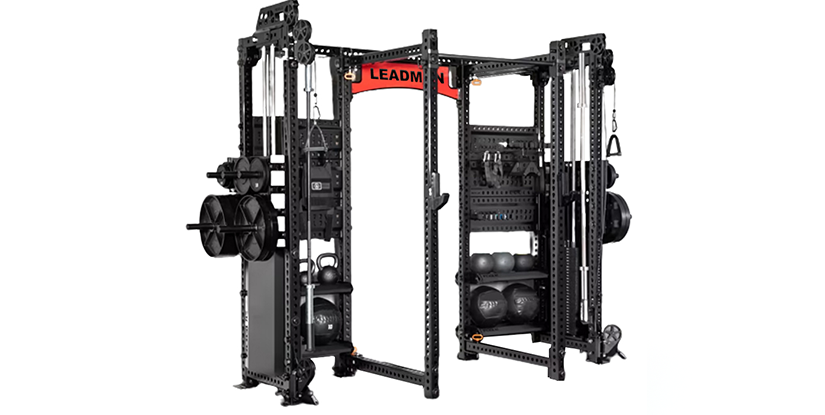
Deciding between a power rack vs squat stand often comes down to a strategic trade-off between spatial economy and functional depth. For many, the decision hinges on how much utility they require from a single footprint. A squat stand offers a minimal footprint, making it an excellent choice for compact residential setups where floor space is at a premium. However, it lacks the integrated safety features found in full-enclosure models.
Conversely, a full power rack provides unmatched stability and versatility. While it occupies more square footage, it functions as a complete heavy duty weightlifting station, offering built-in safety pins, pull-up bars, and various attachment points. From a procurement standpoint, the power rack offers much higher upgradeability; you can add dip stations, landmines, or cable systems as your training evolves. If your goal is to build a comprehensive, long-lasting training hub, the power rack provides a superior foundation that grows with your ambitions, whereas a stand is a specialized tool for specific movements.
Ultimately, selecting the best bench press squat rack requires a shift in mindset from simple purchasing to a long-term investment in fitness. While the initial cost of professional-grade equipment may be higher, the true value lies in its durability and the reduction of total cost of ownership. Low-quality components often lead to mechanical fatigue, necessitating premature replacements that ultimately cost more than a single high-quality acquisition.
Beyond structural strength, never compromise on essential safety features such as robust spotting arms, adjustable J-cups, and high-friction knurling. These elements are non-negotiable for maintaining a secure training environment during heavy lifts. By prioritizing a heavy duty weightlifting station that adheres to strict manufacturing standards, you are securing a reliable asset that supports your physical progress without the constant threat of equipment failure. Choose quality today to ensure your training space remains a high-performance sanctuary for years to come.
Maximizing ROI: Why Quality Trumps Initial Savings
When sourcing home gym strength equipment, many buyers fall into the trap of prioritizing the lowest upfront price. However, professional procurement logic dictates that the best bench press squat rack is defined by its total cost of ownership rather than its initial sticker price. Choosing an inferior, lightweight model to save a few dollars often leads to premature structural fatigue, necessitating a complete replacement within a short period.
Investing in a heavy duty weightlifting station is a strategic decision where safety features as an investment pay dividends. High-grade steel gauges and precision welding are not just "premium" add-ons; they are essential components that prevent catastrophic failure during heavy lifts. When evaluating durability vs. initial cost, consider that a single high-quality unit serves as a permanent fixture, whereas budget alternatives become recurring expenses. For long-term stability, look for equipment that maintains its structural integrity under high-frequency use, ensuring your capital is spent on an asset that lasts, not a liability that requires frequent upgrading.
To optimize your procurement strategy, you must decide whether your specific training environment demands a full enclosure or a streamlined setup. The debate of power rack vs squat stand typically centers on the trade-off between total safety and footprint. A full rack offers unmatched structural rigidity, while a stand maximizes usable floor area. To assist in your decision-making process, we have outlined the primary differences in the comparison below.
| Feature | Full Power Rack | Squat Stand |
|---|---|---|
| Stability Comparison | Maximum (Four-post structure) | Moderate (Dependent on base width) |
| Versatility | High (Supports pull-ups, dips, etc.) | Focused (Primarily lifting) |
| Space Requirements | Large footprint required | Compact and space-efficient |
| Safety Profile | Highest (Built-in safety pins/arms) | Variable (Requires spotting arms) |
If your goal is to build a comprehensive heavy duty weightlifting station that accommodates multiple disciplines, a power rack is the superior long-term asset. However, if you are constrained by tight space requirements or a limited budget, a high-quality squat stand provides an efficient entry point into professional-grade training.
The Final Quality Verification Checklist
Before finalizing your order for the best bench press squat rack, run your selection through this rigorous quality control checklist. A high-tier heavy duty weightlifting station should meet specific industrial standards to ensure it remains a reliable asset rather than a depreciating liability.
- Steel Gauge and Thickness: Verify the steel gauge of the uprights. For professional-grade stability, look for 11-gauge or thicker steel to prevent bowing under load.
- Weight Capacity Specifications: Ensure the weight capacity exceeds your maximum projected load by at least 30% to maintain a safety buffer during dynamic movements.
- Barbell Compatibility: Confirm that the J-cups and safety spotters are engineered for standard Olympic barbells to prevent knurling damage or uneven weight distribution.
- Assembly and Hardware Integrity: Evaluate the assembly ease; high-quality units utilize precision-drilled holes and high-tensile bolts to ensure a seamless, rigid connection.
- Long-term Maintenance: Check for powder-coated finishes that resist oxidation and high-quality bearing surfaces that require minimal long-term maintenance.
By prioritizing these technical specifications, you ensure that your home gym strength equipment investment delivers consistent performance and safety for years to come.