Mastering the Seated Half Press in a Power Rack Guide (2)
Vetting Manufacturers for High-Stability Power Rack Equipment
When sourcing equipment for high-performance training facilities, procurement professionals must look beyond basic dimensions to evaluate three critical pillars: structural risk mitigation, technical specifications, and long-term logistical reliability. A failure to vet the manufacturing process often results in equipment that cannot handle the dynamic loads required for advanced power rack exercises. For distributors, the priority is ensuring that every unit shipped meets a standard of excellence that prevents mechanical fatigue under heavy use.
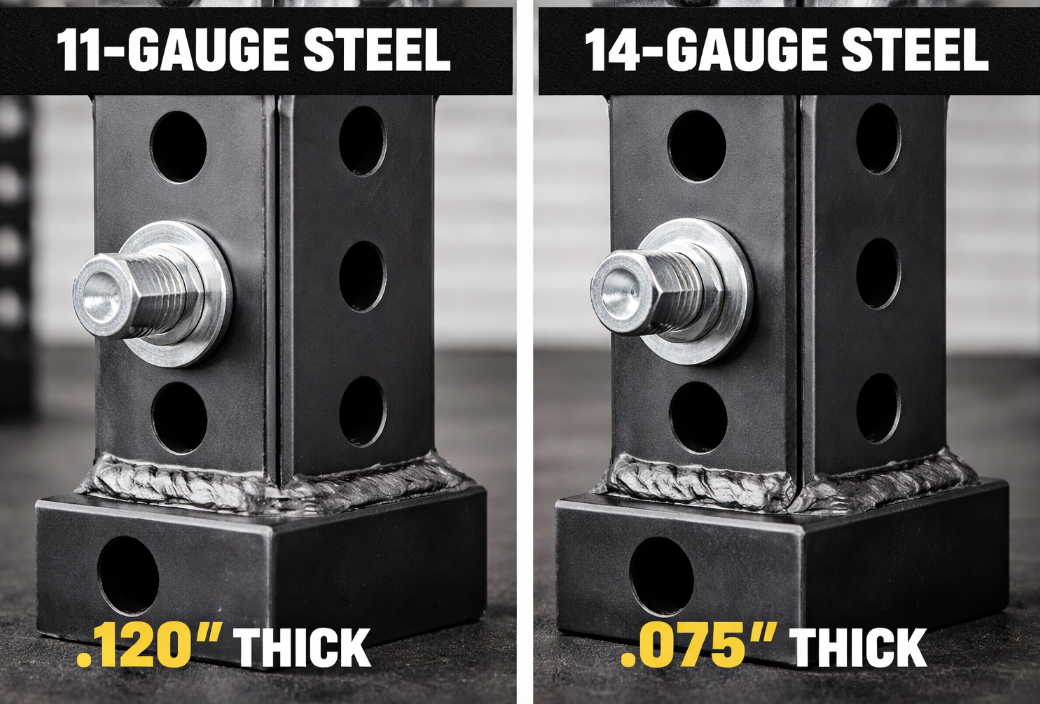
The integrity of a seated half press in a power rack depends entirely on the structural rigidity of the frame. High-tier manufacturers utilize heavy-gauge steel to ensure that the weight capacity remains consistent even during the eccentric phase of a lift. Furthermore, quality control must verify the presence of advanced vibration damping features within the uprights and safety pins. Without this stability, the micro-oscillations caused by heavy resistance can compromise the overhead stability training experience, leading to premature wear on the hardware and a diminished safety profile for the end-user.
To mitigate procurement risks and ensure long-term durability, we recommend implementing a rigorous technical checklist during your factory audit or sample evaluation phase. A high-quality rack seated press setup requires more than just a sturdy frame; it demands precision engineering at every junction. Use the following criteria to evaluate the structural integrity of your potential supplier's production line:
- Steel Gauge Thickness: Verify that the uprights utilize high-grade, heavy-gauge steel. For commercial-grade stability, a thicker gauge is essential to prevent frame deflection during intense overhead stability training.
- Welding Quality: Inspect the joints for consistent, deep-penetration welds. Smooth, uniform beads without porosity are critical for maintaining the structural integrity required for demanding power rack exercises.
- Powder Coating Durability: Ensure the finish is a high-micron, electrostatic powder coating. This layer must be resistant to chipping and oxidation to protect the steel from moisture and high-frequency contact.
By prioritizing these material standards, distributors can confidently supply equipment that maintains its structural profile through years of heavy-duty use, protecting both the investment and the user.
Selecting the appropriate tier of equipment is a strategic decision that directly impacts the long-term ROI of a fitness facility. A mismatch between the training intensity and the equipment's structural capacity can lead to frame oscillation, which negatively affects the execution of a seated half press in a power rack. For procurement specialists and distributors, understanding these distinctions is vital to ensuring that the hardware can support the dynamic forces inherent in high-level overhead stability training.
The following comparison helps clarify which equipment class best serves your specific market segment and training requirements:
| Tier Level | Load-Bearing Capacity | Stability Rating | Ideal For |
|---|---|---|---|
| Light/Residential | Low to Moderate | Standard | Home use and light functional training |
| Commercial/Mid-Tier | High | Enhanced | Standard gyms and boutique fitness studios |
| Professional/Elite | Extreme/Heavy-Duty | Maximum Rigidity | High-performance training and power rack exercises |
When sourcing a rack seated press setup, always prioritize the stability rating over the lowest price point. A more robust frame ensures that even under maximum load, the equipment remains stationary, providing the necessary foundation for safe, high-intensity resistance training.
Rigorous Quality Control Standards for Seated Press Components
When integrating the seated half press in a power rack into a high-traffic commercial facility, equipment failure is not an option. The heavy load shifts inherent in overhead stability training place extreme stress on the uprights and support structures. Maintaining the structural integrity of your rack is a fundamental procurement priority to mitigate liability and ensure user safety. Even minor deviations in weight bearing capacity can lead to catastrophic failure during heavy sets.
A proactive maintenance regimen focuses on the mechanical connection points. We recommend a weekly audit of safety pins and bolt tightness to ensure the frame remains rigid under tension. For distributors and gym owners, selecting equipment with high-grade steel and precision-engineered fasteners is the first line of defense against wear and tear.
| Component Type | Standard Commercial Grade | Premium Heavy-Duty Grade |
|---|---|---|
| Safety Pin Material | Zinc-plated Steel | Hardened Stainless Steel |
| Frame Connection | Standard Hex Bolts | High-Tension Grade Bolts |
| Durability Expectation | Moderate/Daily Use | High/Extreme Load Use |
Beyond structural audits, consistent preventative maintenance is essential for preserving the smooth mechanical function of your setup. Friction is the primary enemy when performing a seated half press in a power rack; as users move through varying resistance ranges, any resistance in the guide rods or sliding mechanisms can disrupt the training rhythm. We suggest a quarterly inspection frequency to check for any signs of metal fatigue or oxidation on the load-bearing surfaces.
To maintain optimal performance, regular lubrication of moving parts with a high-quality, non-corrosive silicone spray is highly recommended. This prevents the grinding sensations that often signal excessive wear and tear. For facility managers sourcing multiple units, prioritizing equipment with powder-coated finishes and precision-machined tracks will significantly reduce the long-term labor required to keep these power rack exercises safe and effective for your members.
To streamline your facility's operational oversight, we have developed a quick-reference guide for identifying critical wear. Recognizing these signs early allows for scheduled part replacement rather than emergency shutdowns, ensuring your rack seated press stations remain operational and safe. For procurement professionals and gym managers, tracking these metrics is vital for maintaining high-quality standards across your inventory.
| Component Type | Common Wear Sign | Action Required | Maintenance Difficulty |
|---|---|---|---|
| Guide Rods/Rails | Surface pitting or scoring | Replace or deep polish | Moderate |
| J-Cups/Hooks | Deformation or metal fatigue | Immediate Replacement | Low |
| Adjustment Pins | Bent shafts or loose fit | Replace Pin/Check Holes | Low |
| Bearing Assemblies | Grinding or uneven motion | Lubricate or Replace | High |
When managing high-volume power rack exercises, identifying these indicators prevents the disruption of your overhead stability training protocols. Proactive replacement of even minor components ensures that the seated half press in a power rack remains a premium, reliable experience for every end-user.
Optimizing Overhead Stability Training Through Precision Engineering
When sourcing high-grade strength equipment, professional facility managers must look beyond the steel gauge to the actual spatial footprint required for high-intensity movements. Executing a seated half press in a power rack requires more than just a sturdy frame; it demands a meticulously planned environment to ensure user safety and functional efficiency. Unlike standard bench presses, this movement emphasizes overhead stability training, which can lead to slight lateral shifts in weight distribution during heavy sets.
To mitigate risk, we recommend establishing strict clearance zones around your installation. A standard rack might occupy a specific footprint, but your facility layout must account for safety margins that include the bench width, the user's elbow extension, and the potential swing of the barbell. When procuring large-scale orders for commercial gyms, ensure your floor plan allows for a minimum of 36 inches of unobstructed space on all sides. This buffer protects both the athlete and the structural integrity of the rack during rigorous power rack exercises.
Selecting the appropriate hardware configuration is a critical decision for distributors and gym owners, as the physical dimensions of your equipment directly dictate the throughput and safety of your facility. A compact setup may maximize floor area, but it might restrict the range of motion required for a smooth rack seated press. Conversely, larger installations offer superior stability but demand significant ceiling clearance.
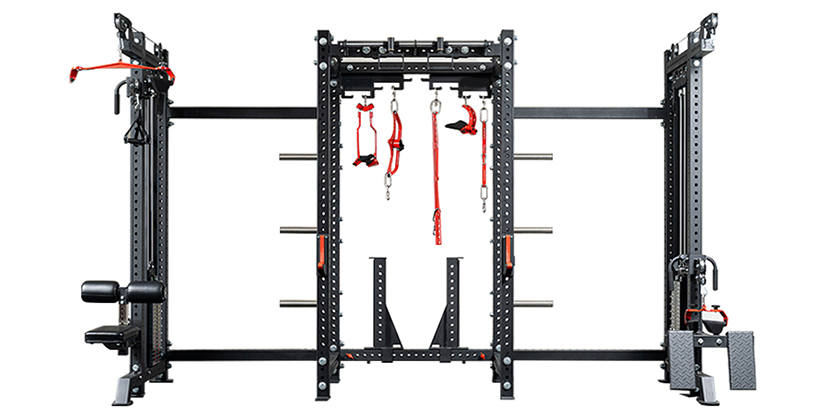
The following comparison helps you evaluate which configuration best supports your clients' needs for overhead stability training and high-performance movement:
| Configuration Type | Typical Footprint | Ceiling Height Requirement | Mobility & Space Efficiency |
|---|---|---|---|
| Standard Power Rack | Moderate (Approx. 4' x 5') | High (Requires 8'+ clearance) | Fixed; ideal for dedicated strength zones. |
| Compact/Half Rack | Small (Approx. 4' x 4') | Moderate (Versatile for low ceilings) | High; best for boutique studios or limited square footage. |
| Full Cage System | Large (Approx. 5' x 5'+) | Very High (Demands ample vertical room) | Low; provides maximum safety for heavy power rack exercises. |
When finalizing your procurement list, always verify that the vertical clearance accommodates the full extension of the barbell during a seated half press in a power rack to prevent accidental contact with overhead fixtures.
Beyond the footprint of the base, the most critical factor in training environment optimization is the vertical dimension. When sourcing equipment for commercial facilities, procurement specialists must ensure that the vertical clearance is sufficient not just for the barbell, but for the entire range of motion during the highest point of the lift. Inadequate ceiling height or low-hanging lighting fixtures can turn a standard set into a high-risk scenario, especially during explosive power rack exercises.
We advise that every installation maintains a strictly defined obstacle-free zone above the rack. This means auditing the space for any protruding structural beams, ventilation ducts, or suspended signage that could interfere with the barbell path. A well-planned layout ensures that the seated half press in a power rack can be performed with total confidence, allowing the athlete to focus entirely on overhead stability training without the distraction of spatial constraints or potential collisions.
Managing Warranty Claims and Component Longevity
When high-performance facilities invest in specialized equipment, the long-term ROI depends heavily on how well the hardware is preserved. Performing a seated half press in a power rack places significant vertical and lateral stress on the uprights and safety pins. To prevent premature wear and ensure the structural integrity of your investment, a strict maintenance protocol is non-negotiable. We recommend that gym owners and distributors implement a monthly inspection routine to identify any subtle shifts in the frame geometry.
Routine bolt tightening is the most critical step; even slight loosening can compromise the stability required for intense overhead stability training. Additionally, ensuring proper lubrication of the guide rods or moving parts prevents friction-induced damage that often leads to invalid warranty claims. By prioritizing these small mechanical adjustments, you safeguard the equipment against the rigors of heavy resistance, ensuring that every rack seated press remains a safe, controlled movement for the end-user while extending the functional lifespan of the entire unit.
To maintain a high standard of safety during rigorous power rack exercises, facility managers must distinguish between normal usage patina and genuine mechanical failure. Neglecting these indicators can lead to costly replacements or equipment downtime. Below is a professional-grade checklist designed to help you monitor the health of your hardware and ensure your rack seated press setup remains compliant with safety standards.
| Component | Inspection Frequency | What to Look For | Action Required |
|---|---|---|---|
| Uprights & Pins | Monthly | Bent metal, cracked welds, or worn holes | Replace pins or decommission unit |
| Fasteners & Bolts | Quarterly | Loose connections or stripped threads | Retighten to manufacturer torque specs |
| Guide Rods/Rails | Bi-Monthly | Surface scratches or lack of smooth motion | Clean and apply silicone lubricant |
| Base/Footing | Semi-Annually | Floor bolt looseness or uneven leveling | Re-level and secure to floor mounting |
By implementing this systematic approach to overhead stability training equipment, you protect your capital investment and ensure that the heavy-duty components can withstand the high-frequency demands of a commercial environment.
Protecting your capital investment requires more than just physical upkeep; it demands rigorous administrative diligence. To avoid complications during a potential warranty claim, always maintain a complete file of your warranty documentation, including original purchase orders and serial numbers. We advise that facility managers strictly adhere to all manufacturer guidelines regarding weight capacities and load placement. Neglecting these specifications—such as exceeding the rated load during a seated half press in a power rack—can often void your coverage.
Furthermore, we suggest scheduling a professional inspection at least once a year. A certified technician can identify micro-fractures or structural fatigue that a standard staff member might overlook. This proactive stance on component longevity ensures that your power rack exercises equipment remains a reliable asset rather than a liability. By documenting every professional inspection and routine service, you build a robust evidence chain that protects your rights as a buyer and ensures the long-term durability of your facility's core strength equipment.
Logistics and Packaging Strategies for Heavy-Duty Racks
Procuring high-end strength equipment involves more than just selecting the right specifications; it requires a deep understanding of transit-related risks. When importing a heavy-duty rack, the sheer mass and dimensional volume present significant logistical hurdles. Any compromise in shipping durability can lead to microscopic misalignments in the frame, which directly impacts the precision required for a seated half press in a power rack. Even a slight deviation in the upright's verticality can compromise the structural integrity of the entire unit, affecting the stability of the barbell path during heavy lifts.
To mitigate these risks, professional manufacturers must prioritize reinforced protective packaging, such as high-density foam padding and heavy-duty corrugated outer cartons. For distributors, ensuring that every component of the rack seated press setup arrives unscathed is essential for maintaining user safety and brand reputation. Investing in superior crating methods ensures that the equipment remains rigid and true, providing the necessary overhead stability training environment that commercial gym owners expect from premium power rack exercises equipment.
Managing the landed cost of heavy equipment requires a strategic balance between speed and budget. Since high-quality power rack exercises equipment is often heavy and bulky, the choice of freight method significantly impacts your bottom line and inventory turnover. For large-scale gym fit-outs, understanding these logistical trade-offs is essential to maintaining a predictable procurement cycle.
Shipping Method vs. Cost/Speed
Depending on your order volume and the urgency of your facility launch, different transit modes offer varying levels of efficiency. Most distributors opt for sea freight for bulk orders to maximize cost savings, while LTL serves as a standard for mid-sized shipments.
| Shipping Method | Delivery Time | Budget Impact | Best Use Case |
|---|---|---|---|
| Sea Freight | Long-term (Weeks/Months) | Lowest Cost | Bulk warehouse restocking |
| LTL (Less Than Truckload) | Moderate (Days/Weeks) | Medium | Mid-sized gym equipment orders |
| Air Freight | Fastest (Days) | Highest Cost | Urgent, low-volume components |
When sourcing components for a seated half press in a power rack, we recommend analyzing your lead times early. While air freight can expedite small parts, the sheer volume of a full rack setup usually necessitates sea or LTL options to remain cost-effective.
Beyond choosing a shipping mode, achieving a cost-effective procurement strategy requires a focus on volume optimization. Because the dimensions of a power rack are often fixed, the way components are nested and palletized determines the final landed cost. For distributors looking to scale, bulk procurement of compatible accessories—such as weight plates or specialized benches—alongside the primary rack can significantly improve container utilization. This approach reduces the per-unit shipping expense and maximizes the efficiency of every cubic meter in a shipping container.
To further enhance logistics efficiency, we suggest coordinating the arrival of all components required for specialized power rack exercises in a single shipment. By consolidating orders, you minimize the administrative overhead and the risk of mismatched parts arriving at different times. Whether you are setting up a single high-performance zone for overhead stability training or outfitting an entire commercial facility, a synchronized, high-volume approach ensures that your capital is used effectively while maintaining the high standards of quality control expected in the North American market.
Calculating Total Landed Cost for Commercial Strength Solutions
When sourcing high-end strength solutions, many gym owners focus exclusively on the initial invoice price. However, if you are planning to incorporate specialized movements like the seated half press in a power rack, the upfront cost is only one piece of the puzzle. To ensure a high return on investment, you must evaluate the total cost of ownership, which includes shipping, assembly, and long-term maintenance requirements.
Investing in commercial-grade equipment is a strategic decision rather than a simple expense. While budget-friendly alternatives may seem attractive, they often lack the structural integrity required for intense overhead stability training. Low-quality steel or inferior coatings can lead to premature wear, increasing your operational costs through frequent repairs or early replacement. For a facility focused on high-performance training, selecting a robust rack ensures that the rack seated press remains a stable, safe, and reliable station for years. Prioritize durability and high-grade construction during your procurement process to minimize downtime and maximize the longevity of your strength training zone.
Navigating the financial complexities of bulk procurement requires a clear understanding of different sourcing channels. Depending on your facility's scale, your budget planning will likely lean toward one of two primary models: direct factory sourcing or working through a local distributor.
Direct factory sourcing offers the most competitive unit pricing, which is ideal for large-scale gym builds. However, this path demands a sophisticated grasp of shipping logistics. When importing heavy steel structures designed for power rack exercises, you must account for import duties, ocean freight volatility, and the necessity of rigorous quality control inspections at the origin. While the base cost is lower, the administrative burden of managing international transit and customs clearance is higher.
Conversely, a local distributor model provides a more predictable, albeit slightly higher, price point. The primary advantage here is the mitigation of risk; distributors typically handle the complexities of shipping logistics and installation costs, providing a turnkey solution. This approach is often more efficient for mid-sized facilities that prioritize rapid deployment and localized support over the maximum possible margin on a single rack seated press unit.
To help you visualize how different investment levels impact your long-term operational budget, we have categorized equipment into three distinct tiers. When planning for movements like the seated half press in a power rack, the choice of tier directly influences how much you will spend on upkeep and replacement over the next decade.
| Equipment Tier | Ideal Use Case | Expected Lifespan | Maintenance Frequency | Space Footprint |
|---|---|---|---|---|
| Entry-Level | Home Studios / Small PT Studios | 3–5 Years | High (Frequent Bolt Tightening) | Compact / Minimal |
| Mid-Range | Boutique Fitness / Semi-Commercial | 7–10 Years | Moderate (Seasonal Checks) | Standard Modular |
| Professional | High-Traffic Commercial Gyms | 12+ Years | Low (Routine Lubrication) | Large / Integrated Systems |
Choosing the right tier is a balancing act between initial capital expenditure and long-term overhead stability training utility. While a professional-grade setup requires a higher initial outlay, its superior structural integrity and lower maintenance requirements often result in a much lower cost-per-use, making it the most economical choice for high-volume commercial environments.
Implementation checklist for buyers
When sourcing equipment for high-performance training facilities, the return on investment is dictated by the durability of your hardware. A subpar frame can compromise the efficacy of overhead stability training, leading to client dissatisfaction or even injury. To ensure your facility can safely support the seated half press in a power rack, your procurement checklist must prioritize structural integrity above all else. A heavy-duty gauge steel construction is non-negotiable to prevent micro-oscillations during heavy eccentric loading.
Beyond raw strength, functional geometry is a critical differentiator. Ensure your selected units offer optimal barbell path clearance to prevent the knurling from striking the uprights during the transition phase. Furthermore, verify J-cup/spotter arm compatibility; high-quality power rack exercises require precise, adjustable support systems that can withstand the lateral forces of a missed lift. For distributors and gym owners, investing in racks with reinforced weld points and standardized accessory mounting ensures long-term utility and reduces the frequency of replacement cycles.
To maximize your capital expenditure, you must align your equipment tier with your facility's specific training volume and footprint. Choosing the wrong configuration for a rack seated press can lead to unnecessary maintenance costs or underutilized floor space. Use the following comparison to determine which configuration offers the best utility for your business model.
| Rack Configuration | Space Requirements | Stability Rating | Ideal User Profile |
|---|---|---|---|
| Standard/Home | Compact / Minimal | Moderate | Solo enthusiasts & Home studios |
| Heavy Duty | Medium / Standard | High | Personal trainers & Boutique gyms |
| Commercial | Expansive / Dedicated | Extreme | High-traffic training facilities |
When scaling your inventory, remember that a seated half press in a power rack demands a foundation that can handle constant weight transitions. While a standard unit may suffice for light overhead stability training, commercial-grade steel ensures the long-term reliability required for professional-grade power rack exercises and high-frequency usage.
Before finalizing your wholesale order, use this final quality control checklist to verify that your investment aligns with professional standards. A failure to scrutinize these technical specifications often results in premature depreciation and higher long-term maintenance needs.
Final Procurement Verification Checklist
- Weight Capacity Certification: Confirm the static and dynamic weight capacity of the uprights. For high-intensity power rack exercises, the frame must handle eccentric loading without structural deflection.
- Adjustable Height Precision: Verify that the adjustment holes are laser-cut for absolute adjustable height precision. This ensures the rack seated press setup remains consistent and safe across different user heights.
- Coating Durability: Inspect the powder coating or plating. High-quality coating durability prevents rust and chipping in high-humidity or high-traffic environments, preserving the aesthetic and structural integrity.
- Component Tolerance: Test the fit of J-cups and spotter arms to ensure they do not wobble, which is essential for maintaining overhead stability training standards.
By prioritizing these manufacturing details, you ensure that every seated half press in a power rack performed by your clients is supported by a reliable, long-lasting asset rather than a liability.