Finding the Most Versatile Power Rack for Your Home Gym
Evaluating Long-Term Value Beyond the Initial Purchase Price
When a boutique fitness studio or a high-end hotel gym renovates its strength area, the temptation is often to select the lowest-priced unit available to stay within a strict quarterly budget. However, seasoned procurement professionals know that a cheap, rigid rack often becomes a sunk cost when training needs evolve. To find the most versatile power rack, you must shift your perspective from the sticker price to the initial investment vs. long-term utility. A unit that lacks compatibility options might save money today, but it will force a complete replacement or a total area overhaul when you decide to expand your programming.
A truly multifunctional squat rack serves as a foundational platform that grows with your facility. By prioritizing high-grade compatibility and accessory integration, you ensure that adding a dip station, landmine attachment, or cable system is a simple upgrade rather than a costly structural limitation. This foresight minimizes downtime and maximizes the lifespan of your equipment investment.
| Investment Factor | Basic Standard Rack | High-Utility Modular Rack |
|---|---|---|
| Upfront Cost | Lower initial outlay | Moderate to higher investment |
| Expansion Potential | Limited to basic lifting | High accessory integration |
| Long-Term Utility | Niche/Single-use | Most versatile power rack capabilities |
| Replacement Cycle | Frequent as needs change | Extended due to modularity |
To truly understand the value proposition, we recommend calculating the cost-per-use over a three-to-five-year lifecycle. While a budget-friendly model might satisfy a basic home gym equipment guide checklist, it often lacks the structural durability required for intensive, multi-modal training. An adjustable training station may require a larger upfront budget, but its ability to pivot from heavy compound lifts to functional movement patterns provides much higher dividends. When you invest in a system with significant expansion potential, you are essentially future-proofing your space against shifting fitness trends and evolving client demands.
Ultimately, the goal is to avoid the "replacement trap"—the cycle of buying entry-level gear only to discard it when your training intensity increases. By selecting a high-spec, modular unit, you ensure that your capital is directed toward a permanent fixture of your facility rather than a temporary solution.
As you finalize your selection, be wary of the "hidden costs" that often plague budget-conscious buyers. In our experience, the most significant drain on a fitness budget isn't the initial invoice, but the lack of modularity that renders a unit obsolete within a year. A rack with poor build quality or non-standard hole spacing may seem like a bargain, but it creates a dead end for your facility's growth. Without a standardized system, you cannot easily add specialized attachments, forcing you to scrap the entire unit when your programming shifts. For anyone following a professional home gym equipment guide, true future-proofing means choosing a platform that accommodates both heavy barbell work and high-intensity functional training. Investing in a high-spec adjustable training station ensures that your hardware remains a relevant, evolving asset rather than a static, depreciating liability.
Structural Integrity and the Evolution of Training Modalities
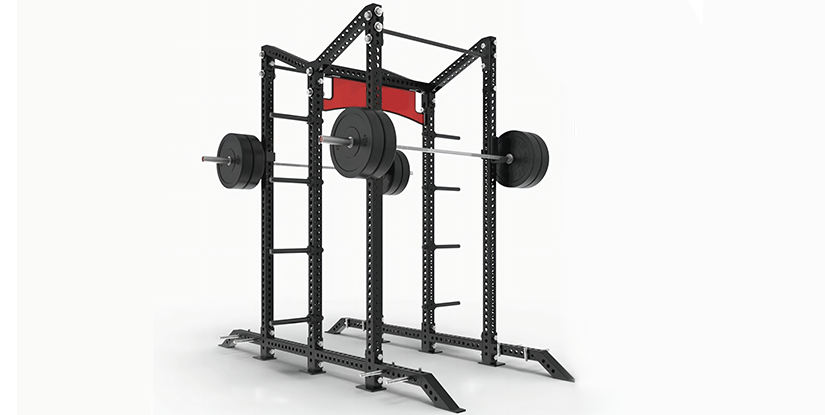
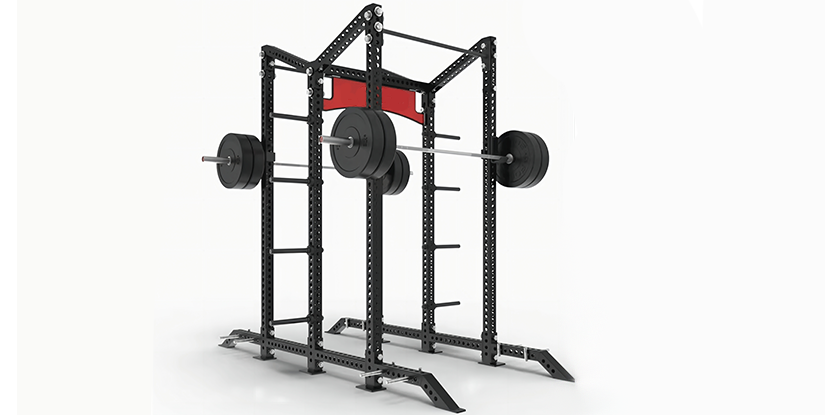
When sourcing high-end fitness assets, the distinction between a basic rack and the most versatile power rack lies in the foundational engineering. A premium adjustable training station must do more than hold a barbell; it must serve as a stable anchor for a lifetime of evolving fitness goals. For distributors and gym owners, prioritizing heavy-duty steel construction is not just about weight capacity—it is about ensuring long-term structural stability during high-intensity transitions.
As users move from traditional powerlifting to high-velocity, multi-modal training, the equipment faces diverse lateral and vertical stresses. A multifunctional squat rack built with high-gauge steel and reinforced welding can seamlessly transition from heavy compound lifts to dynamic functional movements without compromising safety. Investing in superior structural integrity ensures that the equipment remains a reliable centerpiece, regardless of how a client's training style shifts over time.
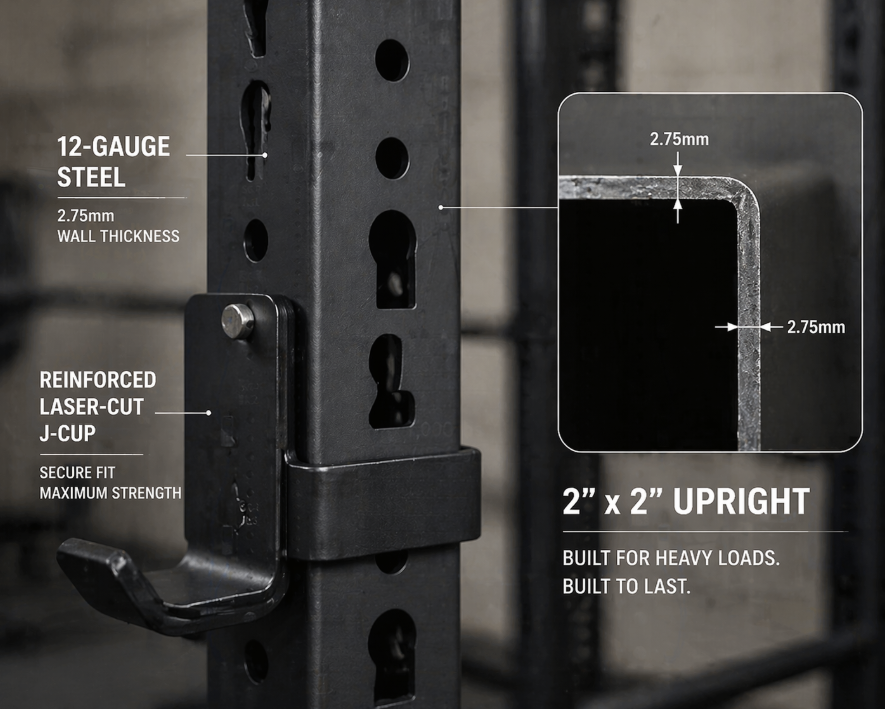
Beyond basic aesthetics, the true value of a premium adjustable training station is found in the precision of its manufacturing specifications. When evaluating a potential multifunctional squat rack, the critical metric is the steel gauge thickness. Higher gauge numbers indicate thinner steel, whereas lower numbers represent the heavy-duty, thick-walled tubing required for professional-grade durability. A robust frame prevents the microscopic warping that often occurs under repetitive, heavy loading, ensuring the rack remains perfectly plumb for years.
Furthermore, the quality of welding integrity serves as the ultimate litmus test for a product's load-bearing capacity. We often see that while a frame may look sturdy, the structural weak points lie in the joints. High-quality, full-penetration welds are essential to prevent fatigue during explosive movements. For those looking to build a high-performance home gym or a commercial-grade facility, prioritizing these technical manufacturing standards transforms the purchase from a simple equipment acquisition into a reliable long-term investment.
To assist in your selection process, we have categorized the relationship between training intensity and structural requirements. Choosing the most versatile power rack requires understanding how different movement profiles impact the steel frame. While a standard rack might suffice for light accessory work, high-impact or heavy-load disciplines demand a higher standard of metallurgy and engineering to maintain safety and longevity.
| Training Type | Typical Load | Recommended Steel Gauge | Stability Focus |
|---|---|---|---|
| Functional & Accessory Work | Low to Moderate | 11-Gauge (Thinner) | Lateral Movement Dampening |
| Bodyweight & Calisthenics | Low (Dynamic) | 11-Gauge (Medium) | Rigidity under Vibration |
| Traditional Powerlifting | High (Static) | 7-Gauge (Heavy-Duty) | Vertical Load Compression |
| Explosive/Multi-Modal Training | High (Dynamic) | 7-Gauge (Heavy-Duty) | Multi-Directional Force Resistance |
When navigating this home gym equipment guide, remember that a multifunctional squat rack designed for explosive, dynamic movements must prioritize both gauge thickness and base stability. If your goal is to provide a truly adjustable training station that scales with the user, selecting a lower-gauge, high-strength steel option is the most prudent way to ensure the equipment remains a permanent fixture in any high-performance environment.
Optimizing Footprint with Multifunctional Design
When designing a high-end residential or boutique fitness studio, the greatest constraint is often the available square footage. Rather than cluttering a room with disconnected machines, savvy buyers prioritize a space-saving design that maximizes utility per square foot. Investing in the most versatile power rack allows you to consolidate various training modalities into a single, streamlined footprint.
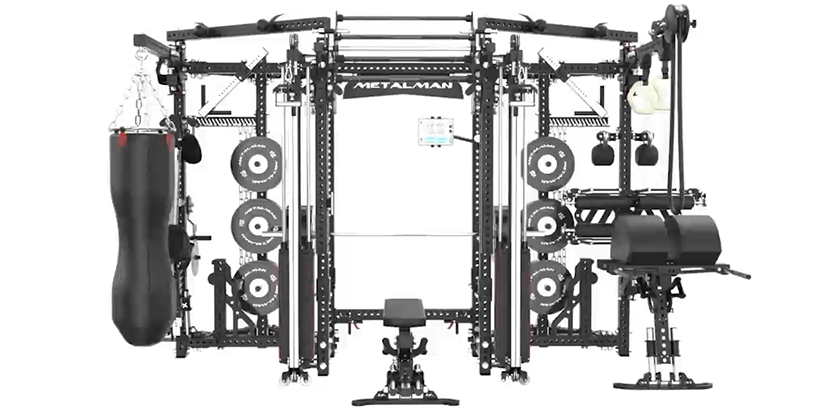
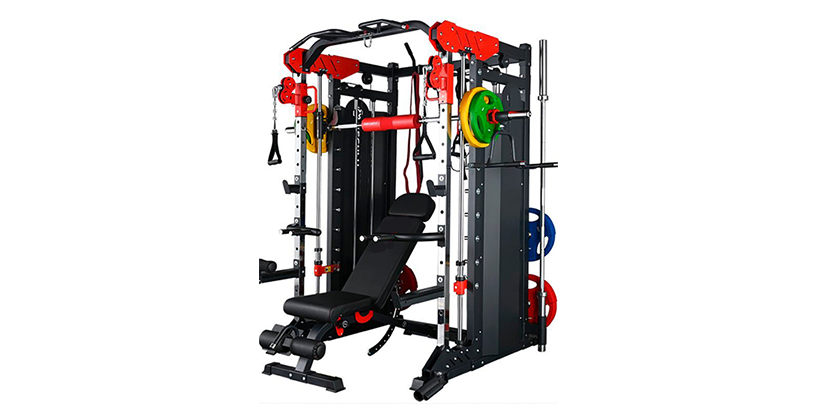
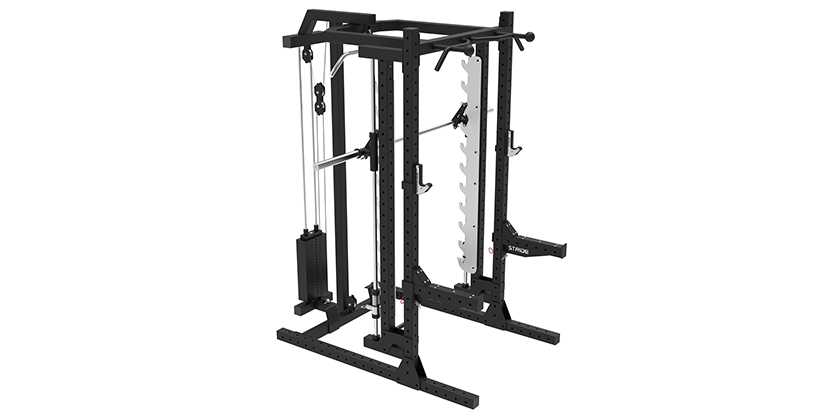
A high-quality multifunctional squat rack acts as a central hub for diverse workouts. By selecting a model that supports functional training integration—such as integrated pull-up bars, dip stations, and cable attachment points—you eliminate the need for standalone accessory equipment. This approach not only optimizes the layout of a home gym but also ensures that heavy compound lifts and high-intensity functional movements can coexist in a compact, efficient station. For distributors and premium gym builders, this versatility is key to delivering a professional-grade experience within limited spatial boundaries.
To assist in your procurement planning, we have outlined how different configurations impact your floor layout. While a standard rack offers a minimal footprint, an adjustable training station provides a higher density of utility, making it an essential component of a comprehensive home gym equipment guide. Choosing the right balance between a standard rack vs multifunctional rack depends heavily on your specific spatial constraints and intended training variety.
| Configuration Type | Typical Space Requirement | Functional Utility | Best For |
|---|---|---|---|
| Standard Power Rack | Low (Compact Footprint) | Core heavy lifting only | Minimalist setups |
| Multifunctional Squat Rack | Moderate (Expanded Width/Depth) | High (Lifting + Accessory Integration) | Diverse training needs |
| Adjustable Training Station | Variable (Modular Design) | Maximum (Full Functional Versatility) | Boutique/High-end home gyms |
When sourcing the most versatile power rack, consider that a slightly larger footprint often yields a much higher return on investment by reducing the need for additional standalone machines.
Strategic Layout and Vertical Integration
Beyond the base dimensions, true efficiency in a premium fitness environment comes from how well the unit manages its surrounding area. When we consult on optimizing small gym layouts, we often emphasize the importance of vertical storage. A high-tier multifunctional squat rack should do more than just hold a barbell; it should serve as a centralized docking station for your entire accessory kit. Look for models featuring integrated peg systems or specialized attachment points for weight horns, resistance band anchors, and dip bars.
Prioritizing accessory compatibility ensures that your training evolves without requiring more floor space. Instead of a cluttered room filled with loose plates and bands, a well-chosen adjustable training station keeps your gear organized and within arm's reach. This vertical approach to organization is a hallmark of a professional-grade home gym equipment guide, allowing users to transition from heavy strength work to functional mobility seamlessly. By selecting a rack that maximizes its height and peripheral attachment points, you effectively turn a single footprint into a comprehensive, high-density training zone.
Selecting an Adjustable Training Station for Diverse User Groups
To truly qualify as the most versatile power rack, a unit must withstand the friction of constant reconfiguration. Whether the user is a heavy lifter performing explosive squats or a functional trainer utilizing cable attachments, the hardware undergoes constant mechanical stress. High-quality components are non-negotiable because different training styles impose unique demands on the equipment. A heavy strength athlete relies on the structural durability of the uprights and pin systems, while functional athletes increase the frequency of movement and accessory swaps.
When sourcing an adjustable training station, the primary concern for long-term utility is minimizing wear and tear on moving parts. Low-grade bushings or thin-gauge steel will degrade quickly under the high-frequency adjustments required for varied workouts. By prioritizing premium, low-maintenance components, distributors and gym owners ensure that the equipment remains smooth and reliable, regardless of whether it is being used for traditional powerlifting or modern metabolic conditioning.
Understanding the long-term upkeep requirements is essential for determining the total cost of ownership. A multifunctional squat rack with complex cable systems or integrated pull-up attachments generally requires a higher maintenance frequency compared to a static, single-purpose rack. For instance, while a basic frame only requires periodic hardware tightening to ensure structural integrity, an adjustable training station with moving pulleys or sliding mechanisms will eventually require periodic lubrication to prevent friction-induced wear.
We recommend categorizing user group suitability based on these maintenance profiles. Professional strength athletes often prefer minimalist, heavy-duty designs that demand very little attention beyond checking bolts. Conversely, commercial-grade home gym users who prioritize high-variety functional training may need to budget more time for routine upkeep. By matching the complexity of the most versatile power rack to the user's ability to perform regular maintenance, you ensure the equipment remains a reliable asset rather than a mechanical liability.
To protect your investment, treat preventative care as a standard part of your training routine. A high-quality home gym equipment guide should always emphasize that structural integrity is not a "set and forget" feature. For any adjustable training station, the most critical task is a regular bolt inspection. High-impact movements and frequent setting changes can naturally loosen fasteners over time; checking these connections ensures the unit remains stable and safe during heavy lifts.
Furthermore, environmental factors play a significant role in long-term reliability. Even in climate-controlled home environments, moisture can accumulate in crevices or near metal-on-metal contact points. Implementing consistent rust prevention measures—such as keeping the steel surfaces clean and dry—will prevent oxidation from compromising the frame. By prioritizing these small, proactive steps, you ensure that your multifunctional squat rack remains a high-performing centerpiece for years to come, maintaining its resale value and mechanical precision.
Sourcing Strategies for High-Performance Modular Systems
When scaling a fitness setup, the most common mistake is viewing a squat rack as a static, single-use unit. To build a truly future-proof training environment, procurement professionals and serious enthusiasts must shift their focus from purchasing isolated hardware to investing in a complete ecosystem. A high-quality most versatile power rack is defined not just by its steel gauge, but by its capacity for expansion and modularity.
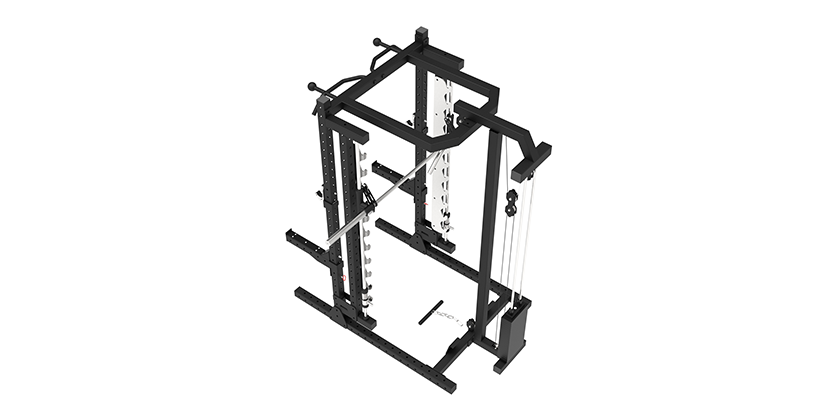
Instead of sourcing a basic frame, look for manufacturers that prioritize accessory compatibility. A premium multifunctional squat rack should serve as a foundation that can evolve alongside a user's training needs—transitioning seamlessly from heavy compound lifts to complex functional movements. By selecting a system designed for integration, you ensure that adding dip stations, cable attachments, or pull-up bars remains a simple upgrade rather than a logistical headache. This strategic approach to sourcing ensures long-term value and prevents the need for total equipment replacement as training requirements change.
Deciding where to source your equipment depends heavily on your specific scale and long-term objectives. This home gym equipment guide highlights two primary procurement paths: the Direct-to-Consumer (DTC) model and the Specialized Equipment Distributor model. Each offers distinct advantages depending on whether you prioritize immediate space efficiency or deep customization options.
DTC brands are often ideal for individual users seeking a streamlined, ready-to-use adjustable training station. These models excel in budget vs. longevity for those who want a predictable, single-box solution. However, for those building larger-scale facilities or highly customized setups, sourcing through a distributor or specialized manufacturer is often more effective. Distributors provide access to a wider array of modular components, allowing you to tailor the footprint to your exact dimensions. While the initial complexity might be higher, the ability to integrate diverse attachments ensures your system remains the most versatile power rack in your collection, capable of evolving through various training modalities without requiring a complete structural overhaul.
Beyond initial dimensions, the true value of a premium system lies in its ability to withstand rigorous, high-frequency use over many years. When vetting a supplier, do not settle for superficial aesthetics; instead, demand transparency regarding structural integrity and quality standards. A professional-grade most versatile power rack must be engineered with high-gauge steel and precision welding to ensure it remains a safe, stable centerpiece. We recommend prioritizing manufacturers that provide documented compatibility testing for all modular attachments, ensuring that every bar, J-cup, or pulley fits perfectly without compromising the frame's stability.
Treating this purchase as a long-term investment means looking beyond the current SKU. A high-tier multifunctional squat rack should offer clear upgrade paths, allowing you to add advanced functional tools or specialized weight storage as your budget or training intensity grows. By selecting a system built on a standardized, modular architecture, you avoid the common pitfall of outgrowing your equipment. This foresight ensures your adjustable training station remains a cutting-edge asset, capable of evolving from a basic lifting station into a sophisticated, multi-modal training hub.
Quality Assurance Standards for Global Export Readiness
When sourcing equipment for a high-end residential or boutique setting, the difference between a temporary fix and a lifelong asset lies in the raw material integrity. To secure the most versatile power rack, buyers must look beyond aesthetics and scrutinize the fundamental engineering. A truly multifunctional squat rack is only as reliable as the steel it is built upon. We recommend prioritizing a high structural steel gauge—typically 11-gauge or thicker—to ensure the frame remains rigid under extreme stress. This heavy-duty construction is non-negotiable for maintaining long-term weight capacity stability during heavy compound movements.
Furthermore, the longevity of an adjustable training station depends heavily on its surface protection. High-quality powder coating durability prevents oxidation and scratches, even in high-humidity environments. For distributors and professional importers, verifying these manufacturing standards is essential to ensure the product survives rigorous shipping and heavy daily use. Investing in superior metallurgy ensures that your home gym equipment guide leads you toward a piece that performs consistently for years without structural fatigue.
To assist in your procurement evaluation, we have synthesized several quality benchmarks into a practical comparison. When vetting manufacturers, use this table to distinguish between entry-level builds and professional-grade units. A premium multifunctional squat rack should exhibit high precision in both its structural composition and its finish quality to meet the demands of diverse training styles.
| Feature Indicator | Standard Commercial Grade | Premium Export Quality |
|---|---|---|
| Steel Thickness | 14-gauge (Standard) | 11-gauge or 7-gauge (High-Density) |
| Welding Precision | Basic MIG welding | Full-penetration, seamless weld joints |
| Rust Resistance | Basic paint finish | Advanced electrostatic powder coating |
| Safety Compliance | Local/General standards | Strict international safety standards |
When evaluating your options, always verify that the manufacturer adheres to rigorous international safety standards. High-tier welding precision ensures that load-bearing points do not become failure zones over time. By prioritizing these technical specifications, you ensure that your investment in the most versatile power rack remains a safe, durable centerpiece for any premium fitness environment.
Beyond the visible frame, true quality is defined by the invisible rigor of the manufacturing process. A premium adjustable training station must maintain its precision through thousands of adjustments, meaning that every hole alignment and pin engagement must be flawless. We suggest that buyers demand evidence of rigorous load-bearing testing, where the structure is subjected to extreme weight cycles to simulate years of heavy lifting. This prevents the gradual loosening or warping that often plagues lower-tier products.
Furthermore, a high-functioning multifunctional squat rack relies on perfect component compatibility. Whether you are adding dip bars, pull-up attachments, or weight storage, the mounting points must remain secure and standardized. Without strict quality control, accessory integration can become a safety hazard due to slight manufacturing deviations. In any comprehensive home gym equipment guide, the emphasis must remain on long-term reliability; ensuring that the rack functions as a cohesive, safe system regardless of how many different training modules are integrated over time.
Common Misconceptions in Home Gym Equipment Selection
A common pitfall for many buyers is the assumption that a premium price tag inherently guarantees a better long-term investment. In the world of strength training, many assume that the most versatile power rack is simply the one with the highest static weight capacity. However, true value is rarely found in sheer load limits alone.
While heavy-duty steel is essential, a multifunctional squat rack derives its true utility from its accessory compatibility. A rack that can only support heavy barbell movements becomes a single-use station once your training evolves. To maximize your ROI, you should look for an adjustable training station that serves as a modular platform. This allows you to integrate dip bars, landmines, or cable attachments without needing to replace the entire unit.
When calculating your cost-per-use vs. initial investment, prioritize a system that grows with your programming. A slightly more affordable unit with high compatibility often provides a much higher utility yield over several years than an expensive, rigid structure that lacks expansion potential.
Another frequent oversight in this home gym equipment guide is the belief that a larger footprint automatically translates to better functional training capabilities. Many buyers mistakenly prioritize massive dimensions, thinking more steel equals more value, while ignoring the critical factor of space efficiency. In a home or boutique setting, the goal is to maximize the utility per square foot, not just the total weight capacity.
The following comparison illustrates how different configurations impact your long-term value based on your specific training objectives and available area:
| Rack Configuration | Primary Benefit | Footprint Impact | Best ROI For... |
|---|---|---|---|
| Basic Squat Stand | Low initial cost | Minimal | Strictly heavy barbell lifting |
| Multifunctional Squat Rack | High accessory integration | Moderate | Hybrid strength and conditioning |
| Full Modular Station | Maximum versatility | Significant | Complete athletic development |
Ultimately, the most versatile power rack is not the one that occupies the most space, but the one that offers the highest density of movement options within your existing environment. Choosing a system that balances robust construction with modular expansion ensures your investment remains relevant as your fitness goals evolve.
One of the most significant misunderstandings in equipment procurement is the distinction between "static" and "dynamic" utility. Many buyers focus exclusively on the static load capacity—how much weight the uprights can hold—while overlooking the potential for functional accessory integration. A heavy-duty squat stand might offer impressive numbers on a spec sheet, but if it lacks the ability to adapt, it becomes a depreciating asset the moment your training style shifts.
To secure a superior ROI, we recommend looking for an adjustable training station that facilitates diverse movement patterns. A truly high-value piece of equipment should transition seamlessly from heavy compound lifts to high-intensity functional work. By selecting a system that supports training variety—such as pull-ups, dips, or cable-based resistance—you ensure long-term utility. Rather than purchasing multiple standalone machines, an integrated approach allows you to expand your capabilities through modular additions, making it the most versatile power rack for any evolving fitness environment.