Evaluating at Home Squat Rack Durability for Retailers
Vetting Manufacturers for Residential Strength Training Equipment
Distributors must distinguish between entry-level consumer models and professional-grade residential strength training equipment. While basic models suffice for casual use, B2B buyers sourcing an at home squat rack for retail inventory must prioritize structural integrity and high-spec fabrication to minimize returns and ensure long-term product reliability.
Standardizing Structural Specifications
The primary differentiator in durability lies in the steel gauge and frame geometry. High-quality inventory should utilize heavy-duty, thick-walled steel rather than thin-gauge tubing common in low-end consumer models. When evaluating a factory's capability, verify that the at home squat rack utilizes consistent welding standards and high-grade steel to prevent structural fatigue under heavy loads. Additionally, the powder coating durability is a critical quality control metric; a premium finish prevents oxidation and surface scratches during shipping and assembly, which is vital for maintaining a high-end brand image in the home fitness market.
To streamline your procurement audit, use the following technical benchmarks to categorize the inventory you are sourcing. This comparison helps differentiate between budget-friendly models intended for light use and premium-tier units designed for high-intensity training environments.
| Tier Level | Steel Thickness (Gauge) | Typical Weight Capacity | Finish Quality & Resilience |
|---|---|---|---|
| Standard Consumer | 14-gauge (approx. 2.0mm) | 200–300 lbs | Basic powder coat; susceptible to minor chipping |
| Premium Residential | 11-gauge (approx. 3.0mm) | 400–600 lbs | High-micron electrostatic coating; scratch resistant |
| Pro-Sumption / Semi-Commercial | 7-gauge (approx. 3.8mm) | 650+ lbs | Industrial-grade finish; high impact & oxidation resistance |
When reviewing manufacturer spec sheets, do not rely solely on the weight capacity claims. A high weight capacity is meaningless if the home gym rack specifications for the uprights and crossmembers do not include high-gauge steel. For distributors, sourcing the premium tier often results in lower long-term return rates and higher customer satisfaction, despite the higher initial COGS (Cost of Goods Sold).
Verifying Quality Control and Logistics Capability
Beyond technical specs, the reliability of your inventory depends on a manufacturer's internal quality control (QC) protocols and logistical stability. A high-tier heavy duty squat rack quality assessment is incomplete without auditing the factory's batch consistency. For distributors, even slight deviations in bolt threading or paint thickness across different production runs can lead to assembly failures and high return rates.
Inquire whether the supplier conducts standardized stress tests on each batch and how they manage MOQ considerations during peak seasons to prevent material substitution. Furthermore, ensure the manufacturer has robust packaging standards to maintain shipping stability. For overseas procurement, equipment must be secured in reinforced, heavy-duty cartons to withstand multi-modal transit without structural deformation or surface damage, protecting your margins from preventable transit-related claims.
Critical Inspection Points for Home Gym Rack Specifications
To differentiate premium inventory from budget-tier options, distributors must look beyond aesthetic appeal and focus on the fundamental engineering of the at home squat rack. High-quality residential equipment is defined by its ability to maintain structural integrity under repetitive mechanical stress and varying environmental conditions.
Structural Integrity and Material Standards
A primary indicator of quality is the steel gauge thickness. While entry-level models may use thinner tubing to reduce shipping costs, premium units typically utilize 11-gauge or 12-gauge steel to ensure long-term durability. Furthermore, the powder coating durability is a vital metric; a high-grade finish prevents oxidation and resists scratches during heavy usage, preserving the product's resale value. When evaluating a unit, the weight capacity vs. stability ratio is critical: a rack may claim a high load limit, but without a wide base or adequate bracing, it may lack the necessary structural stability for safe home training.
| Feature Aspect | Budget Tier (Standard) | Premium Tier (High-End) |
|---|---|---|
| Steel Gauge | 14-gauge or thinner | 11-gauge to 12-gauge |
| Surface Finish | Basic paint coating | High-durability powder coat |
| Stability Profile | Narrower base footprint | Reinforced bracing/Wide base |
| Primary Risk | Structural deflection | Minimal vibration/movement |
Procurement managers should prioritize technical specifications that align with the intended user demographic. A significant variance exists between hardware designed for light functional training and high-performance residential equipment. Utilizing the following technical comparison, buyers can better vet factory capabilities and ensure the inventory matches the advertised load-bearing capacity.
Technical Specification Comparison
| Specification Metric | Standard Residential Model | Heavy Duty Performance Model |
|---|---|---|
| Steel Gauge | 14ga (approx. 2.0mm) | 11ga (approx. 3.0mm) |
| Tubing Dimensions | 2" x 2" (50mm x 50mm) | 3" x 3" (75mm x 75mm) |
| Typical Weight Capacity | 300–500 lbs (135–225 kg) | 600–1,000+ lbs (270–450+ kg) |
| Primary Use Case | Light calisthenics & accessory work | Heavy compound lifting & barbell training |
When sourcing at scale, note that the transition from 14ga to 11ga steel significantly impacts both the unit's gross weight and shipping volume. While premium specifications command higher margins, they also reduce the frequency of customer returns related to structural fatigue or wobbling. Always verify that the manufacturer's weight capacity claims are supported by the tubing diameter and gauge density provided in the technical data sheet.
Mechanical Reliability and Component Precision
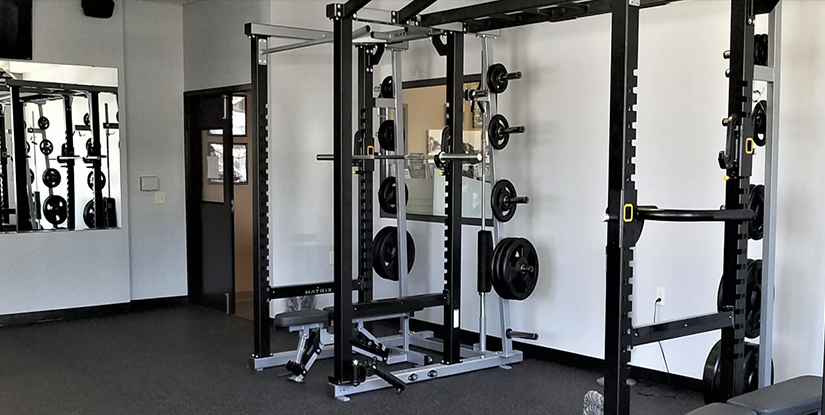
Beyond the static frame, the durability of an at home squat rack depends heavily on the precision of its moving parts. For distributors, the most common source of post-sale dissatisfaction is not the steel itself, but the failure of adjustable components. High-quality hardware must demonstrate tight adjustment pin tolerances to prevent "play" or wobbling during movement. Loose tolerances lead to rattling and eventual mechanical wear, which increases maintenance frequency for the end user.
When inspecting J-cup stability, ensure the mounting interface is robust enough to prevent lateral shifting when a barbell is racked. Furthermore, a critical check for long-term wear resistance involves testing the compatibility between the rack's accessory attachments and various barbell knurling patterns. A high-grade J-cup or barbell holder should be designed to accommodate both aggressive and smooth knurling without damaging the bar or slipping under load. Ensuring these mechanical tolerances are standardized during the factory QC process will significantly lower your return rates and protect your brand reputation in the residential strength training market.
Managing Warranty Claims and Defect Thresholds
For distributors, the financial impact of a faulty at home squat rack extends far beyond the initial replacement cost. High return rates on residential strength training equipment often stem from poorly defined defect thresholds regarding minor cosmetic issues versus critical structural integrity failures. Establishing clear boundaries during the procurement phase is essential to mitigate retailer liability.
When sourcing, differentiate between aesthetic imperfections—such as slight powder coating inconsistencies—and functional defects like weld fractures or bolt-hole misalignment. A robust quality control agreement should specify that warranty claims are strictly reserved for structural deviations that compromise user safety. By setting these rigorous standards with your factory, you protect your margins from the high overhead of processing non-critical returns for home-use products.
Distinguishing Maintenance from Manufacturing Defects
To streamline your claim processing, your team must distinguish between routine upkeep and genuine quality failures. Misclassifying a maintenance issue as a product defect can lead to unnecessary shipping costs and diminished profit margins for high-volume residential orders.
| Feature Area | Wear and Tear (Maintenance/User Issue) | Manufacturing Defect (Warranty Claim) |
|---|---|---|
| Powder Coating | Scratches or chips from barbell contact and regular use. | Bubbling, peeling, or uneven application present upon arrival. |
| Fasteners | Loosening of bolts due to vibration or lack of periodic tightening. | Stripped threads, missing hardware, or incorrect bolt sizing. |
| Weld Integrity | Surface discoloration from environmental exposure. | Cracks, porosity, or separation at critical load-bearing joints. |
| Heavy Duty Squat Rack Quality | Minor surface abrasions on uprights from barbell movement. | Structural misalignment or bent tubing from the factory line. |
Educating your end-users on basic upkeep—such as periodic bolt tensioning—reduces the frequency of preventable returns. When negotiating with suppliers, ensure that the heavy duty squat rack quality standards you demand are clearly defined by these technical distinctions to simplify your dispute resolution process.
To further insulate your business from the volatility of after-sales service, implement a structured policy regarding maintenance cycles and consumer misuse. Many claims against residential strength training equipment arise not from poor manufacturing, but from failure to follow standard home gym rack specifications, such as uneven floor surfaces or overloading the weight capacity. Clearly define in your documentation that the warranty does not cover structural failure caused by improper assembly or exceeding the weight limit.
Furthermore, optimize your inventory strategy by negotiating a dedicated MOQ for spare components. Instead of processing full-unit returns for minor broken parts, maintain a stock of high-turnover replacement parts—such as J-cups, safety spotter arms, or specific hardware kits. This approach allows you to resolve customer issues rapidly through parcel shipping rather than expensive freight-in returns, preserving both your reputation and your bottom line.
Optimizing Inventory via Heavy Duty Squat Rack Quality Standards
For distributors, the true cost of an at home squat rack is not found in the initial unit price, but in the lifecycle management of the product. Selecting low-grade materials to lower entry costs often results in higher return rates and diminished brand trust within the residential strength training equipment market.
Material Specifications and Long-Term Value
High-quality residential strength training equipment relies on specific metallurgical standards to ensure structural integrity under repetitive loading. When sourcing, prioritize the steel gauge; for instance, a 11-gauge steel frame offers significantly higher long-term value and safety margins than thinner 14-gauge alternatives commonly found in budget imports. Furthermore, the powder coating durability is a critical metric for retailers. A resilient, multi-layer coating prevents oxidation and unsightly chipping, which are the primary drivers of customer dissatisfaction and warranty claims in home environments.
| Specification Component | Standard/Low-Grade Impact | High-Quality/Premium Impact |
|---|---|---|
| Steel Thickness | 14-gauge (Higher flex risk) | 11-gauge (Superior rigidity) |
| Surface Finish | Basic spray (Prone to chipping) | Industrial powder coat (High abrasion resistance) |
| Total Cost of Ownership | Higher due to returns/replacements | Lower due to durability and brand loyalty |
Determining the optimal price point for your catalog requires a calculated cost-benefit analysis of various configurations. A single product line cannot serve every customer segment; instead, a tiered approach allows you to capture both the value-conscious beginner and the enthusiast seeking a heavy duty squat rack quality standard.
Tiered Configuration Comparison
When evaluating home gym rack specifications, distributors should categorize inventory into "Entry-Level" and "Pro-Sumption" tiers. While entry-level models facilitate higher volume and lower MOQs, they often sacrifice load capacity and steel thickness to maintain a competitive retail price. Conversely, premium tiers justify a higher MSRP through enhanced stability and increased weight capacity, which reduces the risk of structural fatigue over years of use.
| Configuration Tier | Typical Steel Gauge | Estimated Weight Capacity | Target Retail Segment |
|---|---|---|---|
| Budget/Entry-Level | 14-gauge | 300 – 500 lbs | Casual/Beginner Users |
| Mid-Range/Standard | 12-gauge | 500 – 750 lbs | Dedicated Home Athletes |
| Premium/High-End | 11-gauge | 750+ lbs | Serious Lifters/Semi-Pro |
From a procurement standpoint, stocking a mix of these tiers optimizes your ROI. High-volume, lower-margin entry-level units drive consistent cash flow, while premium-spec racks build your reputation as a reliable supplier of high-durability residential strength training equipment.
Balancing Manufacturing Complexity and Logistics
Optimizing your purchase orders requires a deep understanding of how manufacturing complexity impacts both the final unit price and the total landed cost. High-end designs featuring integrated cable systems or complex folding mechanisms often demand higher MOQs and more intricate assembly requirements, which can strain your warehouse labor and increase potential error rates during final setup.
To protect your wholesale margins, prioritize component standardization across different product lines. By sourcing an at home squat rack series that utilizes uniform bolts, uprights, and hardware, you can streamline your inventory management and reduce shipping volume through more efficient nested packaging. A modular approach—where a basic frame can be upgraded with optional accessories—allows you to maintain a leaner SKU count while offering the versatility that high-end residential consumers demand.
Logistics and Packaging Strategies for High-Volume Orders
Optimizing the landed cost of residential strength training equipment requires looking beyond the initial factory invoice. For distributors, the true expense of an at home squat rack is often determined by the efficiency of the transit phase and the resilience of the supply chain logistics.
The Impact of Packaging on Retail Margins
When sourcing high-volume orders, the relationship between protective packaging and final profitability is direct. Neglecting heavy-duty boxing or inadequate corner protection leads to shipping damage, such as bent uprights or scratched powder coatings. Even minor cosmetic defects can trigger costly customer returns or complete refusals at the doorstep. For a retailer, these incidents do more than just reduce the landed cost; they erode retail margins through secondary shipping fees and diminished brand trust. Investing in reinforced, multi-layer corrugated cardboard and custom foam inserts is a necessary upfront cost to safeguard the structural integrity of the product during long-haul maritime or overland transit.
To balance freight expenditures with the necessity of maintaining heavy duty squat rack quality, procurement managers must select a configuration that matches their specific distribution model. Standardized packaging may lower the initial bill, but it often increases the risk of transit-related defects that impact your bottom line.
Comparing Shipping Configurations for Inventory Stability
The following table compares common packaging tiers used when importing at home squat rack units to help you determine the most cost-effective strategy for your regional fulfillment centers.
| Configuration Type | Packaging Specifications | Weight/Volume Impact | Best Use Case |
|---|---|---|---|
| Standard Export | Single-wall corrugated box with basic foam inserts. | Lowest weight; optimizes container space. | Low-cost, budget-tier residential models. |
| Reinforced Commercial | Double-wall heavy-duty cardboard with high-density EPS protection. | Moderate weight increase; higher volume per unit. | High-end home gym retailers and distributors. |
| Premium Crating | Custom wooden crate or reinforced palletizing. | Significant weight/volume increase; maximizes stability. | Bulk ocean freight or high-value specialized equipment. |
While reinforced options may slightly increase your volume-based freight costs, the reduction in damage-related claims typically provides a higher ROI for retailers focused on premium residential strength training equipment. Choosing the right balance ensures that the product arrives in showroom condition, protecting your service reputation and long-term margins.
Maximizing Profitability Through MOQ and Container Optimization
To achieve the best possible distributor ROI, procurement strategies must shift focus toward container optimization and high-volume ordering. Relying on small, frequent shipments often leads to high per-unit freight expenses that can quickly consume your margins. Instead, professional buyers should align their MOQ (Minimum Order Quantity) requirements with full container load (FCL) capacities to maximize logistics efficiency.
Effective bulk shipping involves more than just hitting a volume target; it requires precise coordination with manufacturers to ensure that every cubic meter of a 40ft HC container is utilized. By selecting home gym rack specifications that are designed for stackability or nested shipping, you can increase the number of units per shipment. This strategic approach reduces the landed cost per unit and provides a buffer against fluctuating ocean freight rates, ensuring your inventory remains competitively priced in the North American market.
Calculating Landed Cost and Total Value of Ownership
Distributors often mistake a low unit price for a high-margin opportunity. When sourcing residential strength training equipment, the true profitability of an at home squat rack depends on the relationship between the initial landed cost and the long-term return rates. Low-quality builds frequently result in high defect claims and expensive reverse logistics, which quickly erode net profits.
| Procurement Factor | Economy Grade Sourcing | Premium Residential Grade |
|---|---|---|
| Initial Landed Cost | Lower (Low MOQ/Basic Steel) | Moderate (High-Gauge Steel) |
| Return Rates | Higher due to assembly/structural issues | Minimal due to precision engineering |
| Brand Reputation | Short-term volume focus | Long-term loyalty and repeat orders |
| Total Cost of Ownership | High (Includes support/returns) | Optimized (Reliable fulfillment) |
To maximize ROI, procurement managers must look beyond the factory invoice. A superior at home squat rack minimizes the total cost of ownership by reducing customer support overhead and preventing the margin erosion caused by faulty components. Prioritizing structural integrity during the selection phase ensures a more predictable and profitable inventory cycle.
Tiered Specification Analysis for Sourcing Decisions
Evaluating different manufacturing tiers requires a granular look at technical specifications rather than just price-per-unit. For distributors, the trade-off between shipping volume and material thickness determines whether a product is a high-turnover budget item or a high-value centerpiece for a premium home gym catalog. A slight increase in steel gauge or coating quality can significantly lower the long-term maintenance frequency and customer complaints.
| Technical Specification | Budget Tier (Entry-Level) | Mid-Range (Standard Home Gym) | Premium (High-End Residential) |
|---|---|---|---|
| Steel Gauge | 14-gauge (Thinner) | 11-gauge (Standard) | 7-gauge to 11-gauge (Heavy Duty) |
| Powder Coating | Basic Electrostatic | Scratch-Resistant Matte | Industrial-Grade High Durability |
| Logistics Impact | High Volume / Lower Weight | Moderate Density | Lower Volume / High Density/Weight |
| Maintenance Frequency | Frequent (Bolt/Joint Tension) | Occasional (Annual Check) | Minimal (Long-term Stability) |
Choosing a mid-range or premium option may increase the initial shipping and freight costs due to higher weight and density. However, from a procurement standpoint, investing in higher-gauge steel and superior powder coating reduces the risk of structural fatigue. This strategic selection helps maintain a high standard of quality control across your entire inventory line.
Optimizing your bottom line requires a delicate balance between Minimum Order Quantity (MOQ) and product reliability. While lower MOQs might seem attractive for testing market demand, they often lack the economies of scale necessary to drive down unit costs. Conversely, over-ordering low-spec inventory can lead to stagnant inventory turnover if the product fails to meet consumer expectations for heavy duty squat rack quality.
To protect your margins, implement a rigorous quality control (QC) protocol during the manufacturing phase. Verifying structural tolerances and weld strength at the factory level prevents the common pitfall of high customer support overhead caused by assembly difficulties or part mismatches. By investing in a more robust supply chain and ensuring high manufacturing standards, you reduce the frequency of costly returns and protect your brand's long-term market position.