Finding the Most Compact Squat Rack for Small Home Gyms
Optimizing SKU Breadth and Inventory Turnover for Compact Strength Solutions
A most compact squat rack refers to a specialized strength training station engineered to minimize footprint without sacrificing structural integrity. B2B buyers and distributors prioritize these units because they cater to the rapidly growing niche of residential fitness markets and boutique studio setups where floor space is a premium commodity.
When evaluating your inventory, it is essential to understand that price points are often dictated by the complexity of the build. While mass-market, standard-sized racks benefit from economies of scale, finding the most compact squat rack often requires specialized engineering vs. mass-market models. High-density steel and advanced folding mechanisms increase production costs but offer higher value to the end-user. For distributors, balancing a space saving power rack with traditional heavy-duty equipment is a strategic move. While high-spec folding squat rack options may carry a higher initial unit cost, they often command better margins due to their specialized utility. Navigating these budget considerations requires a keen eye for how structural innovation drives both the retail premium and the long-term demand in space-constrained environments.
Understanding the investment landscape is vital when sourcing small home gym equipment. The cost per unit typically scales with the sophistication of the mechanical components and the grade of the steel used. For distributors, the goal is to match the right product tier to the specific client needs, whether they are looking for entry-level residential setups or premium boutique studio solutions.
Generally, the market is divided into three distinct tiers based on the footprint vs. durability ratio. While basic models offer lower entry prices, advanced folding squat rack options provide much higher utility for urban clients. Below is a comparative overview to help you assess the value proposition of different categories:
| Rack Category | Primary Value Driver | Typical Use Case | Price Position |
|---|---|---|---|
| Basic Wall-Mounted | Minimal Footprint | Light Residential | Budget-Friendly |
| Standard Compact | Stability & Versatility | Home Gyms/Studios | Mid-Range |
| Premium Folding | Advanced Engineering | High-End Boutique/Apartments | Premium Tier |
When selecting the most compact squat rack for your inventory, remember that higher-priced, specialized units often yield better long-term turnover in markets where space-saving is the primary pain point.
Beyond the initial purchase price, savvy buyers should view these units as a long-term investment rather than a simple commodity expense. The most cost-effective strength training strategy involves prioritizing versatility and modularity over the cheapest possible entry point. A rack that offers expandable attachment points or adjustable heights allows the user to evolve their training without replacing the entire structure. For distributors and high-volume clients, sourcing equipment with high modularity ensures that the product remains relevant as the consumer's fitness goals progress. By selecting high-quality, adaptable small home gym equipment, you reduce the frequency of replacement cycles and minimize the total cost of ownership. Investing in a robust, multi-functional station prevents the need for frequent upgrades, providing much higher value to the end-user and building stronger brand loyalty in the competitive residential fitness market.
The Footprint Dilemma: Balancing High-Density Training with Facility Constraints
For many residential users and boutique studio owners, the primary obstacle to a high-performance setup isn't strength—it is square footage. In modern residential settings, the desire for heavy compound movements often clashes with the reality of limited real estate. This creates a significant tension: how do you integrate high-intensity small home gym equipment without sacrificing the safety and mobility required for heavy lifting? The search for the most compact squat rack is rarely just about finding the smallest unit; it is about navigating the critical trade-off between footprint vs. stability.
When space is at a premium, there is a constant risk of over-optimizing for size at the expense of structural integrity. A rack that is too light or lacks a wide enough base may save floor space, but it fails the most basic requirement of heavy barbell training: staying grounded during a lift. Whether you are sourcing for a private client or optimizing a small-scale fitness studio, understanding this equilibrium is essential to ensuring that your space saving power rack provides both a minimal profile and maximum reliability.
To effectively navigate these constraints, we categorize available solutions into three distinct architectural profiles. Depending on whether your priority is permanent stability or temporary utility, your selection criteria will shift. For instance, a dedicated space saving power rack might offer the rigidity required for heavy squats but remains a fixed element in the room. Conversely, folding squat rack options offer unparalleled versatility for multi-purpose rooms, allowing the equipment to "disappear" when training sessions conclude.
The following comparison helps identify which footprint aligns with your specific environmental limitations:
| Type | Footprint | Best For | Mobility |
|---|---|---|---|
| Wall-Mounted Folding | Minimal (Retractable) | Multi-purpose rooms/Garages | High (Stows against wall) |
| Compact Fixed Frame | Low (Fixed Base) | Dedicated home strength zones | Low (Static placement) |
| Slim Profile Modular | Moderate (Variable) | Boutique studio optimization | Medium (Easy to reposition) |
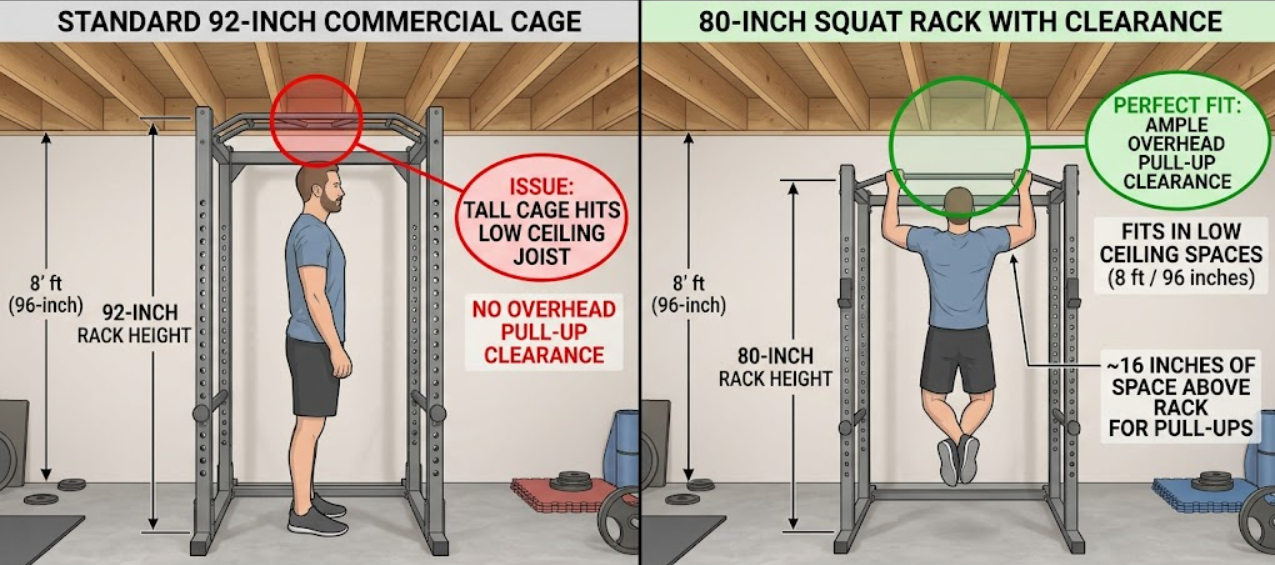
When evaluating these models, do not merely look at the floor dimensions. Consider the "vertical footprint" and the clearance required for barbell movement to ensure your most compact squat rack choice doesn't hit low-hanging ceilings or obstacles during a lift.
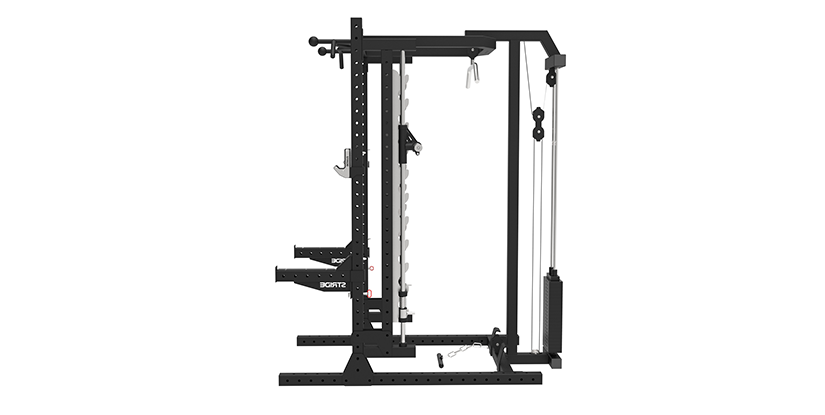
Before finalizing your procurement, you must look beyond the physical dimensions of the equipment itself. A common oversight in small-scale setups is failing to account for the functional volume required during a lift. To ensure a safe and professional training environment, we recommend establishing strict clearance zones around your selected unit. This includes not just the rack's frame, but the full length of the barbell and the lateral space needed for a lifter to approach and exit the bar safely.
Establishing these safety margins is non-negotiable. You should plan for a minimum of 3 to 4 feet of unobstructed space on all sides of the rack to accommodate plate loading and movement. Furthermore, do not overlook floor protection; whether you are installing in a garage or a high-end residence, high-density rubber matting is essential to dampen vibration and prevent structural damage to the subfloor. Proper preparation ensures that your small home gym equipment remains a permanent asset rather than a liability to the facility.
Evaluating Structural Integrity in Space Saving Power Racks
A common misconception among boutique gym owners and home enthusiasts is that a smaller footprint inherently compromises heavy-duty performance. When sourcing the most compact squat rack, the fear is often that reduced dimensions lead to instability under heavy loads. However, true structural integrity is not determined by the size of the base, but by the quality of the materials and the engineering of the joints. A high-quality space saving power rack utilizes heavy-gauge steel and precision welding to ensure that a minimal footprint does not result in a lack of safety.
To maintain the perfect balance of stability vs. footprint, manufacturers focus on the thickness of the steel tubing. While a standard rack might use lighter materials, a professional-grade compact unit relies on a higher steel gauge to prevent bowing or wobbling during high-intensity lifts. When evaluating your procurement options, consider how the structural density compensates for the reduced surface area.
| Construction Feature | Lightweight Models | Professional Compact Racks |
|---|---|---|
| Standard Steel Gauge | 11-gauge or thinner | 7-gauge to 11-gauge heavy-duty |
| Structural Focus | Portability over load | High structural integrity |
| Stability Profile | Prone to vibration | Optimized stability vs. footprint |
| Best Use Case | Casual home use | High-frequency strength training |
Beyond fixed steel dimensions, the mechanical design dictates how the equipment handles various training intensities. For instance, folding squat rack options offer unparalleled versatility for extremely tight quarters, yet they introduce more moving parts that must be rigorously tested for wear. When selecting small home gym equipment, you must distinguish between a unit designed for light accessory work and one built for serious barbell training. A professional-grade unit should maintain a high weight capacity even when the mechanism is engaged, ensuring the user feels secure during heavy sets.
The relationship between usage frequency and durability is critical. If the rack is intended for daily, high-volume training, the pivot points in folding models or the bolt-together joints in modular racks must be engineered for longevity. While a smaller footprint is the primary goal, the ultimate metric of quality is whether the rack maintains its stability under the dynamic load of a moving barbell. Always prioritize designs that utilize reinforced gussets and high-tensile steel to ensure that your pursuit of space efficiency never compromises your safety or your training progress.
When sourcing the most compact squat rack, the true test of durability lies in the microscopic details of construction. For those performing heavy lifting, even a slight tremor in the frame can be a major distraction or a significant safety hazard. We recommend scrutinizing the welding quality of the uprights and crossmembers; seamless, deep-penetration welds are essential to prevent structural fatigue over time. In many small home gym equipment configurations, the integrity of bolt-on components becomes a primary failure point if the hardware is substandard.
To ensure long-term reliability, look for high-tensile fasteners and reinforced connection points that can withstand the dynamic forces of a barbell being racked. High-quality folding squat rack options must feature robust pivot pins and heavy-duty locking mechanisms to ensure the frame remains rigid during a lift. Ultimately, a premium space saving power rack should feel like a single, solid unit rather than a collection of loosely connected parts, providing the confidence necessary for high-intensity strength training.
Comparing Folding Squat Rack Options for Residential and Boutique Settings
When sourcing small home gym equipment, the primary challenge lies in navigating the divide between convenience and heavy-duty performance. For many end-users, the most compact squat rack is often a folding model designed to disappear against a wall when not in use. However, from a procurement perspective, we must distinguish between basic residential units and high-performance boutique studio models.
Residential folding squat rack options typically prioritize a minimal footprint to accommodate tight living spaces, often utilizing lighter gauge steel. While these are excellent for general fitness, they may lack the rigidity required for high-frequency use. In contrast, boutique studio models are engineered as a space saving power rack that maintains uncompromising stability. These professional-grade units utilize thicker steel tubing and reinforced bracing to ensure that even with a reduced footprint, the structural integrity remains sufficient for heavy compound lifts. Understanding this trade-off between spatial efficiency and load-bearing capacity is essential for distributors looking to satisfy both casual enthusiasts and serious strength athletes.
To help you determine which category aligns with your inventory or personal installation needs, we have categorized the most common folding squat rack options. While both styles aim to maximize utility, their mechanical execution and durability profiles differ significantly based on the intended environment.
| Dimensions (Folded) | Usage Intensity | Stability Level | Best For |
|---|---|---|---|
| Ultra-Slim (4-6 inches) | Low to Moderate | Standard/Light | Residential/Home Use |
| Compact (8-12 inches) | High/Daily | Professional/Heavy | Boutique Studios/Small Gyms |
When selecting the most compact squat rack for a commercial client or a high-end home setup, do not overlook the hardware. A high-quality space saving power rack should not compromise on the thickness of the steel or the precision of the folding mechanism. For distributors, ensuring that the small home gym equipment meets these structural benchmarks is the key to reducing return rates and maintaining long-term brand reputation in the fitness industry.
Optimizing your layout requires a strategic look at how often the equipment will be utilized. For users with daily, high-intensity training goals, the necessity of a permanent fixture often conflicts with the desire for floor space optimization. This is where wall-mounted folding racks become indispensable. Unlike standalone units that occupy a fixed area, these systems offer significant space-saving benefits by utilizing vertical real estate, effectively reclaiming the room once the session ends.
When evaluating these products, consider the installation environment. If the goal is a high-traffic boutique setting, the rack must be anchored with industrial-grade fasteners to ensure the most compact squat rack remains immobile under heavy loads. For those sourcing for residential markets, the focus shifts to ease of deployment and a seamless transition from a functional training station to an unobtrusive wall feature. Whether you are a distributor or a high-end end-user, matching the mounting strength to the intended intensity is the most critical step in maximizing utility without sacrificing safety.
Sourcing Versatility: Small Home Gym Equipment for Diverse Market Demands
The fitness landscape is shifting toward residential and boutique settings, where square footage is at a premium. As consumers increasingly prioritize high-quality small home gym equipment, the demand for space optimization has moved from a luxury to a necessity. For distributors and retailers, this shift represents a significant opportunity to capture the growing "at-home athlete" demographic. Providing the most compact squat rack that does not sacrifice structural integrity allows you to cater to a market that values both high-performance training and minimal footprints.
Understanding these market trends is essential for maximizing your return on investment. A product that offers extreme versatility—such as a unit that can be easily integrated into a multi-functional workout space—ensures higher turnover and broader consumer appeal. By sourcing equipment designed for efficiency, you are not just selling a single piece of hardware; you are providing a solution for the modern, space-constrained lifestyle, driving long-term value for both your inventory and your end-users.
To optimize your procurement strategy, it is essential to categorize equipment based on how it balances physical footprint against structural durability. Different consumer segments require different levels of stability, and selecting the right tier of space saving power rack models will directly impact your inventory turnover and customer satisfaction. Below is a comparison to help you navigate the various folding squat rack options and stationary models available in the current market.
| Equipment Type | Footprint | Stability Level | Price Tier | Ideal User |
|---|---|---|---|---|
| Wall-Mounted Folding Unit | Minimal (Retractable) | High (Fixed to Structure) | Mid-Range | Apartment Dwellers / Urban Athletes |
| Compact Half Rack | Moderate | Very High | Premium | Serious Lifters / Small Studio Owners |
| Multi-Functional Station | Small / Integrated | Moderate | Entry to Mid | General Fitness Enthusiasts |
When sourcing the most compact squat rack for your catalog, consider that a higher price tier often correlates with superior stability and long-term durability. For distributors targeting high-end boutique clients, prioritizing a space saving power rack with heavy-duty steel construction is often more profitable than low-cost, lightweight alternatives that may fail under heavy loads.
Prioritizing Long-Term Value and Reliability
From a procurement standpoint, the true ROI of your inventory is found in the lifecycle of the product. While budget-friendly options may offer lower entry costs, prioritizing high-quality, multi-functional training gear ensures that your clients receive a reliable tool rather than a temporary fix. Investing in a most compact squat rack that features heavy-duty steel and precision welding provides a long-term investment for the end-user, which in turn fosters brand loyalty and trust in your distribution capabilities.
Rigorous quality assurance is the cornerstone of successful wholesale sourcing. When you select folding squat rack options or stationary models built for durability, you significantly reduce the frequency of returns and warranty claims. By focusing on equipment that maintains structural integrity through years of intense use, you position your business as a premium provider. This commitment to excellence ensures high levels of customer satisfaction, driving repeat business and establishing your reputation in the competitive small home gym equipment market.
Logistics and Assembly Considerations for Low-Volume, High-Efficiency Units
When sourcing the most compact squat rack for a boutique setting or a residential project, the logistical complexity often lies in the unseen trade-off between portability and structural integrity. A common pitfall for buyers is overlooking the shipping weight vs. stability ratio. While lighter components reduce freight costs and simplify the unboxing experience, an overly lightweight space saving power rack may lack the necessary ballast to remain stationary during heavy compound lifts.
From a procurement standpoint, you must evaluate the assembly time and tool requirements before finalizing an order. High-efficiency units designed for tight footprints often utilize modular designs to fit through standard doorways, but this can lead to more complex bolt patterns. We recommend verifying if the unit requires specialized industrial tools or if standard hex keys suffice. For distributors and high-end home gym builders, ensuring the manufacturer provides a streamlined assembly process is vital to maintaining client satisfaction and minimizing on-site setup friction.
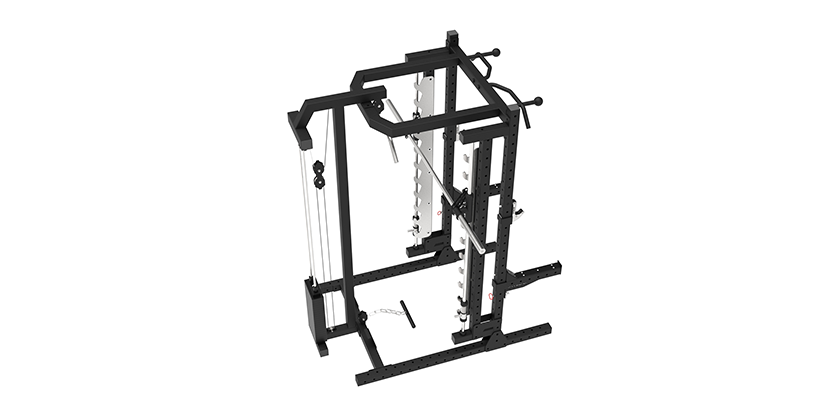
Once the unit is installed, implementing a consistent upkeep protocol is essential to preserve long-term durability. Unlike static structures, folding squat rack options feature mechanical pivot points and folding mechanisms that require regular attention. To prevent friction-induced wear, the lubrication of moving parts—specifically the hinges and sliding rails—should be performed quarterly using a high-quality silicone-based lubricant. This ensures smooth transitions and prevents the mechanical stiffness often seen in lower-quality small home gym equipment.
Structural integrity depends heavily on a strict bolt tightening schedule. High-impact training can gradually loosen fasteners over time; we advise a monthly inspection of all connection points to ensure the frame remains rigid. Additionally, to maintain the aesthetic and structural life of the steel, proactive rust prevention is necessary, especially in humid environments or non-climate-controlled basements. Finally, never overlook floor protection. Utilizing high-density rubber mats not only stabilizes the unit but also protects the flooring from the concentrated pressure of the rack's footprint, ensuring your investment remains a permanent fixture in any high-efficiency training space.
To assist in your procurement decision, we have developed a profile comparison. Selecting the most compact squat rack requires balancing the convenience of installation against the long-term maintenance needs of the specific environment. Whether you are sourcing for a client with limited storage or a high-traffic boutique studio, understanding these logistics profiles will help you mitigate post-purchase dissatisfaction.
| Rack Type | Assembly Complexity | Maintenance Frequency | Ideal User | Footprint Impact |
|---|---|---|---|---|
| Standard Compact Rack | Moderate (Standard Tools) | Low (Monthly Bolt Check) | Dedicated Home Athletes | Minimal Permanent Footprint |
| Space Saving Power Rack | High (Modular/Bolted) | Medium (Rail Lubrication) | Boutique Studio Owners | Versatile/Expandable |
| Folding Squat Rack Options | Complex (Pivot Points) | High (Hinge/Mechanism Care) | Multi-use Room Owners | Ultra-Low (Wall-Mounted) |
When evaluating small home gym equipment, remember that higher mechanical complexity often translates to a higher requirement for routine upkeep. For distributors, prioritizing units with intuitive assembly and durable mechanical components will reduce the frequency of support requests and ensure a seamless user experience.
Lifecycle maintenance planning for busy facilities
When investing in high-quality small home gym equipment, many buyers overlook the long-term operational requirements. For those utilizing a most compact squat rack, the mechanical complexity of folding mechanisms or wall-mount systems necessitates a disciplined maintenance schedule. Neglecting routine checks can lead to structural instability, which is a significant liability in any strength training environment.
To ensure the longevity of your investment, we recommend a quarterly inspection protocol. Focus primarily on bolt tightening across all connection points and pivot joints; constant weight loading can cause fasteners to loosen over time. Additionally, regular lubrication of moving parts and sliding rails is essential to prevent friction-induced wear. By maintaining these standards, you ensure that your space saving power rack remains a reliable, high-performance asset, preserving both its structural integrity and its resale value for years to come.
To streamline your facility management, we have developed a practical checklist. This is particularly vital when managing folding squat rack options, where moving parts are more susceptible to wear and tear than static structures. Consistent oversight ensures that your equipment remains within its intended weight capacity and operational safety limits.
| Component Area | Maintenance Task | Frequency | Safety Check Focus |
|---|---|---|---|
| Folding Mechanisms | Lubricate pivot points and hinges | Quarterly | Smooth movement and locking engagement |
| Structural Bolts | Torque check all fasteners | Every 6 Months | No loose connections under load |
| Wall Mounts/Brackets | Inspect mounting surfaces | Bi-Annually | Wall integrity and fastener stability |
| Weight Bearing Rails | Clean and inspect for debris | Monthly | Smooth sliding without friction |
Implementing this safety check routine minimizes downtime and prevents premature degradation. For distributors and facility managers, prioritizing these small intervals of care is the most cost-effective way to protect the long-term durability of your most compact squat rack inventory.
Beyond mechanical adjustments, environmental control plays a decisive role in the long-term durability of your inventory. Even the highest-grade powder coating can succumb to environmental stressors if the installation site is not properly managed. We frequently advise clients to monitor humidity levels, especially in basement installations or non-climate-controlled garage settings. High moisture content can accelerate oxidation on exposed steel surfaces and pivot points, potentially compromising the structural integrity of a space saving power rack over time.
Furthermore, the physical interface between the equipment and the structure is a critical oversight area. Utilizing high-density rubber mats or specialized floor protection solutions is not just about noise reduction; it is a preventative measure against vibration-induced loosening of floor anchors. By controlling the ambient environment and ensuring a stable, dry foundation, you mitigate the risks of corrosion and structural settling. This proactive approach to environmental management ensures that your folding squat rack options remain a high-value, reliable asset for the duration of their functional lifecycle.