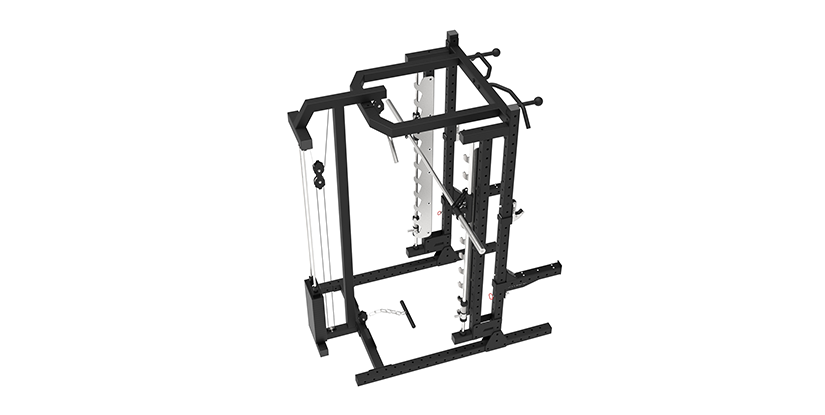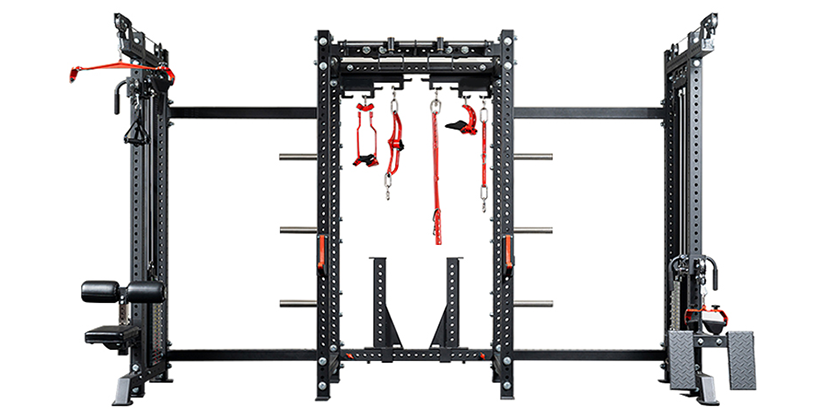
Half Rack Functional Trainer Installation and Safety Guide
Prioritizing Structural Integrity and Material Longevity
Distributors often mistake lower initial unit costs for better margins, frequently sourcing equipment with thin-walled tubing that fails under heavy use. A superior procurement strategy focuses on the half rack functional trainer specifications that ensure long-term ROI, specifically targeting heavy-gauge steel and high-grade finishes to withstand rigorous commercial cycles.
For a professional commercial cable machine setup, the structural foundation determines the equipment's lifespan. We recommend verifying the steel gauge; high-traffic facilities typically require a minimum of 11-gauge steel for the main uprights to prevent bowing or structural fatigue. Furthermore, the quality of the powder coating is a critical metric for durability. A premium, electrostatic powder coating provides essential resistance against oxidation and surface abrasions caused by constant accessory changes and high-traffic usage, protecting your investment from premature aesthetic and structural degradation.
Standardizing Material Specifications for High-Volume Facilities
To mitigate the risk of premature wear, procurement managers should implement a standardized checklist when auditing factory capabilities. The difference between entry-level and professional-grade components is often found in the subtle metallurgy and finishing processes. The following table outlines the technical benchmarks necessary for distinguishing between standard retail-grade builds and high-durability commercial configurations.
| Feature Specification | Standard/Light Commercial Grade | Premium Commercial/High-Traffic Grade |
|---|---|---|
| Steel Upright Gauge | 12–14 Gauge Steel | 11-Gauge Heavy-Duty Steel |
| Weight Stack Durability | Standard Nylon Bushings | High-Density Polyurethane or Bronze Bushings |
| Surface Coating Type | Basic Liquid Paint/Light Powder | Multi-Stage Electrostatic Powder Coating |
| Pulley System Material | Standard Nylon/Zinc Alloy | Precision Machined Aluminum or Steel |
When managing functional trainer assembly at scale, prioritizing these higher specifications reduces long-term maintenance calls and parts replacement frequency. High-density coatings and thicker steel profiles are not merely luxury upgrades; they are fundamental requirements for maintaining structural safety and brand reputation in professional strength and conditioning environments.
Evaluating Factory QC and Logistics Reliability
Reliability extends beyond raw materials into the precision of the functional trainer assembly process. A robust procurement strategy requires auditing a factory’s internal QC processes to ensure every bolt and cable pulley meets strict gym equipment safety protocols. Inconsistent welding or loose tolerance in the guide rods can lead to catastrophic failure in a high-traffic commercial setting.
When negotiating MOQ and shipping terms, verify that the manufacturer utilizes reinforced, moisture-controlled packaging. For heavy steel components, substandard logistics planning often results in transit damage that compromises structural stability. Ensure your supplier provides detailed assembly schematics and rigorous testing reports for cable tension and weight stack smoothness. Vetting these operational standards prevents the high cost of onsite repairs and ensures your equipment remains a safe, reliable asset for the long term.
Quality Control Audits for Cable Systems and Structural Integrity
For distributors and facility managers, the long-term ROI of a half rack functional trainer depends entirely on the quality of its moving parts. Unlike static racks, a commercial cable machine setup faces constant friction and tension, making rigorous quality control essential to prevent premature failure.
High-traffic environments demand superior structural integrity to mitigate liability risks. During the sourcing process, prioritize manufacturers that implement strict testing for cable tensile strength and pulley smoothness. Neglecting these standards leads to rapid wear and tear, resulting in unexpected downtime and increased maintenance costs. Ensuring the durability of both the steel frame and the internal cable mechanisms is a critical step in protecting your capital investment and maintaining operational safety.
Technical Inspection Benchmarks for Component Longevity
Evaluating a supplier's factory capability requires looking beyond the frame dimensions. Procurement managers should request specific technical tolerances for the mechanical assemblies. A high-quality unit must demonstrate consistency in both the tension delivery and the frame's resistance to lateral oscillation under heavy load. Use the following benchmark table to audit incoming shipments or evaluate product spec sheets against standard commercial gym safety protocols.
| Inspection Point | Standard Requirement | Failure Indicator |
|---|---|---|
| Cable Sheath Integrity | Smooth, non-frayed nylon/polyurethane coating | Visible wire exposure or cracking |
| Pulley Smoothness | Zero lateral play; consistent rotation under load | Grinding sounds or jerky movement |
| Frame Weld Strength | Uniform, seamless beads on all structural joints | Pitting, uneven penetration, or surface cracks |
When managing functional trainer assembly for large-scale distribution, verify that all load-bearing fasteners are grade-appropriate. A failure in pulley alignment or a weak weld not only increases maintenance frequency but also compromises the long-term safety of the facility.
To optimize maintenance cycles, implement a tiered audit schedule based on facility usage density. In high-volume commercial gyms, a quarterly inspection of cable tension and weight stack travel is standard practice. Relying on low-grade components or substandard functional trainer assembly can lead to catastrophic failures that exceed your load-bearing capacity tolerances. To meet global B2B procurement standards, ensure your supplier provides documentation regarding the metallurgical quality of the steel and the durability of the pulley housing. Investing in high-spec, industrial-grade components reduces the frequency of part replacement and secures a much lower total cost of ownership over the equipment's lifespan.
Managing Warranty Claims and Component Replacement Logistics
Understanding the distinction between structural warranties and consumable replacement cycles is vital for calculating the long-term Total Cost of Ownership (TCO). While the primary frame of a half rack functional trainer typically carries a long-term structural guarantee, the moving components require a different procurement strategy.
Differentiating Structural vs. Consumable Parts
A professional commercial cable machine setup involves both static steel structures and high-wear mechanical interfaces. Distributors should categorize parts into two distinct groups to manage client expectations and inventory levels effectively.
| Component Category | Typical Items | Maintenance/Replacement Logic |
|---|---|---|
| Structural Frame | Uprights, Base, Crossbars | Long-term warranty; rarely requires replacement unless damaged by impact. |
| Wear Parts | Cables, Pulleys, Upholstery | Subject to regular maintenance cycles; replaced based on usage density. |
| Mechanical Parts | Selectorized pins, Weight stacks | Routine inspection required to prevent friction-related degradation. |
Efficient functional trainer assembly and upkeep depend on having a reliable supply chain for wear parts. For high-traffic facilities, we recommend stocking replacement cables and pulley systems in advance to minimize equipment downtime during standard service intervals.
Optimizing Replacement Strategy: OEM vs. Generic Components
When managing a fleet of equipment, procurement managers must choose between high-fidelity replacement parts and budget-friendly alternatives. The decision impacts not only the immediate budget but also the long-term reliability of the cable system and the safety of the end-user.
| Evaluation Metric | OEM Replacement Parts | Generic/Third-Party Components |
|---|---|---|
| Lead Times | Moderate; dependent on factory stock and shipping routes. | Short; readily available via local fitness distributors. |
| Cost Impact | Higher initial unit cost; lower long-term failure rate. | Lower upfront cost; higher frequency of replacement. |
| Compatibility Risk | Minimal; engineered for precise fit and movement. | High; potential issues with pulley diameters or cable thickness. |
| Quality Control | Strict; follows original manufacturer engineering specs. | Variable; depends entirely on the third-party supplier. |
While generic components may reduce immediate outlays, the technical complexity of a high-end half rack functional trainer often requires precision-engineered parts to maintain smooth cable travel. Choosing non-standard components can lead to premature wear on pulleys or unexpected tension discrepancies, ultimately increasing total maintenance labor costs.
Inventory Management and MOQ for High-Wear Components
To maintain strict gym equipment safety protocols, facility managers should avoid reactive purchasing. Relying on single-unit orders for essential parts often leads to prolonged equipment downtime. Instead, we suggest establishing a spare parts kit for every installation, containing high-frequency consumables like cables, pulleys, and carabiners.
For large-scale deployments, negotiating a specific MOQ (Minimum Order Quantity) with your distributor stock provider is a strategic advantage. Maintaining a small onsite buffer of critical components ensures that minor mechanical issues do not escalate into a permanent outage. In a high-traffic commercial setting, proactive inventory management is the most effective downtime prevention strategy available to procurement professionals.
Optimizing Shipping Volume and Landed Cost for Heavy Racks
Understanding the dimensional profile of a half rack functional trainer is critical for calculating the true landed cost of a shipment. Because these units combine heavy steel frames with bulky cable components, the relationship between actual weight and volumetric weight dictates your freight budget.
Dimensional Efficiency and Freight Impact
For distributors and facility managers, shipping density is a primary lever for cost control. A commercial cable machine setup often arrives in multiple crates; if the packaging footprint is inefficient, you pay a premium for "dead air" space. High-quality manufacturers optimize the functional trainer assembly into modular, high-density components to reduce the total cubic meter (CBM) volume, effectively lowering the freight-to-value ratio during international transit.
| Configuration Type | Packaging Profile | Logistics Complexity | Landed Cost Impact |
|---|---|---|---|
| Fully Assembled | High Volume / Low Density | Highest (Requires specialized handling) | Significant premium due to air space |
| Modular/Knock-down | Medium Volume / High Density | Standard (Easier container loading) | Optimized for sea freight efficiency |
| Component-Based | Low Volume / High Density | Lowest (High density per CBM) | Most cost-effective for bulk orders |
When sourcing, prioritize suppliers that offer modular designs. This approach ensures that the half rack functional trainer dimensions remain compact during transit, minimizing the impact of volumetric weight on your final procurement budget.
Evaluating Assembly Labor and Speed
Choosing between a pre-assembled unit and a knock-down configuration involves a direct trade-off between immediate deployment speed and long-term logistics savings. For large-scale gym builds or distributors managing high-volume orders, the total cost of ownership must account for on-site labor, not just the purchase price.
| Metric | Knocked Down (KD) Configuration | Pre-Assembled / Semi-Assembled |
|---|---|---|
| Assembly Time | High (Requires skilled technician/team) | Minimal (Plug-and-play components) |
| Freight Cost | Optimized (Minimal CBM and weight) | Higher (Increased volumetric weight) |
| Component Protection | High (Individual parts in reinforced crates) | Moderate (Large-scale frame protection needed) |
| Ideal Use Case | Bulk wholesale and international shipping | Local distribution and urgent installations |
A knock-down approach significantly reduces the risk of structural damage during sea transit by nesting components tightly. While it requires more man-hours for the final functional trainer assembly, the reduction in sea freight and customs duties often outweighs the localized labor costs for North American commercial projects.
Strategic Procurement and Volume Management
To maximize ROI, professional buyers should leverage economies of scale through strategic ordering. Negotiating a higher MOQ (Minimum Order Quantity) can significantly lower the per-unit cost, but only if paired with rigorous quality control (QC) protocols. We recommend requesting a pre-shipment inspection to verify the precision of the functional trainer assembly before it leaves the factory. Furthermore, implementing consolidated shipping—combining multiple equipment SKUs into a single container—allows for superior logistics optimization. This approach reduces the overhead of multiple customs clearances and ensures that your heavy frame components and delicate cable parts arrive in a synchronized, cost-effective manner.
Standard Procedures for Commercial Cable Machine Setup
Maintaining a high-performance half rack functional trainer requires a structured approach to preventative care. For facility managers and distributors, establishing a strict routine inspection schedule is vital to protecting the long-term ROI of the equipment and ensuring user safety in high-traffic environments.
Core Components of Preventive Maintenance
The durability of a commercial cable machine setup depends on the continuous monitoring of moving parts. Technicians should prioritize checking cable integrity to detect fraying or coating separation before a failure occurs. Additionally, verifying pulley smoothness ensures that bearings remain lubricated and free of debris, preventing friction-related wear that can degrade the user experience and increase long-term replacement costs.
Strategic Maintenance Cycles for Optimized TCO
To effectively manage the Total Cost of Ownership (TCO), procurement managers should implement a tiered maintenance strategy. While structural frames require minimal oversight, the mechanical components of a half rack functional trainer are subject to constant tension and friction, necessitating more frequent intervention to prevent premature part replacement.
| Component Type | Primary Focus Area | Recommended Frequency |
|---|---|---|
| Cables & Pulleys | Cable tension, fraying, and bearing smoothness | Monthly/Quarterly |
| Weight Stack | Selector pin fit and guide rod lubrication | Bi-Annually |
| Upholstery & Pads | Surface tears, hygiene, and foam density | Monthly |
| Structural Frame | Bolt tightness and powder coat integrity | Annually |
In high-intensity commercial gym settings, these intervals may need to be compressed. Consistent lubrication of guide rods and regular inspection of cable coatings are the most effective ways to avoid the high costs of emergency shipping and replacement parts for specialized functional trainer assembly components.
Managing Wear and Tear Through Professional Oversight
Identifying subtle signs of wear and tear early is the difference between a routine service call and a complete machine shutdown. Procurement specialists should insist that facilities utilize a certified professional technician for major adjustments. While basic cleaning is standard, complex tasks like re-tensioning weight stacks or deep-cleaning internal pulley tracks require specialized tools to maintain strict gym equipment safety protocols.
When sourcing for large-scale deployments, ensure your supplier provides easy access to replacement parts. Having a stock of high-wear items—such as specialized bushings, cable ends, or selector pins—minimizes downtime. Implementing these preventative maintenance standards not only extends the functional lifespan of the half rack functional trainer but also protects the facility from liability risks associated with mechanical failure.
Structural Assembly and Floor Anchoring Protocols
High-traffic facilities demand a half rack functional trainer that prioritizes long-term structural stability over aesthetic design. For distributors and gym owners, verifying the gauge of the steel and the integrity of the welding is the first step in preventing mechanical fatigue and ensuring user safety during heavy compound movements.
Frame Integrity and Load-Bearing Capacity
A professional-grade half rack functional trainer must utilize heavy-duty steel—typically a 11-gauge or 12-gauge thickness—to handle the dynamic loads generated by cable pull movements. When planning a commercial cable machine setup, procurement managers should evaluate the load-bearing capacity of both the uprights and the cross-members. Inconsistent steel thickness or substandard welds can lead to frame deflection, which compromises the precision of the pulley systems and shortens the equipment's lifecycle in a high-volume environment.
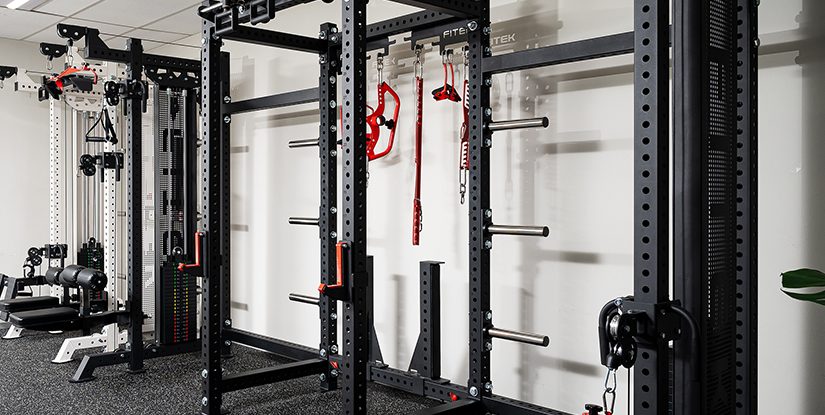
Optimizing Installation Stability via Anchoring Methods
Selecting the appropriate mounting option is critical to the long-term durability of the unit and the overall facility layout. Depending on the flooring substrate and the intensity of the training environment, distributors should advise clients on one of the following anchoring protocols to ensure compliance with commercial gym safety protocols.
| Anchoring Method | Best Use Case | Durability Profile | Installation Complexity |
|---|---|---|---|
| Concrete Expansion Bolts | Permanent installations on concrete subfloors. | Highest; eliminates frame shifting during heavy use. | High; requires drilling into structural slab. |
| Rubber Mat Weighting | Boutique studios or temporary facility layouts. | Moderate; relies on friction and high-density padding. | Low; non-invasive and highly portable. |
| Steel Floor Plates | Multi-purpose training zones with modular flooring. | High; provides a stable base without permanent drilling. | Medium; requires precise leveling of the base frame. |
For large-scale commercial gym environments, we recommend permanent bolt-down configurations. While weight-based or mat-secured setups offer flexibility, they often fail to meet strict safety standards during high-velocity cable exercises. Proper anchoring prevents micro-movements that can eventually loosen fasteners or degrade the precision of the functional trainer's movement tracks.
Preventing Structural Fatigue Through Systematic Maintenance
To protect the long-term ROI of a commercial grade installation, facility managers must implement a rigorous maintenance cycle. High-traffic environments accelerate wear and tear on moving parts, making it essential to inspect bolt tension across all primary joints every 90 days. Neglecting these checks can lead to structural fatigue or misalignment in the pulley paths. Regular auditing of the structural integrity ensures the assembly remains compliant with gym equipment safety protocols, preventing costly downtime or component failure caused by the constant dynamic loads inherent in heavy functional training.
Optimizing TCO Through Rigorous Maintenance
For distributors and facility managers, a high-quality half rack functional trainer represents a long-term asset, but its durability is directly tied to a structured upkeep regimen. In high-traffic commercial environments, high-frequency usage can accelerate the degradation of moving parts, making proactive intervention essential to protecting your Total Cost of Ownership (TCO).
Implementing strict commercial gym safety protocols involves more than periodic visual inspections. Maintenance teams must prioritize the integrity of the cable tension and the smoothness of the pulley systems. Neglecting regular lubrication of the guide rods and checking for cable fraying can lead to premature wear and tear, resulting in expensive component replacements or equipment downtime.
| Maintenance Focus | Frequency (High-Traffic) | Action Required |
|---|---|---|
| Cable & Pulley System | Weekly | Inspect for fraying; verify cable tension and smooth travel. |
| Guide Rods & Rails | Monthly | Clean debris and apply specialized silicone lubrication. |
| Structural Bolts | Quarterly | Check torque on all assembly points to prevent vibration loosening. |
| Upholstery & Padding | Monthly | Sanitize and inspect for cracks or material separation. |
To maintain operational efficiency and minimize unexpected downtime, facility managers should utilize a tiered inspection strategy. This structured approach ensures that critical components of the functional trainer assembly are addressed before failure occurs, protecting both the end-user and the equipment's longevity.
The following technical schedule provides a baseline for routine diagnostics. While high-volume commercial gyms may require more frequent interventions, this framework serves as a standard for wholesale distributors providing technical support to their international clients.
| Component | Inspection Frequency | Action Required |
|---|---|---|
| Steel Cables | Weekly | Check for fraying, kinks, or coating loss; replace if any wear is visible. |
| Pulley Wheels | Monthly | Inspect for bearing smoothness and debris accumulation in the track. |
| Frame Bolts | Quarterly | Verify torque on all primary fasteners and structural connection points. |
| Main Frame | Quarterly | Inspect weld points and powder coating integrity for any signs of stress. |
Consistent adherence to these gym equipment safety protocols reduces the risk of mechanical failure. For distributors, documenting these inspections provides valuable data for long-term quality control and helps validate the reliability of the hardware supplied to large-scale commercial clients.
Procurement Strategy: Spare Parts and Long-Term Support
Reliability in the field depends heavily on the accessibility of replacement parts. When sourcing a half rack functional trainer for large-scale distribution, buyers must evaluate the manufacturer's ability to provide OEM compatibility for all high-wear items. Relying on third-party, non-standardized components for functional trainer assembly can compromise structural integrity and void safety certifications.
Distributors should prioritize suppliers that offer a maintenance-friendly design, featuring modular components that are easily serviceable. From a logistics standpoint, we recommend maintaining localized stock levels for critical consumables—such as pulleys, cables, and specialized fasteners—to avoid extended equipment downtime. Efficient shipping logistics and a clear SKU management system for spare parts ensure that even remote facilities can maintain peak performance without waiting for long-lead international shipments.