Optimizing Gym Floor Plans with Fitness Gear Half Racks
Prioritizing Structural Integrity and Material Longevity
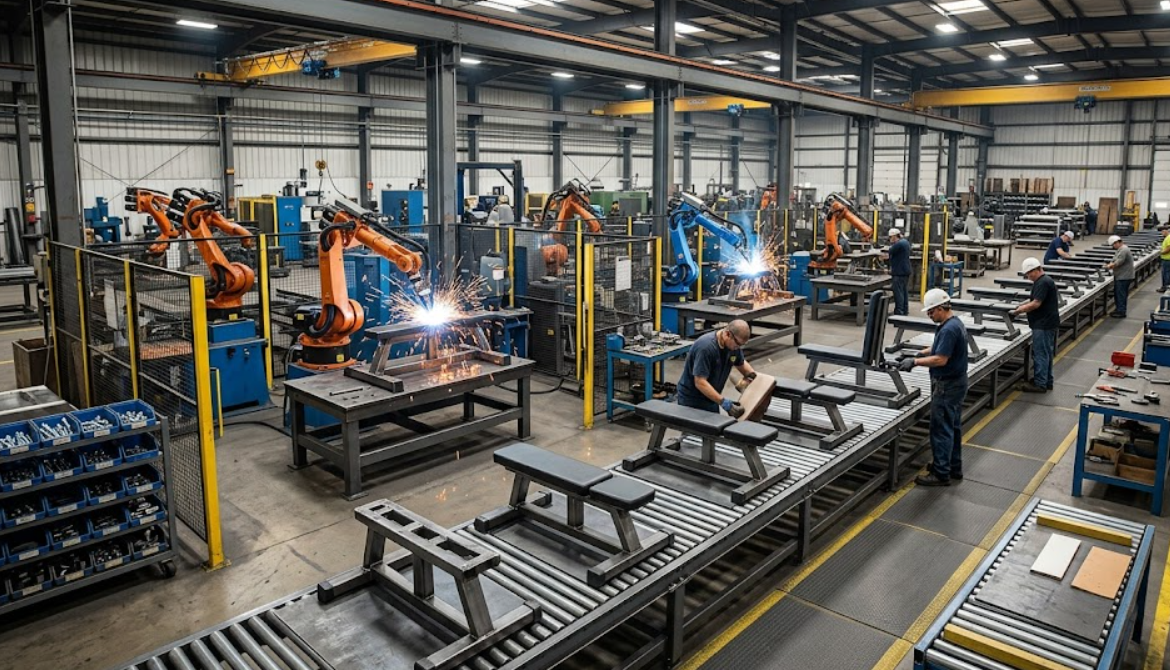
When sourcing a fitness gear half rack for high-traffic facilities, procurement managers must evaluate three critical checkpoints: structural stability under load, material specification accuracy, and long-term maintenance requirements. Relying on substandard builds leads to premature replacement cycles, whereas investing in high-grade steel ensures a predictable lifecycle and higher ROI for your facility or distribution stock.
For commercial gym layout optimization, the footprint of a rack is only as valuable as its durability. A high-quality fitness gear half rack should feature a heavy-duty steel gauge—typically 11-gauge or 7-gauge—to prevent frame deformation during high-volume usage. Furthermore, the powder coating durability is a non-negotiable factor; a resilient finish protects against oxidation and constant friction from weight plates, maintaining the aesthetic integrity of the strength training zone design over years of intense use.
Technical Benchmarks for Material and Hardware Quality
Distinguishing between consumer-grade models and professional-grade equipment requires a technical audit of the manufacturing specifications. For distributors and facility planners, understanding these nuances is essential for effective strength training zone design and long-term asset management. Use the following comparison to evaluate if a manufacturer's production standards align with the rigorous demands of a commercial environment.
| Technical Specification | Standard Retail-Grade | Professional Commercial-Grade |
|---|---|---|
| Steel Thickness (Gauge) | 14-gauge or thinner | 11-gauge to 7-gauge heavy-duty steel |
| Welding Quality | Spot welding / Basic TIG | Full-penetration, reinforced structural welds |
| Weight Capacity | Low to moderate; prone to flex | High; engineered for heavy barbell loads |
| Hardware Durability | Zinc-plated or lightweight bolts | Hardened steel, high-tensile fasteners |
| Frame Finish | Thin paint or basic powder coat | Industrial-grade, impact-resistant coating |
When vetting suppliers, demand specific documentation regarding steel thickness and welding protocols. High-quality hardware durability is a primary indicator of whether the equipment can withstand the mechanical stress of a high-density commercial layout without requiring frequent part replacements or structural adjustments.
Ensuring Scalability Through Rigorous QC and Logistics Management
Beyond technical specs, successful procurement hinges on a manufacturer's ability to manage large-scale orders without sacrificing product consistency. When planning a facility layout, you must verify that the supplier maintains strict quality control protocols across every batch. This prevents discrepancies in color, finish, or fitment that can disrupt space-efficient gym equipment placement during installation.
For distributors, transparency regarding Minimum Order Quantity (MOQ) and shipping stability is vital. Ensure your partner utilizes reinforced packaging and standardized palletization to protect the structural integrity of each fitness gear half rack during long-distance transit. A reliable manufacturer provides consistent bulk order consistency, ensuring that the hundredth unit arriving at your warehouse matches the precision of the first prototype.
Prioritizing Structural Integrity in Bulk Procurement
When sourcing a fitness gear half rack for high-traffic facilities, durability is not a luxury but a core requirement for long-term ROI. For distributors and facility managers, the primary concern is ensuring that every unit in a large-scale shipment meets rigorous standards for load-bearing stability and structural integrity under heavy, repetitive use.
A failure in quality control can compromise commercial gym layout optimization by forcing premature equipment replacement or creating safety hazards. Reliable manufacturing must guarantee powder coating consistency to prevent oxidation in humid environments and verify that weld points can withstand maximum weight capacities. High-quality fitness gear half rack units should undergo strict stress testing to ensure they maintain their form and function throughout their operational lifecycle in a demanding commercial setting.
Technical Inspection Checkpoints for Global Shipments
To mitigate the risk of receiving defective units, procurement managers should implement a standardized inspection protocol. This ensures that every piece of equipment arriving at the warehouse or client facility aligns with the original technical specifications and meets the necessary safety tolerances for commercial use.
| Inspection Category | Key Focus Area | Standard Expectation |
|---|---|---|
| Welding | Joint penetration and bead uniformity | No porosity or undercut; smooth transitions |
| Coating | Powder coat thickness and adhesion | Uniform coverage without bubbling or chipping |
| Hardware | Bolt threading and fastener grade | Smooth thread engagement; high-tensile steel |
| Dimensions | Frame profile and hole spacing | Strict tolerance within ±1-2mm variance |
Beyond visual checks, verifying the weight capacity is critical. A reliable supplier must provide documentation proving the structure can sustain maximum load limits without deformation. For high-volume orders, requesting a sample test report for structural deflection under load can prevent costly logistics-related disputes and ensure long-term equipment reliability.
Logistics Integrity and Transit Protection
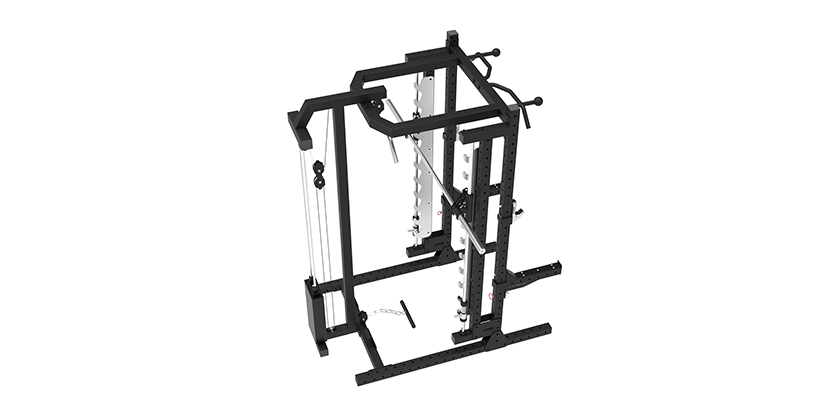
Even the most robust equipment can suffer from shipping damage if packaging durability is overlooked during long-haul transit. For distributors managing complex strength training zone design, receiving dented uprights or scratched finishes can delay installation and increase replacement costs. We recommend specifying reinforced corrugated boxing and edge protectors to maintain structural alignment. High-standard shipping damage prevention protocols ensure that your fitness gear half rack arrives in showroom condition, facilitating a seamless transition from the loading dock to the facility floor while supporting maintenance-free longevity.
Protecting Asset Longevity Through Installation Compliance
Maintaining the long-term structural integrity of a fitness gear half rack depends heavily on precise installation and adherence to leveling requirements. When distributors or facility managers overlook these technical specifications, they risk voiding manufacturer warranties and creating significant structural liability for the end-user.
Improper weight distribution often stems from uneven flooring or failed bolting procedures during the initial setup. For professional procurement teams, ensuring strict installation compliance is a critical step in commercial gym layout optimization. If a rack is not perfectly leveled, uneven stress points can lead to premature metal fatigue or fastener failure, which are typically classified as user-error rather than manufacturing defects during warranty disputes.
Technical Evaluation of Warranty and Maintenance Scenarios
Distributors and procurement managers must distinguish between manufacturing defects and operational wear to manage liability effectively. Understanding these distinctions is essential for maintaining a high-standard strength training zone design while minimizing unexpected downtime or replacement costs.
| Cause of Issue | Warranty Coverage | Typical Maintenance Solution |
|---|---|---|
| Material/Weld Failure | Full Coverage | Component replacement via factory parts |
| Surface Scratches/Rust | Limited/Voided | Powder coating touch-up or cleaning |
| Fastener Loosening | Not Covered | Routine torque checks and tightening |
| Improper Floor Leveling | Not Covered | Subfloor adjustment or shim installation |
When auditing a facility for commercial gym layout optimization, prioritize equipment with high-grade steel tolerances to reduce the frequency of structural disputes. A proactive maintenance schedule prevents minor mechanical issues from escalating into costly warranty claims.
Standardizing Documentation and Quality Control
To mitigate liability and streamline the procurement lifecycle, professional buyers should implement rigorous quality control (QC) protocols during the receiving stage. This begins with a formal floor leveling certification to verify that the installation surface meets the manufacturer's tolerance requirements. Without this documentation, any structural deviation may be blamed on the facility rather than the product.
Furthermore, maintaining detailed maintenance logs for every fitness gear half rack in the facility is vital. These logs should track bolt torque, bushing wear, and any structural adjustments. Such data-driven record-keeping ensures that space-efficient gym equipment placement remains safe and functional, providing the necessary evidence to resolve disputes regarding equipment longevity or improper usage during high-traffic training sessions.
Optimizing Commercial Gym Layout with Strategic Half Rack Placement
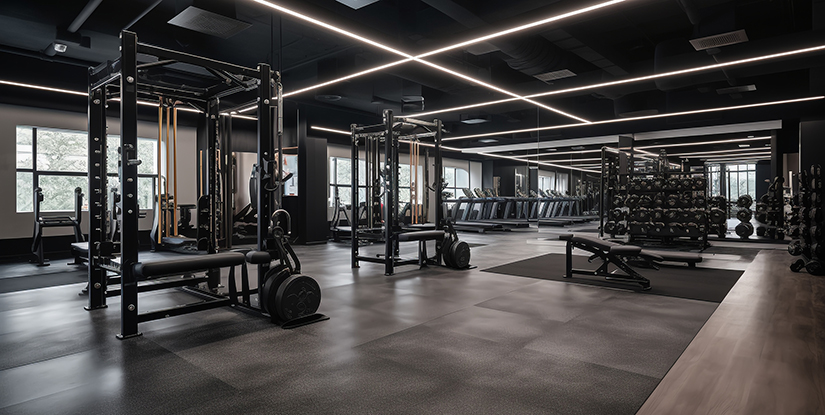
Maximizing square footage in high-traffic facilities requires a shift from simple equipment ordering to intentional commercial gym layout optimization. A well-placed fitness gear half rack serves as a structural anchor that defines specialized zones without the massive footprint of a full power cage, allowing for better movement corridors and higher member density.
Evaluating Footprint vs. Functional Density
For facility managers and distributors, selecting the right equipment involves balancing the physical footprint against the long-term utility of the strength training zone design. While full cages offer maximum stability, the half rack provides a more agile solution for boutique studios or high-turnover commercial gyms where traffic flow and floor accessibility are critical KPIs.
| Equipment Type | Footprint Requirement | Space Utility | Procurement ROI Focus |
|---|---|---|---|
| Full Power Cage | High / Fixed | Maximum stability for heavy lifting | Long-term durability in heavy-use gyms |
| Fitness Gear Half Rack | Moderate / Versatile | Optimized for multi-use strength zones | High turnover and floor space efficiency |
| Squat Stand | Minimal | Best for compact or home-gym setups | Low entry cost for small-scale ventures |
When sourcing for a new build or renovation, prioritize models that offer modular attachment options. This ensures that your initial space-efficient gym equipment placement can evolve alongside your facility's programming without requiring a complete floor redesign or additional heavy shipping costs.
Configuration Trade-Offs for High-Density Facilities
Choosing between a single-sided or double-sided configuration depends heavily on your specific facility constraints and the intended intensity of the strength training zone. A single-sided model is often the preferred choice for boutique studios or hotel gyms where maximizing the open floor area is the priority. Conversely, double-sided configurations can increase the density of a high-volume commercial gym by allowing users to train on both sides of the unit, though this necessitates a larger safety buffer to maintain safe traffic flow.
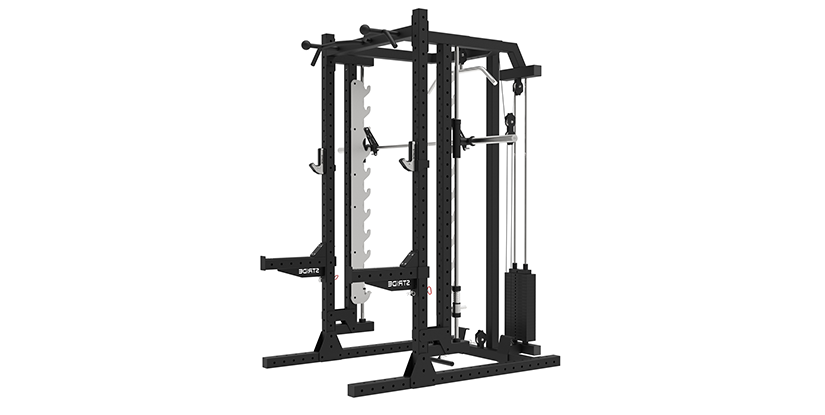
When evaluating your procurement list, consider the structural trade-offs. While a more compact, single-sided rack reduces initial shipping volumes and lowers the cost per unit, it may limit the variety of attachments you can offer. A more robust, multi-sided setup provides higher functional density and better long-term value for large-scale distributors, even if it requires a more significant initial footprint and more complex assembly protocols during installation.
Safety Clearances and Maintenance Access
A critical oversight in many facility builds is neglecting the operational buffer around each unit. For a professional fitness gear half rack installation, you must account for more than just the base dimensions. Effective commercial gym layout optimization requires a minimum 36-inch safety clearance around the perimeter to accommodate weight plate loading and barbell oscillation. Furthermore, ensure placement does not obstruct high-traffic zones or emergency exits. From a procurement decision standpoint, always factor in maintenance access; leave sufficient space behind the rack for technicians to inspect bolts, adjust uprights, or clean structural components without relocating heavy machinery.
Maximizing Strength Training Zone Design for High-Traffic Areas
Effective commercial gym layout optimization depends on how effectively you manage the footprint of heavy lifting stations. A fitness gear half rack serves as a critical anchor in strength training zone design, offering a high-utility alternative to full power cages when floor area is at a premium.
In high-density environments like boutique studios or multi-functional training centers, the goal is to balance equipment density with user safety. By selecting half racks with streamlined profiles, distributors and facility managers can minimize dead space while ensuring that high-traffic areas remain unobstructed. Strategic placement allows for better movement flow around the lifting station, preventing bottlenecks during peak hours and maximizing the revenue-generating potential of every square foot.
Footprint Analysis and Configuration Selection
Selecting the right configuration requires a calculated assessment of square footage versus functional versatility. While full power racks provide maximum stability for heavy barbell training, they often consume excessive floor area, which can stifle movement in smaller facilities. For distributors and procurement managers prioritizing space-efficient gym equipment placement, a half rack offers a strategic middle ground, providing essential support without the massive footprint of a full cage.
| Configuration Type | Typical Footprint | Accessibility & Flow | Best Use Case |
|---|---|---|---|
| Full Power Rack | Large / High | Restricted; requires clearance | Heavy strength-focused gyms |
| Fitness Gear Half Rack | Medium / Moderate | Improved; easier entry/exit | Boutique studios & multi-use zones |
| Wall-Mounted System | Minimal / Low | Maximum; optimizes floor space | Compact commercial or home-gym setups |
When sourcing for high-traffic zones, consider how each model impacts the surrounding clearance. A half rack facilitates better accessibility for athletes, allowing for smoother transitions between exercises and reducing the risk of congestion in crowded training environments.
Safety Buffers and Operational Clearance
Effective facility management requires more than just fitting equipment into a room; it requires planning for the dynamic movement of users. When positioning a fitness gear half rack, distributors must advise clients to maintain a strict safety clearance—typically a minimum of 3 to 4 feet—around the lifting area. This buffer accommodates barbell rotation, plate loading, and natural lateral movement, preventing collisions in high-traffic flow zones.
Furthermore, procurement specialists should prioritize models that allow for easy maintenance access. Positioning racks too close to walls or structural pillars can hinder routine inspections and cleaning. In a professional commercial setting, ensuring there is sufficient space for technicians to access bolts, adjustment pins, and structural joints is vital for long-term durability and minimizing downtime. Investing in layouts that respect these operational margins reduces the total cost of ownership by preventing premature wear caused by cramped, obstructed environments.
Calculating Landed Cost and Logistics Efficiency for Heavy Steel Goods
Procurement managers must look beyond the initial unit price when sourcing a fitness gear half rack to understand the true impact on capital expenditure. A low factory price can be quickly offset by high freight costs and complex assembly requirements during the final delivery phase.
Total Cost of Ownership and Shipping Volume
Because these units consist of heavy steel goods, the shipping volume and weight density significantly dictate the final landed cost. For distributors and large-scale facility planners, optimizing commercial gym layout optimization starts with choosing equipment that balances structural integrity with efficient container loading. High-density steel components require specialized freight considerations, such as heavy-duty palletization or LTL (Less Than Truckload) shipping, which can add substantial overhead to the total procurement budget if not factored into the initial sourcing strategy.
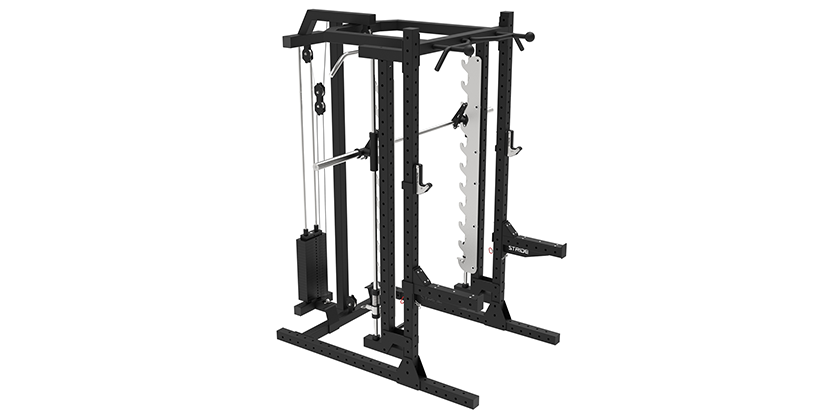
Procurement Model Comparison: Factory Direct vs. Local Distribution
Deciding between direct factory sourcing and local distributor purchasing involves a trade-off between unit-level savings and operational speed. While direct sourcing lowers the base cost of each fitness gear half rack, it increases the complexity of managing lead times and assembly oversight. Local distributors offer faster deployment but often at a premium price point.
| Evaluation Metric | Direct Factory Sourcing | Local Distributor Model |
|---|---|---|
| Minimum Order Quantity (MOQ) | High (Container-load based) | Low (Unit or pallet based) |
| Shipping & Logistics | Complex (Ocean/International) | Simplified (Domestic/LTL) |
| Lead Time | Extended (Production + Transit) | Short (Immediate/Ready-to-ship) |
| Assembly & Setup | On-site/Self-managed | Often included/Local support |
| Impact on Strength Training Zone Design | Optimized for bulk inventory | Optimized for rapid deployment |
For large-scale commercial projects, direct sourcing provides the best ROI for long-term facility expansion. However, for boutique studios requiring immediate strength training zone design implementation, the local model minimizes the risk of construction delays caused by international shipping volatility.
Prioritizing Durability to Lower Long-Term Maintenance Costs
Strategic space-efficient gym equipment placement is not just about floor area; it is about long-term asset protection. Investing in a fitness gear half rack with high-grade steel specifications and superior powder coating ensures extended maintenance cycles. While premium steel may increase initial capital outlay, the resulting durability reduces the frequency of part replacement and structural repairs. For high-traffic commercial facilities, prioritizing rigorous quality control (QC) during the manufacturing stage maximizes ROI by preventing premature wear, ensuring the strength training zone remains operational without frequent, costly downtime.
Evaluating Space-Efficient Gym Equipment Placement for Boutique Studios
Maximizing the utility of high-cost real estate is the primary metric for success in small-scale fitness ventures. For a boutique studio, every square meter must contribute to a high-density training environment without sacrificing user experience or safety standards.
Maximizing Revenue per Square Foot via Footprint Optimization
In high-rent urban districts, the ability to scale capacity without expanding the physical facility is a critical competitive advantage. Utilizing a fitness gear half rack as the anchor for a dedicated strength training zone design allows operators to transition from sprawling, low-density layouts to high-performance, compact configurations. By prioritizing footprint optimization, studios can accommodate more clients per session, directly increasing the revenue per square foot. Instead of investing in full power cages that consume excessive floor area, sourcing high-quality half racks enables a versatile, multi-functional layout that supports diverse programming while maintaining a streamlined, professional aesthetic for premium clientele.
When calculating the long-term ROI of your facility layout, procurement managers must weigh the initial unit cost against the potential for increased training density. While full power racks offer maximum enclosure, they often create "dead zones" in smaller facilities. Choosing a high-grade fitness gear half rack typically yields a superior space-to-utility ratio, allowing for more efficient movement patterns and higher client turnover.
Comparative Analysis: Full Power Racks vs. Half Racks
The following comparison highlights why many distributors and boutique owners pivot toward half rack configurations to achieve better commercial gym layout optimization.
| Feature Metric | Full Power Rack Configuration | Fitness Gear Half Rack Configuration |
|---|---|---|
| Average Footprint | Large / High-density footprint | Compact / Optimized footprint |
| Versatility | High (Heavy lifting focus) | Very High (Multi-functional/Hybrid) |
| Spatial Utility | Fixed, enclosed volume | Open-access, adaptable layout |
| Cost-Efficiency | Higher per-unit investment | Optimized CAPEX for scale |
| Traffic Flow | Can obstruct sightlines | Maintains open, fluid movement |
For distributors looking to supply high-end studios, the half rack offers a more attractive value proposition. It provides the structural integrity required for professional strength training while remaining flexible enough to accommodate various accessories, ensuring the equipment remains relevant as training trends evolve.
Prioritizing TCO and Long-Term Procurement Logistics
Smart procurement extends beyond the initial purchase price; it requires a deep dive into the Total Cost of Ownership (TCO). When sourcing a fitness gear half rack for high-traffic environments, durability is the most significant variable in your long-term margin. Low-grade steel or inferior powder coating may lower initial CAPEX, but they drastically shorten the maintenance cycle, leading to frequent repairs and lost revenue during downtime.
For distributors, managing shipping volume is equally vital to maintaining profitability. Because half racks offer a more streamlined profile than full cages, they often allow for more efficient container loading and reduced shipping costs per unit. When planning wholesale procurement, prioritize manufacturers with robust quality control and optimized packaging to minimize transit damage. Investing in heavy-duty, high-spec components ensures that your equipment remains a reliable asset, reducing long-term maintenance expenses and enhancing your reputation for quality in the competitive commercial fitness market.