How to Choose the Best Space Saving Half Rack for Home Gyms
Evaluating the Long-Term Value of Compact Strength Stations
A compact half rack is a streamlined strength training station designed to provide essential barbell support while occupying minimal floor space. B2B buyers and distributors prioritize these units because they offer a high-performance solution for residential clients and boutique studios seeking to maximize utility in limited footprints.
When sourcing equipment, it is easy to be swayed by lower unit prices, but true value lies in the durability vs. price equation. A low-cost unit may appear attractive initially, but inferior materials often lead to rapid depreciation and frequent replacement requests. To ensure long-term training stability, we recommend focusing on the structural integrity of the frame. Specifically, look for a high steel gauge—typically 11-gauge or 75mm tubing—to prevent wobbling or structural fatigue during heavy lifts.
Investing in the best space saving half rack means prioritizing high-grade steel and precision welding over a cheaper, thinner alternative. While the upfront cost may be higher, a robust build ensures the equipment remains a reliable asset for years, reducing the long-term overhead associated with small home gym equipment maintenance and premature turnover.
Navigating the pricing tiers for compact power rack alternatives requires a clear understanding of your target end-user's training intensity. For many distributors, the decision rests on whether to supply entry-level small home gym equipment or professional-grade slim weightlifting stations that can withstand high-frequency use in boutique settings.
Budget-friendly models often utilize thinner steel and lighter-duty hardware to lower the entry price point. While these are sufficient for casual users, they may lack the stability required for heavy compound movements. Conversely, premium stations are engineered with reinforced uprights and advanced accessory compatibility to ensure longevity. Use the following framework to align your procurement with your specific market needs:
| Feature Metric | Budget-Friendly Options | Premium Compact Stations |
|---|---|---|
| Average Footprint | Minimal / Ultra-Slim | Compact / Modular |
| Weight Capacity | Moderate (Standard Lifts) | High (Heavy Compound Lifts) |
| Expected Lifespan | 2–4 Years (Casual Use) | 5–10+ Years (High Intensity) |
| Ideal User | Home Enthusiasts | Semi-Pro & Boutique Studio Clients |
Choosing the best space saving half rack involves more than finding the lowest price; it is about selecting a tier that matches the expected mechanical stress of the environment to prevent frequent replacement cycles.
Beyond the initial purchase price, savvy buyers must account for the total cost of ownership. A common pitfall when sourcing slim weightlifting stations is overlooking accessory compatibility. Many low-cost models utilize non-standard hole spacing or proprietary dimensions, forcing users to buy specific, often overpriced, add-ons that don't work with standard plates or bars. This lack of versatility creates a cycle of frustration and unnecessary spending.
Furthermore, the maintenance costs of inferior compact power rack alternatives can quickly erode your margins. Cheap coatings may chip or rust under high humidity, while low-grade hardware often requires frequent tightening or replacement. We advocate for value-driven purchasing: prioritize units with standardized drilling and high-quality finishes. By selecting a robust, versatile station upfront, you avoid the "hidden costs" of incompatibility and premature wear, ensuring a much higher return on investment for your clients.
Structural Integrity vs. Footprint: Finding the Right Balance
When sourcing small home gym equipment, the most common pitfall is equating a smaller footprint with lower quality. While the goal is to find the best space saving half rack, many buyers mistakenly compromise on structural integrity to save floor space. In the commercial-grade manufacturing sector, we see a clear distinction between "lightweight" and "compact." A truly high-performance unit must maintain rigorous stability even when the physical dimensions are minimized.
The tension between stability vs footprint is often decided by the steel gauge and the thickness of the uprights. A rack that looks substantial but uses thin-walled tubing will wobble under heavy loads, creating a safety hazard. To ensure your procurement meets professional standards, you must prioritize the density and grade of the steel over the mere dimensions of the base.
| Feature Factor | Standard Compact Models | Premium High-Performance Racks |
|---|---|---|
| Steel Gauge Thickness | 14-gauge (Thinner) | 11-gauge (Heavy-duty) |
| Structural Rigidity | Moderate/Lightweight | High/Industrial Grade |
| Load Bearing Capacity | Limited/Residential | High/Commercial-Ready |
| Stability Profile | Requires Floor Anchoring | Self-Stabilizing Design |
When evaluating compact power rack alternatives, always verify the steel specifications. A high-quality slim weightlifting station should feel anchored and immovable, regardless of its streamlined profile. Do not settle for a design that sacrifices heavy-lifting security for a few extra inches of walking space.
To make an informed decision, you must categorize your needs based on your intended training volume and the specific type of small home gym equipment you plan to integrate. Not all compact power rack alternatives are engineered for the same level of impact. For instance, a lightweight station designed for accessory work requires different structural reinforcement than a heavy-duty unit intended for progressive overload. Choosing the right slim weightlifting stations depends heavily on whether your primary goal is general fitness or high-intensity strength training.
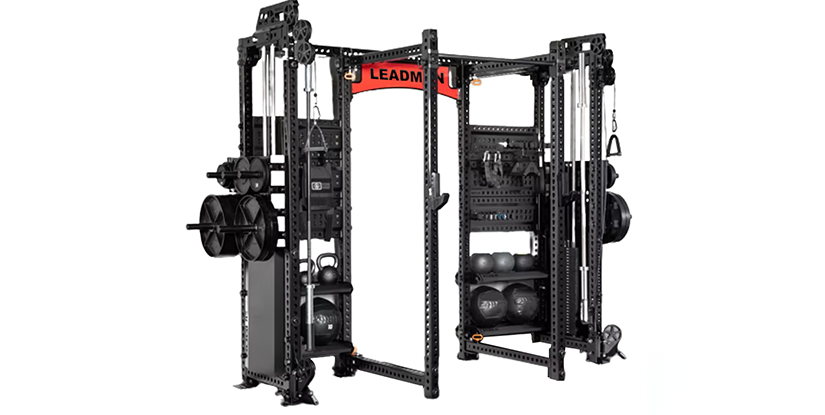
The following comparison helps clarify which tier of the best space saving half rack category aligns with your operational requirements:
| Training Intensity | Typical Dimensions | Weight Capacity | Best For | Stability Level |
|---|---|---|---|---|
| Low to Moderate | Ultra-Compact | ~250–400 lbs | Calisthenics & Mobility | Moderate |
| High Intensity | Streamlined/Slim | ~500–700 lbs | Heavy Compound Lifts | High |
| Professional/Hybrid | Standard Half-Rack | 800+ lbs | Serious Strength Training | Maximum |
When selecting your gear, remember that a more robust frame often justifies a slightly larger footprint. Investing in a higher-tier model ensures that your station remains a reliable asset as your strength capabilities evolve.
Beyond the dimensions, true durability is found in the microscopic details of the manufacturing process. When vetting a potential best space saving half rack, do not rely on aesthetics alone; you must inspect the technical construction of the frame. High-quality slim weightlifting stations rely on precision-engineered components that can withstand years of high-impact use without structural fatigue.
First, prioritize the welding quality. In a compact setup, the stress points are concentrated, making seamless, deep-penetration welds essential for safety. Second, verify the upright thickness. We generally recommend looking for 11-gauge steel to ensure the unit maintains its rigidity during heavy sets. Finally, check for integrated floor mounting options. Even the most robust heavy-duty construction requires a secure connection to the ground to prevent shifting during explosive movements. A professional-grade unit should offer pre-drilled holes for bolting, ensuring that your compact power rack alternatives remain an immovable foundation for your training.
Comparing Compact Power Rack Alternatives for Limited Square Footage
When designing a high-performance training environment, the primary challenge is often the footprint vs. functionality dilemma. While traditional full power racks offer maximum structural overhead, they frequently consume excessive square footage, making them impractical for residential setups or boutique studios with strict spatial constraints. This is where discerning buyers and distributors look toward compact power rack alternatives to balance heavy-duty lifting with spatial efficiency.
Choosing the best space saving half rack allows you to maintain essential barbell movements without the bulky footprint of a full cage. Unlike standard small home gym equipment that may compromise on stability, a high-quality half rack provides the necessary structural integrity for heavy compounds while freeing up valuable floor area. Understanding these trade-offs is essential for optimizing your inventory or personal training area, ensuring that a reduced footprint does not result in a reduced training experience.
To make an informed decision, you must visualize how much floor area is truly available for movement and safety. Different slim weightlifting stations serve distinct training purposes, and selecting the wrong silhouette can lead to cramped training sessions or wasted square footage. Whether you are sourcing for a boutique studio or a premium home gym project, understanding the spatial impact of each equipment type is vital for maximizing space efficiency.
The following comparison outlines how various configurations occupy your training environment, helping you identify the best space saving half rack or alternative for your specific requirements:
| Equipment Type | Typical Footprint | Primary Use | Best For |
|---|---|---|---|
| Standard Power Rack | Large / Deep | Full-body heavy lifting | Dedicated commercial facilities |
| Compact Power Rack Alternatives | Medium / Moderate | Strength & Conditioning | Multi-purpose training studios |
| Best Space Saving Half Rack | Small / Shallow | Heavy Barbell Compounds | Limited residential or boutique areas |
| Slim Weightlifting Stations | Minimal / Linear | Functional & Accessory Work | Tight corners or small apartment gyms |
When evaluating small home gym equipment, always account for the "buffer zone"—the extra space required for barbell rotation and safe spotting. A high-quality half rack offers the perfect middle ground, providing the structural density of a commercial unit while maintaining a much more manageable footprint than a traditional cage.
Effective layout planning begins with more than just measuring the floor; it requires calculating the "active zone" around the equipment. When you are maximizing training area, you must account for the length of the barbell, the width of the weight plates, and the necessary clearance for safe movement. A common mistake in weightlifting station selection is focusing solely on the base dimensions of the rack while ignoring the lateral space needed for lateral lunges or accessory work.
To achieve versatile training in a confined environment, we recommend selecting models that prioritize verticality over depth. By choosing a profile that utilizes height for storage—such as integrated plate pegs or J-cup positioning—you can keep the floor clear of clutter. Whether you are sourcing for a high-end residential project or a boutique fitness studio, prioritizing a design that offers a deep functional range within a shallow footprint ensures that your setup remains high-performing without feeling claustrophobic.
Optimizing Small Home Gym Equipment Layouts and Workflow
When designing a high-performance training environment within a residential setting, the primary constraint is rarely the intensity of the workout, but rather the available square footage. Most enthusiasts realize too late that high-quality small home gym equipment requires more than just a physical spot on the floor; it requires a functional ecosystem. Selecting the best space saving half rack is not merely about finding a smaller footprint, but about ensuring the unit integrates seamlessly into your existing room dimensions without hindering your athletic progression.
A common mistake in procurement is focusing solely on the static footprint of the steel uprights while neglecting the necessary movement clearance. A truly efficient setup accounts for the lateral range of motion during barbell exercises and the swing of a kettlebell. Without calculating the total operational area, even the most compact power rack alternatives can become obstacles that disrupt your training flow and compromise safety. Prioritize equipment that balances structural integrity with a streamlined profile to maintain an unobstructed, professional-grade workspace.
To maximize utility, consider three distinct layout strategies depending on your room's architecture. For narrow corridors or spare bedrooms, prioritizing verticality is essential. By choosing slim weightlifting stations with integrated pull-up bars or high-mounted storage, you utilize the air space rather than the floor, keeping the center of the room open for auxiliary movements. This approach is ideal for those sourcing compact power rack alternatives that serve a dual purpose as both a lifting station and a storage solution.
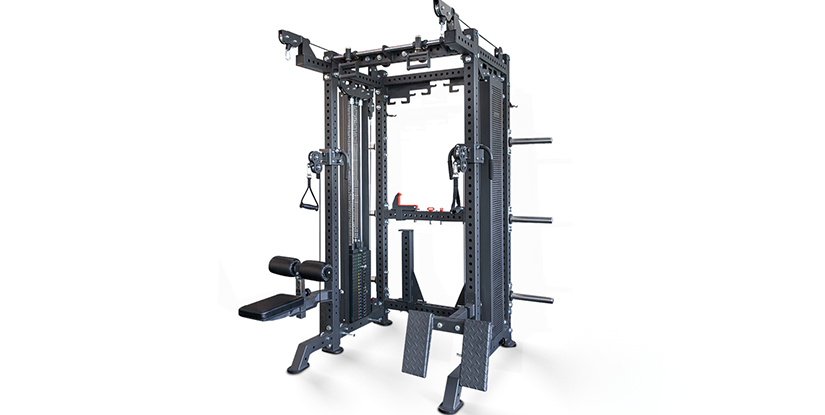
In larger, open-concept residential areas, a corner-oriented setup can significantly improve accessibility. Placing your rack in a corner minimizes the visual and physical "bulk" of the steel, creating a more inviting training environment. If you are managing a multi-functional space, look for equipment with a shallow depth to ensure that the path of travel remains clear. Whether you are a distributor looking for versatile inventory or an end-user refining a personal studio, a well-planned layout ensures your best space saving half rack functions as a high-performance hub rather than a cramped obstacle.
Effective layout design also hinges on the synergy between your equipment and your daily training workflow. To avoid a cluttered environment, prioritize storage solutions that are integrated directly into the rack's frame. Utilizing built-in weight plate pegs and barbell holders eliminates the need for additional bulky accessory racks, ensuring your small home gym equipment remains a streamlined, high-performance unit. This vertical integration is a hallmark of premium slim weightlifting stations, allowing for a clean floor plan that facilitates easier movement.
Crucially, always validate the barbell clearance before finalizing your placement. You must account for the full length of the barbell and the width of the collars to ensure you can safely load and unload plates without hitting walls or nearby furniture. For those seeking compact power rack alternatives, choosing a model that offers multi-functional use—such as a rack that doubles as a storage hub and a strength station—will optimize your spatial utility. A thoughtful layout ensures that your best space saving half rack serves as a professional-grade training center rather than a cramped corner of a room.
Sourcing Slim Weightlifting Stations: Quality Control and Material Standards
When sourcing for a residential or boutique studio environment, the temptation to prioritize a small footprint often leads buyers to overlook the foundational physics of the equipment. However, a high-performance best space saving half rack must never compromise on its core architecture. Without a rigorous focus on heavy-duty steel construction, a compact unit can become a liability during high-intensity lifts. For distributors and professional buyers, the primary concern is ensuring that the reduction in size does not result in a reduction in structural stability.
The true indicator of quality lies in the steel gauge thickness of the uprights and crossmembers. While many compact power rack alternatives on the market use thinner, lighter materials to save on shipping costs, professional-grade equipment requires high-gauge steel to prevent bowing or catastrophic failure under heavy loads. We recommend verifying that the frame utilizes robust, high-density steel to ensure that your small home gym equipment remains a reliable, long-term asset rather than a seasonal purchase.
Beyond structural integrity, the surface finish of your equipment dictates its operational lifespan and visual appeal. In the world of small home gym equipment, buyers often face a choice between aesthetic elegance and rugged utility. For instance, the debate between powder coating vs. chrome is central to long-term value. While chrome offers a sleek, high-end look, high-quality electrostatic powder coating provides superior rust resistance and a more resilient barrier against the inevitable wear and tear of daily training sessions.
When evaluating slim weightlifting stations, consider the following material comparison to guide your procurement decisions:
| Finish Type | Durability Profile | Maintenance Level | Best Use Case |
|---|---|---|---|
| Powder Coating | High impact/scratch resistance | Low; easy to wipe down | High-traffic home gyms |
| Chrome/Polished | High aesthetic; prone to pitting | Moderate; requires moisture control | Boutique/Showcase settings |
Selecting the best space saving half rack means choosing a finish that minimizes maintenance while maximizing longevity. For professional distributors, prioritizing a heavy-duty powder coat ensures the unit withstands humidity and constant contact with barbell knurling, protecting your investment against premature oxidation.
Beyond the surface finish, the structural reliability of slim weightlifting stations is ultimately determined by what lies beneath the coating. As a buyer, you must look closer at the assembly points to ensure long-term safety. A high-quality unit relies on exceptional weld quality; look for smooth, continuous beads rather than jagged or porous joins, which can indicate weak points in the frame. Even the most advanced small home gym equipment will fail if the connection points cannot handle lateral forces during heavy movements.
True professional-grade equipment is a product of precision engineering. This means every hole is perfectly aligned for J-cups and spotter arms, ensuring a seamless fit every time. When vetting manufacturers, we suggest asking about their internal quality control standards. Reliable suppliers don't just assemble parts; they utilize rigorous testing to ensure that every bolt, upright, and crossmember meets strict tolerances. By prioritizing these manufacturing nuances, you ensure that your compact power rack alternatives offer the same confidence and stability as full-sized commercial stations.
Logistics and Assembly Realities for Space-Saving Imports
When sourcing the best space saving half rack from overseas manufacturers, the technical specifications extend far beyond the steel gauge. For distributors and high-end home gym retailers, the primary concern is the shipping footprint. A high-quality compact power rack alternative should be engineered with a modular design that allows for efficient container loading without compromising the structural integrity of the components. If the parts are too bulky or lack a logical sequence, you face increased assembly complexity and higher labor costs upon arrival.
Furthermore, professional procurement requires a deep dive into weight distribution. A well-designed slim weightlifting station must balance heavy structural uprights with lighter accessory components to ensure stable transit. When selecting small home gym equipment for export, always verify that the modularity of the unit allows for easy unpacking and straightforward installation. This attention to detail prevents logistical bottlenecks and ensures that the end-user receives a premium, high-performance station that is easy to set up in restricted residential environments.
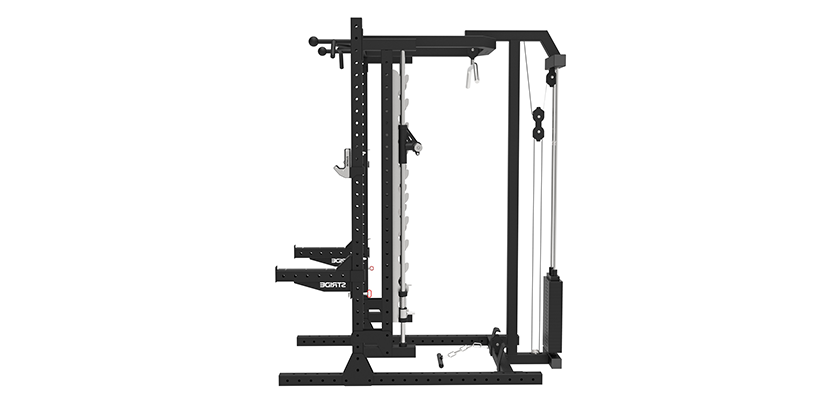
Beyond the initial setup, understanding the long-term maintenance requirements is critical for ensuring long-term durability. When evaluating compact power rack alternatives, buyers must distinguish between bolt-on vs. weld construction methods. While fully welded frames offer maximum rigidity, modular bolt-on designs are often preferred for small home gym equipment because they allow for easier component replacement and more efficient international shipping.
However, modularity introduces a specific maintenance frequency. A slim weightlifting station utilizing high-grade bolts requires periodic inspection to ensure structural tightness, especially under heavy load cycles. We recommend that distributors advise end-users to keep basic tool requirements in mind—typically just a standard socket set or Allen wrench—to perform routine tightening. Choosing a unit with high-quality, corrosion-resistant hardware ensures that the best space saving half rack remains a stable, reliable centerpiece of a home gym for years, rather than a piece of equipment that suffers from structural looseness over time.
To preserve the premium feel of your inventory, rigorous upkeep of the frame and finish is non-negotiable. When importing small home gym equipment, the quality of the powder coating determines the unit's resistance to oxidation. A high-standard best space saving half rack should feature a multi-stage coating process to ensure effective rust prevention, especially in humid residential environments. Neglecting this can lead to unsightly wear that devalues the product in the eyes of the consumer.
Furthermore, maintaining structural stability requires a disciplined approach to hardware management. We suggest implementing a quarterly bolt tightening schedule for all modular connections. This proactive measure prevents the micro-movements that can lead to metal fatigue or rattling during heavy lifts. From a procurement standpoint, it is also vital to confirm that the manufacturer provides a reliable supply of replacement parts. Ensuring that standard bolts, bushings, and J-cups are readily available allows you to offer superior after-sales support, reinforcing the reliability of your compact power rack alternatives and building long-term brand trust with your clients.
Investment Strategy: Prioritizing Long-Term Value Over Initial Cost
When sourcing small home gym equipment, many buyers make the mistake of focusing solely on the lowest upfront price point. However, in the commercial-grade fitness market, the best space saving half rack is defined by its ability to provide years of reliable service without requiring replacement. A low-cost unit often lacks the structural integrity necessary to handle heavy progressive loading, leading to wobbling or even catastrophic failure over time. This makes the "cheap" option a high-risk investment that fails to deliver actual long-term value.
Instead, professional distributors and savvy home gym builders should look for compact power rack alternatives that offer high-gauge steel construction and robust welding. A premium best space saving half rack acts as a multi-functional hub; its versatility of use—from heavy compound lifts to accessory work—ensures it remains relevant as a training program evolves. By investing in a high-quality station now, you avoid the hidden costs of frequent upgrades and the logistical headaches of sourcing replacement parts later, ensuring your capital is spent on durability rather than disposable hardware.
To help you determine which configuration offers the highest return on investment for your specific footprint, we have categorized the most common slim weightlifting stations. Choosing the right model depends on balancing your available square footage against the intensity of the training intended for the space.
The following comparison helps clarify which small home gym equipment options align with your spatial constraints and functional requirements:
| Configuration Type | Dimensions (Typical) | Versatility | Footprint | Ideal User |
|---|---|---|---|---|
| Wall-Mounted Half Rack | Minimal depth | Moderate | Smallest | Strict space-constrained enthusiasts |
| Folding Half Rack | Variable (Foldable) | High | Very Small | Multi-purpose home gym builders |
| Standard Compact Half Rack | Fixed/Compact | Highest | Medium | Serious lifters seeking compact power rack alternatives |
When evaluating the best space saving half rack for your inventory or personal setup, prioritize the station that offers the most functional utility per square foot. A slightly larger footprint that allows for more diverse movements often provides better long-term utility than a minimal unit that limits training progression.
Final Pre-Purchase Verification Checklist
Before finalizing your order for the best space saving half rack, a rigorous verification process is essential to prevent logistical errors and spatial mismatches. Even the most efficient slim weightlifting stations can become a liability if they do not integrate seamlessly with your existing environment or training tools.
Use this checklist to ensure your selection meets all professional standards:
- Precise Measurement Verification: Do not just measure the floor area; account for the total volume. Ensure there is sufficient vertical clearance for overhead movements and sufficient horizontal room for the user's stance.
- Barbell Clearance: Confirm that the compact power rack alternatives you are considering allow for full range of motion. Verify that the barbell sleeves do not strike any walls or nearby small home gym equipment during heavy lifts.
- Accessory Compatibility: Ensure the uprights are compatible with your preferred attachments, such as dip bars, landmines, or pull-up bars, to maximize the utility of the station.
- Weight Capacity Check: Validate that the structural rating of the rack exceeds your maximum intended load, including the weight of the barbell and the dynamic force of heavy lifting.
By performing these checks, you guarantee that your investment in high-quality small home gym equipment translates into a safe, high-performance training environment.