Best Gym Rack for Home: Wholesale Sourcing & QC Guide
Evaluating Total Cost of Ownership for Home Gym Racks
Many distributors fail by prioritizing the lowest unit price, only to face high return rates and damaged shipments. A smarter sourcing strategy focuses on the long-term utility of commercial grade home gym equipment rather than chasing bottom-tier discounts. While budget models appear attractive initially, they often lack the structural integrity required for high-frequency use, leading to premature replacement cycles and increased logistics costs for the importer.
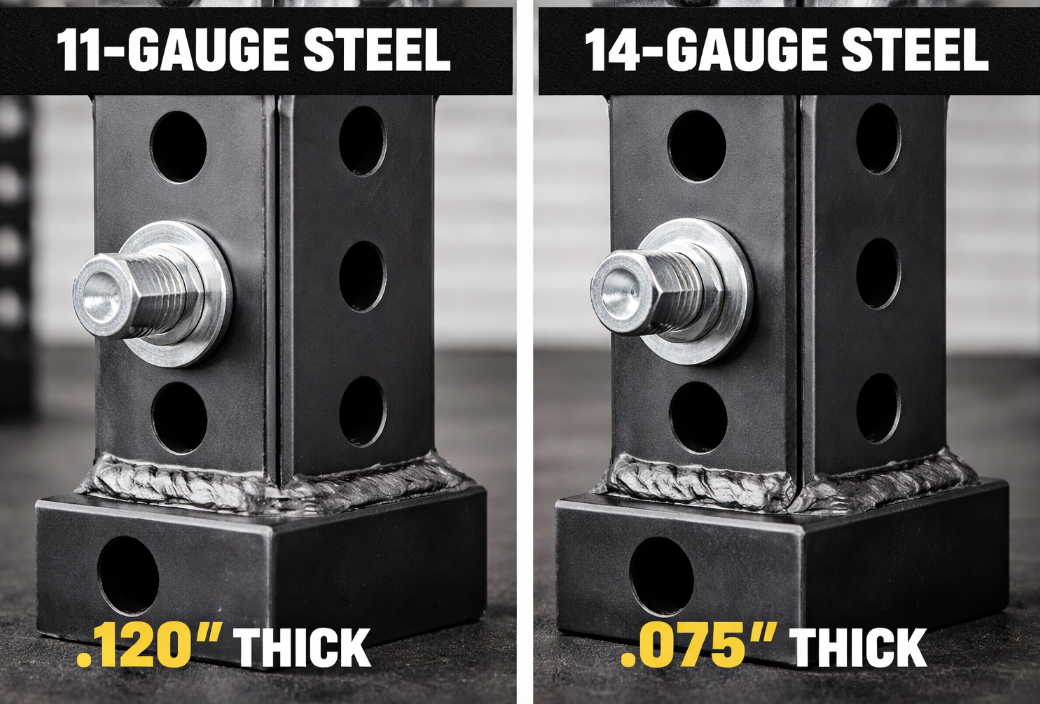
When searching for the best gym rack for home, professional buyers must analyze the relationship between durability vs. upfront cost. The primary differentiator in high-quality manufacturing is the material gauge/thickness of the steel tubing. A higher gauge ensures the frame remains rigid under heavy loads, protecting your reputation as a reliable supplier.
| Procurement Factor | Economy Tier (Low MOQ) | Premium Tier (Wholesale) |
|---|---|---|
| Steel Gauge | Thin-walled (Light Use) | Heavy-duty (High Gauge) |
| Maintenance | Frequent Re-painting | Minimal/Powder Coated |
| Long-term Value | Low (High Replacement) | High (Extended Lifespan) |
| TCO Impact | High (Warranty Claims) | Low (Stable Margin) |
Investing in a reputable fitness rack manufacturer ensures that your bulk gym rack procurement efforts result in products that withstand the test of time. By selecting superior steel specifications, you reduce the long-term burden of maintenance and customer dissatisfaction.
Analyzing Maintenance and Long-Term ROI
The true cost of a product is rarely found on the initial invoice. For distributors, the distinction between low-grade imports and professional-grade stock lies in the maintenance requirements and surface treatment integrity. Inferior models often utilize thin, substandard finishes that succumb to oxidation quickly. In contrast, a high-tier fitness rack manufacturer utilizes advanced powder coating quality to ensure superior rust resistance, even in humid environments or high-traffic residential settings.
When executing bulk gym rack procurement, buyers must account for the total cost of ownership. A product with poor coating will require frequent touch-ups or complete replacement, destroying your long-term ROI and brand trust. By prioritizing high-spec finishes, you minimize post-sale support and warranty claims. Selecting the best gym rack for home use means choosing a build that remains aesthetically and structurally sound for years, ensuring stable profit margins and high customer retention for your distribution business.
Strategic Comparison of TCO Factors
To optimize your margins, you must look beyond the initial invoice. Professional buyers calculate the total cost of ownership by weighing the initial acquisition cost against long-term operational stability. A low-cost unit may seem profitable at first, but hidden expenses in shipping damage and warranty claims can erode your net gains. Use the following breakdown to evaluate how different tiers impact your bottom line during bulk gym rack procurement.
| Cost Factor | Low-Tier Sourcing | Premium Wholesale Standard |
|---|---|---|
| Initial Price | Low (High Volatility) | Moderate (Stable/Predictable) |
| Lifespan | Short (1–3 Years) | Extended (5–10+ Years) |
| Maintenance | High (Rust/Wear Issues) | Low (Durable Finishes) |
| Logistics/Shipping | High Risk (Fragile/Damage) | Optimized (Robust Packaging) |
Selecting the best gym rack for home usage through a vetted fitness rack manufacturer ensures that your commercial grade home gym equipment inventory remains a high-margin asset. Prioritizing structural durability and superior packaging reduces the logistical friction often associated with international freight, securing a more reliable total cost of ownership for your distribution network.
Selecting Commercial Grade Home Gym Equipment for Longevity
When sourcing the best gym rack for home use at scale, distributors must look beyond aesthetics to technical durability. The primary differentiator between consumer-grade models and commercial grade home gym equipment lies in the structural integrity of the steel. High-volume buyers should prioritize a minimum steel gauge thickness of 11-gauge or 12-gauge to ensure long-term stability and prevent frame warping under heavy use.
Furthermore, the longevity of your inventory depends on the powder coating durability applied during the manufacturing process. A high-micron, electrostatic powder coating prevents oxidation and resists scratches during high-frequency training, which is vital for maintaining brand reputation in the retail market. When evaluating a fitness rack manufacturer, always demand documentation regarding the load capacity. A superior rack must handle significant weight distribution without structural fatigue, justifying the premium investment in high-quality bulk gym rack procurement.
To minimize returns and maximize client satisfaction, procurement officers must evaluate specific engineering tolerances. Relying on generic descriptions is a risk; instead, utilize rigorous technical specifications to vet your fitness rack manufacturer. A high-performance rack is defined by its metallurgy and fastening components, not just its frame dimensions. Below is the essential technical benchmark for high-standard bulk gym rack procurement.
| Material Specification | High-End Commercial Standard | Impact on Longevity |
|---|---|---|
| Steel Gauge | 11-Gauge (3mm) to 12-Gauge | Prevents structural bowing and frame fatigue |
| Coating Type | Electrostatic Powder Coating | Resists oxidation and surface abrasion |
| Bolt/Nut Grade | Grade 8.8 or Higher | Ensures joint stability under high vibration |
| Weight Capacity | 400kg+ (Dynamic Load) | Guarantees safety for heavy barbell use |
Standardizing these metrics ensures that the best gym rack for home remains a durable asset rather than a maintenance liability. By enforcing these strict tolerances during your QC inspection, you secure a competitive advantage in the commercial grade home gym equipment market.
Beyond structural metallurgy, long-term profitability hinges on a maintenance-free design that survives diverse environmental conditions. For international distributors, the greatest threat to inventory value is oxidation. Ensure your chosen fitness rack manufacturer utilizes advanced anti-corrosion treatments and premium rust resistance protocols. A rack that begins to oxidize shortly after delivery will lead to high return rates and damaged brand authority in the premium home fitness sector.
Rigorous QC Standards for Global Distribution
To mitigate the risks associated with bulk gym rack procurement, buyers must mandate comprehensive QC documentation before any shipment leaves the factory floor. Do not rely on verbal assurances; require standardized testing reports that verify weld strength, coating thickness, and dimensional accuracy. Professional bulk gym rack procurement involves auditing the factory’s ability to provide batch-specific inspection logs. By enforcing these strict quality benchmarks, you ensure that every unit delivered to the end-user meets the high-performance standards required of true commercial grade home gym equipment.
Direct Sourcing Strategies via Fitness Rack Manufacturers
When scaling a fitness inventory, the most significant variable in your long-term ROI is the procurement channel. While local distributors offer convenience, they inherently include markup costs that inflate your landed price. By identifying the best gym rack for home through a fitness rack manufacturer, you bypass these unnecessary layers. Sourcing directly allows you to secure direct-from-factory pricing, which is essential for maintaining competitive edges in the North American market.
Transitioning to a direct model requires a strategic approach to MOQ (Minimum Order Quantity) management. While distributors handle small, fragmented orders, working with a factory allows you to optimize bulk gym rack procurement to reduce the unit cost per item. By reducing middleman margins, you can reallocate those saved funds toward enhanced commercial grade home gym equipment quality standards or more aggressive marketing budgets. This direct-to-factory logic ensures that your capital is spent on product integrity rather than logistical overhead.
To ensure long-term profitability, your procurement standards must prioritize technical durability over low initial costs. High-performing commercial grade home gym equipment requires rigorous adherence to material specifications. When auditing a potential fitness rack manufacturer, demand precise data on steel gauge thickness; a minimum of 11-gauge or 7-gauge steel is standard for professional-grade stability. Insufficient gauge thickness leads to structural failure, increasing your replacement liabilities and damaging brand reputation.
Beyond metallurgy, the surface finish is a critical failure point in high-use environments. Verify that the powder coating durability meets international standards to prevent oxidation and chipping during transport or assembly. To mitigate risk, your purchase agreements should mandate comprehensive QC documentation, including structural integrity testing reports and load-bearing certifications. Securing these technical proofs during the bulk gym rack procurement phase ensures that every unit shipped meets the heavy-duty expectations of the North American consumer, protecting your margins from costly returns.
Deciding on a procurement model requires balancing initial capital outlay against long-term technical oversight. For distributors looking to scale, understanding the trade-offs between retail, wholesale, and direct factory channels is vital for optimizing the landed cost of the best gym rack for home. While retail provides speed, it lacks the scalability required for professional inventory growth. Conversely, direct sourcing offers the highest degree of control over both unit price and the technical specifications of your commercial grade home gym equipment.
The following comparison outlines how different channels impact your bulk gym rack procurement strategy, specifically regarding cost efficiency and the ability to implement strict quality control protocols.
| Sourcing Model | Cost Structure | Quality Control Capability |
|---|---|---|
| Retail/Local | Highest (High markup) | Minimal (Reliance on brand) |
| Wholesale/Distributor | Moderate (Volume discounts) | Standardized (Pre-vetted) |
| Direct Factory | Lowest (Direct manufacturing) | Maximum (Customized QC/Specs) |
For high-volume buyers, a fitness rack manufacturer provides the transparency needed to audit production lines directly. This level of oversight is the most effective way to ensure that your bulk gym rack procurement results in durable, high-margin inventory rather than low-quality stock that incurs high return rates.
Optimizing Bulk Gym Rack Procurement for High-Volume Orders
When sourcing the best gym rack for home use at scale, the primary challenge shifts from product quality to logistical efficiency and margin protection. For distributors and large-scale retailers, purchasing via retail channels is unsustainable. By partnering directly with a professional fitness rack manufacturer, buyers can leverage economies of scale to significantly lower the landed cost per unit. This transition from fragmented purchasing to strategic bulk gym rack procurement allows for better control over inventory turnover and shipping density.
Optimizing your MOQ (Minimum Order Quantity) is essential for balancing upfront capital expenditure against long-term savings. Moving toward direct-from-factory pricing reduces the middleman markup, providing the necessary headroom for competitive domestic pricing in the North American market. Below is a comparison of procurement models to assist your inventory planning:
| Procurement Model | Unit Cost Margin | Shipping Efficiency | Inventory Control |
|---|---|---|---|
| Local Retail Sourcing | Low | Low (Small Parcels) | Immediate/Low Volume |
| Wholesale Distributor | Moderate | Medium (LTL) | Standardized Stock |
| Direct Factory Sourcing | High | High (FCL/Container) | Customized/Scalable |
Strategic volume planning ensures that your commercial grade home gym equipment inventory remains both profitable and readily available for your end-users.
To maximize profitability during bulk gym rack procurement, buyers must prioritize shipping volume optimization. The choice between flat-pack vs. pre-assembled configurations is often the single most significant factor in determining your landed cost. While pre-assembled units offer a premium unboxing experience, they consume disproportionate cubic volume, drastically increasing freight expenses and reducing the number of units per shipment.
For high-volume importers, container load optimization is the most effective way to mitigate rising ocean freight rates. Utilizing high-density, flat-pack designs allows for greater shipping volume optimization, enabling more units to fit within a single 40ft HQ container. This structural efficiency lowers the per-unit shipping cost and streamlines warehouse management. Use the following framework to evaluate your logistics variables:
| Packaging Type | Volume Density | Assembly Requirement | Logistics Impact |
|---|---|---|---|
| Pre-assembled | Low | Zero (Ready to use) | High freight cost per unit |
| Flat-pack | High | Moderate (User assembly) | Optimized container load optimization |
By selecting optimized packaging, distributors can maintain healthier margins while ensuring commercial grade home gym equipment reaches the end-user with minimal transit damage.
Beyond logistics, a critical component of high-volume sourcing is the balance between material durability vs. price. In the competitive North American market, distributors often face the temptation to reduce costs by opting for thinner steel gauges or lower-grade powder coatings. However, compromising on structural integrity can lead to high return rates and damaged brand reputation. To maintain cost-per-unit stability, it is vital to standardize material specifications across all orders, ensuring that every unit meets the rigorous standards of commercial grade home gym equipment.
Ensuring Standards via Rigorous Quality Control
To mitigate the risks associated with large-scale manufacturing, professional buyers must demand comprehensive QC documentation before any shipment leaves the factory floor. This documentation should include material test reports, weld strength verification, and coating thickness measurements. By integrating these strict quality checkpoints into your bulk gym rack procurement strategy, you protect your margins against the hidden costs of defective inventory and ensure that your supply chain remains both reliable and highly profitable.
Standardizing Quality Control and Export-Ready Packaging
When sourcing the best gym rack for home via wholesale channels, many distributors overlook a critical distinction: the gap between consumer-grade lightweight frames and commercial grade home gym equipment. For B2B buyers and international distributors, the primary risk lies in structural fatigue caused by substandard materials. To mitigate liability and ensure long-term product reliability, your procurement specifications must demand rigorous structural integrity standards that go beyond basic aesthetics.
High-performance equipment requires strict adherence to technical benchmarks during the manufacturing process. We prioritize load-bearing capacity testing to ensure every unit can withstand repetitive high-intensity use without frame deformation. Furthermore, to prevent oxidation during maritime transit and long-term residential use, we mandate a specific powder coating thickness that meets international industrial standards. By enforcing these stringent QC protocols, we ensure that your bulk shipments arrive as high-value, durable assets rather than high-maintenance liabilities.
To ensure a seamless import process, your selected fitness rack manufacturer must provide comprehensive QC documentation that validates every stage of production. This begins with material certification, proving that the high-tensile steel used meets international structural requirements. We do not rely on verbal assurances; we demand verifiable material certification to prevent the structural failures often seen in low-tier imports.
Beyond raw materials, rigorous weld strength inspection is non-negotiable. Every joint must undergo stress testing to ensure the frame remains stable under maximum load. Our procurement strategy includes mandatory batch testing, where random samples from a production run are subjected to extreme weight cycles to verify MOQ compliance and consistency across the entire shipment. This systematic approach guarantees that whether you are ordering a single pallet or a full container, the quality remains uniform. By requiring this level of technical transparency, distributors can confidently market the best gym rack for home while minimizing the risks of returns or structural liability.
The final frontier of bulk gym rack procurement is not just the build quality, but the survivability of the product during long-haul transit. Even the highest-spec commercial grade home gym equipment is worthless if it arrives with dented uprights or scratched powder coating. To mitigate these risks, we mandate export-ready packaging designed specifically for the rigors of maritime logistics. Relying on standard single-wall boxes is a common mistake that leads to high damage rates and costly replacement claims for distributors.
Our technical standards require 5-layer corrugated boxes to provide superior crush resistance. For heavy-duty frames, we implement reinforced steel edges and high-density foam corner protectors to shield structural components from impact. This ensures maximum sea freight durability throughout the shipping cycle. The following table outlines our required protective standards for high-volume orders:
| Protection Layer | Technical Specification | Primary Function |
|---|---|---|
| Outer Shell | 5-layer corrugated boxes | Crush resistance and stacking strength |
| Edge Protection | Reinforced steel edges | Prevents frame deformation during lifting |
| Surface Guard | EPE Foam & Shrink Wrap | Prevents scratches and moisture ingress |
| Transit Standard | Sea freight durability compliant | Optimized for containerized shipping |
By enforcing these specific packaging protocols, a professional fitness rack manufacturer ensures that your inventory arrives in showroom condition, protecting your margins and reputation.
Logistics and Scalability in International Wholesale Sourcing
When sourcing the best gym rack for home in high volumes, procurement specialists must look beyond the unit price to the total landed cost. A common pitfall in bulk gym rack procurement is overlooking the impact of product dimensions on freight expenses. Unlike smaller accessories, heavy-duty steel structures occupy significant volume, making container optimization a critical factor for maintaining healthy margins.
For distributors importing commercial grade home gym equipment, shipping costs are often driven by volumetric weight rather than actual mass. If your fitness rack manufacturer provides unoptimized packaging, you will pay for "dead air" inside the container. To ensure shipping cost reduction, we prioritize nested designs and modular assembly configurations. By streamlining the footprint of each unit, we maximize the number of SKUs per 40ft HQ container, effectively lowering the per-unit freight cost and improving your overall supply chain efficiency.
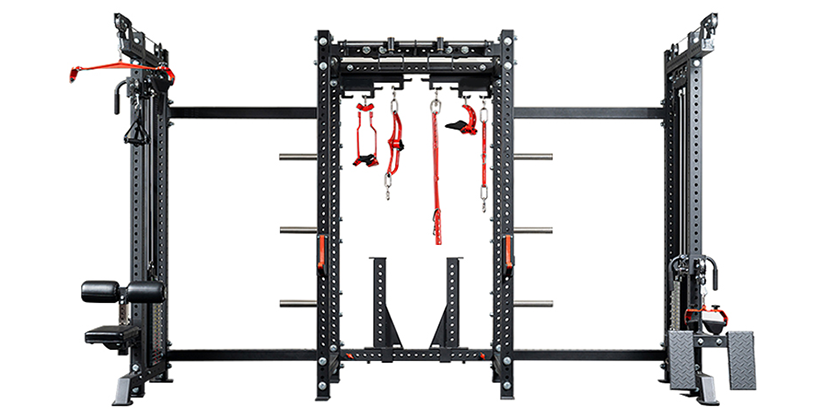
Scalability also depends on how a fitness rack manufacturer manages downstream logistics and inventory. To prevent damage during long-haul maritime transit, every shipment must utilize export-ready packaging that meets international standards. This includes heavy-duty corrugated boxing and reinforced palletization to ensure structural integrity. High-quality palletization not only protects the steel components from deformation but also optimizes warehouse storage efficiency upon arrival at your distribution center, allowing for faster unloading and organized stock management.
Furthermore, professional bulk gym rack procurement requires clear communication regarding MOQ requirements and SKU differentiation. We provide detailed packing lists and dimensional data for every model, ensuring your logistics team can plan container loads with precision. By standardizing dimensions and optimizing box volumes, we help distributors manage diverse product lines without sacrificing warehouse storage efficiency. Choosing a partner that understands the nuances of export-ready packaging ensures your inventory arrives ready for immediate retail or local distribution.
To optimize your budget, you must strategically select between LCL vs FCL shipping methods based on your current inventory turnover and order volume. While LCL (Less than Container Load) offers flexibility for smaller test orders of commercial grade home gym equipment, it often carries higher per-unit freight costs and increased handling risks. For large-scale distribution, FCL (Full Container Load) remains the most cost-effective method for bulk gym rack procurement, as it minimizes transit damage and maximizes container utilization.
The following table provides a comparative reference for your logistics planning and inventory forecasting:
| Shipping Method | Typical Lead Time | Ideal Order Volume | Logistics Scalability |
|---|---|---|---|
| LCL (Less than Container Load) | 4–6 Weeks | Low (Small Batch/Test) | Limited; Higher risk of damage |
| FCL (Full Container Load) | 6–8 Weeks | High (Distributor/Wholesale) | High; Optimized for bulk procurement |
| Air Freight (Express) | 1–2 Weeks | Urgent/Sample Only | Low; Not recommended for heavy steel |
Understanding these variables allows your procurement team to balance lead times against market demand, ensuring your fitness rack manufacturer aligns with your regional distribution cycles.
Customization Capabilities: OEM and ODM Specifications
When sourcing the best gym rack for home, B2B buyers must distinguish between manufacturing models to optimize their ROI and brand positioning. Partnering with a professional fitness rack manufacturer allows you to leverage two distinct pathways: OEM and ODM. Choosing the right path ensures your inventory meets both commercial grade home gym equipment standards and specific market demands.
OEM (Original Equipment Manufacturer) is ideal for distributors seeking to apply branding/logo application to existing, proven designs. This method minimizes R&D costs while allowing for minor material specifications adjustments, such as powder coating colors or weight capacity tweaks. Conversely, ODM (Original Design Manufacturer) offers deeper customization, enabling you to request custom dimensions and unique structural engineering to create a proprietary product line. While ODM requires higher MOQs and longer lead times, it provides a significant competitive advantage in niche markets.
| Procurement Factor | OEM Model | ODM Model |
|---|---|---|
| Structural Integrity | Standardized High-Grade Steel | Custom Engineering/Reinforcement |
| Design Control | Existing Factory Framework | Full Proprietary Concept |
| Custom Dimensions | Limited/Standardized | Highly Versatile |
| Brand Integration | Logo & Color Focus | Complete Product Identity |
Understanding these nuances is critical for bulk gym rack procurement. Whether you need a cost-effective solution with high-volume turnover or a specialized piece of commercial grade home gym equipment, matching your request to the correct manufacturing tier ensures predictable quality and streamlined shipping logistics.
Optimizing the Durability vs. Price Ratio through Material Selection
For high-volume distributors, achieving the best gym rack for home involves a delicate balance between structural longevity and cost-optimization. To maintain a high durability vs price ratio, we recommend focusing on two critical technical specifications: steel gauge thickness and powder coating options. While thinner gauges reduce initial unit costs, they compromise the structural integrity required for commercial grade home gym equipment. We advise sourcing a minimum of 11-gauge or 7-gauge steel for high-demand models to ensure long-term reliability and reduce return rates.
Furthermore, the finish dictates the product's lifespan in diverse climates. Selecting premium powder coating options—such as electrostatic textured finishes—provides superior resistance to scratches and oxidation compared to standard paint. By standardizing these high-quality finishes across your bulk gym rack procurement, you can offer a premium product feel that justifies higher retail margins. Our factory provides detailed metallurgical reports and finish-durability testing to ensure your customized orders meet the rigorous expectations of the North American market without exceeding your target COGS.
To streamline your bulk gym rack procurement, we have categorized our manufacturing tiers based on technical complexity and investment levels. Selecting the appropriate tier allows you to align your inventory with specific market segments, whether you are targeting entry-level consumers or professional-grade enthusiasts seeking the best gym rack for home.
| Customization Tier | MOQ Requirements | Customization Scope | Impact on Lead Time | Cost Impact |
|---|---|---|---|---|
| Standard (OEM) | Low (50–100 units) | Logo, Color, & Packaging | Standard (30–45 days) | Minimal (Base Price) |
| Semi-Custom | Medium (200–500 units) | Steel Gauge & Accessory Mix | Extended (60+ days) | Moderate (+5–15%) |
| Full ODM | High (1,000+ units) | Proprietary Engineering & Dimensions | Significant (90+ days) | Substantial (Custom R&D) |
For distributors prioritizing rapid turnover, the Standard tier offers the most efficient route to market. However, for those establishing a premium brand of commercial grade home gym equipment, the Semi-Custom or Full ODM pathways provide the necessary differentiation to command higher retail margins and ensure long-term structural reliability.