Wholesale 2x4 Squat Racks for Gyms & Fitness Centers | Bulk Orders<
The Strategic Value of the 2x4 Squat Rack in Commercial Settings
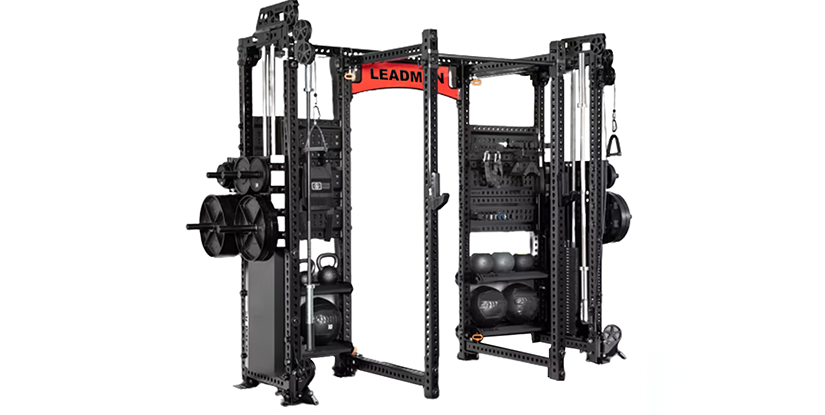
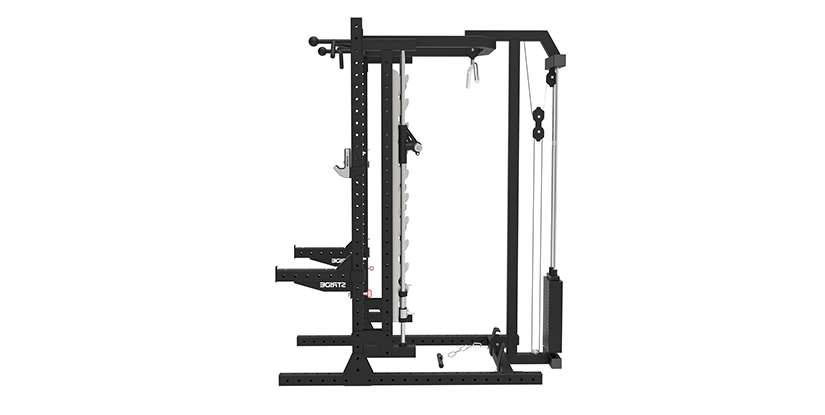
A 2x4 squat rack is a heavy-duty strength training station utilizing 2x4-inch steel tubing, engineered to provide maximum structural stability while minimizing the footprint and material overhead of oversized 3x3 commercial rigs. This configuration offers the ideal balance of high weight capacity and cost-efficiency for high-traffic fitness facilities.
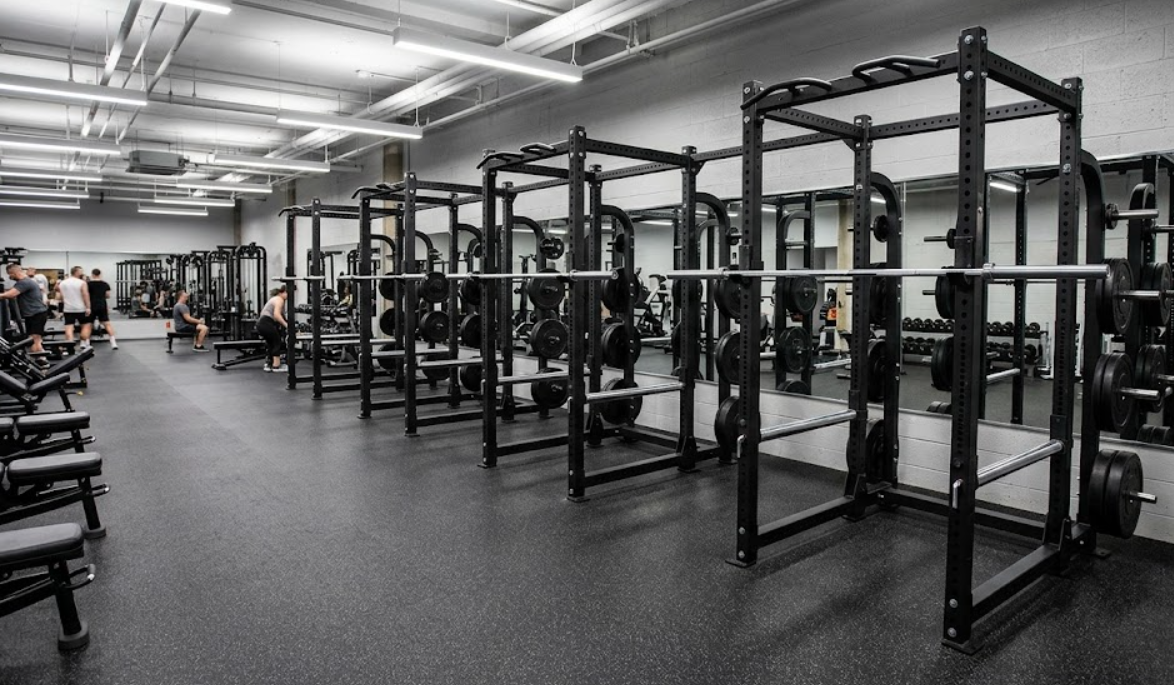
In the commercial fitness sector, every square foot must generate revenue. When we outfitted a regional chain of 50 fitness centers, the primary challenge wasn't just finding a rack that could hold weight—it was finding a solution that maximized the number of lifting stations without compromising safety. The 2x4 squat rack emerged as the clear winner. By choosing this specific geometry, gym owners can achieve the structural rigidity required for heavy compound movements while maintaining a lower profile that improves the visual flow and safety of the gym floor.
For a procurement manager, the pain of over-specifying equipment is real. Investing in over-engineered 3x3 racks for every single station often leads to bloated capital expenditure and reduced floor capacity. This inefficiency drains your ROI before the first member even signs up. The solution lies in strategic equipment selection: using a 2x4 squat stand or 2x4 power rack allows you to deploy more stations per square foot, directly increasing your facility's peak-hour capacity and long-term profitability.
Beyond Initial Cost: Calculating the ROI of 2x4 Power Racks
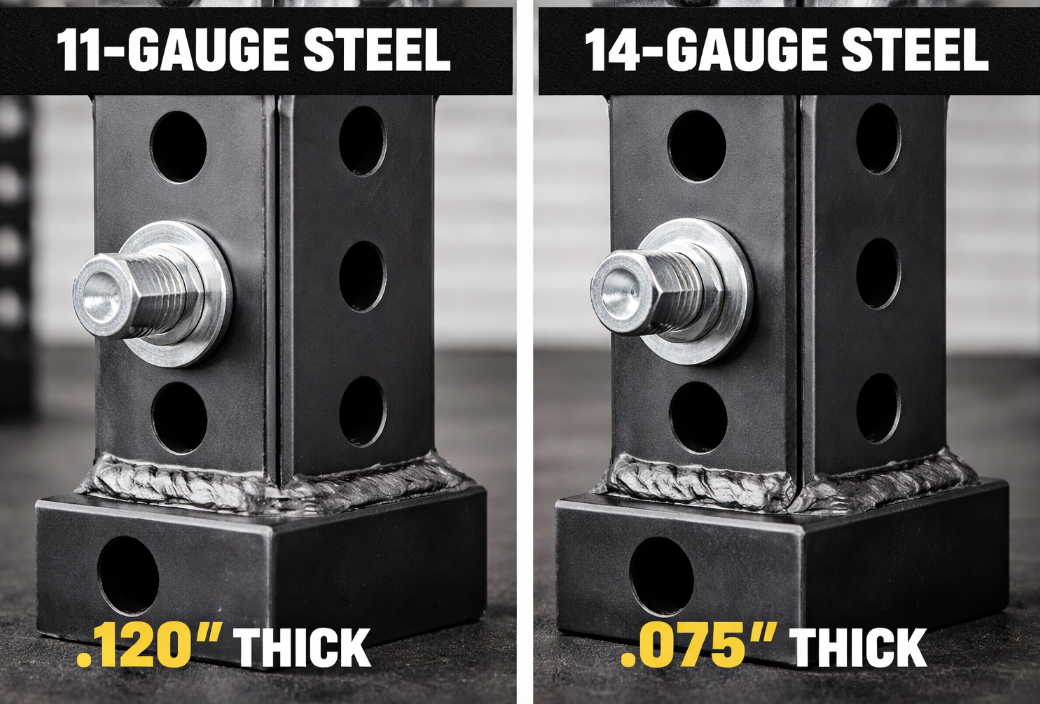
When evaluating a 2x4 power rack, look past the sticker price. The true commercial value is found in the intersection of durability, versatility, and maintenance costs. A high-quality 2x4 squat rack built with 11-gauge or 7-gauge steel ensures that the rack survives the daily abuse of hundreds of drop-sets and racked barbells without structural fatigue.
We analyze procurement through the lens of "Total Cost of Ownership." A cheaper, light-gauge rack might save 15% upfront, but the agitation of frequent bolt-tightening, paint chipping, and potential safety liabilities quickly erodes those savings. Our experience in supplying large-scale facilities shows that a standardized 2x4 power rack significantly reduces the variety of spare parts needed in inventory, streamlining maintenance across multiple locations. This standardization is a massive advantage for franchise operators looking for a repeatable, scalable equipment model.
| Metric | Standard 2x4 Squat Rack | Light-Duty Residential Rack | Heavy 3x3 Commercial Rig |
|---|---|---|---|
| Space Efficiency | High (Optimized Footprint) | High (Unstable for Commercial) | Low (Bulkier Footprint) |
| Structural Capacity | Typical 800 - 1,000+ lbs | Typically < 500 lbs | 1,500+ lbs |
| Maintenance Frequency | Low (Industrial Grade) | High (Frequent Adjustments) | Very Low |
| Initial CapEx | Moderate / Cost-Effective | Low | High |
| Long-term ROI | Optimized for High Traffic | Poor (High Replacement Rate) | Diminishing Returns for General Use |
Structural Integrity: Material Standards for High-Traffic Facilities
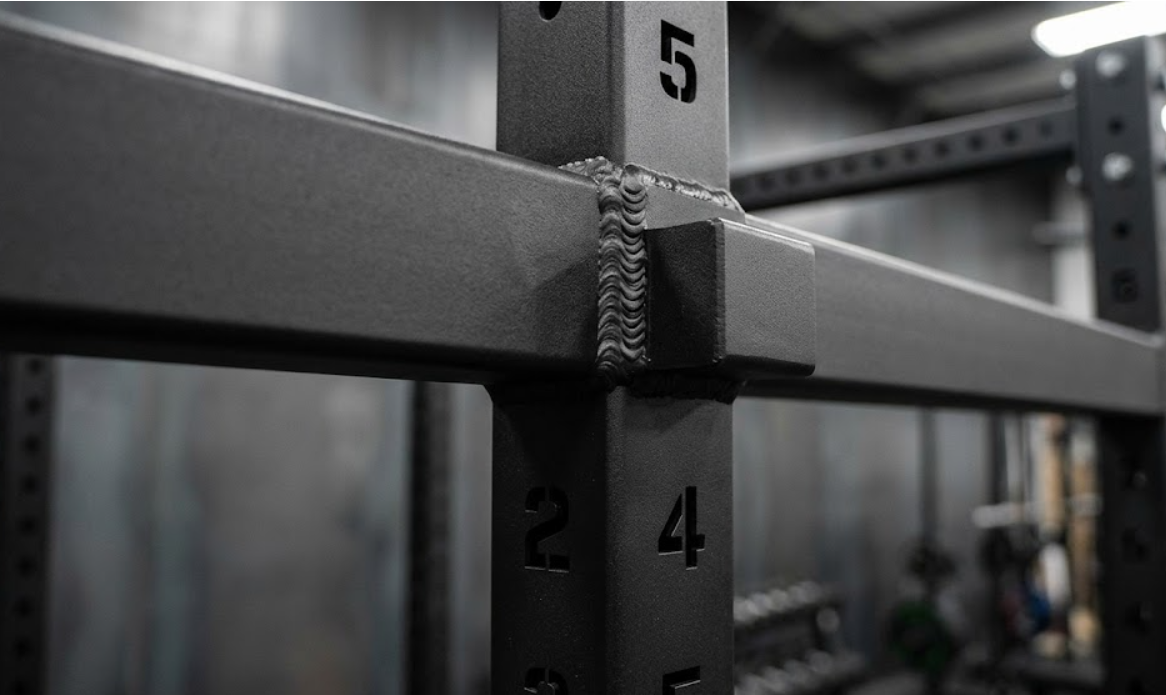
When procuring a 2x4 squat rack for a commercial facility, the steel gauge is the most critical factor in determining the equipment's lifespan. In high-traffic gyms, equipment is subjected to constant impact and eccentric loading. We typically recommend 11-gauge steel for the uprights of any 2x4 power rack. This thickness provides the necessary rigidity to prevent frame torsion during heavy re-racks, ensuring the safety of your members and the longevity of your investment.
The agitation of choosing inferior materials often manifests as "frame sway" or hardware fatigue after just six months of use. This not only compromises safety but also creates a perception of low quality among gym members, potentially leading to increased churn rates. By specifying 11-gauge steel and industrial-grade hardware, you reduce the frequency of safety inspections and part replacements. Our production process utilizes precision laser cutting and robotic welding to ensure that every 2x4 squat rack meets strict weight tolerance standards, allowing for a consistent user experience across multiple lifting stations.
Beyond the steel itself, the finish plays a vital role in maintenance costs. A high-quality powder coat finish is essential for preventing corrosion in humid gym environments. We utilize an electrostatic powder coating process that bonds to the steel at a molecular level, resisting the chips and scratches that commonly occur with adjustable J-cups and safety arms. This attention to detail ensures that your 2x4 squat stand looks as professional in year five as it did on day one, preserving the aesthetic value of your facility.
Floor Efficiency: Maximizing Revenue per Square Foot with the 2x4 Squat Stand
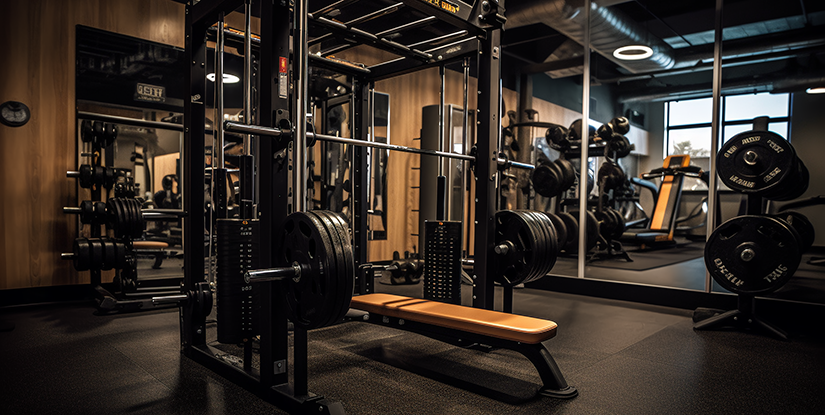
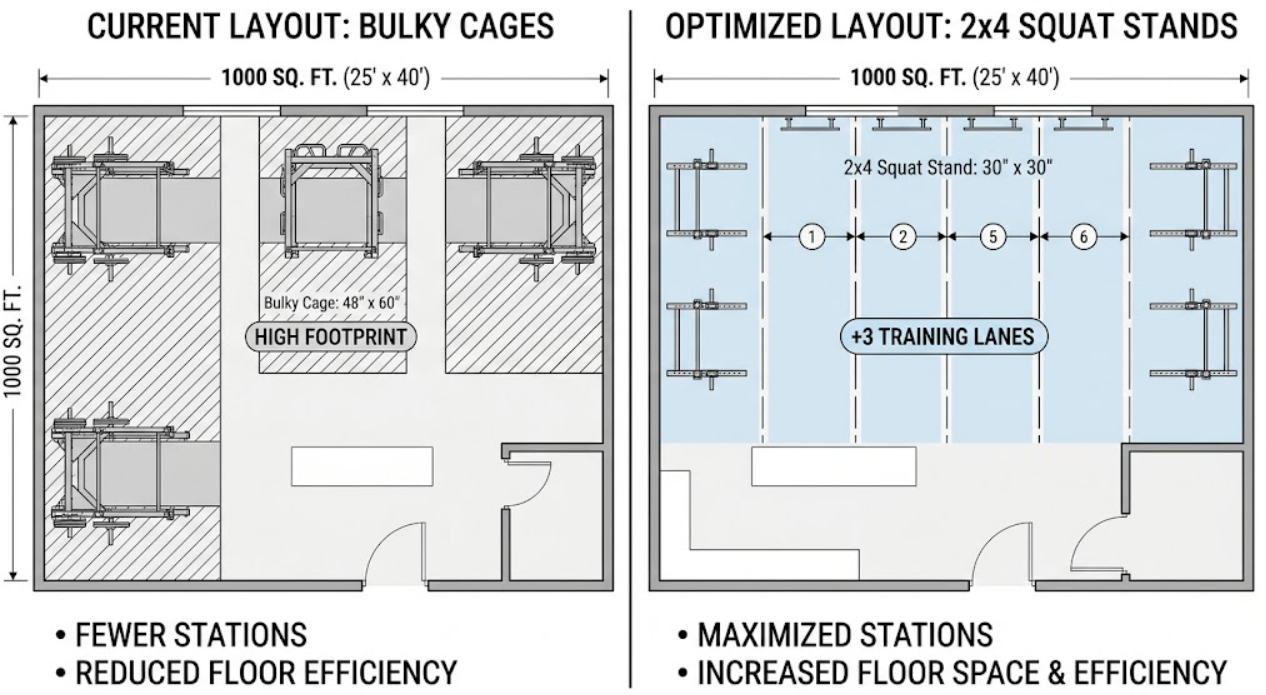
For boutique studios and functional training zones, the 2x4 squat stand offers a significant advantage in spatial ROI. Traditional 3x3 power cages often consume excessive floor space, creating "dead zones" that limit the number of clients you can train simultaneously. In a commercial setting, space is rent, and rent is a fixed cost that must be offset by member throughput. By utilizing the more compact footprint of a 2x4 squat rack, you can often fit five stations in the space normally occupied by four larger units.
This 20% increase in station density directly impacts your bottom line, especially during peak hours. A 2x4 squat stand provides a versatile platform for squats, overhead presses, and bench work without the bulky overhead crossmembers of a full cage. This open design also improves sightlines for trainers, allowing for better supervision of multiple clients in a small-group personal training environment. When we assist gym owners in floor plan optimization, we focus on the "working area" vs. "footprint" ratio—a metric where the 2x4 squat rack consistently outperforms larger alternatives.
| Feature | Commercial 2x4 Squat Stand | Standard 3x3 Power Cage | Impact on Business ROI |
|---|---|---|---|
| Footprint (Typical) | Approx. 12-15 sq. ft. | Approx. 20-25 sq. ft. | Saves up to 40% floor space |
| Installation Time | Fast (Minimal Parts) | Moderate (Multi-bolt assembly) | Reduces labor costs and downtime |
| Mobility | High (Easily rearranged) | Low (Fixed/Heavy) | Allows for flexible gym layout |
| Shipping Volume | Compact (Lower Freight) | High (Increased Logistics) | Significant savings on bulk orders |
Total Cost of Ownership (TCO) and Preventive Maintenance Protocols
When we manage procurement for high-volume facilities, the conversation must shift from the purchase price to the Total Cost of Ownership (TCO). A 2x4 squat rack built to commercial specifications is designed to minimize the long-term drain on your maintenance budget. In a facility operating 18 hours a day, the J-cups and safety pins of a 2x4 power rack are engaged thousands of times per month. Lower-tier equipment often fails at these friction points, leading to unexpected downtime and the labor cost of frequent repairs.
The agitation of poorly planned procurement is the hidden cost of "micro-repairs." Replacing a bent safety bar or a cracked plastic insert on a cheap rack may seem minor, but when multiplied across 20 stations, it becomes a significant operational burden. By investing in a 2x4 squat rack with reinforced bolt-down plates and heavy-duty hardware, you standardize your maintenance schedule. We recommend a simple quarterly torque-check on all primary bolts and a visual inspection of the powder coating to ensure structural integrity and professional appearance. This proactive approach extends the lifecycle of the equipment well beyond the typical three-year depreciation cycle.
The solution to maintaining a high-performance floor is choosing equipment that utilizes standardized commercial components. Our 2x4 squat rack systems use industry-standard hole spacing, which allows for easy replacement of wear-and-tear items like J-cup liners without needing to source proprietary parts from multiple vendors. This compatibility simplifies your supply chain and ensures that your racks are never out of commission due to a lack of available parts.
Strategic Logistics: Why the 2x4 Squat Rack Dominates Distributor Portfolios
For fitness equipment distributors and retailers, the profitability of a product line is heavily influenced by shipping density and warehouse utilization. The 2x4 squat rack geometry offers a distinct advantage over the bulkier 3x3 counterparts in terms of logistics. Because the 2x4 steel tubing is more space-efficient, it allows for tighter flat-packing in shipping containers. This directly reduces the landed cost per unit, allowing for better margins in a competitive wholesale market.
The pain of high freight costs can quickly kill the profitability of a large-scale equipment deal. Standard 3x3 rigs often require specialized crating and take up excessive pallet space, increasing the logistics overhead for every unit sold. In contrast, a 2x4 squat stand is designed for high-density shipping. This efficiency is especially critical when managing bulk orders for international shipping or regional distribution centers. By optimizing the packaging volume, we help our B2B partners maximize their warehouse "profit per cubic foot."
In addition to shipping efficiency, the 2x4 squat rack is often easier for end-users to assemble, reducing the need for expensive professional installation teams. For a distributor, this means fewer customer service inquiries and a lower return rate. Whether you are stocking 2x4 power rack units for e-commerce fulfillment or local gym fit-outs, the balance of strength, weight, and shipping volume makes this the most liquid asset in a strength equipment portfolio.
| Logistics Factor | Standard 2x4 Configuration | Heavy 3x3 Configuration | Distributor Advantage |
|---|---|---|---|
| Units per 40ft Container | Higher (Approx. 15-20% more) | Lower | Lowered per-unit landed cost |
| Standard Pallet Fit | Excellent (Flat-pack optimized) | Bulky (Often requires over-sized pallets) | Simplified warehouse stacking |
| Assembly Complexity | Moderate (2-person, 45 mins) | High (3-person, 90 mins) | Reduced technical support needs |
| Shipping Weight | Optimized for Freight Classes | Heavy (High-tier freight class) | Lower LTL and Last-mile costs |
Safety Standards and Structural Integrity: The Foundation of Commercial Strength Zones
For any commercial gym owner, safety is the primary metric that precedes aesthetics or price. A 2x4 squat rack must be engineered to handle the dynamic loads of professional athletes and heavy lifters. In a commercial environment, equipment failure is not just a maintenance issue; it is a significant liability risk. Using a 2x4 power rack that lacks proper structural certification can lead to catastrophic failure, resulting in member injury and potential legal exposure that far outweighs any initial savings on the equipment purchase.
The agitation of utilizing non-commercial grade racks is often seen in the gradual degradation of the uprights and safety pins. Over time, repeated heavy impacts on low-quality 2x4 squat stand units can lead to metal fatigue and hairline fractures in the welds. This degradation often goes unnoticed until a failure occurs. Our 2x4 squat rack designs undergo rigorous weight-load testing that exceeds standard gym usage, ensuring a safety factor that accounts for the most extreme training scenarios. We focus on the gusset plate reinforcement at every joint, which stabilizes the frame against side-to-side movement during high-intensity sessions.
Choosing a certified 2x4 power rack provides the peace of mind required to operate a professional facility. We ensure that our J-cups and safety spotting arms are lined with high-density UHMW (Ultra-High Molecular Weight) plastic. This material protects the barbell knurling and dampens the noise of heavy drops, but more importantly, it prevents metal-on-metal wear that can compromise the structural integrity of the rack over years of service. A safe gym is a profitable gym, and the 2x4 squat rack serves as the backbone of a secure lifting environment.
Branding and Customization: Tailoring Your 2x4 Squat Rack to Your Identity
In the competitive fitness market, brand identity is what separates a premium training facility from a budget basement gym. Standard, off-the-shelf equipment often makes a facility look generic, making it difficult to command premium membership rates. For distributors, offering a generic 2x4 squat stand means competing solely on price, which leads to a race to the bottom in terms of profit margins. The solution is customization—transforming a standard 2x4 squat rack into a bespoke piece of equipment that reinforces your brand’s prestige.
We provide comprehensive OEM and ODM services for our 2x4 power rack systems, allowing B2B clients to specify custom powder coat colors that match their corporate branding. Beyond color, we offer laser-cut logo plates and custom-branded crossmembers. This level of detail not only enhances the professional look of the gym floor but also serves as a constant marketing tool when members post their workout content on social media. For a franchise operator, having a standardized, branded 2x4 squat rack across fifty locations creates a cohesive and professional member experience that justifies higher tier pricing.
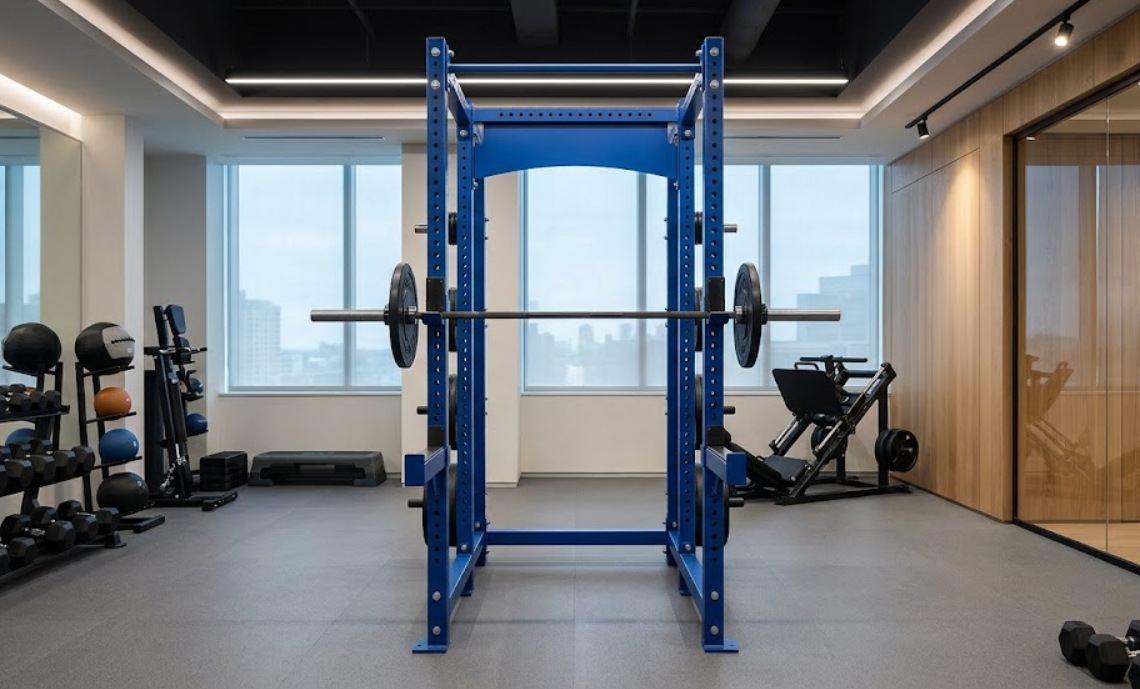
The procurement process for customized 2x4 squat rack units is streamlined to ensure that branding does not significantly delay your project timeline. Our design team works directly with your brand assets to create 3D renders of the equipment before mass production begins. This ensures that the final product meets your exact specifications for color accuracy and logo placement. By integrating your brand into the hardware, you increase the perceived value of your facility and create a more immersive environment for your members.
Warehouse and Inventory Management: Profitability for Retailers
For fitness equipment retailers and e-commerce distributors, warehouse space is a premium resource. Large, 3x3 commercial rigs often present a storage nightmare, requiring oversized pallets and complex racking systems that eat into your operational margins. The 2x4 squat rack provides a strategic alternative. Its slimmer profile and modular design allow for high-density storage, enabling you to stock more units per square foot of warehouse space compared to bulkier alternatives.
The agitation of inefficient inventory management is felt most during peak shipping seasons. When your warehouse is clogged with slow-moving, oversized equipment, your agility to respond to market trends is diminished. The 2x4 power rack is designed for streamlined inventory turnover. Because these units are typically flat-packed with precision, they maximize pallet efficiency. This means you can fit more sellable inventory into a single shipping container or delivery truck, significantly reducing your per-unit overhead and increasing your total profit per shipment.
Furthermore, the 2x4 squat stand is an ideal product for private labeling. Its versatile design serves a wide range of customers, from garage gym enthusiasts to commercial studio owners. This broad market appeal, combined with the logistical advantages of the 2x4 footprint, makes it a high-velocity item for any fitness equipment portfolio. By partnering with a manufacturer that understands these B2B logistical constraints, you ensure that your supply chain remains lean, responsive, and ultimately more profitable.