Short Squat Rack | Optimizing Small Gym Footprints With
Deploying Compact Strength Solutions in High-Traffic Boutique Settings
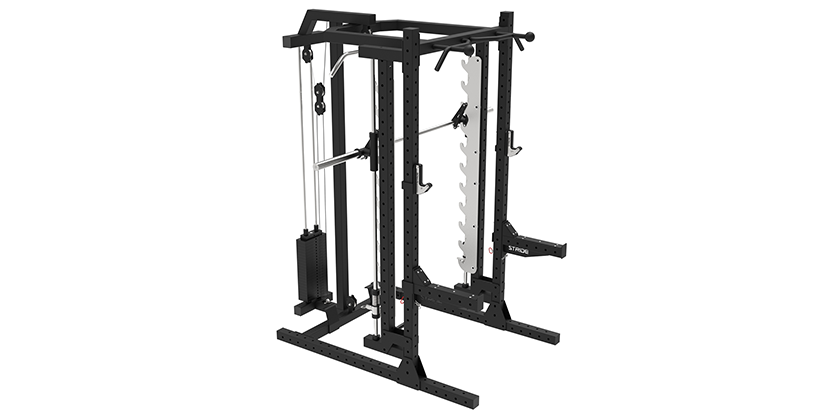
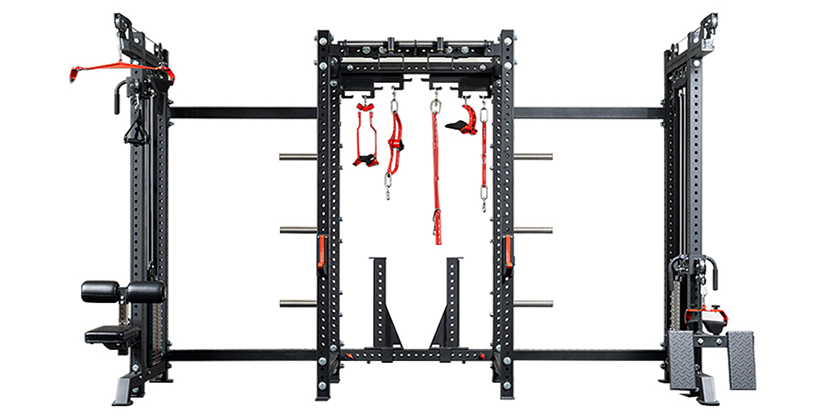
Facility managers often struggle with the tension between maximizing floor utility and maintaining equipment standards. A common procurement mistake is prioritizing standard full-height racks that clash with low-clearance ceilings, or conversely, selecting low-profile equipment that lacks structural rigidity. A more strategic approach involves sourcing a specialized short squat rack designed to balance vertical clearance with high-load stability.
In a high-traffic boutique studio, every square foot directly impacts revenue potential. Implementing low ceiling squat stands allows operators to utilize underused architectural corners or basement-level layouts that would otherwise be non-functional for traditional strength training. This focus on footprint optimization ensures that even in space-constrained environments, the facility can offer heavy compound movements without compromising the safety of the overhead clearance or the structural integrity of the unit.
Technical Comparison of Space-Saving Configurations
When sourcing space saving gym equipment, procurement managers must weigh the trade-offs between vertical height, stability, and the total floor footprint. Depending on your facility's ceiling height and intended user density, different configurations of compact power racks will serve different operational needs. A lower height profile often improves safety in low-clearance areas but may require reinforced base structures to maintain the same load capacity as full-scale commercial models.
| Configuration Type | Ideal Ceiling Height | Footprint Profile | Primary Use Case |
|---|---|---|---|
| Low-Profile Squat Stand | Under 9 ft (2.7m) | Minimal / Compact | Boutique studios & home-based commercial units |
| Compact Power Rack | 9 ft – 10 ft (2.7m–3m) | Moderate / Fixed | High-traffic strength zones with limited depth |
| Wall-Mounted Rig | Variable | Zero Floor Footprint | Maximum floor utility in narrow training lanes |
For distributors and large-scale buyers, selecting a configuration is not just about size, but about long-term durability. While a standard squat stand offers the smallest footprint, a compact power rack provides superior lateral stability for heavy barbell movements. Always verify that the shortened vertical height does not compromise the structural welding points or the ability to attach essential commercial accessories.
Streamlining Logistics and Global Sourcing Operations
Managing the arrival of heavy-duty steel components requires precise logistics planning to avoid unexpected overhead. When sourcing a short squat rack, distributor partners should prioritize suppliers that optimize shipping volume through modular designs. Reducing the cubic volume per unit lowers freight costs and simplifies assembly on-site within a commercial facility. For those managing large-scale deployments, negotiating a reasonable MOQ is critical to balancing inventory depth with the physical constraints of warehouse storage and rapid deployment timelines.
Prioritizing Stability in Low-Clearance Environments
When sourcing for low-ceiling facilities, the primary procurement risk is the trade-off between height reduction and structural stability. A short squat rack must maintain high structural integrity despite a lower center of gravity or altered upright dimensions. In a high-traffic commercial gym, reducing vertical clearance should never result in a compromised load-bearing capacity or increased lateral sway under heavy barbell loads.
Distributors and facility managers should verify that the shortened uprights are engineered with heavy-gauge steel to compensate for the change in leverage and weight distribution. A high-quality unit ensures that the reduced profile remains rigid during heavy compound lifts, preventing the micro-oscillations that often plague lower-quality, compact equipment in boutique studio settings.
Technical Comparison of Structural Configurations
To optimize procurement decisions, evaluate the relationship between steel gauge, upright dimensions, and footprint stability. While compact designs save space, the selection of steel thickness directly dictates the long-term durability and safety standards of the equipment in a professional environment.
| Configuration Type | Standard Steel Gauge | Stability Profile | Ideal Application |
|---|---|---|---|
| Standard 75x75mm Uprights | 11-Gauge Steel | High; optimal for heavy barbell loads | Boutique studios with high throughput |
| Slim 60x60mm Uprights | 14-Gauge Steel | Moderate; suitable for lighter lifting | Residential-focused commercial gyms |
| Reinforced Base Design | Mixed Gauge | Maximum; reduces lateral sway | Low-ceiling facilities with high volume |
When negotiating with manufacturers, confirm that the base footprint is engineered to counteract the shorter vertical profile. For distributors, prioritizing 11-gauge steel ensures the product meets the rigorous demands of commercial users, even when working within highly constrained vertical spaces.
Logistics and Quality Control for Compact Power Racks
Optimizing the supply chain for space saving gym equipment requires more than just checking dimensions; it involves auditing how shorter profiles affect shipping volume and assembly stability. While compact power racks often offer more efficient container loading due to reduced vertical dimensions, this does not inherently guarantee lower freight costs if the component density remains high.
From a distributor procurement standpoint, rigorous QC standards must extend to the hardware and connection points. Because shorter uprights can change the mechanical leverage during assembly, ensure the manufacturer uses high-tensile bolts and precision-drilled holes to prevent misalignment. A failure to verify these tolerances can lead to increased onsite labor costs and diminished structural rigidity. When sourcing, request verification that the shortened geometry does not compromise the welding strength at the base, ensuring the unit remains a durable, long-term asset for your clients.
Comparing Full-Scale Power Racks vs. Compact Footprint Alternatives
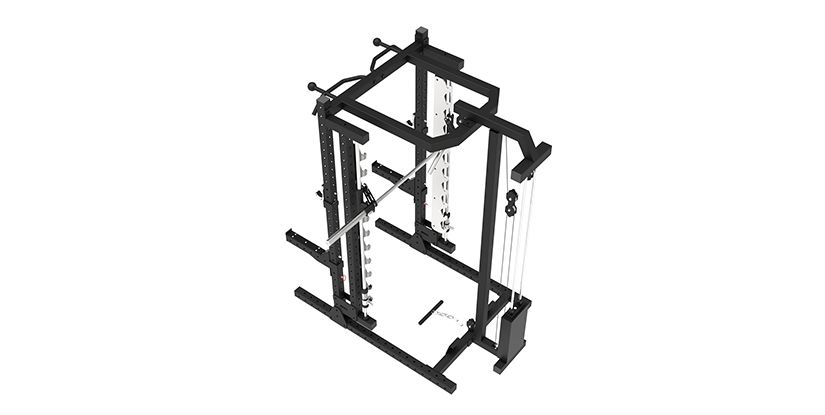
When calculating the total cost of ownership for a new facility, procurement managers must weigh the upfront capital expenditure against the long-term revenue potential of every square foot. While full-scale power racks offer maximum versatility for high-volume training, a short squat rack provides a strategic advantage for high-density layouts where ceiling height or floor area is limited.
Evaluating the Space-to-Value Ratio
For boutique studios and specialized training zones within a larger commercial gym, the goal is to maximize utility without over-investing in unused vertical clearance. A short squat rack reduces the physical footprint and initial investment per unit, allowing for more functional zones within the same square footage. This optimization directly impacts the space-to-value ratio, turning high-rent floor area into productive, revenue-generating training space.
| Procurement Factor | Full-Scale Power Racks | Short Squat Rack |
|---|---|---|
| Initial CAPEX | Higher investment per unit | Lower entry cost per unit |
| Vertical Clearance | Requires high ceilings | Optimized for low ceilings |
| Facility Density | Lower units per sq. ft. | Higher density potential |
| Primary Use Case | Heavy strength/Competition | Boutique/Functional/Compact |
Cost-Efficiency and Configuration Comparison
Selecting the right configuration depends on whether your priority is maximum weight capacity or maximizing floor utility. While compact power racks offer a robust middle ground, low ceiling squat stands or specialized space saving gym equipment may offer a lower price point for facilities prioritizing high-density movement over heavy powerlifting.
| Configuration Type | Footprint Profile | Versatility Level | Durability Focus | Procurement Tier |
|---|---|---|---|---|
| Standard Power Rack | Large/Fixed | High (Multi-lift) | Heavy Duty/Competition | Premium/Full-Scale |
| Compact Power Rack | Medium/Modular | Moderate (Strength) | Standard Commercial | Mid-Tier/Value |
| Short Squat Rack | Small/Minimal | Functional/Niche | High-Frequency/Boutique | Efficient/Budget-Friendly |
Distributors should consider how these configurations affect shipping volumes and storage requirements. A short squat rack typically offers a more efficient shipping profile, reducing logistics costs per unit compared to oversized, full-scale structures, which is a critical factor for overseas wholesale procurement and inventory management.
Total Cost of Ownership and Logistics Optimization
Beyond the initial purchase, professional buyers must evaluate the long-term ROI through the lens of maintenance and structural durability. In high-traffic commercial settings, the simplified engineering of a short squat rack often results in fewer moving parts and lower upkeep requirements compared to complex, full-sized rigs. This reduces long-term operational costs for facility managers.
From a global sourcing perspective, the smaller profile of these units significantly optimizes logistics. Compact dimensions allow for higher container density during sea freight, lowering the landed cost per unit. For distributors, this means reduced shipping overhead and more efficient facility layout planning during warehouse storage and final deployment.
Optimizing Floor Utility Through Modular Accessory Compatibility
In high-density commercial environments, the value of a short squat rack is defined by its ability to evolve with the facility layout. For boutique studios and specialized training centers, static equipment creates dead zones that diminish revenue-per-square-foot. Integrating a modular short squat rack allows operators to transition from a basic lifting station to a multi-functional training zone by adding specialized attachments.
When sourcing compact power racks, procurement managers must prioritize accessory compatibility over initial unit cost. High-quality space saving gym equipment should feature standardized hole spacing and robust mounting points to support dip stations, landmines, or weight storage pegs. This modularity ensures that a single footprint can serve diverse programming needs, effectively increasing the long-term utility of the square footage provided.
Distributors and facility owners should evaluate the trade-offs between fixed structural setups and expandable modular systems. While fixed configurations offer lower initial costs and higher structural rigidity, expandable models provide the versatility required for multi-use studio environments where floor utility is at a premium.
| Attachment Type | Standard 2x3 Upright Compatibility | Standard 3x3 Upright Compatibility | Typical Utility Benefit |
|---|---|---|---|
| J-Cups / Spotter Arms | Common (Light/Mid Duty) | Standard (Heavy Duty) | Core lifting stability |
| Dip Stations | Limited (Requires specialized mounts) | High (Optimized for weight) | Multi-functional training |
| Landmine Attachments | Often requires floor-mounts | Highly compatible (Bolt-on) | Dynamic movement variety |
| Weight Storage Pegs | Standardized | Heavy-duty/High capacity | Reduced floor clutter |
When auditing potential suppliers, verify if the upright profiles support both 2x3 and 3x3 accessory standards. For low ceiling squat stands, choosing a modular system that utilizes high-density steel prevents the need for frequent equipment replacement, ensuring a lower total cost of ownership (TCO) even as training requirements evolve.
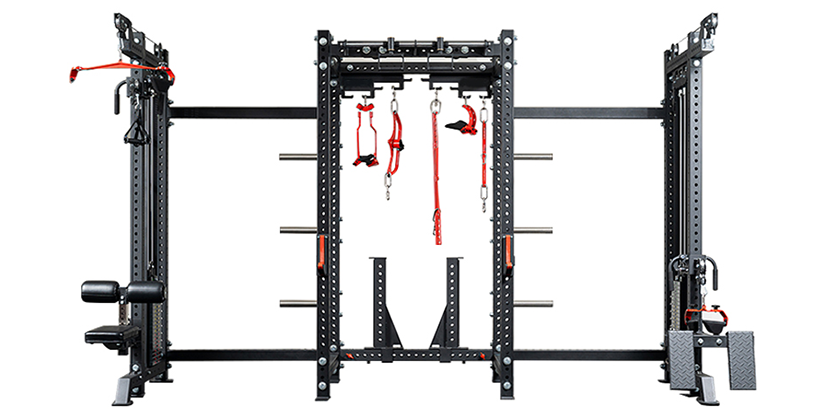
Evaluating the long-term ROI of your procurement requires looking beyond the initial invoice. While basic low ceiling squat stands may offer a lower entry price, they often lack the structural versatility required for future expansion. For distributors and facility owners, prioritizing modularity is a strategic hedge against obsolescence. A system that supports diverse accessory integration reduces long-term maintenance costs and prevents the need for full unit replacement when programming needs shift. Focus on sourcing from manufacturers with high-grade steel profiles that allow for incremental upgrades, ensuring your initial investment continues to generate value as your facility grows.
Sourcing Considerations for Wholesale Distributors and OEM Partners
Procuring a short squat rack requires a strict focus on vertical clearance and load-bearing reliability. For distributors serving boutique studios or hotel fitness centers, the primary challenge is sourcing compact power racks that function effectively in low ceiling environments without compromising safety or structural integrity.
Prioritizing Material Grade and Stability
When vetting manufacturers, prioritize units constructed from high-gauge commercial-grade steel. Unlike residential alternatives, professional-grade equipment must maintain structural stability under heavy barbell oscillations. For B2B buyers, ensuring the uprights and crossmembers meet rigorous thickness standards is essential to reduce long-term maintenance costs and prevent deformation during high-traffic use in space-constrained facilities.
Distributors should evaluate manufacturing configurations based on the intended facility profile. A standard commercial setting requires significantly higher specifications than a boutique studio or a hospitality-focused gym. Miscalculating these variables can lead to premature wear or structural fatigue, increasing the total cost of ownership for your clients.
Technical Configuration Comparison for Procurement
| Specification Metric | Boutique/Studio Tier | Standard Commercial Tier | High-Performance/Elite Tier |
|---|---|---|---|
| Steel Gauge (Uprights) | 11-gauge (approx. 3mm) | 7-gauge to 11-gauge | 7-gauge heavy-duty steel |
| Powder Coating Quality | Standard electrostatic finish | Scratch-resistant matte/gloss | Anti-corrosion, high-durability finish |
| Typical Weight Capacity | Moderate load requirements | High-volume daily usage | Maximum heavy barbell loading |
| Ideal Use Case | Personal training studios | Small commercial gyms | Competitive strength facilities |
When negotiating MOQs or custom OEM specifications, verify that the space saving gym equipment maintains a consistent finish across all joints and welds. A high-quality powder coating is not merely aesthetic; it protects the steel from moisture and sweat in high-density environments, ensuring the longevity of the product during its lifecycle.
Logistics Optimization and Supply Chain Efficiency
For distributors managing high-volume orders, optimizing the shipping volume is critical to protecting margins. High-quality manufacturers design these units with modularity in mind, ensuring that each short squat rack component is optimized for palletization. This precision reduces the warehouse footprint and minimizes the risk of damage during long-distance transit.
When negotiating with overseas factories, clarify the assembly requirements and packaging standards early. Efficient logistics rely on standardized box dimensions and clear, step-by-step installation guides to reduce on-site labor for your end-users. Always verify the MOQ against your projected inventory turnover to balance shipping costs with storage capacity. A well-structured supply chain ensures that even specialized, compact equipment arrives ready for immediate integration into the facility layout.
Logistics and Quality Control Standards for International Freight
Maintaining the structural integrity of a short squat rack requires more than just high-grade steel; it demands rigorous oversight during the manufacturing and transit phases. For distributors and commercial gym operators, the risk of receiving compromised equipment due to improper handling is a significant concern for long-term reliability.
To meet strict commercial gym standards, every short squat rack must undergo multi-stage quality control to verify weld strength and alignment. Beyond the factory floor, specialized packaging is essential to prevent shipping damage. Heavy-duty reinforced crating and optimized palletization ensure that compact power racks arrive at your facility without frame deformation or surface abrasions, protecting your initial capital investment and reducing the need for costly returns or on-site repairs.
When sourcing space-saving gym equipment at scale, the choice between air and sea freight significantly impacts both your landed cost and inventory turnover. Large-scale distributors must balance the urgency of restocking boutique studios with the logistical constraints of shipping heavy, high-density steel components across oceans.
| Shipping Configuration | Primary Use Case | Protection Level | MOQ Considerations |
|---|---|---|---|
| Sea Freight (LCL/FCL) | Bulk distributor replenishment | High (Heavy-duty pallet/crate) | Higher volume required for cost-efficiency |
| Air Freight | Urgent boutique studio orders | Medium (Reinforced carton) | Lower volume; premium cost per kg |
| Express Courier | Single unit/Sample testing | Standard (Protective foam/polybag) | Single unit (Low MOQ) |
For most commercial procurement cycles, sea freight remains the industry standard due to the weight-to-volume ratio of compact power racks. We recommend opting for reinforced wooden crates for sea shipments to mitigate the risk of structural shifting during long-haul transit, ensuring your facility receives equipment that meets exact assembly tolerances.
Pre-Assembly Inspection and Maintenance Protocols
Effective maintenance begins the moment the shipment arrives at your facility. Procurement managers should treat the unboxing phase as a critical assembly inspection to mitigate long-term operational risks. Even when sourcing high-quality space saving gym equipment, shipping vibrations can occasionally impact fine tolerances or surface finishes.
First, verify the coating integrity of all steel members. Scratches or chips in the powder coating can lead to premature oxidation, especially in high-humidity boutique environments. Second, inspect all fasteners and connection points; ensure that every bolt maintains proper bolt tension to prevent structural wobbling over time. This is particularly vital for low ceiling squat stands, where height-specific adjustments must remain perfectly aligned to ensure user safety. Conducting these checks during initial setup prevents the need for expensive mid-cycle onsite adjustments and extends the total lifecycle of the unit.
Long-Term Value Assessment of Space-Saving Strength Equipment
Evaluating the financial impact of a short squat rack extends beyond the initial purchase price. For facility owners, the true ROI is found in the optimized floor utility of a high-traffic commercial gym or high-end boutique studios where every square foot generates revenue.
Maximizing Revenue Density and Asset Longevity
Investing in high-quality space saving gym equipment allows operators to increase the density of functional training zones without compromising safety or structural integrity. Unlike consumer-grade alternatives, professional-grade compact racks maintain high asset longevity, reducing the frequency of replacement cycles and minimizing long-term capital expenditure. By selecting modular, heavy-duty configurations, distributors and gym owners ensure that their footprint remains versatile as training trends evolve, protecting the long-term value of the facility layout.
Choosing between standard dimensions and specialized configurations requires a clear understanding of how equipment height and footprint influence your total cost of ownership (TCO). While standard racks offer familiarity, specialized options like low ceiling squat stands or compact power racks may offer superior long-term value in specific real estate environments.
Configuration Comparison: Standard vs. Compact Solutions
The following comparison highlights the trade-offs between footprint, maintenance requirements, and long-term utility for various commercial settings.
| Configuration Type | Ideal Facility Layout | Primary Benefit | Maintenance Profile |
|---|---|---|---|
| Standard Power Rack | Large-scale commercial gyms | Maximum versatility/attachments | Standard periodic inspections |
| Compact Power Racks | Boutique studios & high-traffic zones | Optimized floor utility | Low; high structural stability |
| Low Ceiling Squat Stands | Multi-use facilities with height limits | Avoids structural interference | Minimal; simplified mechanics |
When sourcing for a distributor or large-scale facility, prioritize durability and ease of maintenance over the lowest initial bid. A more robust, compact design typically reduces long-term operational costs by minimizing wear on moving parts and ensuring the unit remains a permanent fixture despite high-intensity usage cycles.
Procurement Strategy: Scaling Through Efficient Sourcing
For distributors and large-scale facility managers, the procurement process for a short squat rack requires balancing unit cost against logistics efficiency. When wholesale ordering, evaluate the factory capability regarding MOQ thresholds and structural quality control. High-density shipping configurations can significantly reduce freight-per-unit costs, but only if the manufacturer prioritizes robust packaging to prevent transit damage. A strategic investment in premium steel gauges ensures long-term durability, preventing the premature scaling issues caused by frequent repairs or part replacements in high-volume commercial environments.