Selecting Power Rack J Hooks for Multi Site Gym Rollouts
Standardizing Accessory Selection for Large-Scale Facility Rollouts
Many procurement managers fail by prioritizing the lowest unit price for power rack j hooks, only to face high replacement costs later. A superior sourcing strategy shifts focus from immediate savings to long-term TCO, ensuring that standardized commercial weightlifting accessories reduce maintenance overhead and simplify inventory management across multiple locations.
Evaluating Unit Price vs. Durability
In large-scale rollouts, the delta between cheap components and high-grade steel becomes visible through replacement cycles. Sourcing low-cost barbell j hooks often leads to premature wear on the coating or structural bending under heavy loads, forcing frequent re-orders. For distributors and facility owners, maximizing procurement efficiency means selecting accessories that match the lifespan of the rack itself, thereby stabilizing the budget against unexpected maintenance spikes.
| Procurement Metric | Low-Cost Generic Sourcing | Standardized Commercial Grade |
|---|---|---|
| Initial Unit Price | Lower upfront investment | Moderate to higher initial cost |
| Durability Profile | Higher risk of deformation | High load-bearing stability |
| Maintenance Frequency | Frequent replacement required | Extended service intervals |
| Operational Impact | High SKU fragmentation | Uniformity across all sites |
Tiered Procurement Models by Facility Type
Selecting the appropriate quality tier depends heavily on the intended use case and the expected density of the facility. A boutique studio with limited heavy lifting may prioritize aesthetic finish and footprint, whereas a high-traffic commercial strength zone requires rigorous load-bearing certifications to mitigate liability and replacement frequency.
| Facility Tier | Material Grade | Load Capacity Expectation | Cost-Effectiveness Logic |
|---|---|---|---|
| Boutique / Studio | Mild Steel / Light Powder Coating | Standard / Moderate | Focus on aesthetics and low initial CAPEX |
| Mid-Scale Commercial | Reinforced Steel / High-Durability Finish | Heavy / High-Volume | Balance of durability and reasonable unit price |
| Professional Strength Hub | Heavy-Gauge Structural Steel | Extreme / Constant Load | Maximum TCO savings through long-term reliability |
When managing multi-site deployments, procurement teams should standardize on a single tier to streamline gym equipment procurement. Using a unified specification across different facility types simplifies the distributor ordering process and ensures that spare parts remain interchangeable, reducing the complexity of global logistics and stock management.
Optimizing Logistics and Bulk Sourcing Strategies
Managing the logistics for multi-site deployments requires a shift from per-unit thinking to volume-based optimization. To effectively manage the cost of shipping barbell j hooks, procurement officers should prioritize factory direct sourcing to bypass middleman markups and gain control over production timelines. When scaling a rollout, negotiating bulk discount structures is essential; manufacturers often provide tiered pricing that significantly lowers the landed cost as order volumes reach specific thresholds.
Effective inventory management also relies on shipping volume optimization. Instead of frequent, small-batch shipments that inflate freight expenses, consolidate accessory orders into full container loads (FCL) or optimized pallet configurations. This approach minimizes the "air shipping" of low-weight items and helps navigate Minimum Order Quantity (MOQ) requirements. By aligning accessory production cycles with primary rack shipments, distributors can reduce warehouse footprint and streamline the global supply chain for large-scale commercial installations.
Evaluating Compatibility and Upstream Manufacturing Specs
Structural stability in high-traffic facilities depends entirely on the precise interface between your power rack j hooks and the vertical uprights. Mismatched profiles create cantilevered stress points that can lead to metal fatigue or catastrophic failure under heavy barbell loads.
The Criticality of Upright Dimension Matching
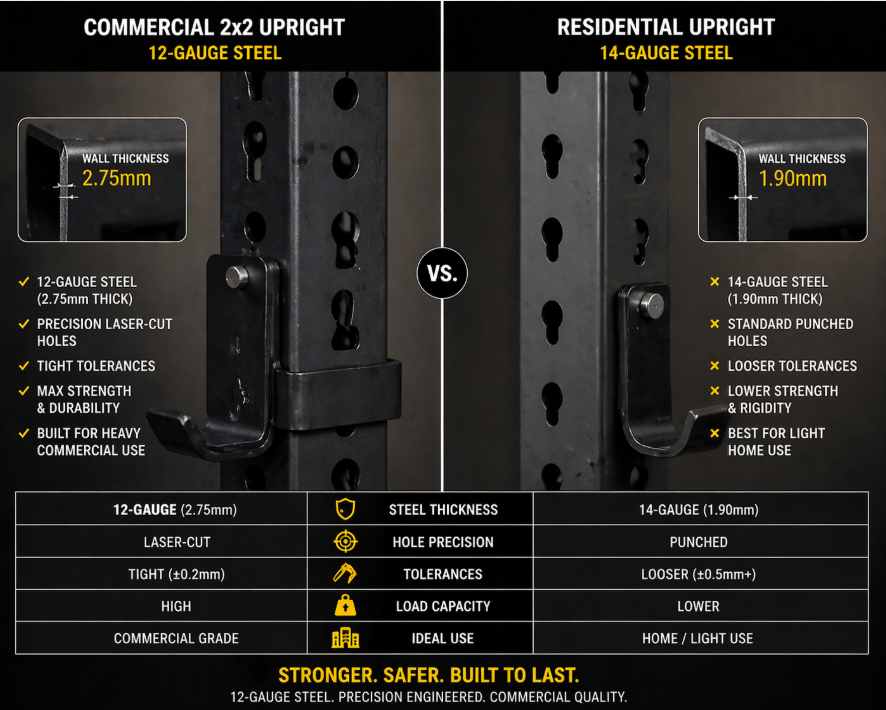
When sourcing commercial weightlifting accessories for multi-site rollouts, procurement managers must verify the exact upright thickness of the existing rack systems. A common oversight in bulk procurement is attempting to fit standard J hooks designed for 2x2 inch tubing onto 3x3 inch or 75mm heavy-duty commercial frames. This lack of compatibility results in excessive play and vibration, compromising the structural integrity of the entire lifting station.
Reliable barbell j hooks must feature a profile that maximizes surface contact with the upright. For high-performance environments, ensuring the hook geometry accounts for the specific radius and thickness of the steel prevents shifting during heavy sets, reducing long-term maintenance costs and liability risks for gym operators.
To mitigate the risk of component mismatch during large-scale installations, we recommend a technical audit of your frame specifications against your accessory requirements. Use the following technical breakdown to align your procurement orders with the specific structural needs of your facility.
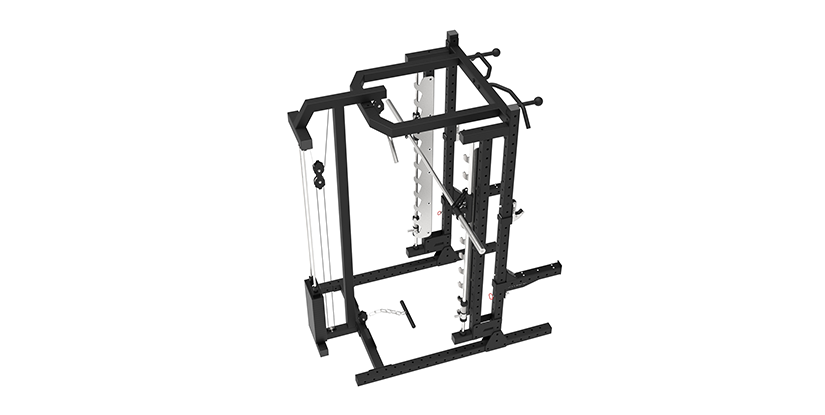
Configuration and Load Profile Comparison
- Heavy-Duty J-Shape
| Upright Size | Profile Type | Typical Commercial Use Case | Stability Profile |
|---|---|---|---|
| 2x2 (50mm) | J-Shape | Boutique studios & home-office setups | Standard; optimized for lighter barbell loads |
| 3x3 (75mm) | U-Shape / Deep J | Mid-tier commercial gyms & functional training zones | High; increased surface contact for stability |
| 4x4 (100mm) | Strength & Powerlifting specialized facilities | Maximum; designed for heavy barbell displacement |
When negotiating with manufacturers, confirm whether the hook back-plate is optimized for the specific radius of your uprights. Selecting a U-shape profile for 3x3 or 4x4 frames often provides better barbell seating and reduces lateral movement, which is essential for maintaining long-term durability in high-volume commercial environments.
Prioritizing Manufacturing Integrity and Material Longevity
Durability in commercial settings is determined by more than just steel gauge; it is defined by the quality of the assembly and surface treatment. For procurement specialists managing multi-site rollouts, ensuring high weld integrity is non-negotiable. Low-quality barbell j hooks often suffer from brittle welds that fail under repetitive loading, whereas high-grade commercial weightlifting accessories utilize continuous or reinforced welding to ensure long-term fatigue resistance against heavy barbell impact.
Furthermore, the resilience of the powder coating durability directly impacts the total cost of ownership. In high-use environments, inferior finishes chip or peel due to friction and moisture, leading to premature oxidation and aesthetic degradation. When evaluating gym equipment procurement partners, verify that the coating process is engineered for impact resistance. We also advise reviewing MOQ considerations alongside quality control certifications; larger orders should include batch-testing protocols to ensure consistent coating thickness and structural strength across the entire shipment, preventing localized failures in high-volume facilities.
Load Stability and Structural Integrity Benchmarks
When sourcing for multi-site rollouts, the long-term durability of power rack j hooks is determined by their ability to withstand repetitive high-impact loading. For commercial-grade installations, superficial strength is insufficient; procurement managers must prioritize the fundamental structural integrity of the accessory to prevent metal fatigue or deformation over thousands of usage cycles.
The technical distinction between consumer-grade hooks and professional commercial weightlifting accessories lies in the gauge of the heavy-duty steel and the precision of the welding strength. High-quality manufacturing ensures that the connection points between the hook and the mounting bracket can handle maximum load-bearing capacity without microscopic cracking or loosening during heavy barbell placement.
| Feature/Specification | Standard Retail Grade | Commercial/Multi-Site Grade |
|---|---|---|
| Material Thickness | Thin-gauge mild steel | High-gauge heavy-duty steel |
| Welding Method | Standard spot welding | Full-penetration structural welding |
| Fatigue Resistance | Moderate (prone to bending) | High (designed for heavy impact) |
| Maintenance Cycle | Frequent replacement required | Minimal long-term intervention |
To optimize total cost of ownership (TCO) during large-scale facility builds, buyers should categorize procurement orders based on the intended intensity of the training environment. Selecting the appropriate tier of barbell j hooks ensures that equipment remains functional under varied user demands without premature replacement cycles.
| Configuration Tier | Typical Material Gauge | Weight Capacity Range | Primary Application |
|---|---|---|---|
| Standard/Boutique | Medium-gauge steel | Up to 135kg (300lbs) | Small studios, hotel gyms, or home-office setups |
| Heavy-Duty/Commercial | Thick-gauge structural steel | Up to 225kg (500lbs) | Mid-sized commercial clubs and training centers |
| Premium/Performance | Ultra-high gauge steel | 300kg+ (660lbs+) | High-traffic strength facilities and professional powerlifting gyms |
For distributors and facility managers managing multi-site rollouts, matching the hook specification to the facility's programming is critical. While boutique settings may prioritize aesthetic variety or lower unit costs, full-scale commercial installations require the higher load-bearing thresholds found in premium tiers to mitigate the risk of mechanical failure during peak usage hours.
Long-Term Maintenance and Surface Durability
A critical factor in the long-term procurement decision is the resistance of the accessory to environmental and mechanical wear. High-traffic facilities experience constant friction between the barbell and the barbell j hooks, which can lead to rapid degradation of inferior coatings. For multi-site rollouts, selecting accessories with superior coating durability—such as high-micron powder coating or specialized zinc plating—is essential to prevent oxidation and surface chipping.
Neglecting these technical specifications often leads to shortened maintenance cycles and increased operational costs. When evaluating commercial weightlifting accessories, procurement specialists must look beyond the initial unit price to consider the total cost of ownership (TCO). A higher initial investment in high wear resistance components reduces the frequency of replacement and minimizes downtime, ensuring that the facility's equipment remains in peak condition throughout its intended lifecycle.
Optimizing Inventory Management for Global Distributors
Managing inventory for multi-site gym rollouts requires more than just tracking volume; it demands rigorous SKU management to prevent compatibility failures during installation. When sourcing power rack j hooks for diverse facility layouts, procurement teams must account for varying upright dimensions and hole spacing patterns to ensure seamless integration across all locations.
A common pitfall in large-scale deployments is failing to standardize commercial weightlifting accessories across different rack models. Without strict multi-site consistency, a distributor may encounter mismatched hardware that prevents uniform equipment setups. To mitigate this, we recommend a centralized procurement strategy that prioritizes universal compatibility and standardized mounting specifications.
| Inventory Challenge | Impact on Rollout | Mitigation Strategy |
|---|---|---|
| Varied Upright Gauges | Hardware mismatch | Standardize on single gauge thickness |
| Non-uniform Hole Spacing | Installation delays | Verify hole pattern compatibility early |
| Fragmented SKU Lists | High logistics costs | Consolidate accessory types per region |
Configuration Benchmarking for Scalable Procurement
Distributors evaluating different tiers of barbell j hooks must balance initial procurement costs against long-term durability and facility requirements. Selecting the wrong specification can lead to increased maintenance cycles or premature replacement requests from gym operators. The following comparison outlines typical configurations encountered in professional sourcing.
| Configuration Tier | Material & Coating | Load Capacity | Compatibility Range | Procurement Use Case |
|---|---|---|---|---|
| Standard | Powder-coated steel | Moderate (High-volume training) | Standard 2x2 or 2x3 uprights | Budget-friendly boutique studios |
| Premium | Zinc-plated or heavy-duty polymer | High (Strength & Powerlifting) | Universal/Multi-gauge options | Full-scale commercial gym rollouts |
| Specialized | High-grade reinforced alloy | Extreme (Heavy barbell stability) | Oversized/Customized rack systems | Specialized training or high-performance facilities |
When negotiating with manufacturers, prioritize the consistency of the coating application. High-quality barbell j hooks should feature uniform thickness to prevent barbell slippage and ensure long-term resistance to oxidation, especially in high-humidity environments. Selecting a single high-spec tier for a multi-site rollout often reduces the complexity of your logistics and simplifies field maintenance for technicians.
Logistics and QC Standards for High-Volume Orders
Efficient gym equipment procurement for global rollouts depends on strict quality control (QC) protocols that extend beyond the factory floor. When ordering large quantities of power rack j hooks, a lack of batch consistency can lead to subtle variations in weight, dimensions, or mounting tolerances. Even a millimeter of deviation in the J-hook's internal radius can cause barbell instability or uneven wear on premium bar bells, leading to client dissatisfaction.
To safeguard your supply chain, demand clear documentation regarding shipping volume and packaging density. Because these accessories are high-density steel components, improper palletization can lead to crushed packaging or damaged powder coatings during long-haul transit. We advise procurement managers to implement a three-step verification process: verifying the weight and dimensions of random samples against the spec sheet, inspecting the uniformity of the finish across different production batches, and ensuring that the packaging is reinforced for international maritime shipping. This level of scrutiny ensures that the hardware arriving at a remote site is identical to the prototype approved during the initial sampling phase.
Maintenance Cycles and Total Cost of Ownership
For multi-site operators, the long-term value of power rack j hooks is determined by how they withstand high-frequency usage. Selecting low-grade commercial weightlifting accessories may lower initial procurement costs, but these often lead to accelerated wear and tear on both the hardware and the barbell sleeves, ultimately increasing operational overhead.
Maintaining load stability requires a strict inspection of the mounting points and the integrity of the protective coatings. In high-traffic facilities, maintenance cycles should include monthly checks for bolt tension and surface deformation. High-quality components reduce replacement frequency, ensuring that facility managers spend less on emergency restocking and more on scalable growth. When sourcing for large-scale rollouts, prioritize hardware that maintains structural rigidity even after thousands of loading cycles to protect your long-term ROI.
To accurately project the Total Cost of Ownership (TCO) during the procurement phase, distributors must evaluate the specific material composition of the hooks. The interaction between the metal substrate and the barbell is the primary driver of both replacement frequency and long-term maintenance labor.
| Material / Coating Type | Durability Profile | Maintenance Needs | TCO Impact |
|---|---|---|---|
| Standard Powder Coating | Moderate; susceptible to chipping | Occasional surface touch-ups | Low initial cost; higher long-term replacement risk |
| Stainless Steel / Chrome | High; excellent corrosion resistance | Minimal; routine cleaning | Higher upfront investment; extended lifecycle |
| UHMW Plastic Inserts | Superior; prevents metal-on-metal wear | Low; check for polymer compression | Optimizes barbell longevity and reduces friction noise |
When negotiating with manufacturers, request specifications regarding the thickness of the protective layers. While basic powder-coated steel is common in budget-friendly setups, facilities prioritizing high-volume throughput often find that integrating UHMW (Ultra-High Molecular Weight) plastic components offers the best ROI by protecting expensive barbell sleeves from abrasive damage.
Logistics and Inventory Management for Large-Scale Rollouts
Effective gym equipment procurement for multi-site expansion requires more than just selecting high-quality hardware; it demands a sophisticated logistics strategy to prevent facility downtime. Relying on reactive ordering when components fail can disrupt gym operations and damage brand reputation. Instead, procurement managers should integrate a proactive inventory model that accounts for the high turnover of high-use accessories.
When negotiating with global suppliers, always clarify the MOQ (Minimum Order Quantity) for spare parts such as bolts, specialized bushings, or replacement J-hook inserts. Rather than ordering only the exact amount needed for the initial installation, build a "buffer stock" into your primary shipment. This strategic overstocking ensures that local facility managers can perform immediate repairs without waiting for international shipping cycles. By treating these essential barbell j hooks as high-wear consumables rather than permanent fixtures, you minimize the risk of extended equipment outages during peak training hours.
Optimizing TCO Through Scalable Accessory Procurement
When planning multi-site rollouts, the procurement scope for power rack j hooks must extend beyond individual unit strength to encompass long-term operational efficiency. For distributors and facility managers, true value is found in the intersection of component compatibility and scalability across diverse gym layouts.
A high-quality selection of commercial weightlifting accessories reduces the frequency of maintenance cycles, directly impacting the TCO of the entire installation. Selecting standardized, high-durability components ensures that replacement parts remain consistent across all locations, simplifying inventory management and reducing the logistical burden of site-specific sourcing.
| Procurement Focus | Single-Site Approach | Multi-Site Rollout Strategy |
|---|---|---|
| Component Selection | Focus on immediate weight capacity | Focus on cross-brand compatibility |
| Inventory Management | Low MOQ/On-demand ordering | Bulk procurement for standardized parts |
| Long-term Cost | Lower initial unit price | Minimized replacement and labor costs |
Comparative Analysis of Configuration Durability and Long-Term ROI
Selecting the correct grade of barbell j hooks involves a strategic trade-off between initial capital expenditure and long-term replacement frequency. For large-scale installations, the cost of labor for onsite replacement often exceeds the cost of the component itself, making the grade of steel and coating critical to your total cost of ownership.
| Configuration Type | Typical Material & Coating | Load Capacity Profile | Maintenance Frequency | ROI Profile |
|---|---|---|---|---|
| Standard Commercial | Powder-coated Steel | Moderate/Static | Moderate (Check for wear) | Best for boutique/low-traffic |
| Heavy-Duty | High-Grade Reinforced Steel | High/Dynamic | Low (Annual inspection) | Ideal for mid-tier franchises |
| Premium/Professional | Hard-Anodized or Thickened Polyurethane | Extreme/High-Impact | Minimal (Long-term durability) | Best for high-volume facilities |
When evaluating these options for a global rollout, consider the impact of environmental factors on the coating. Premium configurations often utilize advanced finishes to prevent oxidation and surface degradation, which is essential for maintaining a consistent brand aesthetic and reducing the logistical overhead of frequent part replacement across multiple regions.
Streamlining Supply Chain and Logistics Efficiency
Successful gym equipment procurement for large-scale projects hinges on more than just technical specifications; it requires a robust manufacturing partner capable of meeting strict MOQ requirements without compromising QC standards. For multi-site rollouts, any discrepancy in compatibility—such as a slight variation in upright thickness or bolt thread pitch—can lead to catastrophic delays and increased labor costs during the installation phase.
To ensure logistics efficiency, procurement managers should prioritize suppliers who offer standardized barbell j hooks designed for seamless integration with existing rack systems. Verifying that the manufacturer implements rigorous quality control protocols at the factory level helps mitigate the risk of receiving defective batches that could stall a nationwide rollout. A reliable supply chain strategy treats these accessories as critical infrastructure components, ensuring that every unit shipped adheres to the same dimensional tolerances and structural integrity required for high-traffic commercial environments.