Best Squat Rack to Buy: Commercial Grade Sourcing Guide
Optimizing SKU Breadth and Margin through Strategic Rack Sourcing
Many distributors fail by either over-investing in a single, high-end model or spreading capital too thin across low-quality, unbranded units. This lack of strategic selection creates a bottleneck in the supply chain. Instead, professional buyers focus on SKU diversification to balance premium offerings with high-volume staples. By selecting the best squat rack to buy based on a mix of specialized functional trainers and standard heavy duty power racks, you can capture diverse market segments without bloating your inventory costs.
Effective margin optimization requires more than just finding the lowest unit price; it requires a partner with high factory capability and a wide range of commercial weightlifting racks. When you source wholesale gym equipment through a manufacturer that offers varying configurations—such as different upright dimensions or attachment compatibility—you increase your ability to fulfill custom facility requirements. This breadth allows you to maintain healthy margins while scaling your catalog to meet the demands of both boutique studios and large-scale commercial gyms.
Evaluating Sourcing Models: Direct Factory vs. Local Distribution
When determining the best squat rack to buy for large-scale projects, procurement officers must weigh immediate availability against long-term landed cost. Sourcing through a local distributor offers lower logistical complexity and faster lead times, but often carries a significant markup that erodes your retail margins. For high-volume facilities, factory direct sourcing is the superior strategy for maximizing profitability.
Direct procurement allows you to bypass middleman fees, though it requires navigating higher MOQ (Minimum Order Quantity) thresholds and managing international logistics. While direct importing may increase your quality control (QC) overhead, it provides greater transparency regarding the steel gauge and welding integrity of your heavy duty power racks. By managing the supply chain directly with a manufacturer, you gain control over customization and volume-based pricing, ensuring your wholesale gym equipment orders remain both high-performing and cost-efficient.
Scaling Profitability via Volume and Logistics Optimization
For large-scale facility builds, the total landed cost is heavily dictated by your ability to execute bulk procurement effectively. Relying on small, frequent orders for commercial weightlifting racks leads to fragmented shipping schedules and inflated freight costs. To maximize your ROI, you must transition from individual unit purchasing to container-load strategies. This shift allows you to leverage economies of scale, significantly reducing the per-unit cost of heavy duty power racks through optimized container utilization and consolidated shipping optimization.
Successful procurement specialists focus on scaling inventory through high-volume ocean freight rather than air shipments, which can quickly erode margins on bulky steel structures. When searching for the best squat rack to buy for a massive gym rollout, prioritize manufacturers capable of high-volume production without compromising commercial-grade durability. A partner that understands wholesale gym equipment logistics can help you balance MOQ requirements with efficient palletization, ensuring that your bulk procurement strategy drives down overhead while maintaining the rigorous structural standards required for professional training environments.
Engineering Durability: Load Ratings and Material Specifications for Heavy Duty Power Racks
When sourcing for high-traffic facilities, the best squat rack to buy is defined by its metallurgical integrity rather than its aesthetic. For distributors and gym owners, the primary risk in procurement is structural fatigue caused by inferior steel. Professional-grade heavy duty power racks must utilize high-grade steel gauges to ensure long-term safety and compliance with international factory manufacturing standards.
The distinction between 11-gauge and 14-gauge steel is critical for structural stability. While 14-gauge steel may suffice for residential use, commercial-grade procurement requires 11-gauge or thicker to prevent bowing under heavy barbell loads. Investing in higher-gauge specifications reduces long-term replacement costs and minimizes liability risks for the end-user.
| Material Specification | Structural Integrity | Commercial Suitability |
|---|---|---|
| 11-Gauge Steel | Maximum Rigidity | High-Traffic Gyms |
| 14-Gauge Steel | Standard Stability | Boutique/Home Studios |
| Reinforced Joints | High Impact Resistance | Full-Scale Commercial |
As a buyer, always verify the factory manufacturing standards regarding welding techniques and load-bearing certifications. Selecting the best squat rack to buy means prioritizing these technical specifications to ensure your wholesale gym equipment shipments arrive with the durability required for professional strength training environments.
Beyond steel gauge, professional procurement specialists must differentiate between static and dynamic load capacities. While a static load capacity refers to the weight a rack can hold while stationary, the dynamic rating is the true benchmark for commercial weightlifting racks, accounting for the impact of dropping heavy barbells. A failure to verify these metrics during the sourcing phase can lead to catastrophic structural failure in high-intensity environments.
To mitigate quality risks, ensure your supplier adheres to rigorous QC testing protocols. High-tier manufacturers conduct stress tests to provide verified weight capacity verification, ensuring the frame remains intact under sudden kinetic force. Furthermore, surface durability is a non-negotiable specification; demand high-micron powder coating durability to prevent oxidation and chipping in humid gym environments. For high-volume distributors, these technical benchmarks are essential when evaluating wholesale gym equipment to ensure the products can withstand years of rigorous use without structural degradation.
Beyond the technical specifications of the steel itself, the reliability of your wholesale gym equipment depends heavily on the manufacturer's logistical precision. When managing high-volume imports, the risk of transit-related damage can erode profit margins. Therefore, a critical component of the procurement checklist is verifying shipment durability through reinforced packaging and standardized container loading protocols. Ensuring that heavy duty power racks are secured with high-density foam and heavy-duty corrugated protection prevents micro-fractures and cosmetic defects during long-haul maritime transit.
Furthermore, top-tier distributors must demand comprehensive material certification and strict bulk order quality control. It is not enough to trust a single prototype; the factory must demonstrate consistency across entire production runs. This includes rigorous testing for structural fatigue resistance to ensure that every unit in a container meets the same load-bearing benchmarks. By prioritizing suppliers who offer transparent material certification and robust bulk order quality control, you safeguard your reputation and ensure that the best squat rack to buy remains a reliable asset for your clients.
Navigating Global Logistics and MOQ Requirements for Commercial Weightlifting Racks
When sourcing the best squat rack to buy for large-scale fitness facilities, procurement specialists must look beyond individual unit features and analyze the structural costs of international trade. One of the most critical variables in your total landed cost is the MOQ (Minimum Order Quantity) set by the manufacturer. For high-end commercial weightlifting racks, factory-direct pricing is heavily dependent on volume.
To achieve true economies of scale, buyers should aim to consolidate orders. While purchasing a single unit is easy for retail, scaling your procurement to meet a specific MOQ allows you to bypass middleman markups and access wholesale gym equipment pricing tiers. Higher volume orders often trigger lower per-unit costs and more favorable shipping configurations, such as full container loads (FCL). By negotiating directly with a manufacturer capable of high-volume production, you ensure that your budget is optimized for durability and long-term asset value rather than just immediate procurement costs.
Beyond the unit price, the true complexity of sourcing heavy duty power racks lies in the logistical overhead. Because these units are high-density and high-volume, shipping volume can quickly inflate your budget if not managed with precision. Professional distributors must prioritize container optimization to ensure that every cubic meter of a 40ft HQ container is utilized efficiently. Failing to do so results in paying for "empty air," which significantly drives up the landed cost per unit.
Furthermore, procurement teams must account for variables beyond basic freight. Navigating customs duties and local import taxes is essential to avoid unexpected budget overruns at the port of entry. Working with an experienced freight forwarding partner is non-negotiable when importing wholesale gym equipment; they provide the necessary oversight for documentation and compliance. A strategic approach to these hidden costs ensures that your investment in heavy duty power racks remains profitable and that your supply chain remains predictable.
To optimize your budget, you must select a shipping strategy that balances urgency against the total landed cost. For high-volume orders of commercial weightlifting racks, the choice between air and sea freight can mean the difference between a profitable margin and a logistical deficit. While air freight offers speed, the high volumetric weight of heavy duty power racks often makes it cost-prohibitive for bulk procurement. Most distributors opt for sea freight to maintain competitive wholesale gym equipment pricing.
The following breakdown illustrates the logistical trade-offs essential for your procurement planning:
| Shipping Method | Cost Implication | Speed/Lead Time | Logistics Model |
|---|---|---|---|
| Sea Freight (FCL) | Lowest per-unit cost | 30–50 Days | Port-to-Port / Full Container |
| LCL (Less than Container) | Moderate | 20–35 Days | Shared Container / Port-to-Door |
| Air Freight | Highest (Volumetric) | 5–10 Days | Airport-to-Airport / Express |
When determining the best squat rack to buy for global distribution, always factor in the port-to-door transit time and potential demurrage fees. For maximum efficiency, coordinate with your factory to ensure all heavy duty power racks are palletized and optimized for container loading to minimize freight overhead.
Facility Footprint Optimization: Selecting Racks for High-Density Commercial Layouts
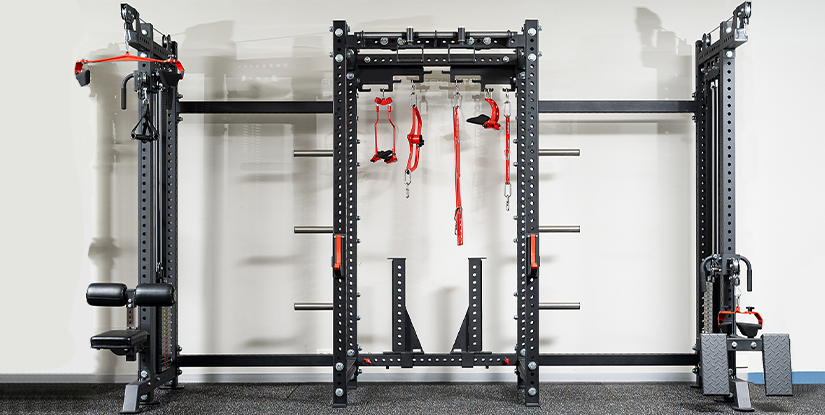
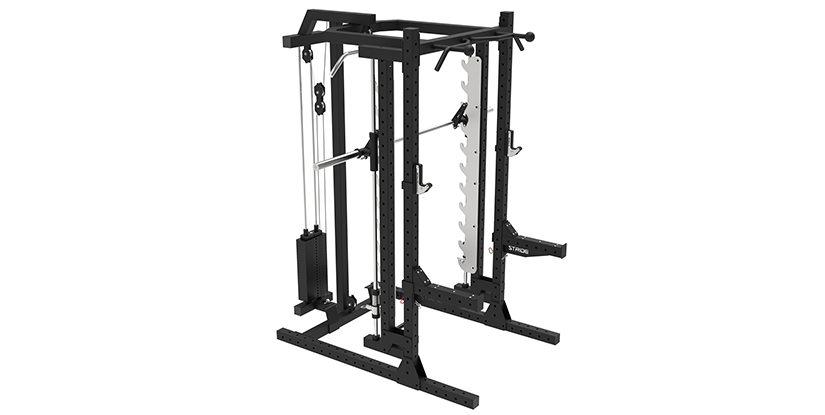
When sourcing for high-traffic training centers, the best squat rack to buy is not just about load capacity, but about footprint optimization. Procurement managers often face a dilemma: maximizing the number of stations versus ensuring athlete safety and movement clearance. Investing in heavy duty power racks with high multi-functional utility allows you to consolidate multiple training modalities—such as pull-ups, dip stations, and barbell work—into a single footprint, significantly increasing floor space efficiency.
From a wholesale perspective, selecting equipment that integrates accessory storage can reduce secondary costs for storage solutions. High-density facility planning requires a strategic balance between the physical dimensions of the steel frame and the peripheral space required for plates and attachments.
| Rack Configuration Type | Storage Integration | Space Efficiency Rating | Procurement Advantage |
|---|---|---|---|
| Standard Power Rack | External Pegs | Moderate | Lower Unit Cost |
| Integrated Combo Rack | Built-in Plate Trees | High | Reduced Footprint |
| Wall-Mounted Rig | Minimal/Modular | Maximum | Optimized Floor Flow |
For distributors looking to maximize ROI per square foot, we recommend prioritizing models that offer modular attachment points. This ensures your clients can scale their capacity without requiring additional floor real estate.
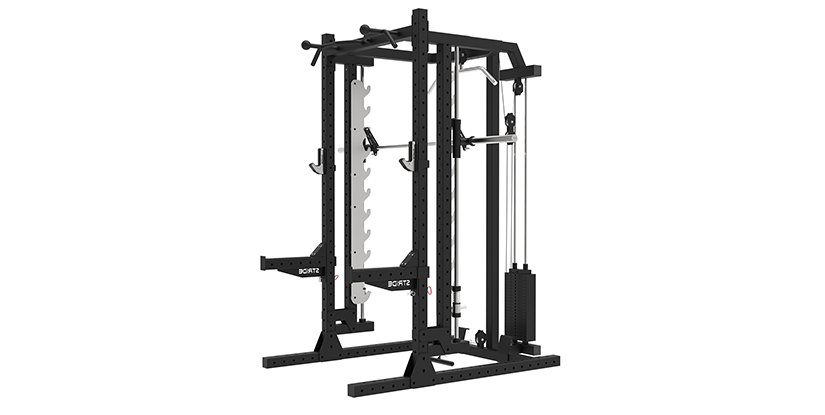
To streamline your procurement process, it is essential to evaluate the direct correlation between a rack's physical dimensions and its mechanical integrity. When ordering commercial weightlifting racks in bulk, the trade-off between space-saving designs and structural stability becomes a critical KPI for facility longevity. A more compact footprint may improve floor flow, but it must not compromise the load-bearing reliability expected in professional settings.
The following comparison helps buyers determine which profile aligns with their specific facility constraints and weight-load requirements:
| Rack Profile Type | Typical Footprint | Load Capacity Rating | Best Use Case |
|---|---|---|---|
| Full Power Cage | Large/Fixed | Ultra-High (1,000+ lbs) | Dedicated Strength Zones |
| Half Rack / Squat Stand | Medium/Flexible | High (600-800 lbs) | Multi-Use Training Floors |
| Wall-Mounted Rig | Minimal/Compact | High (Variable) | High-Density Boutique Gyms |
For global buyers, selecting heavy duty power racks with a smaller footprint allows for higher density in shipping containers, potentially lowering your landed cost per unit while maintaining the high-caliber performance required for commercial-grade environments.
Beyond physical dimensions, professional procurement requires a deep dive into logistics optimization. When sourcing wholesale gym equipment at scale, the complexity of international shipping can significantly impact your landed cost. To mitigate these expenses, we prioritize factory-direct sourcing models that emphasize shipping volume reduction. High-quality manufacturers design their products with modular assembly in mind, ensuring that even the most robust commercial weightlifting racks can be efficiently packed into standard shipping containers without compromising structural integrity.
For large-scale distributors and gym developers, understanding the MOQ (Minimum Order Quantity) in relation to container utilization is vital. A smart procurement strategy involves selecting modular assembly configurations that allow for high-density packing. This approach reduces the air gap within a container, effectively lowering the freight cost per unit. By choosing factory-direct sourcing partners who specialize in logistics optimization, you ensure that your wholesale gym equipment arrives in a warehouse-ready state, reducing onsite assembly time and streamlining the transition from the shipping dock to the gym floor.
OEM Customization and Quality Control Protocols for Wholesale Gym Equipment
When sourcing the best squat rack to buy for high-traffic facilities, procurement officers must look beyond basic dimensions to long-term durability. Standard off-the-shelf models often fail under rigorous commercial use due to subpar finishes. To ensure maximum structural stability, we recommend prioritizing manufacturers that offer advanced custom powder coating. This specialized finish is not merely aesthetic; it provides essential corrosion resistance against sweat and humidity, preventing the oxidation that compromises the metal over time.
For distributors managing large-scale imports, investing in OEM-specific customization ensures that heavy duty power racks meet exact regional safety standards and environmental demands. By controlling the metallurgical properties and coating thickness at the factory level, buyers can mitigate the risks of structural fatigue. Choosing a partner with robust quality control protocols ensures that your wholesale gym equipment inventory remains a high-performing asset rather than a maintenance liability.
Rigorous Testing and Quality Assurance Standards
Reliability in commercial weightlifting racks is not accidental; it is the result of strict manufacturing discipline. For high-volume importers, verifying a factory's technical capability is critical to avoiding costly returns and liability claims. Top-tier manufacturers implement a multi-stage batch inspection process that begins with raw material verification. This includes load rating verification through rigorous weight-stack testing to ensure the frame can sustain peak dynamic loads without structural deformation.
Beyond sheer strength, the integrity of the joints is paramount. We prioritize suppliers who conduct regular weld strength testing to prevent catastrophic failures under heavy use. To guarantee international compliance, all heavy duty power racks must be produced under strict ISO standards. This commitment to precision ensures that every unit shipped meets the highest global benchmarks for safety and durability. For distributors, these rigorous protocols are the ultimate safeguard for brand reputation and long-term operational success.
Optimizing Lifecycle Costs via Maintenance-Friendly Customization
To maximize the ROI on your wholesale gym equipment, procurement strategies should prioritize specifications that reduce long-term operational overhead. For large-scale distributors, the difference between a standard finish and a high-performance coating determines the replacement cycle of the unit. Selecting the best squat rack to buy involves evaluating how customization options affect the total cost of ownership through ease of upkeep and resistance to wear.
The following technical comparison outlines the most effective customization tiers for high-volume B2B sourcing, focusing on durability and maintenance frequency:
| Customization Option | Material Grade | Finish Type | Maintenance Frequency | Durability Rating |
|---|---|---|---|---|
| Standard Industrial | 11-Gauge Steel | Basic Powder Coat | Quarterly Inspection | Moderate |
| Premium Commercial | 7-Gauge Steel | Electrostatic Coating | Bi-Annual Check | High |
| Elite/Pro Series | High-Tensile Alloy | UV/Anti-Corrosion | Annual Maintenance | Extreme |
When sourcing commercial weightlifting racks, we advise buyers to favor higher-grade finishes to minimize onsite labor. High-performance heavy duty power racks with advanced metallurgical coatings significantly lower the frequency of surface repairs, ensuring your inventory remains in peak condition despite high-intensity usage environments.
Total Cost of Ownership: Assessing Long-Term Maintenance and Replacement Cycles
When procurement officers search for the best squat rack to buy, the mistake often lies in prioritizing low upfront unit costs over long-term structural stability. In a high-traffic commercial facility, the distinction between a budget-friendly frame and heavy duty power racks is the difference between a high-performing asset and a constant maintenance liability. While low-cost imports may satisfy initial CAPEX constraints, they frequently suffer from rapid depreciation due to inferior steel gauges and poor weld quality.
To maximize ROI, buyers must evaluate load ratings and structural integrity as primary procurement metrics. Investing in high-spec equipment reduces the frequency of replacement cycles, effectively shifting the financial burden from unpredictable OPEX to a controlled, one-time capital expenditure. A rack with superior fabrication reduces the total cost of ownership by extending the equipment's functional lifespan by several years.
| Procurement Metric | Economy Grade Sourcing | Premium Commercial Grade |
|---|---|---|
| Initial CAPEX | Low | Moderate to High |
| Load Rating Reliability | Variable/Unverified | High/Certified |
| Replacement Cycle | 2–4 Years | 8–12+ Years |
| Maintenance Frequency | High (Part Replacement) | Low (Routine Inspection) |
Selecting the best squat rack to buy requires a strategic balance: choosing heavy duty power racks that offer verified load ratings ensures your facility maintains high uptime and minimizes the long-term costs associated with equipment failure and premature turnover.
Optimizing Lifecycle Management through Quality Control
Understanding the nuances of maintenance schedules is critical for distributors managing large-scale facility rollouts. When sourcing wholesale gym equipment, the long-term value is dictated by how the materials withstand constant wear and tear. Lower-tier commercial weightlifting racks often utilize substandard finishes that succumb to oxidation and chipping, necessitating frequent aesthetic repairs or complete unit replacement. In contrast, premium-grade manufacturing focuses on high-micron powder coating durability, ensuring the frame remains resistant to scratches and moisture-induced corrosion under heavy usage.
From a procurement standpoint, the goal is to minimize the frequency of replacement cycles. While economy-grade models may offer a lower entry price, the cumulative cost of frequent part replacements and labor creates a negative ROI. By prioritizing manufacturers with rigorous quality control and high-gauge steel, buyers can implement a streamlined maintenance schedule consisting of simple periodic inspections rather than costly structural overhauls. This strategic approach ensures that your investment in heavy duty power racks remains a durable asset rather than a recurring expense.
Sourcing Models and Scalability Economics
To truly identify the best squat rack to buy, procurement teams must look beyond the unit price and analyze the logistical variables of different supply chains. The economic efficiency of your order is heavily influenced by factory capability and the scale of your procurement. While direct-from-factory sourcing offers the most competitive margins, it requires a sophisticated understanding of how MOQ (Minimum Order Quantity) impacts the total landed cost and logistics/shipping overhead.
A high-performing manufacturer provides more than just wholesale gym equipment; they provide a predictable cost structure through standardized QC inspection costs and optimized container loading. For large-scale distributors, the ability to leverage volume to lower unit costs while maintaining strict quality control is the ultimate lever for maximizing profitability and operational uptime.
| Sourcing Model | Typical Lifespan | Maintenance Cost | Primary Cost Driver |
|---|---|---|---|
| Local Distributor | 7–10 Years | Low | Markup & Local Logistics |
| Direct Factory (High MOQ) | 10–15+ Years | Minimal | Shipping & Customs/Duties |
| Unverified Small-Scale Export | 3–5 Years | High | QC Failures & Replacement |
When evaluating commercial weightlifting racks, ensure your factory capability assessment includes a deep dive into logistics/shipping overhead and MOQ impact. Choosing the right scale of engagement is as vital as the heavy duty power racks themselves to ensure long-term fiscal stability.
Vendor due diligence and specification guardrails
When sourcing the best squat rack to buy for a high-traffic facility, the primary risk is not aesthetic—it is structural failure. For distributors and gym owners, a single equipment malfunction can lead to massive liability and brand damage. You cannot rely on visual inspections alone; rigorous structural integrity testing must be a non-negotiable part of your procurement checklist.
To ensure long-term ROI, verify the steel gauge verification protocols used by your manufacturer. High-quality heavy duty power racks should utilize 11-gauge or thicker steel to prevent frame deformation under constant use. Furthermore, demand documented load capacity certification from independent testing laboratories. Relying on unverified factory claims is a dangerous shortcut. For professional-grade commercial weightlifting racks, your sourcing strategy must prioritize vendors who provide transparent metallurgical reports and stress-test data to guarantee that every unit meets international safety standards before shipping.
Beyond the structural frame, a critical component of your procurement audit must involve the precision of the manufacturing finishing. When negotiating for wholesale gym equipment, do not overlook the chemical composition of the surface treatments. High-tier commercial weightlifting racks require a multi-stage powder coating durability test to ensure the finish resists chipping and oxidation in high-humidity or high-use environments. A superficial coating may look acceptable in a showroom, but it will fail under the friction of barbell movements.
Furthermore, instruct your quality control team to perform a rigorous weld quality inspection on all structural joints. Inconsistent bead widths or porosity in the welding process are red flags that indicate substandard factory capability. For a professional importer, the goal is to secure heavy duty power racks that feature full-penetration welds. Validating these technical specifications during the pre-shipment inspection phase is the only way to mitigate the risk of structural fatigue and ensure your client's facility remains safe and operational.
To mitigate risk at scale, professional buyers must move beyond individual unit inspection and implement systemic quality control protocols. When negotiating wholesale gym equipment, establish a clear Minimum Order Quantity (MOQ) that allows for comprehensive batch testing. This ensures that every production run undergoes identical stress tests, maintaining consistency across your entire inventory. Before finalizing any large-scale contract, a mandatory factory audit is essential to verify that the manufacturer’s machinery and compliance certifications align with your high-performance standards.
Logistics stability is equally critical to your bottom line. The best squat rack to buy is only valuable if it arrives in pristine condition. Demand strict export packaging standards, including reinforced heavy-duty corrugated boxing and edge protection, to prevent transit damage. Your procurement checklist must also include shipment stability protocols, ensuring that container loading maximizes space without compromising the structural safety of the heavy duty power racks. Rigorous oversight at the point of origin is the only way to guarantee seamless delivery to your end-users.