Commercial Gym Equipment Rack Load Capacity and Specs
Deployment Scenarios for High-Traffic Strength Training Stations
Procurement managers often fail by prioritizing unit price over footprint efficiency, leading to congested floor plans that hinder movement. A professional sourcing approach balances strength training station specs with the actual spatial requirements of high-traffic commercial settings to ensure long-term operational flow.
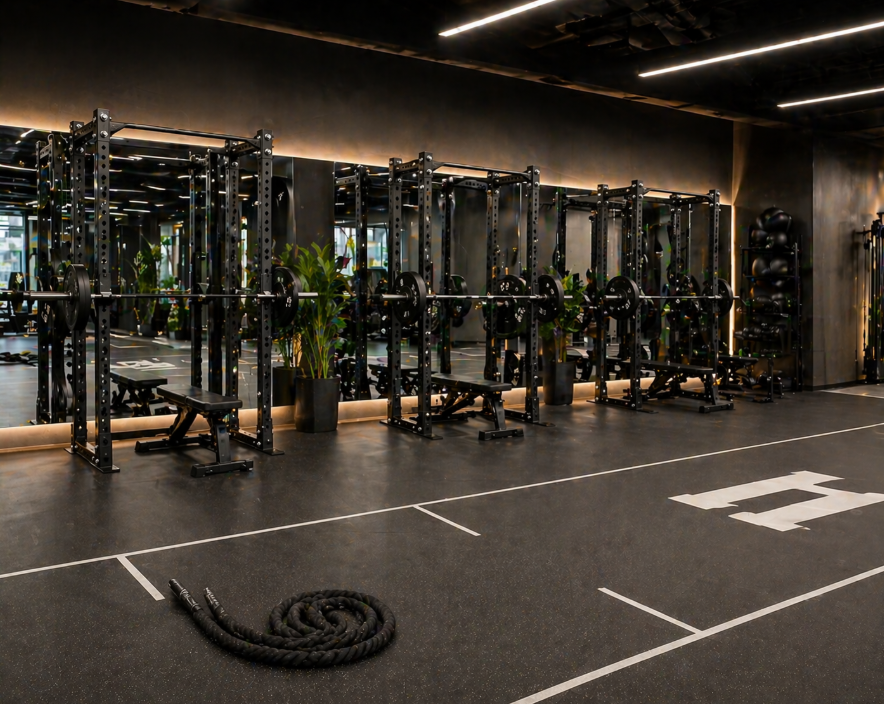
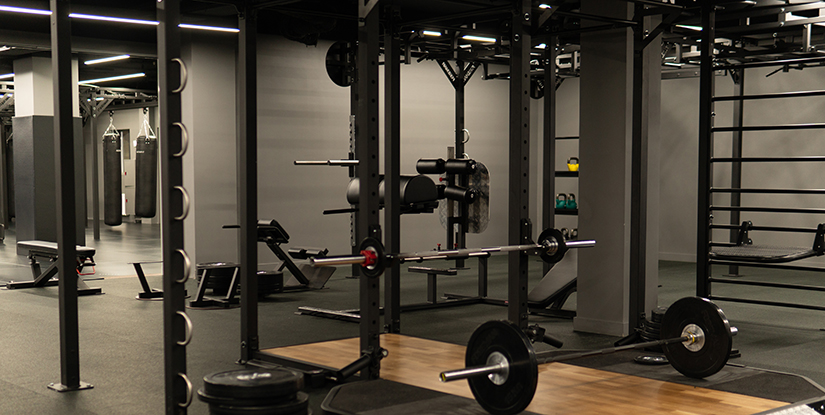
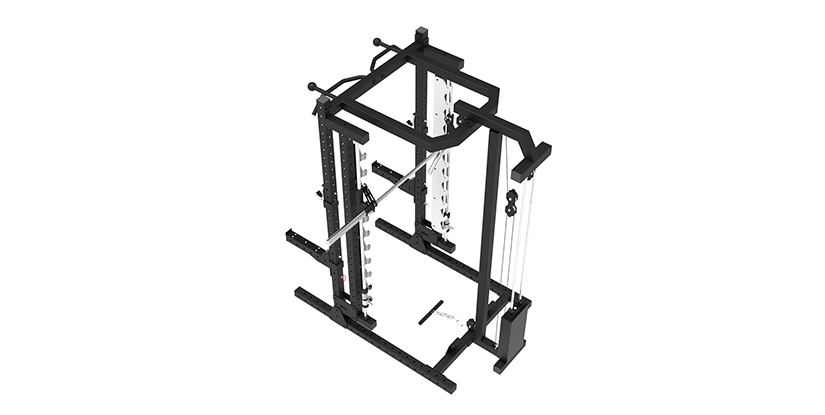
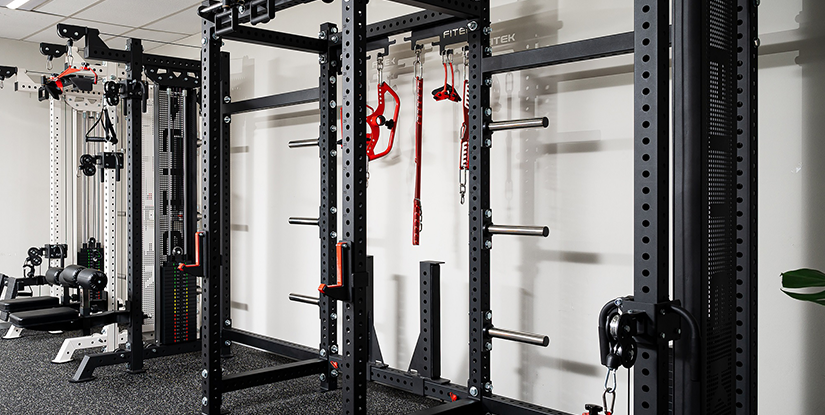
When planning a multi-site rollout or a large-scale facility, the gym equipment rack footprint must be meticulously integrated into the facility layout. Neglecting the clearance zones required for plate loading or accessory access can lead to bottlenecks during peak hours. Effective space optimization involves matching the physical dimensions of the equipment to the specific density of the gym floor, ensuring that high-intensity zones do not compromise the safety or accessibility of adjacent training areas.
Configuration Comparison by Facility Type
Selecting the right configuration requires balancing the physical footprint against the expected load intensity. Boutique studios often prioritize aesthetic flow and minimal square footage, whereas large-scale commercial clubs require heavy-duty structural integrity to handle constant, high-volume usage. Use the following comparison to align your procurement strategy with your target facility's specific operational density.
| Configuration Type | Typical Footprint | Load Capacity Profile | Primary Deployment Scenario |
|---|---|---|---|
| Compact/Folding Models | Minimal / Variable | Moderate (Standard Commercial) | Boutique Studios & Small Personal Training Suites |
| Half Rack Systems | Medium | High (Heavy Duty) | Mid-sized Commercial Gyms & Specialized Strength Zones |
| Full Power Racks | Large / Fixed | Maximum (Industrial Grade) | Large-scale Training Facilities & High-Traffic Performance Centers |
For distributors and large-scale buyers, verifying commercial weight rack durability against these footprint models is essential. While compact units offer higher ROI in limited spaces, high-traffic strength zones generally demand the heavier gauge steel and larger structural footprints found in full power rack configurations to prevent long-term mechanical fatigue.
Logistics and Scalability Optimization
Beyond the floor plan, procurement professionals must account for the logistical complexities of international sourcing and bulk distribution. When ordering a gym equipment rack in large volumes, the relationship between modularity and shipping costs becomes a critical variable for total landed cost. High-modularity systems, which utilize standardized components and space-saving attachments, often allow for more efficient container loading, reducing the per-unit freight burden for distributors.
To maximize efficiency during multi-site rollouts, consider the following procurement checklist:
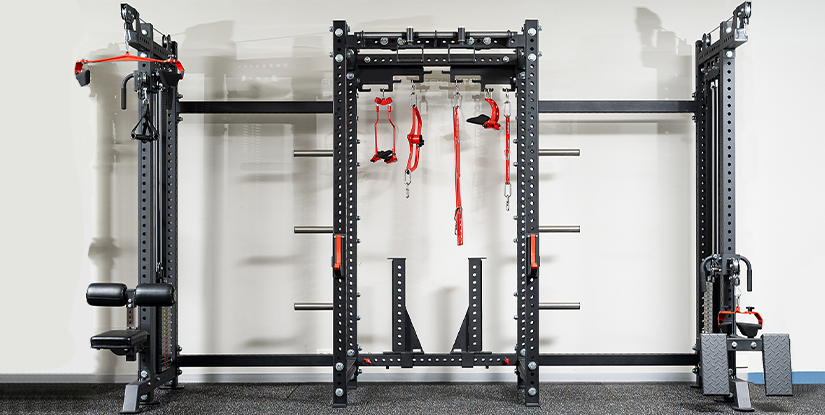
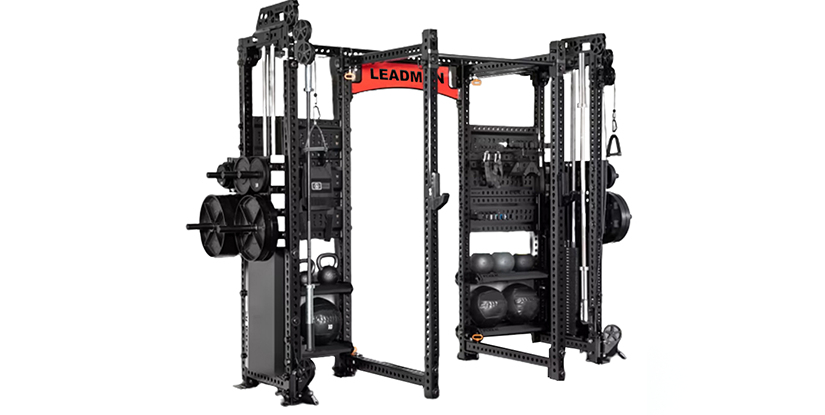
- Modularity & Accessories: Prioritize racks that support various space-saving attachments (e.g., dip stations, landmines) to allow for layout adjustments without replacing core hardware.
- Logistics & Shipping: Evaluate the "knock-down" (KD) capability of the frame. Highly modular designs facilitate easier assembly on-site and optimize container volume during sea freight.
- MOQ & Bulk Ordering: Negotiate Minimum Order Quantities (MOQ) based on component standardization. Standardized parts across different rack models can lower costs and simplify inventory management.
- Maintenance & Lifecycle: Align gym equipment load ratings with a structured maintenance cycle. High-traffic facilities should budget for periodic bolt tensioning and bearing inspections to maintain structural integrity.
Successful sourcing requires looking past the initial unit price to evaluate how the equipment's physical specifications and shipping density impact your long-term operational overhead and facility scalability.
Evaluating Structural Integrity and Strength Training Station Specs
In high-traffic commercial settings, the long-term ROI of your facility depends heavily on the structural integrity of every gym equipment rack. For distributors and gym owners, durability is not just about weight capacity; it is about how the unit withstands constant vibration, impact, and heavy loading cycles without mechanical fatigue.
Core Components of Durability
When auditing factory specifications, professional buyers must look beyond the advertised weight rating. A premium gym equipment rack relies on two critical engineering factors: steel gauge and welding quality. A higher gauge (thicker steel) prevents frame bowing under heavy barbell loads, while high-grade, continuous welding ensures that connection points do not become failure points during high-intensity training sessions. Sourcing units with consistent, clean weld beads is a key quality control metric for reducing long-term maintenance costs and replacement frequency in multi-site rollouts.
Structural Configuration Comparison
Selecting the appropriate configuration requires balancing footprint with expected usage intensity. Different strength training station specs are engineered for specific load profiles, ranging from boutique studio environments to heavy-duty strength conditioning centers. Understanding these variations helps procurement managers align equipment with both facility layout and budget constraints.
The following table compares common structural types to assist in determining commercial weight rack durability and suitability for your specific facility needs:
| Configuration Type | Typical Steel Thickness | Standard Load-Bearing Capacity | Primary Use Case |
|---|---|---|---|
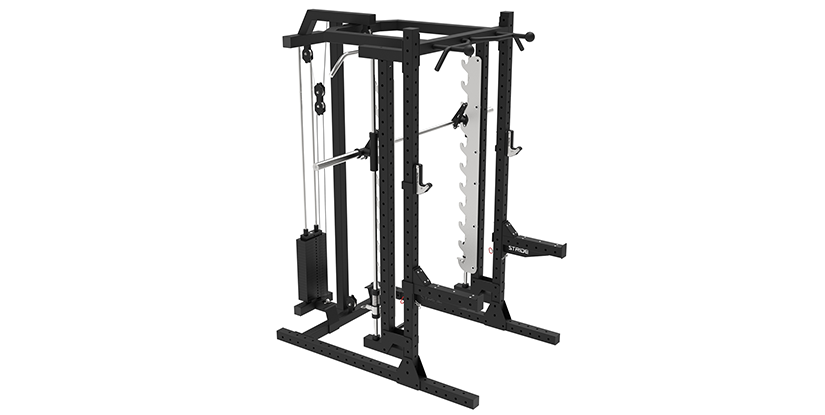
| Half Rack | 11-gauge (3mm) | 600–800 lbs | Small studios or limited floor space |
| Full Power Rack | 7-gauge (approx. 3.5mm) | 1,000+ lbs | High-traffic strength training zones |
| Squat Stand (Heavy Duty) | 11-gauge (3mm) | 500–700 lbs | Specialized lifting or accessory stations |
When evaluating gym equipment load ratings, prioritize the steel thickness of the uprights and base. While 11-gauge steel is standard for many commercial distributors, 7-gauge or 11-gauge reinforced steel is often required for high-performance facilities where heavy barbell drops and repetitive impact are expected. Always verify the specific welding and reinforcement standards during the sourcing process to ensure long-term structural stability.
Verifying Load Ratings and Quality Control
A successful procurement decision hinges on moving beyond static weight numbers to verify actual structural stability. Procurement managers should request detailed testing protocols from manufacturers to ensure gym equipment load ratings are based on dynamic impact rather than just static weight. Relying solely on a single number can be a mistake; instead, evaluate how the frame handles repetitive loading and unhooking cycles.
During the quality control phase, implement a rigorous inspection checklist that includes checking for frame alignment, bolt torque consistency, and weld penetration. High-quality manufacturing processes should result in minimal tolerances in assembly. Furthermore, consider the maintenance cycles required for different grades of equipment. While heavier-duty 7-gauge steel structures may have a higher initial cost, they typically require less frequent structural audits and part replacements, significantly lowering the total cost of ownership for large-scale commercial facilities.
Interpreting Gym Equipment Load Ratings for Multi-Site Rollouts
For multi-site operators and distributors, commercial weight rack durability is not merely a single metric but a requirement for operational standardization. When scaling across various locations, relying on inconsistent load ratings creates significant liability and maintenance discrepancies. True structural integrity must be verified through standardized testing protocols to ensure every unit performs predictably under heavy use.
In high-traffic commercial facilities, the gym equipment rack undergoes repetitive mechanical stress that can compromise lower-grade steel over time. Procurement managers should prioritize suppliers that offer transparent weight-bearing data to maintain uniform safety standards across all branches.
| Configuration Type | Structural Profile | Typical Use Case | Durability Focus |
|---|---|---|---|
| Standard Commercial | 11-gauge steel | Boutique studios | Consistent weight distribution |
| Heavy-Duty Power | 7-gauge heavy steel | High-traffic gyms | High-impact resistance |
| Modular Specialty | Hybrid steel grades | Custom training zones | Component interchangeability |
Distinguishing Static vs. Dynamic Load Capacities
A critical oversight during sourcing is the failure to distinguish between static and dynamic weight capacities. Static load refers to the maximum weight a gym equipment rack can support while stationary, such as a barbell resting on a J-hook. In contrast, dynamic load accounts for the kinetic energy and impact forces generated during active lifting or dropping a barbell. High-performance strength training station specs must account for this impact to prevent structural fatigue or weld failure.
When evaluating gym equipment load ratings, procurement specialists must look beyond the nominal weight limit. High-quality manufacturing relies on heavy-duty steel gauge—typically 11-gauge or thicker—and superior welding quality to manage these sudden force spikes. A rack rated for a high static weight may still fail if the structural joints and welds are not engineered to withstand the violent vibrations of heavy dynamic movements common in professional strength training environments.
Verifying Manufacturer QC and Logistics Resilience
Reliability in a multi-site rollout depends heavily on the manufacturer's internal Quality Control (QC) and their ability to maintain structural integrity through the global supply chain. Distributors should request documentation regarding batch testing and stress-testing protocols to ensure that the gym equipment load ratings provided are consistent across different production runs. A single faulty batch can lead to widespread failures and high replacement costs across a network of facilities.
Beyond the factory floor, shipping durability is a vital procurement variable. High-volume orders often involve complex logistics where vibration and stacking pressure during sea freight can stress structural components. Ensure your supplier utilizes reinforced packaging and understands the specific requirements for transporting heavy-gauge steel to prevent micro-fractures or coating damage before arrival. Furthermore, when negotiating Minimum Order Quantities (MOQ), verify that the manufacturer’s production scale can sustain your long-term maintenance cycles and replacement needs without significant lead-time delays. A smart procurement decision accounts for both the initial build quality and the ease of sourcing replacement parts to mitigate long-term wear and tear.
Optimizing Inventory Selection via Commercial Weight Rack Durability
Selecting a gym equipment rack requires more than comparing basic dimensions; procurement professionals must align structural integrity with the projected usage intensity of the facility. Failure to match the equipment's build quality to the actual user volume often leads to accelerated wear and premature structural fatigue.
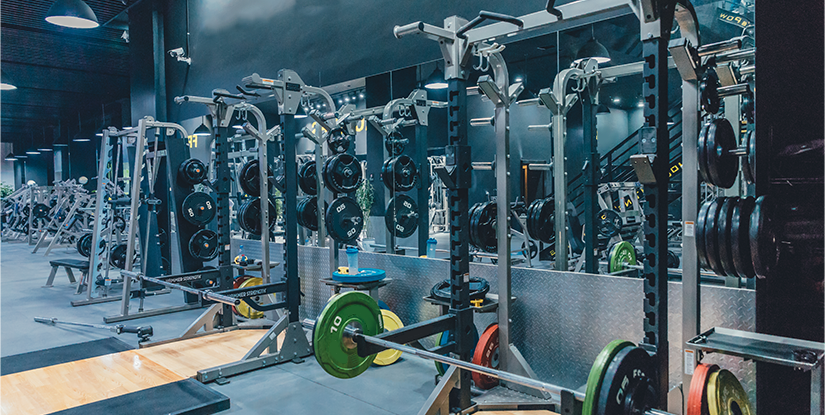
In high-traffic commercial settings, such as large-scale fitness franchises or high-volume training centers, the demand on steel frames and attachment points is constant. Prioritizing commercial weight rack durability during the sourcing phase is a strategic move to manage the total cost of ownership (TCO). While lower-spec units may offer a lower initial purchase price, they frequently trigger shorter replacement cycles and increased maintenance overhead. By investing in high-gauge steel and reinforced welding standards, distributors and facility managers can extend the functional lifespan of their inventory, ensuring a more predictable capital expenditure model and higher long-term ROI.
When sourcing for multi-site rollouts, buyers must distinguish between light-duty studio equipment and heavy-duty strength training station specs. The decision hinges on the steel gauge and the corresponding weight capacity tiers to ensure the product survives rigorous daily use without structural deformation.
Configuration Comparison: Boutique vs. Large-Scale Commercial
The following table illustrates the typical technical disparities between configurations found in boutique settings versus high-volume training facilities. Understanding these gym equipment load ratings is essential for maintaining accurate inventory descriptions for your clients.
| Specification Feature | Boutique/Studio Configuration | Large-Scale Commercial Configuration |
|---|---|---|
| Typical Steel Gauge | 11-gauge (approx. 3mm) | 7-gauge to 11-gauge (reinforced) |
| Weight Capacity Tiers | Moderate (up to 600+ lbs) | High-Intensity (1,000+ lbs per station) |
| Primary Use Case | Personal training, small group classes | Heavy lifting, powerlifting, high-traffic zones |
| Structural Focus | Footprint optimization & aesthetics | Maximized durability & impact resistance |
For distributors managing large-scale orders, verifying these specific strength training station specs during the QC process is critical. A mismatch between a facility's intended use and the actual load capacity can lead to significant liability and high replacement costs. Always confirm if the manufacturer's testing protocols align with the high-intensity requirements of your target market's commercial tier.
Strategic Sourcing and Inventory Management
Effective distributor procurement extends beyond selecting a single model; it requires a robust stocking strategy that balances variety with reliability. When managing high-volume orders, negotiating a reasonable MOQ (Minimum Order Quantity) should not come at the expense of rigorous quality control (QC). For a gym equipment rack, QC must specifically validate the structural integrity of weld points and the precision of hole spacing to ensure compatibility with various attachments.
Furthermore, logistics planning is a critical variable in the total landed cost. Because heavy-duty steel frames are high-density, low-volume items, logistics costs can fluctuate significantly based on container optimization and shipping methods. To mitigate risk, procurement managers should demand factory-level verification of gym equipment load ratings before goods leave the port. This proactive approach ensures that the inventory arriving at your warehouse meets the exact strength training station specs promised, preventing costly returns and maintaining your reputation as a reliable supplier in the North American market.
Logistics and Quality Control for Heavy-Duty Equipment Imports
Reliable sourcing for a high-traffic gym equipment rack extends beyond initial load ratings to include rigorous factory inspections and logistics management. For distributors and multi-site operators, the structural integrity of the steel frame must be verified through standardized testing before the product leaves the facility to prevent costly onsite assembly failures.
Maintaining commercial weight rack durability requires a strict quality control protocol that monitors weld consistency and powder coating thickness. In high-traffic environments, even minor manufacturing defects can accelerate wear, leading to increased maintenance cycles and higher total cost of ownership. Prioritizing manufacturers with transparent QC documentation ensures that every unit meets the structural demands of heavy professional use, reducing the risk of premature replacement or liability issues.
Procurement Configuration Comparison
When sourcing at scale, distributors must decide between standardized shipping and premium configurations based on their specific market needs. Choosing the right level of oversight directly impacts the reliability of strength training station specs and the overall safety of the end-user experience.
| Feature / Service Level | Standard Wholesale Tier | Premium Distributor Tier |
|---|---|---|
| QC Inspection Types | Random batch sampling | 100% structural & weld inspection |
| Load Rating Verification | Standard factory certification | Third-party stress test validation |
| Shipping Method | Standard container loading | Reinforced palletizing & custom crating |
| MOQ Considerations | Lower minimums for small orders | Bulk volume for optimized freight |
For large-scale facility rollouts, the Premium tier is often more cost-effective in the long run. While the initial gym equipment load ratings are verified in both tiers, the premium level mitigates the risk of transit damage and ensures that complex assemblies arrive ready for immediate installation without missing components or structural deformities.
The Impact of Component Quality on Long-Term Upkeep
Beyond structural steel, the longevity of a commercial gym installation depends heavily on the quality of secondary components. Low-grade hardware and substandard coatings are common failure points that drive up maintenance costs. High-quality, corrosion-resistant powder coatings are essential to prevent oxidation and paint chipping, especially in humid facility environments. Furthermore, sourcing racks that utilize high-tensile bolts and reinforced adjustment pins ensures that the hardware quality can withstand thousands of adjustment cycles without stripping or loosening.
For procurement managers, investing in these premium finishing details is a strategic move for long-term upkeep. While basic models may meet minimum gym equipment load ratings, they often lack the environmental resilience required for high-use settings. Selecting equipment with precision-engineered parts and industrial-grade coatings reduces the frequency of onsite repairs and protects your capital investment against premature wear and tear.
Long-Term TCO and Replacement Cycles for Facility Managers
For high-volume fitness centers, the total cost of ownership (TCO) extends far beyond the initial purchase order. Selecting a gym equipment rack based solely on the lowest upfront price often leads to premature replacement cycles and increased operational downtime. In high-traffic environments, the ability of a unit to withstand constant mechanical stress determines whether a facility manages its budget or reacts to constant equipment failures.
Structural Integrity vs. Operational Expenses
Procurement professionals must distinguish between standard weight capacity and true commercial weight rack durability. While a rack may hold a specific load in a static test, the real risk in commercial settings is structural fatigue caused by dynamic loading and repetitive impact. Over time, inferior welding or thin-gauge steel leads to micro-fractures and misalignment, forcing facility managers to replace units much sooner than anticipated.
| Procurement Factor | Economy-Grade Sourcing | Commercial-Grade Sourcing |
|---|---|---|
| Initial Capital Outlay | Low | Moderate to High |
| Structural Fatigue Risk | High (Dynamic Loading) | Low (Engineered for Impact) |
| Average Replacement Cycle | 18–36 Months | 5–8+ Years |
| Long-Term TCO | Unpredictable/High | Stable/Predictable |
Investing in higher-specification steel and reinforced junction points minimizes the frequency of maintenance interventions. For distributors and multi-site operators, prioritizing structural stability over initial savings ensures a more reliable asset lifecycle and protects the long-term return on investment.
Tiered Specification Comparison for Strategic Sourcing
Distinguishing between various levels of strength training station specs is critical when deciding whether to prioritize volume-based cost savings or long-term asset reliability. A mismatch between the facility's traffic volume and the equipment's inherent gym equipment load ratings can result in rapid depreciation and high turnover of inventory.
| Tier Classification | Typical Steel Gauge | Target Environment | Maintenance Frequency |
|---|---|---|---|
| Tier 1: Light Commercial | 11-gauge (approx. 3mm) | Boutique Studios / Home Use | Monthly inspection |
| Tier 2: Full Commercial | 7-gauge to 11-gauge | Standard Gyms / Training Centers | Quarterly inspection |
| Tier 3: Heavy-Duty/Competition | 3mm to 5mm (Reinforced) | High-Traffic / Professional Gyms | Bi-annual inspection |
When negotiating with manufacturers, verify that the steel thickness meets the specific requirements of your target market. While Tier 1 units offer lower MOQs and faster shipping, Tier 3 equipment provides the structural resilience required for heavy dynamic loading in professional settings, ultimately reducing the long-term cost of replacement and facility downtime.
Optimizing Procurement Through Quality Control and Logistics
To mitigate long-term operational risks, procurement strategies must look beyond the unit price and evaluate the manufacturer's ability to maintain consistency at scale. When sourcing a gym equipment rack in bulk, the relationship between MOQ (Minimum Order Quantity) and QC (Quality Control) becomes a critical variable in your supply chain stability. A low MOQ might benefit small boutique orders, but for large-scale rollouts, a distributor or factory with rigorous inspection protocols is essential to prevent a single faulty batch from compromising an entire facility's safety standards.
Effective logistics planning also plays a role in total lifecycle costs. Heavy-duty steel components require specialized shipping configurations to prevent transit-related damage that can compromise structural integrity before the product even reaches the gym floor. By auditing a supplier's quality control processes and ensuring they account for the wear and tear of high-intensity use, buyers can secure a more predictable asset lifecycle and a more reliable return on investment.