Maximizing Gym Floor ROI with Space Saving Squat Racks
Evaluating Total Cost of Ownership for Compact Strength Solutions
Procurement managers must look beyond the initial invoice to avoid long-term fiscal leaks. When sourcing a space saving squat rack, the primary decision drivers involve assessing structural risk under high-frequency use, verifying steel gauge specifications for heavy-duty cycles, and calculating the logistical impact of shipping weight versus durability. A low-cost unit that requires frequent replacement or constant part sourcing eventually undermines the facility's profitability.
Balancing Capex and Long-Term Opex
While the initial CAPEX is a critical budget metric, the true value of a space saving squat rack is found in its operational lifecycle. High-quality equipment constructed from heavy-gauge commercial grade steel reduces the frequency of maintenance cycles and prevents premature wear from high-volume member usage. Investing in premium structural integrity minimizes the hidden costs of downtime and secondary shipping fees for replacement components.
| Cost Factor | Budget-Tier Models | Commercial-Grade Compact Racks |
|---|---|---|
| Initial CAPEX | Lower upfront cost | Moderate to high investment |
| Facility Footprint Value | Variable stability | Optimized for high-density ROI |
| Maintenance Frequency | Higher due to wear | Minimal with proper care |
| Lifespan Expectancy | Short-term/Studio use | Long-term commercial durability |
Optimizing the facility footprint value requires a balance between physical dimensions and structural rigidity. A compact design that lacks sufficient stability or uses inferior coatings will increase long-term OPEX through constant adjustments and part replacements. For distributors and large-scale gym owners, sourcing equipment that prioritizes material density ensures that the space-saving benefits do not come at the expense of equipment longevity.
Comparative Framework for Compact Strength Configurations
Selecting the right equipment type depends heavily on your specific facility layout and the intended member density. For small studio strength training environments, the trade-off between footprint and versatility is the most critical variable. The following comparison assists in determining which configuration aligns best with your long-term gym floor plan optimization goals and procurement budget.
| Configuration Type | Footprint Impact | Durability Rating | Versatility | Long-Term ROI |
|---|---|---|---|---|
| Standard Full-Size Rack | High (Fixed) | Excellent | High (Multi-use) | Stable (High Volume) |
| Foldable/Wall-Mounted | Minimal (Retractable) | Moderate | Low (Single-focus) | High (Small Footprint) |
| Modular Space-Saving System | Medium (Adjustable) | High | Very High | Maximum (Scalable) |
When evaluating these options, procurement specialists should prioritize modular systems if the facility intends to expand or pivot its training offerings. While wall-mounted options offer the absolute lowest footprint, they may limit the long-term utility of the station. Conversely, a modular approach allows for high-performance utility that can adapt to changing member demands without requiring a complete overhaul of the existing gym floor plan.
Logistics and Sourcing: Managing Freight and Quality Control
For international distributors, the complexity of sourcing compact commercial gym equipment extends far beyond the unit price. Heavy steel components present unique challenges in shipping volume optimization. To protect margins, buyers should prioritize manufacturers that offer nested or modular designs to reduce dimensional weight and lower total freight costs.
Reliability in the supply chain also depends on strict QC inspection protocols. When ordering at scale, verifying the durability of coatings—such as powder coating thickness and resistance to oxidation—is essential to prevent transit damage or premature rust upon arrival. Furthermore, clarify MOQ considerations early in the negotiation phase; many high-performance suppliers offer tiered pricing that rewards higher volume, allowing you to offset increased shipping expenses through more efficient container utilization and reduced per-unit landed costs.
Footprint Efficiency vs. Functional Versatility in Small Studio Layouts
Boutique studio owners often face a rigid constraint: the tension between maximizing high-density member capacity and maintaining premium training standards. Selecting a space saving squat rack requires a calculated assessment of the footprint vs. functionality trade-off to ensure equipment does not obstruct traffic flow while still offering professional-grade utility.
In small studio strength training environments, every square meter must generate revenue. Relying on oversized, traditional power racks can inadvertently limit your ability to scale classes or add secondary training zones. Instead, procurement managers should prioritize modularity and integrated storage to reclaim floor space without sacrificing the heavy-duty stability members expect.
| Configuration Type | Primary Space Advantage | Storage Potential | Best Use Case |
|---|---|---|---|
| Wall-Mounted Folding Rack | Minimal footprint when inactive | Low (requires separate rack) | Multi-purpose HIIT studios |
| Compact Half Rack | Reduced depth/width requirements | Moderate (integrated barbell hooks) | Specialized strength boutiques |
| Integrated Combo Station | High utility in small footprint | High (built-in plate/dumbbell storage) | High-density commercial gyms |
Technical Specifications and Installation Requirements
When evaluating these configurations for gym floor plan optimization, procurement specialists must look beyond surface area and consider the structural dependencies of each unit. A wall-mounted system offers the highest return on square footage, but it necessitates high-grade structural reinforcement to the building's substrate, making it less flexible for temporary or leased facilities. Conversely, freestanding compact half racks offer greater mobility and lower installation complexity, making them easier to relocate during facility renovations or expansions.
From a sourcing perspective, the decision often hinges on the intended user density. For high-turnover boutique studios, the versatility of a combo station justifies the slightly larger footprint due to its multi-functional nature. For distributors and wholesalers, stocking a mix of these configurations allows clients to solve diverse layout challenges, ranging from ultra-tight HIIT zones to specialized strength training corridors. Always verify the load-bearing capacity and mounting hardware standards with the manufacturer to ensure long-term durability under heavy commercial use.
Balancing Durability with Long-Term Maintenance Cycles
Optimizing ROI involves more than just selecting the smallest footprint; it requires a focus on the total cost of ownership. While compact commercial gym equipment is designed for efficiency, procurement decisions must account for the frequency of maintenance cycles. High-density environments often lead to accelerated wear on moving parts, such as adjustable uprights and pin-lock mechanisms. Selecting units with high-grade powder coating and reinforced steel profiles ensures that a space-optimized layout does not become a recurring cost center due to premature mechanical failure.
For distributors, the long-term utility of a product line is a key selling point for facility managers. When sourcing, prioritize designs that feature modular attachments and easy-to-replace components. A rack that offers high functionality but requires specialized, proprietary parts can hinder a gym's uptime. By selecting robust, standardized configurations, buyers can ensure that their procurement decision-making process supports both immediate space savings and years of uninterrupted commercial performance.
Engineering Stability in Compact Footprints
In high-traffic commercial environments, the reduced footprint of a space saving squat rack must not come at the expense of structural integrity. While smaller dimensions optimize floor plans, procurement managers must prioritize structural stability to prevent wobbling or frame fatigue during heavy lifts. A rack that lacks rigidity under load increases maintenance costs and liability risks for facility owners.
Reliable sourcing requires verifying the load-bearing capacity against the intended usage intensity of the facility. We recommend specifying commercial-grade steel gauge—typically 11-gauge or thicker for uprights—to ensure the equipment withstands repetitive high-volume use. When evaluating manufacturers, ensure the welding quality and steel thickness can compensate for the shorter lever arms often found in compact designs, maintaining a high performance-to-space ratio.
Technical Specifications for Long-Term Durability
To accurately calculate Total Cost of Ownership (TCO), distributors must look beyond the initial purchase price and evaluate material specifications. High-quality compact commercial gym equipment should minimize the frequency of maintenance cycles and replacement needs. A superior finish and thicker steel gauge directly impact the equipment's lifespan in high-volume training environments.
The following table provides a technical benchmark for evaluating the durability and long-term utility of different rack configurations during your sourcing process.
| Specification Category | Standard Commercial Grade | Premium High-Traffic Grade |
|---|---|---|
| Steel Gauge (Uprights) | 12-gauge steel | 11-gauge or 7-gauge steel |
| Powder Coating Quality | Standard electrostatic | High-impact, scratch-resistant finish |
| Wear Resistance | Moderate (Standard usage) | High (Constant heavy loading) |
| Typical Maintenance Cycle | 6–12 months inspection | 12–24 months inspection |
Investing in higher-gauge steel and reinforced coatings may increase upfront MOQ costs, but it significantly reduces long-term labor costs for facility upkeep. For boutique studios or small-scale commercial layouts, selecting equipment with superior wear resistance ensures that the space saving squat rack remains a reliable asset rather than a frequent maintenance liability.
Logistics and Quality Control Standards
Sourcing for small studio strength training requires a rigorous approach to quality control that extends far beyond the factory floor. Because compact designs often rely on precision-engineered components to maintain stability, even minor deviations in manufacturing can lead to catastrophic assembly issues. Buyers should prioritize suppliers who implement strict factory QC protocols, specifically focusing on welding consistency and hole alignment precision. This ensures that every component integrates seamlessly during on-site installation, preventing the structural weaknesses often associated with lower-tier compact designs.
Furthermore, the logistics of importing heavy steel frames demands a focus on shipping stability. A robust packaging standard is essential to prevent frame warping or finish damage during long-distance transit. When negotiating with distributors, clarify the MOQ considerations and request documentation regarding protective packaging methods. High-quality manufacturers will utilize reinforced crating to ensure that the structural integrity of your space saving squat rack remains uncompromised from the factory exit to the gym floor, reducing the risk of costly returns or installation delays.
Optimizing Member Density Through Strategic Equipment Placement
For facility operators, the relationship between equipment footprint and revenue-generating capacity is a critical metric. In high-density environments like boutique studios or urban fitness centers, every square foot must justify its existence through utility. Selecting a space saving squat rack allows distributors and owners to increase member throughput without sacrificing the quality of the training experience.
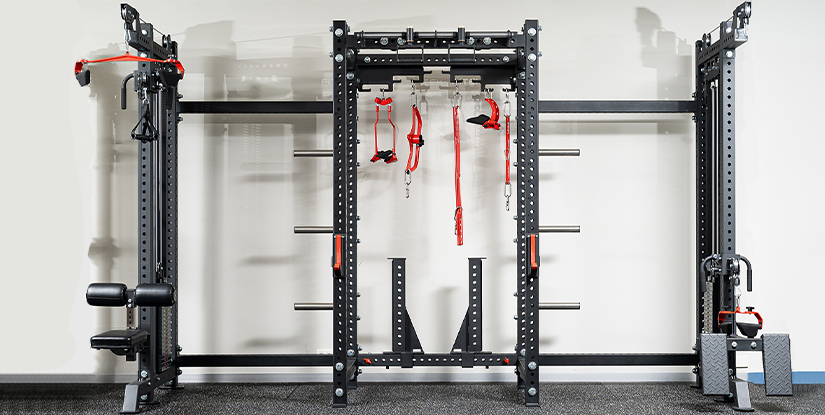
Effective gym floor plan optimization moves beyond simple arrangement; it requires balancing footprint vs. utility to maximize revenue per square foot. While traditional heavy-duty racks offer massive stability, they often create "dead zones" in a layout. In contrast, small studio strength training models prioritize a streamlined profile, ensuring that heavy lifting zones do not impede traffic flow or limit the installation of secondary functional training stations.
Technical Configuration Comparison for Facility Planning
Procurement managers must evaluate the trade-offs between structural rigidity and floor area usage. While a full power rack provides maximum safety for heavy barbell training, it imposes a permanent footprint that can limit facility flexibility. Conversely, wall-mounted or modular configurations offer superior space ROI for high-traffic boutique environments, provided the structural mounting meets commercial load-bearing standards.
| Configuration Type | Typical Footprint | Versatility Rating | Commercial Utility |
|---|---|---|---|
| Full Power Rack | Large (4' x 6' minimum) | High (Multi-use) | Maximum stability for heavy lifting |
| Half Rack | Medium (3' x 5') | Moderate (Primary lifts) | Balanced for high-volume training |
| Wall-Mounted | Minimal (Depth only) | Specialized (Limited) | Ideal for compact commercial gym equipment needs |
When sourcing for international distribution or studio startups, consider the total cost of ownership (TCO). While wall-mounted units optimize the floor plan, they require precise installation and permanent structural integration. For distributors looking to provide versatile solutions, the half rack remains the most common middle-ground for maintaining high durability without the excessive spatial overhead of a full cage.
Safety Clearance and Maintenance Realities
Beyond the physical dimensions of the unit, procurement decision-making must account for the invisible "buffer zone" required for safe operation. A high-performance utility model might have a small footprint, but it requires sufficient safety clearance for barbell whip, plate loading, and user movement. Neglecting this during the initial facility layout can lead to congestion and increased liability risks in high-density settings.
Furthermore, distributors should advise clients to integrate specific maintenance cycles into their operational workflows. Compact equipment often utilizes more complex adjustment mechanisms or specialized coatings to maintain its streamlined profile. Ensuring that space-saving designs do not compromise accessibility for routine bolt tightening or lubrication is essential for long-term scalability and equipment longevity.
Balancing Capex with Long-Term Facility ROI
From a procurement standpoint, selecting a space saving squat rack is not merely about reducing the physical footprint; it is a strategic decision to maximize revenue per square foot. While high-density configurations may sometimes carry a slightly higher initial capital expenditure (CAPEX) due to specialized engineering or integrated attachments, the long-term yield often outweighs the upfront cost.
In specialized environments like small studio strength training facilities, every square meter must generate value. By prioritizing gym floor plan optimization through compact, multi-functional equipment, distributors and facility owners can increase member capacity without expanding their real estate footprint. This shift from high-volume, low-density layouts to high-utility, compact strength zones ensures that the investment in equipment translates directly into higher throughput and optimized facility utility.
Evaluating Procurement Models: Wholesale vs. Local Retail
When scaling a facility or managing inventory for distribution, the decision between sourcing local retail units and importing compact commercial gym equipment directly from manufacturers hinges on the total cost of ownership (TCO). While local procurement offers speed, it often lacks the scale of economy required to maintain competitive margins in high-density gym environments.
Direct wholesale procurement allows distributors to optimize shipping volume by consolidating orders, which significantly lowers the landed cost per unit. However, this model requires a strategic approach to MOQ (Minimum Order Quantity) and rigorous quality control (QC) inspection protocols to mitigate the risks associated with long-distance transit. A successful procurement strategy balances these logistics overheads against the long-term savings of bulk acquisition.
| Metric | Local Retail Procurement | Direct Wholesale/Import |
|---|---|---|
| Unit Cost | Higher (Retail Margins) | Lower (Volume Discounts) |
| Logistics Control | Immediate/Low Complexity | Complex (Shipping Volume/Freight) |
| Scalability | Limited by Local Stock | High (Customizable MOQ) |
| Risk Mitigation | Easy Returns | Requires Pre-shipment QC |
Optimizing Inventory and Shipping Density Through Modular Design
For distributors managing wholesale strength training imports, the complexity of logistics often dictates the final margin. Selecting a space saving squat rack with a modular design is a critical lever for logistics optimization. Unlike monolithic single-piece structures, modular units allow for higher shipping density by nesting components or breaking down heavy uprights into manageable, stackable segments. This effectively reduces the volumetric weight per unit, lowering ocean freight costs and lessening the impact of dimensional weight charges.
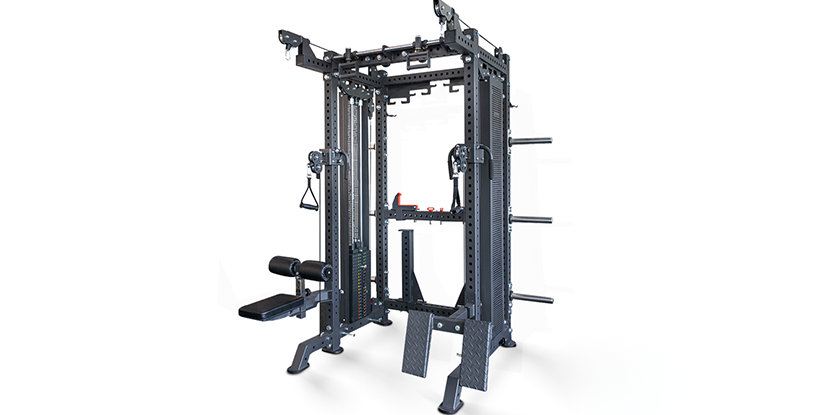
Furthermore, modularity improves inventory turnover by allowing distributors to stock core components rather than a massive variety of fully assembled SKUs. By maintaining a base inventory of standard uprights and specialized attachments separately, buyers can respond to market-specific requests—such as specialized pull-up bars or weight storage—without the overhead of carrying low-velocity, fully assembled products. This lean approach minimizes warehouse footprint and ensures that capital is not tied up in bulky, non-versatile equipment.
Quality Control Standards for Space-Saving Strength Hardware
Durability in a compact footprint requires strict adherence to material grades to prevent premature structural fatigue. When sourcing for small studio strength training environments, the focus must shift from mere aesthetics to long-term structural integrity and low total cost of ownership (TCO).
Structural Integrity and Material Specifications
A high-performance space saving squat rack must be engineered with high-gauge steel to maintain stability under heavy loads. In commercial settings, even a slight deviation in steel thickness can lead to wobbling or catastrophic failure during high-intensity sessions. Buyers should prioritize commercial-grade construction that utilizes heavy-duty steel tubing to ensure consistent weight capacity stability. This level of structural rigidity is critical for distributors and facility managers who need to minimize replacement cycles and maintenance overhead.
Furthermore, the longevity of the equipment depends heavily on the resilience of the finish. A premium powder coating durability standard is essential to protect the steel from oxidation, sweat, and constant friction from barbell movement. Selecting units with high-grade finishes ensures that the equipment maintains its professional appearance and structural health, even in high-traffic boutique studios where equipment turnover is high.
Technical Specification Comparison for Procurement
To maximize your ROI, evaluate the relationship between steel dimensions and coating durability. While smaller profiles save floor space, the gauge and finish determine the product's lifespan in high-traffic commercial environments. Use the following technical comparison to align your sourcing requirements with your specific facility type.
| Specification Type | 75mm x 75mm (Heavy Duty) | 60mm x 60mm (Standard/Compact) |
|---|---|---|
| Typical Use Case | Full-scale commercial gyms; heavy lifting zones | Boutique studios; small studio strength training |
| Structural Rigidity | Maximum stability for high-load barbell movement | Optimized for moderate loads and space efficiency |
| Preferred Coating | High-micron electrostatic powder coating | Standard powder coating or electroplating |
| Maintenance Cycle | Low; highly resistant to oxidation and scratches | Moderate; requires regular surface inspection |
| Primary Benefit | Extreme durability and long-term asset value | Maximum floor plan optimization and portability |
When negotiating with manufacturers, specify the required micron thickness for powder coatings. For distributors, selecting the 75mm profile with reinforced electroplating offers a safer long-term hedge against the high wear-and-tear typical of professional strength training facilities.
Critical B2B Sourcing Inspection Checkpoints
When conducting a B2B sourcing inspection, procurement managers must move beyond visual surface checks to verify the mechanical reliability of the unit. A space saving squat rack that lacks precision in its assembly will inevitably compromise gym floor plan optimization by requiring frequent repairs or causing uneven load distribution. High-quality manufacturing is defined by the precision of the connections and the strength of the joints.
Focus your factory inspection on three specific technical areas to ensure long-term asset stability:
- Welding Integrity: Inspect all load-bearing joints for consistent weld penetration. Look for smooth, uniform beads without porosity or slag inclusions, which indicate structural weaknesses that could fail under heavy barbell drop forces.
- Bolt and Pin Tolerance: Verify that adjustment mechanisms, such as J-hooks and safety pins, exhibit tight tolerances. Any excessive play or "wobble" in the pins can lead to uneven weight distribution and accelerated wear on the steel uprights.
- Load-Bearing Testing: Request documentation or witness a live load-bearing testing protocol. This ensures the rack can handle its rated capacity without structural deformation, a non-negotiable requirement for professional-grade commercial gym equipment.
By prioritizing these technical checkpoints during your quality control process, you mitigate the risk of receiving defective inventory that could harm your brand reputation and increase long-term maintenance costs.