Wholesale 70 Inch Squat Rack: Heavy-Duty Commercial Power Racks for Low Ceilings
For facility managers and gym owners operating in high-density urban markets, vertical clearance is often the deciding factor in equipment procurement. When a premium lease presents a basement or historic space with overhead obstructions, a standard rack becomes a structural impossibility. Sourcing a 70 inch squat rack that maintains commercial-grade stability allows you to monetize every square foot of your facility without compromising user safety or training versatility.
Defining the Commercial Utility of a 70 Inch Squat Rack
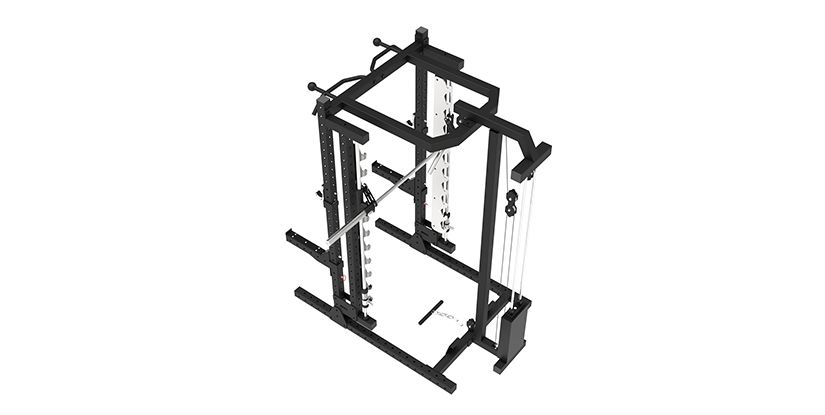
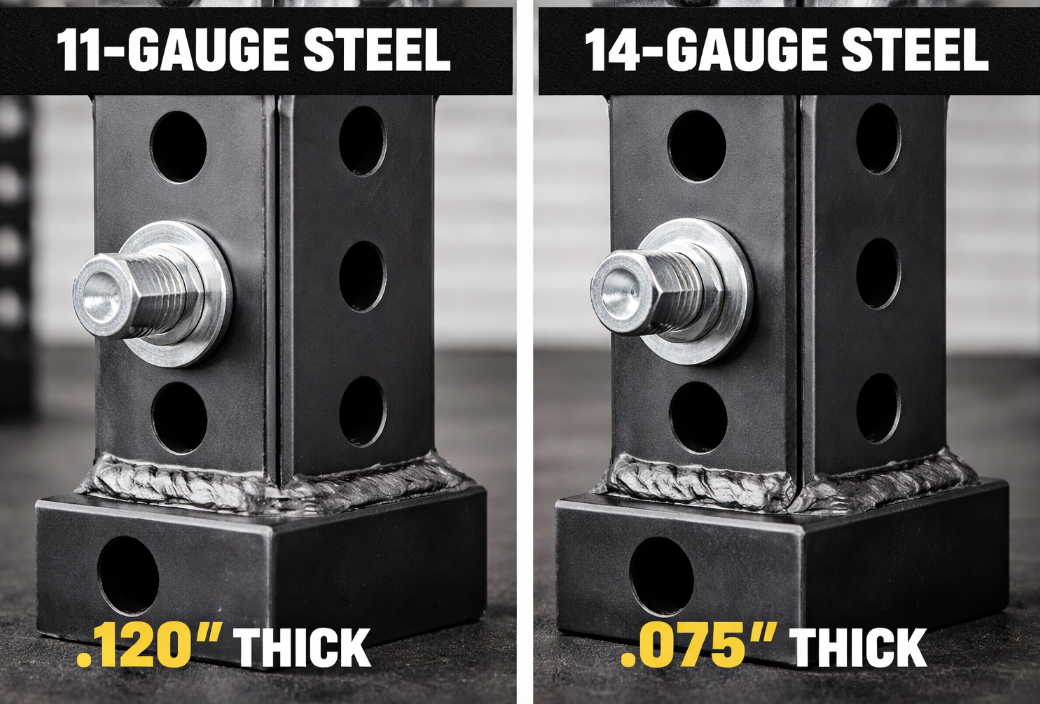
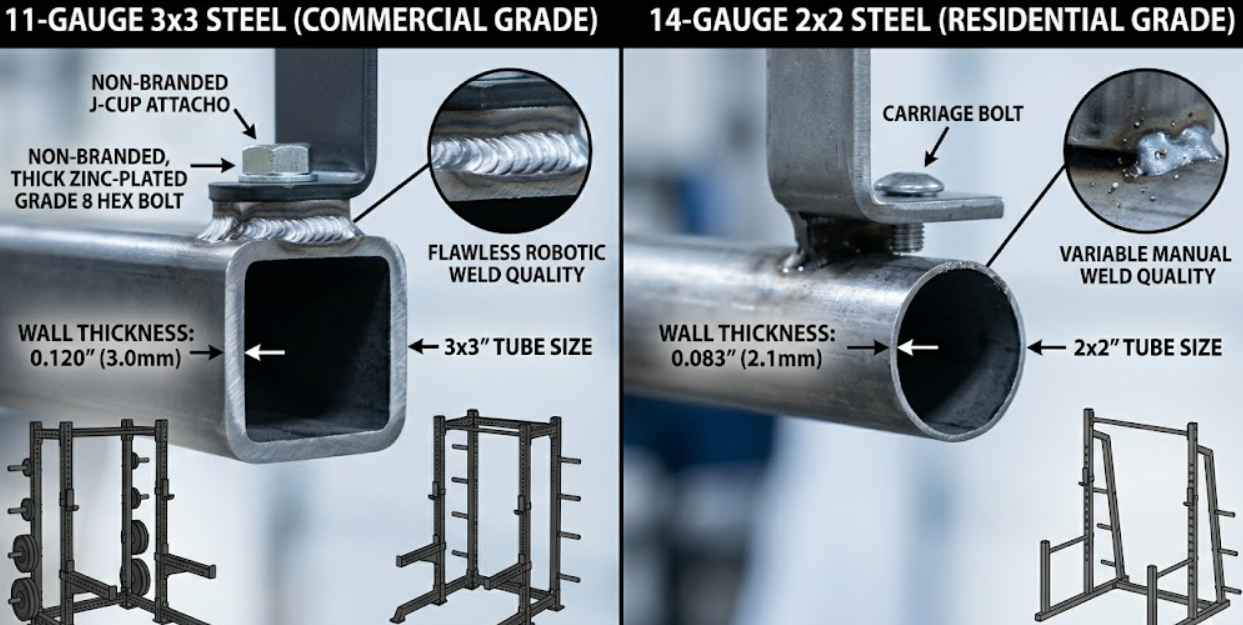
A 70 inch squat rack is a specialized, low-profile strength station engineered for environments with ceiling heights under 7.5 feet. Utilizing 11-gauge 3x3" steel tubing, these racks provide the structural integrity required for heavy-duty commercial use while clearing overhead HVAC ducts, fire pipes, and structural beams that taller frames cannot bypass.
In a professional setting, height should never be a proxy for durability. Many retail-grade racks at this height use thin 14-gauge steel, which is insufficient for the rigors of a boutique studio or high-traffic club. A true 70 inch power rack commercial unit offers a high weight capacity—typically exceeding 800 lbs—and utilizes the same attachment ecosystem as full-sized rigs. This ensures that your investment remains a versatile asset capable of facilitating professional strength training in spaces that were previously considered "dead zones."
The "Basement Trap": Why Even 72-Inch Racks Fail in Historic Facilities
Many gym owners assume that a standard 72-inch (6-foot) rack will solve their height issues, only to find that once the top crossmember is installed, there is zero clearance for pull-ups or barbell plates near the ceiling. In historic urban buildings, such as those found in Chicago or New York, actual clearance under drainage pipes can drop as low as 74 or 75 inches. A 72-inch rack leaves no room for error, forcing coaches to limit exercise selection or risk damaging the building's infrastructure. This leads to a frustrating training environment and a significant loss in billable session capacity.
Settling for a flimsier, shorter rack from a residential supplier is not a viable solution for a business. These "home gym" units lack the bolt-down stability and industrial finish required for 10+ hours of daily use. We have seen owners replace cheap racks three times in two years because of frame torsion and coating failure. This not only triples the initial procurement cost but also exposes the facility to liability risks if a rack fails under a heavy load. A 70 inch power rack built to industrial standards eliminates these operational headaches from day one.
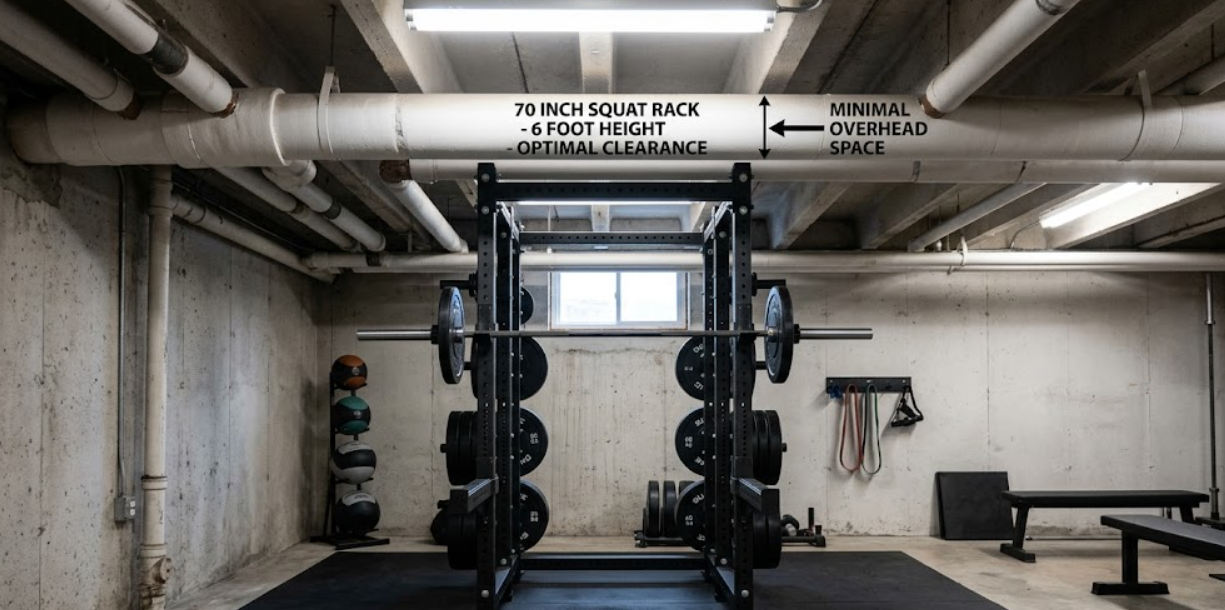
Our 70 inch squat rack solves this by providing that critical 2-to-4-inch buffer that standard "short" racks miss. By lowering the vertical footprint while keeping the base wide and the steel thick, we offer a solution that fits the most restrictive urban spaces. This allows you to transform a low-ceiling basement into a high-revenue PT studio, providing a professional aesthetic that justifies premium membership rates.
Engineering for Low Clearance: 11-Gauge Steel in a 70-Inch Frame
Engineering a 70 inch squat rack for a commercial environment presents a unique structural challenge. When the vertical height is reduced, the frame must compensate with superior material thickness to maintain the same stability as a taller rig. While residential models often compromise by using 14-gauge or 12-gauge steel, a 70 inch power rack commercial unit must utilize 11-gauge (3.0mm) cold-rolled steel. This ensures that the frame can absorb the kinetic energy of a failed lift without permanent deformation, which is a critical safety consideration for any facility manager.
The stability of a 70 inch power rack is further enhanced by the use of 3" x 3" uprights. This oversized footprint creates a lower center of gravity, which is vital for a rack with a shorter stature. In our experience, many boutique studios prefer these "overbuilt" short racks because they offer a zero-wobble experience even when not bolted to the floor—though we always recommend anchoring for maximum security. For the buyer, this translates to reduced liability and a longer equipment lifecycle, as the thicker steel resists the structural fatigue that typically plaques lighter, home-grade equipment in a professional setting.
Comparative Analysis: 70 Inch Squat Rack vs. Standard Commercial Racks
From a procurement perspective, it is essential to understand the trade-offs between different rack heights and grades. Selecting a 70 inch squat rack is often a necessity driven by the building's envelope, but the following comparison demonstrates that choosing the right grade of equipment can actually provide a better long-term ROI than settling for a standard height rack in a cramped space.
| Procurement Metric | Commercial 70" Power Rack | Standard 84" Commercial Rack | Residential 70" Rack |
|---|---|---|---|
| Steel Thickness | 11-Gauge (Professional) | 11-Gauge (Professional) | 14-Gauge (Light Duty) |
| Static Load Capacity | 800 lbs - 1,000 lbs | 1,000 lbs+ | 300 lbs - 450 lbs |
| Vertical Clearance Required | 72" - 74" | 86" - 90" | 72" |
| Attachment Compatibility | Universal 3x3 Ecosystem | Universal 3x3 Ecosystem | Proprietary / Limited |
| Maintenance Interval | Annual / Bi-annual | Annual | Frequent (Monthly) |
| Commercial Warranty | Full Lifetime (Frame) | Full Lifetime (Frame) | None / Limited 90-day |
This data confirms that a 70 inch power rack commercial grade unit effectively mirrors the performance of a full-sized rack while occupying significantly less vertical volume. For a distributor or a gym owner, the value lies in the "Standardized 3x3 Ecosystem." By purchasing a 70 inch squat rack that follows professional dimensions, you ensure that your existing inventory of J-hooks, safety bars, and plate storage is fully interchangeable, reducing the need for specialized, height-specific accessories and simplifying your equipment management.
Maximizing Revenue per Square Foot in Urban Studio Design
In the competitive landscape of urban fitness, the floor plan is your most valuable financial asset. Every square foot carries a lease cost that must be offset by billable training hours. When structural impediments like low ceilings or overhead ductwork render certain areas unusable for standard equipment, your effective "profit-generating area" shrinks. By integrating a 70 inch squat rack into these restricted zones, you reclaim lost square footage. This is not just about fitting equipment into a room; it is about converting "dead space" into a functional strength station that can support high-ticket personal training or semi-private sessions.
Consider the ROI of a boutique studio in a high-rent district. If 20% of your facility is height-restricted, you are effectively paying a 20% "space tax" on unusable floor. Deploying a 70 inch power rack commercial unit allows you to maintain a high station density, which is critical for peak-hour revenue. From our consulting experience with urban startups, the ability to add even two additional lifting stations in a low-clearance basement can increase monthly membership capacity by 15-20%. The 70 inch squat rack essentially pays for itself within the first quarter by maximizing the billable potential of your existing footprint.
The 3x3" Ecosystem: Universal Attachment Compatibility
A common mistake in B2B procurement is purchasing specialized "short" racks that utilize non-standard tubing sizes. This creates an isolated "equipment island" where your existing J-hooks, safety spotters, and dip stations will not fit. Our 70 inch power rack is built on the industry-standard 3" x 3" 11-gauge steel platform with 1-inch laser-cut holes. This ensures that the rack is not an outlier but a fully integrated part of your facility’s equipment ecosystem. This modularity is essential for long-term operational efficiency and procurement flexibility.
For a gym owner, standardization means lower overhead. You don't need to stock height-specific accessories or worry about compatibility when upgrading your facility. A 70 inch squat rack that accepts standard 3x3" attachments—such as jammer arms, landmines, and weight horns—allows for the same exercise variety found on a full-sized rig. This versatility ensures that your trainers are not limited by the equipment’s height, and your members receive a consistent, premium experience. When you invest in a 70 inch power rack commercial frame that follows these standards, you are investing in a platform that can evolve with training trends for years to come.
Durability Factors: Commercial Finish and Weight Capacity Standards
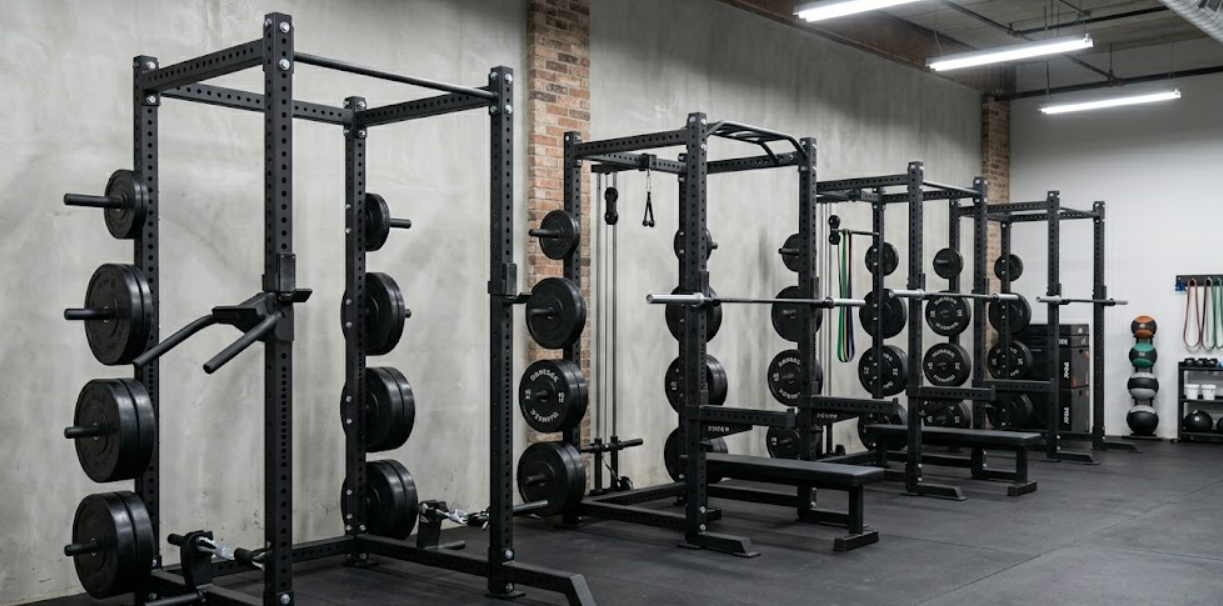
In high-traffic commercial environments, the durability of a 70 inch squat rack is measured by its resistance to both structural fatigue and surface degradation. In low-clearance areas like basements, humidity levels can be higher than on the ground floor, making equipment prone to oxidation if the finish is sub-par. We utilize an industrial-grade powder coat finish that is electrostatically applied and heat-cured. This creates a high-friction, chip-resistant surface that protects the 70 inch power rack from the constant impact of steel barbells and corrosive sweat, ensuring the equipment maintains a professional aesthetic for years without requiring costly refinishing.
Weight capacity is a critical metric for any 70 inch power rack commercial unit. Because these racks are shorter, they must be engineered to handle the same dynamic loads as their taller counterparts. Our 70-inch frames are rated for a static load capacity of 1,000 lbs, providing a massive safety buffer for professional athletes and heavy lifters. For the facility owner, this high capacity reduces the risk of equipment failure and potential liability claims. By investing in a 70 inch squat rack with overbuilt specifications, you significantly lower the total cost of ownership by extending the replacement cycle and minimizing the need for structural maintenance.
Logistical Advantages for Distributors: Shipping and Storage Density
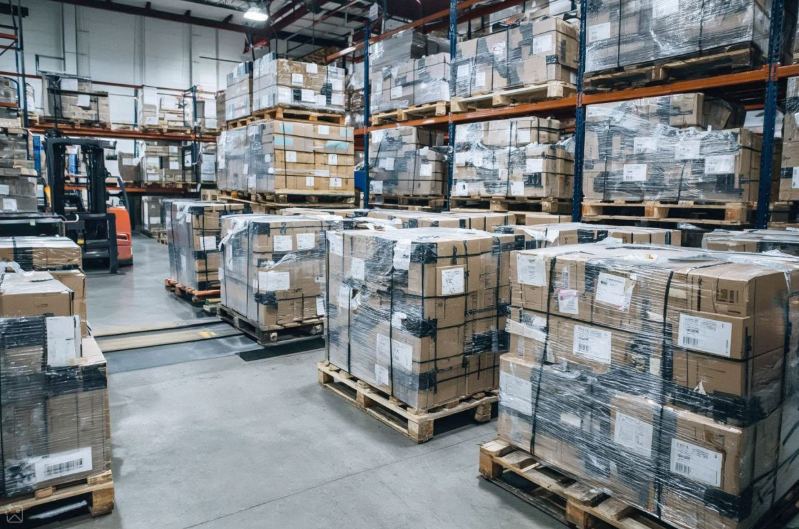
For equipment distributors, the profitability of a product line is often determined by logistics and "dead air" in shipping containers. A 70 inch squat rack offers a distinct advantage in dimensional weight (DIM weight) calculations. The shorter 177cm uprights allow for more compact packaging, which maximizes pallet density and reduces shipping costs per unit. From a B2B perspective, this means a distributor can fit roughly 15-20% more units in a standard 40-foot container compared to 84-inch racks, directly improving the profit margin on every shipment.
Furthermore, the 70 inch power rack commercial units are easier to handle for "last-mile" deliveries in dense urban areas. Standard freight elevators and small delivery vans often struggle with 7-foot or 8-foot uprights, leading to increased labor costs and potential delivery failures. The 70-inch format bypasses these logistical bottlenecks, making it the ideal product for servicing the growing "micro-gym" and boutique studio market. By stocking the 70 inch squat rack, distributors can offer a specialized solution that solves both the customer's spatial problems and the supplier's logistical challenges, creating a more efficient and profitable supply chain.
Safety Protocols and Installation in Restricted Spaces
Installing a 70 inch squat rack in a confined, low-clearance environment requires more than just a wrench; it requires a strategic understanding of spatial safety. In the B2B sector, "fitting the space" is only half the battle—ensuring the equipment remains safe under high-frequency use in a cramped area is the other half. When ceiling heights are tight, the risk of a barbell plate striking an overhead obstruction during a heavy lift is high. We recommend a minimum of 4 inches of clearance above the rack's highest point to allow for the dynamic movement of the bar and the slight lift required to unrack. A 70 inch power rack is specifically designed to provide this "safety buffer" in rooms where a 72-inch frame would be dangerously close to the ceiling.
Furthermore, floor integrity in older basement facilities or converted industrial units can be inconsistent. To ensure the 70 inch power rack commercial unit performs at its rated capacity, it must be installed on a level, high-density rubber surface. We advise facility owners to use 3/4-inch stall mats or a bolt-down platform. Even though the shorter height of a 70 inch squat rack provides a naturally lower center of gravity, anchoring the frame to the subfloor is a non-negotiable step for commercial liability compliance. This prevents "rack walk" during aggressive re-racks and ensures that the structural integrity of the 11-gauge steel is fully utilized during high-performance training sessions.
Case Study: Reclaiming a Historic Basement in Chicago
To illustrate the ROI of the 70 inch squat rack, consider a recent project we managed for an executive "speakeasy-style" gym in a 1920s-era masonry building in Chicago. The facility's primary strength zone was located in a basement with a ceiling height of 90 inches, but massive cast-iron drainage pipes reduced the effective clearance to just 74 inches in the most critical areas. Standard commercial racks were a physical impossibility, and the owner was on the verge of abandoning the strength-training portion of their business model, which would have significantly lowered their membership value.
We implemented a 70 inch power rack commercial solution, utilizing custom-engineered low-profile crossmembers. This allowed the 4-station lifting area to sit directly under the historic pipes while still providing enough room for members to perform squats and bench presses safely. By utilizing a 70 inch squat rack instead of inferior, lightweight retail alternatives, the club maintained its premium "industrial-luxe" aesthetic while providing a safe training environment for its high-net-worth clientele. The result was a 35% increase in initiation fee revenue within the first month of opening, as the facility was able to market itself as a "full-service" strength boutique despite the architectural limitations. Additionally, because the equipment met all commercial safety certifications, the facility's liability insurance rates remained at the standard tier, avoiding the "high-risk" surcharges associated with non-commercial gear.
Analyzing the Total Cost of Ownership (TCO) and Long-Term ROI
For a commercial facility, the sticker price of a 70 inch squat rack is only one component of the procurement equation. To understand the true impact on your bottom line, you must evaluate the Total Cost of Ownership (TCO). A budget-grade "short" rack from a retail vendor may save $400 upfront, but its lack of durability in a high-traffic environment creates hidden costs. Between frequent hardware tightening, the replacement of worn-out plastic liners, and the eventual frame failure under heavy use, the "cheap" option often costs double the price of a professional 70 inch power rack commercial unit within just 24 months of operation.
Our heavy-duty 70 inch squat rack is built to be a "set and forget" asset. By using 11-gauge steel and oversized 1-inch hardware, we reduce the man-hours required for equipment maintenance. In a professional club, every hour a staff member spends fixing a rack is an hour not spent on billable training or sales. Furthermore, the residual value of a 3x3" commercial-grade 70 inch power rack remains high. If you decide to upgrade or relocate your facility in five years, these units command a significant resale price in the secondary market, whereas lightweight residential racks are often liquidated for scrap value. Choosing industrial quality is a strategy for capital preservation.
Strategic Sourcing: Standardizing Multi-Location "Micro-Gym" Facilities
For franchise owners and multi-location boutique brands, the challenge is maintaining a consistent training experience across diverse architectural footprints. One location might have 12-foot ceilings, while the next is a retrofitted urban basement. By incorporating the 70 inch squat rack into your standard equipment manifest, you create a "universal solution" for height-restricted zones. This standardization simplifies your internal training protocols, as your coaches can use the same 3x3" attachments and safety setups regardless of the specific ceiling height at any given location.
From a sourcing perspective, standardizing on a 70 inch power rack commercial frame allows for bulk procurement advantages. When you order 20+ units for a regional rollout, you leverage economies of scale in both manufacturing and logistics. As a B2B gym equipment supplier, we facilitate this by offering custom OEM branding—such as laser-cut logos and brand-specific powder coating—ensuring that your 70 inch power rack fleet reflects your brand’s premium identity. This level of consistency is what separates a professional fitness brand from a collection of loosely managed gyms. It ensures that your "micro-gym" locations feel just as professional and "heavy-duty" as your flagship facilities.
Custom OEM Solutions for High-Volume B2B Procurement
For large-scale distributors and fitness franchises, the ability to differentiate a product line is a significant competitive advantage. A standard 70 inch squat rack serves a functional purpose, but a custom-branded 70 inch power rack commercial unit strengthens your brand equity. We provide comprehensive OEM and private labeling services that allow you to integrate your corporate identity directly into the hardware. This includes custom laser-cut logo plates, specific powder coat color matching to fit your brand’s palette, and even modified hole spacing configurations to meet your specific training protocols.
From a procurement perspective, custom-branded equipment reduces the "commoditization" of your inventory. Instead of competing solely on price with generic imports, you are offering a specialized 70 inch power rack that is exclusive to your brand. Our manufacturing facility is equipped with precision fiber laser cutters and automated powder coating lines, ensuring that every custom unit meets the same rigorous 11-gauge standards as our stock models. For B2B clients, this means you can offer a "boutique-ready" solution that feels bespoke while benefiting from our industrial-scale production efficiencies and quality control protocols.
Corrosion Resistance and Maintenance in Subterranean Facilities
Because the 70 inch squat rack is the go-to solution for basement gyms and subterranean training zones, it is frequently exposed to higher humidity levels and poorer ventilation than ground-floor facilities. In these environments, standard paint or low-grade powder coating will eventually bubble and peel, leading to structural rust and an "unclean" look that drives away premium members. This environmental challenge is a common pain point for facility managers who find themselves repainting equipment every 18 months to keep up appearances.
We address this by utilizing a multi-stage pre-treatment process before the final powder application. Each 70 inch power rack commercial frame undergoes a phosphate wash and an electrostatic primer coat, which creates an impermeable barrier against moisture. Our outdoor-grade textured finish not only provides superior grip for the uprights but also resists the corrosive effects of salt-laden sweat and high humidity. This advanced coating technology ensures that your 70 inch power rack remains a professional-looking asset for years, significantly reducing the labor costs and downtime associated with equipment refinishing in damp environments. In the B2B world, a "low-maintenance" finish is a direct contribution to your facility’s long-term profitability.
Optimizing Training Versatility within a 70-Inch Vertical Constraint
A common concern for procurement officers is whether a 70 inch squat rack will limit the exercise variety available to members. In a commercial setting, if a piece of equipment cannot accommodate standard movements like overhead presses or pull-ups, its value proposition diminishes. However, the 70-inch height is a strategic "sweet spot." It is tall enough to allow most users to perform seated overhead presses and standard squats, while providing the necessary clearance for a barbell to be racked comfortably. By selecting a 70 inch power rack with adjustable pull-up bar heights, you ensure that even in a low-ceiling environment, the rack remains a multi-functional hub for strength training.
From a programming perspective, the 70 inch power rack commercial unit supports everything from powerlifting to functional hypertrophy training. When paired with a high-quality adjustable bench, the rack facilitates a complete range of movements within a height-restricted footprint. For the gym owner, this versatility is a key driver of member retention. You are providing a "no-compromise" training experience in a space that would otherwise be limited to dumbbells or machines. This ability to deliver full-scale barbell training in a compact vertical space is a significant competitive advantage in the boutique fitness market, where specialized strength coaching often commands the highest session rates.
Supply Chain Resilience and Lead Time Considerations for Bulk Procurement
In the B2B world, the best equipment is useless if it doesn't arrive in time for your facility's grand opening. When sourcing a 70 inch squat rack for a large-scale rollout or a distribution warehouse, lead times and supply chain reliability are just as important as steel gauge. We operate as a direct-to-factory partner, which allows us to provide accurate production timelines and bypass the delays common with third-party brokers. For a distributor managing high-volume inventory, having a reliable stream of 70 inch power rack units ensures that you can meet the demands of urban gym contractors without carrying excessive "safety stock" costs.
Our production protocols prioritize quality assurance at every stage, from the initial laser cutting of the 11-gauge steel to the final stress-testing of the 70 inch power rack commercial frames. We understand that in a commercial contract, a delay of one week can cost thousands in lost membership revenue or storage fees. By maintaining a transparent logistics pipeline and offering factory-direct pricing, we help our B2B partners protect their margins and their reputations. Whether you are outfitting a single boutique studio or stocking a regional distribution hub, our focus on supply chain efficiency ensures that your 70 inch squat rack order arrives on schedule and ready for immediate deployment.