Power Rack with Weights | Procuring Power Racks With
Optimizing SKU Breadth and Margin for Strength Training Distributions
Distributors must balance the logistical complexity of high-volume orders against the potential for higher revenue per unit. When evaluating a power rack with weights, the procurement decision often hinges on three critical checkpoints: the risk of shipping volumetric weight, the technical compatibility of attachments, and the long-term inventory turnover of heavy steel components. Navigating these variables is essential for maintaining a lean, profitable catalog.
Managing SKU breadth effectively requires a strategic choice between offering individual components or pre-configured sets. While sourcing commercial strength training equipment as standalone pieces allows for greater customization, it often increases the complexity of inventory management and shipping costs. Conversely, bundled configurations—such as a rack paired with specific weight plates and barbells—can simplify the ordering process for end-users and streamline margin optimization for the distributor through higher average order values.
| Configuration Strategy | Logistical Impact | Margin Profile |
|---|---|---|
| Individual Components | High complexity; multiple shipments | Lower per-unit margin; high customization |
| Standardized Bundles | Predictable volume; easier warehousing | Higher per-unit margin; streamlined shipping |
For professional buyers, the choice between these models directly affects the total cost of ownership and the speed of fulfillment. A nuanced understanding of how each model influences heavy duty weight rack procurement can prevent capital from being tied up in slow-moving, oversized stock.
| Model Type | Upfront Cost | Assembly Requirements | Inventory Turnover |
|---|---|---|---|
| Modular/Component-based | Lowest per-unit cost | High; requires onsite skilled labor | Fast; driven by specific accessory demand |
| Bundled (Rack + Weights) | Moderate to High | Low; often pre-assembled or turnkey | Steady; ideal for full facility build-outs |
When calculating your budget, account for the hidden costs of logistics complexity. While component-based sourcing reduces initial capital outlay, the increased assembly requirements and potential for missing parts can delay project timelines. In contrast, bundled solutions offer predictable shipping profiles, which is a critical advantage for large-scale commercial facility deployments.
Strategic Inventory and Margin Management
To maintain a competitive edge, distributors should categorize their catalog into high-volume staples and high-margin accessories. While a standard power rack with weights acts as a primary driver for order volume, the real profitability often lies in specialized attachments and premium upgrades. Successfully navigating these tiers requires a rigorous approach to inventory management to ensure capital is not trapped in low-turnover, oversized steel frames.
Effective gym equipment sourcing standards dictate that buyers look beyond the base unit price. Negotiating volume-based pricing on core structural units allows you to remain competitive on large-scale facility bids, while simultaneously leveraging a lower MOQ for high-margin accessories like specialized barbells or specialized plate trees. By balancing these two ends of the spectrum, you can maximize both your market reach and your net profitability per shipment.
Structural Integrity and Load Compatibility Standards
When sourcing a power rack with weights for high-traffic facilities, the primary procurement concern is the long-term durability of the frame under repetitive stress. Unlike residential models, commercial strength training equipment must withstand the kinetic energy of heavy barbell drops and constant user interaction without compromising its fundamental geometry.
Baseline Specifications for Heavy-Duty Usage
To ensure structural stability in a commercial setting, buyers should prioritize the steel gauge thickness of the uprights. Most professional-grade manufacturers utilize 11-gauge steel (approximately 3mm) to prevent bowing or lateral movement during high-volume usage. A failure to verify these material standards during the vetting process often leads to premature equipment fatigue and increased maintenance costs for gym operators.
Successful heavy duty weight rack procurement requires a granular understanding of how steel thickness directly influences weight capacity and equipment lifespan. In many commercial gym settings, the difference between 11ga and 7ga steel is not merely a cost variable but a fundamental distinction in structural reliability.
Steel Gauge and Load Capacity Comparison
Choosing the correct specification depends on whether the facility targets high-intensity strength training or general fitness. Below is a technical comparison of common steel configurations used in the industry.
| Steel Specification | Typical Load Capacity | Primary Use Case | Procurement Profile |
|---|---|---|---|
| 11-Gauge (11ga) | 700 – 1,000+ lbs | Standard Commercial Gyms | Balanced ROI / High Durability |
| 7-Gauge (7ga) | 1,200+ lbs | Performance / Pro Training | Extreme Load / Premium Cost |
| 12-Gauge (12ga) | < 600 lbs | Boutique / Semi-Commercial | Cost-Effective / Lower Longevity |
While 7ga steel offers superior rigidity for professional strength athletes, 11ga remains the industry benchmark for most distributors. It provides the necessary resistance to bending during heavy barbell loading while maintaining a manageable shipping weight and reasonable MOQ pricing.
Logistics and QC for Weight-to-Strength Optimization
A critical oversight in the procurement decision involves ignoring the ratio between the rack's structural integrity and its total shipping weight. When importing a power rack with weights, the gross weight significantly impacts freight costs and container utilization. However, excessive lightness often signals a lack of density in the steel, which compromises long-term durability.
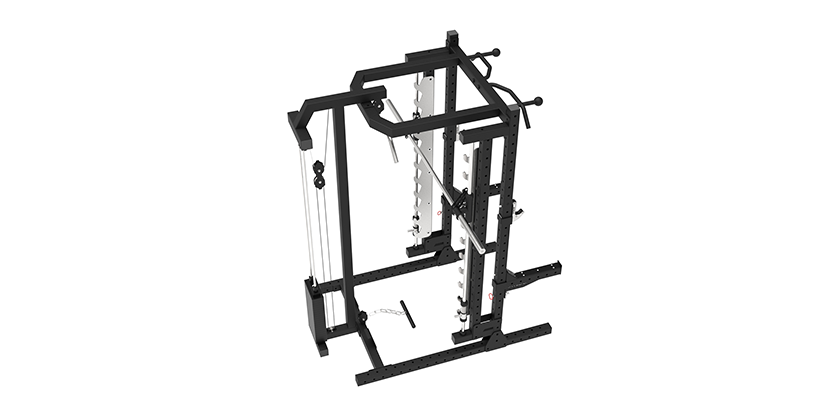
To mitigate risk, implement a rigorous QC inspection protocol that verifies the shipping weight against the technical data sheet. Discrepancies often indicate substandard steel thickness or hollow components that fail to meet gym equipment sourcing standards. Ensure your factory partner provides weight-load testing results to confirm that the integrated weight storage and frame can handle maximum capacity without structural deformation. This scrutiny ensures that the product arrives ready for high-intensity commercial environments without hidden structural weaknesses.
Evaluating Footprint and Spatial Constraints in Commercial Layouts
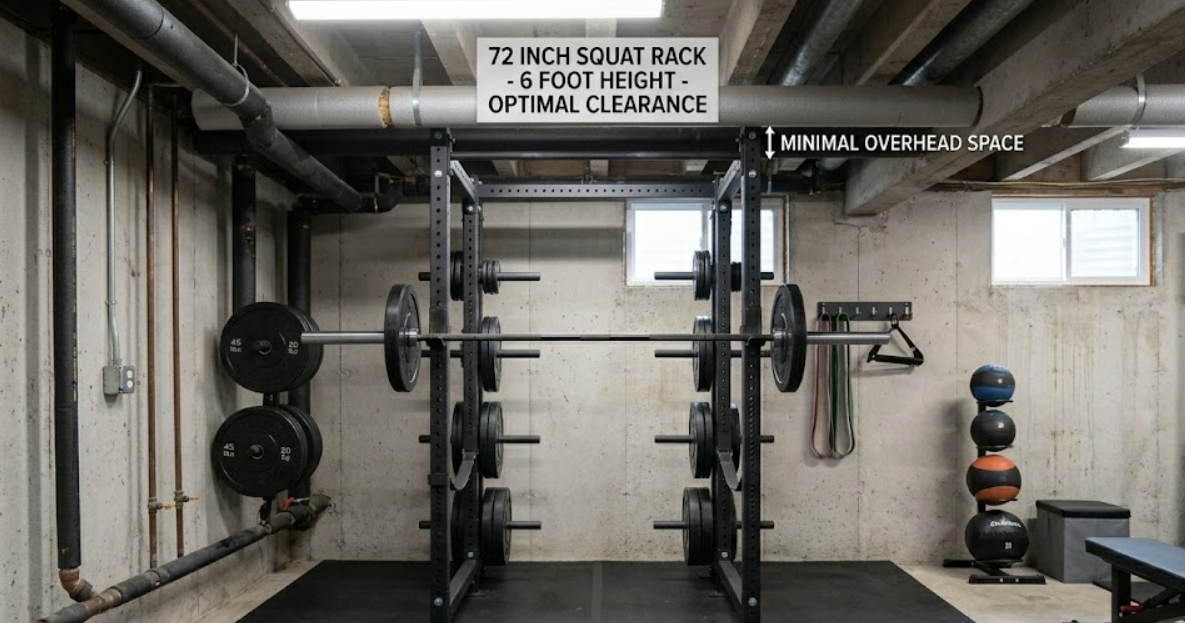
When planning a facility layout, procurement managers must distinguish between the static footprint of a power rack with weights and the total operational clearance required for safe use. While the footprint defines the floor space the unit physically occupies, the operational zone accounts for barbell rotation, plate loading, and user movement. Neglecting this distinction often leads to cramped training environments that compromise safety and flow in high-traffic commercial strength training equipment zones.
Footprint vs. Operational Clearance
Effective space management requires accounting for the "buffer zone" around the rack. A unit might have a compact base, but the length of the barbell and the movement of the lifter significantly expand the required area. For distributors and facility planners, calculating the total spatial impact is critical to maximizing square footage without violating safety standards.
| Configuration Type | Primary Footprint Focus | Operational Clearance Needs | Best Use Case |
|---|---|---|---|
| Wall-Mounted Racks | Minimal floor intrusion | High (requires barbell path clearance) | Boutique studios or small training cells |
| Standard Floor-Standing | Moderate (base width/length) | Standard (barbell length + user space) | General commercial gym layouts |
| Integrated Weight Storage | Large (includes weight tree) | Significant (plate loading access) | High-volume facilities with limited staff |
Selecting the appropriate configuration depends heavily on your facility's specific volume and throughput requirements. For instance, while a modular setup offers the highest adaptability for expanding franchises, a wall-mounted unit provides the most efficient use of vertical space in urban boutique environments. When sourcing, ensure your shipping and logistics planning accounts for the larger dimensions of floor-standing models to avoid unexpected port or warehouse bottlenecks.
Spatial Planning Matrix for Commercial Layouts
Use the following dimensions to estimate the actual floor area required per station during the procurement phase. This helps in determining the total quantity of units that can be realistically deployed within a fixed square footage.
| Configuration Type | Average Base Dimensions | Space Efficiency | Deployment Strategy |
|---|---|---|---|
| Modular Systems | 1.2m x 1.5m (base) | Moderate | Expandable for growing facilities |
| Wall-Mounted Units | 0.6m x 1.2m (depth) | High | Ideal for limited footprint studios |
| Standard Full-Rack | 1.5m x 1.5m (base) | Standard | Core component of heavy-duty zones |
For high-density gym layouts, we recommend calculating a 1.5-meter buffer around the perimeter of the equipment to accommodate barbell sleeves and plate loading. This ensures that the power rack with weights remains accessible even during peak hours without obstructing general circulation paths.
Accessory Compatibility and Safety Buffer Zones
Beyond the primary footprint, successful heavy duty weight rack procurement requires a granular analysis of accessory clearance. Many buyers overlook how bolt-on attachments—such as dip stations, landmines, or lateral weight storage—extend the functional reach of the rack. If these accessories are not accounted for in the initial floor plan, they can infringe upon adjacent equipment or walkways, creating significant liability risks.
Adhering to strict gym equipment sourcing standards means verifying that every add-on maintains a safe safety buffer. We advise distributors to request technical drawings that illustrate the "maximum extension" of all compatible accessories. This prevents logistical errors where a high-density layout becomes unusable due to overlapping movement zones or blocked access to weight plates, ensuring a seamless flow for commercial users.
Weight Compatibility and Accessory Integration Requirements
When sourcing a power rack with weights for high-traffic facilities, buyers must look beyond static load ratings. The relationship between structural integrity and load-bearing stability directly dictates your long-term maintenance cycles and total cost of ownership. A rack that meets nominal weight requirements but lacks rigid frame geometry will suffer from micro-movements over time, leading to bolt fatigue and hardware loosening.
The Link Between Load Capacity and Maintenance
For distributors and facility managers, the quality of commercial strength training equipment is measured by its ability to handle dynamic loading without compromising the frame. If a power rack with weights is rated for heavy lifting but lacks the necessary cross-member reinforcement, the resulting structural sway increases the frequency of required inspections. High-quality manufacturing ensures that even under maximum capacity, the tension remains consistent, effectively extending the interval between standard preventive maintenance routines.
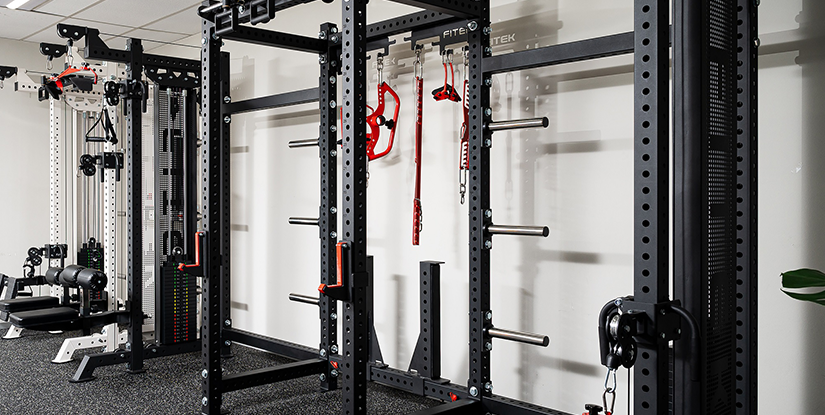
To ensure long-term utility, procurement teams must evaluate how weight capacity interacts with peripheral hardware. A common oversight in heavy duty weight rack procurement is selecting a high-capacity frame that lacks the specialized hole patterns or reinforced mounting points required for advanced attachments. This mismatch often leads to premature wear on the powder coating or physical damage to the uprights when users engage various resistance tools.
Technical Comparison: Capacity vs. Versatility
Standardizing your inventory requires understanding the trade-offs between pure load-bearing strength and attachment versatility. Most gym equipment sourcing standards differentiate between basic structural support and high-functionality systems designed for multi-purpose training environments.
| Configuration Type | Typical Weight Capacity | Barbell Compatibility | Accessory Integration Potential |
|---|---|---|---|
| Standard Heavy-Duty | 300kg - 400kg | Standard Olympic Barbell | Basic (J-Cups, Spotter Arms) |
| Advanced Multi-Functional | 450kg+ | Olympic & Specialty Bars | High (Dip Stations, Lat Pull-down, Landmines) |
| Modular/Hybrid Systems | Variable (Load-Dependent) | Multi-Diameter Bars | Maximum (Customizable Toolsets) |
When negotiating with manufacturers, verify that the attachment mounting points are integrated into the primary structure rather than being secondary add-ons. This ensures that adding weight-bearing accessories does not compromise the overall structural stability or the intended load rating of the unit.
Optimizing Long-Term Facility Longevity
Effective procurement requires a rigorous procurement checklist that accounts for the inevitable wear and tear of high-volume training. Beyond initial capacity, buyers should prioritize compatibility testing for all modular parts to ensure seamless integration. Implementing a strict preventative maintenance schedule—focused on bolt torque and upright alignment—minimizes unexpected downtime and protects facility longevity. By selecting equipment with standardized, high-grade connection points, distributors can avoid the high TCO spikes associated with non-compatible third-party accessories or structural degradation.
Sourcing High-Performance Steel and Coating Specifications
To ensure long-term structural integrity, procurement managers must look beyond basic aesthetics and focus on the metallurgical properties of the frame. High-performance commercial strength training equipment relies on consistent steel density and precision welding to withstand the repetitive kinetic energy of heavy lifting cycles.
Evaluating Gauge Thickness and Steel Density
When vetting manufacturers, the primary technical differentiator is the gauge thickness of the steel tubing. For a professional-grade power rack with weights, we typically recommend a minimum of 11-gauge (approximately 3mm) steel for the uprights. Inferior, thinner-walled tubing may meet basic retail standards but often fails to meet heavy-duty steel specifications required for high-traffic commercial environments. Thinner gauges are prone to structural fatigue and microscopic warping under extreme load, which can compromise the safety of the entire station over time. B2B buyers should request specific mill certifications to verify that the steel density remains uniform across all structural members.
Beyond the structural gauge, the surface finish determines the equipment's resistance to oxidation and physical wear. In high-humidity gym environments or facilities with frequent cleaning protocols, the choice between powder coating and electroplating significantly impacts the total cost of ownership (TCO) and long-term maintenance requirements.
Coating Comparison: Durability and Corrosion Resistance
Selecting the appropriate finish is a critical decision for distributors managing inventory that may undergo extended sea freight or reside in varied climates. The following comparison highlights the technical trade-offs between common industrial finishes used in commercial strength training equipment production.
| Feature | Industrial Powder Coating | Electroplating (Zinc/Chrome) |
|---|---|---|
| Corrosion Resistance | High; creates a thick, non-porous barrier. | Excellent; provides superior electrochemical protection. |
| Impact Durability | Resistant to scratches and barbell strikes. | Can be prone to chipping if the layer is thin. |
| Maintenance Level | Low; easy to clean with standard solutions. | Moderate; requires monitoring for oxidation. |
| Aesthetic Versatility | High; wide range of textures and colors. | Limited; primarily metallic finishes. |
| Weight Capacity Stability | Consistent; does not affect structural load. | Stable; highly compatible with heavy-duty steel. |
While electroplating offers exceptional protection against moisture-induced oxidation, powder coating is often the preferred standard for high-end power racks due to its ability to mask minor welding imperfections and provide a durable, matte texture. When sourcing, verify that the coating application process includes a pre-treatment stage to ensure maximum adhesion and long-term weight capacity stability.
Audit Checklist for Material Integrity
To mitigate the risk of structural failure, procurement specialists should implement a rigorous QC inspection protocol during factory audits. Relying solely on visual confirmation is insufficient for gym equipment sourcing standards; instead, demand material certification documentation, such as Mill Test Reports (MTRs), to validate the chemical composition and tensile strength of the steel.
A thorough durability verification process must also include a physical inspection of weld penetration and the uniformity of the powder coating thickness. Verifying these technical specifications at the source prevents the shipment of substandard units that cannot sustain the high-frequency loading typical of professional strength facilities.
Logistics Optimization for Heavy-Duty Freight and Container Loading
Managing the transit of a power rack with weights requires a sophisticated understanding of shipping density and volumetric weight. Because these units combine high-density steel components with high-volume structural frames, the logistics profile is complex and requires precise container planning to avoid inflated freight costs.
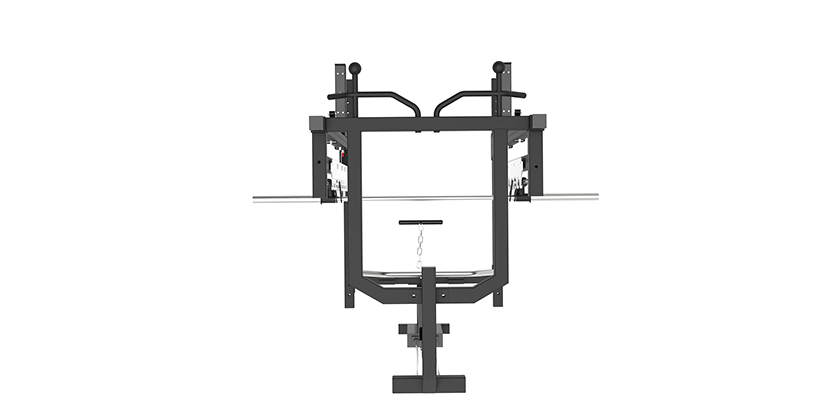
Sea Freight vs Air Freight: Navigating the Cost-Efficiency Trade-Off
For distributors engaged in heavy duty weight rack procurement, the choice between transport methods dictates the final landed cost and inventory turnover speed. While air freight offers rapid deployment for boutique studio launches, it is rarely viable for commercial strength training equipment due to the extreme volumetric weight of the steel uprights and integrated plates. Sea freight remains the industry standard for bulk orders, allowing for optimized container utilization. We recommend coordinating with suppliers to ensure that the power rack with weights configuration maximizes floor space within a 40ft HQ container, effectively lowering the per-unit shipping cost through improved shipping density.
Shipping Configuration Comparison for Procurement Managers
Selecting the correct logistics model is critical to maintaining margins when sourcing heavy-duty equipment. The following table compares common shipping methods to help you evaluate the trade-offs between speed, cost, and volume optimization for large-scale facility deployments.
| Shipping Method | Cost Impact | Typical Lead Time | Best Suitability |
|---|---|---|---|
| FCL (Full Container Load) | Lowest per-unit cost | 30–45+ Days | Bulk distributor restocks and large gym fit-outs |
| LCL (Less than Container Load) | Moderate | 20–35 Days | Small studio orders or mixed equipment shipments |
| Air Freight | Highest cost | 5–10 Days | Urgent replacement parts or lightweight accessories |
When evaluating gym equipment sourcing standards, prioritize FCL for any order involving a complete power rack with weights setup. Maximizing container density through optimized palletization significantly reduces the landed cost per square foot of gym flooring, providing a better ROI for your facility or retail inventory.
Mitigating Damage Risks and Managing MOQ Constraints
To protect the structural integrity during transit, procurement managers must mandate strict palletization protocols. Heavy steel uprights and dense weight plates require reinforced packaging to prevent breakage or frame deformation during sea swells. High-quality suppliers implement specialized breakage prevention techniques, such as corner protectors and custom crate inserts, to ensure the power rack with weights arrives in a build-ready state. Additionally, when negotiating MOQs, consider how volume affects container loading optimization; larger, consolidated orders often justify higher packaging standards, effectively lowering the hidden costs of damaged goods and ensuring a more predictable ROI for your distribution network.
The Hidden Cost of Low Unit Prices
When sourcing a power rack with weights for high-traffic facilities, the lowest initial quote often masks a much higher total cost of ownership (TCO). Procurement teams frequently overlook how substandard steel gauge or inferior welding affects long-term operational budgets.
Prioritizing low-cost alternatives over commercial strength training equipment with proven structural integrity can lead to premature replacement costs. In a commercial setting, a rack that cannot handle consistent heavy loading or lacks proper weight compatibility creates a cycle of constant maintenance and frequent equipment turnover. This instability not only shortens the asset's lifecycle but also increases liability risks and disrupts facility uptime.
Visualizing the Long-Term ROI Gap
Distributors and facility managers must weigh the initial savings of budget-tier units against the long-term operational expenses of inferior builds. A single procurement cycle for high-grade equipment typically yields better margins over a five-year period than multiple replacements of low-grade inventory.
| Evaluation Metric | Low-Grade/Residential Tier | Commercial-Grade Standard |
|---|---|---|
| Weight Capacity | Limited/Inconsistent | High/Certified Load-Bearing |
| Steel Gauge/Durability | Thinner/Prone to Deflection | Heavy-Duty/Structural Stability |
| Maintenance Frequency | High (Frequent Adjustments) | Low (Minimal Intervention) |
| Long-Term ROI | Low (High Replacement Rate) | High (Extended Asset Lifecycle) |
Choosing a premium power rack with weights configuration ensures that your facility investment remains a stable asset rather than a recurring expense. For wholesalers, focusing on these durability benchmarks is essential for maintaining high client retention and reducing warranty claims.
The Logistics and Assembly Oversight
Neglecting the logistical nuances of heavy duty weight rack procurement can result in unforeseen downtime costs that far outweigh any initial savings. When importing large-scale power rack with weights configurations, buyers must scrutinize factory packaging standards to prevent shipping damage to precision components like uprights or J-cups.
Furthermore, failing to audit assembly complexity during the sourcing stage often leads to extended installation timelines. Strict gym equipment sourcing standards should require that all hardware is standardized and instruction sets are intuitive. Without these safeguards, labor costs escalate, and facility openings are delayed, directly impacting the projected ROI of the new installation.