Squat Rack J Hooks | Selecting Commercial J Hooks for Long
Vetting Manufacturers for High-Volume J Hook Production
Many distributors mistake low unit costs for long-term savings, often sourcing lightweight components that fail under heavy use. A superior procurement strategy focuses on manufacturer quality control, ensuring that squat rack j hooks are engineered for the relentless demands of high-traffic commercial gym settings rather than just meeting minimum weight thresholds.
The Impact of Material Integrity on Lifecycle Costs
Reliability in a commercial environment depends on more than just basic load ratings; it requires strict adherence to barbell j hook specifications regarding material thickness and weld consistency. When sourcing heavy duty barbell hooks, buyers must verify that the factory employs rigorous testing to ensure structural integrity. Neglecting these technical details leads to premature deformation and increased replacement frequency, which ultimately drives up the total cost of ownership for facility owners and distributors alike.
Technical Tier Comparison for Procurement Evaluation
To minimize replacement cycles and maintain consistent facility standards, procurement managers should evaluate suppliers based on technical tiers rather than just unit price. The following comparison highlights the divergence in manufacturing standards between standard retail-grade accessories and high-performance commercial components.
| Specification Metric | Standard/Light Commercial | Premium Commercial Grade |
|---|---|---|
| Steel Gauge (Thickness) | 10-12 Gauge (Thin) | 7-9 Gauge (Heavy Duty) |
| Powder Coating Quality | Basic Electrostatic | High-Impact/Anti-Scratch Polyurethane |
| Load-Bearing Stability | Prone to bending under sustained load | High structural rigidity for heavy barbells |
| Weld & Joint Integrity | Spot welding (Higher failure risk) | Full-penetration/Continuous welding |
Selecting the higher tier typically requires a larger initial investment but significantly reduces the long-term maintenance burden. For distributors managing high-volume orders, verifying these barbell j hook specifications during the factory audit stage is essential to prevent costly returns and ensure long-term reliability in professional environments.
Verifying Manufacturing Capacity and QC Protocols
Beyond material thickness, long-term supply chain reliability hinges on a factory's ability to maintain consistency across high-volume production runs. When negotiating wholesale procurement, it is vital to move past basic barbell j hook specifications and investigate the actual quality control (QC) framework. A reliable manufacturer should demonstrate a standardized inspection process for every batch, specifically targeting weld penetration and coating adhesion to prevent widespread product failure in the field.
For distributors and large-scale gym operators, understanding the manufacturing capacity and MOQ (Minimum Order Quantity) is equally critical. A factory capable of scaling production without compromising structural integrity is a valuable partner. Ensure your distributor requirements include clear protocols for batch testing and a transparent documentation process. This proactive approach to vetting prevents the common pitfall of receiving inconsistent shipments that deviate from the approved prototype, protecting your reputation and minimizing the logistical headaches of faulty commercial squat rack accessories.
Critical Barbell J Hook Specifications for Commercial Environments
Reliability in high-traffic commercial gym environments depends on the structural integrity of small components. When sourcing squat rack j hooks, procurement managers must look beyond aesthetics to evaluate the metallurgical standards and fabrication thickness that prevent metal fatigue and deformation under heavy barbell loads.
Material Thickness and Load-Bearing Integrity
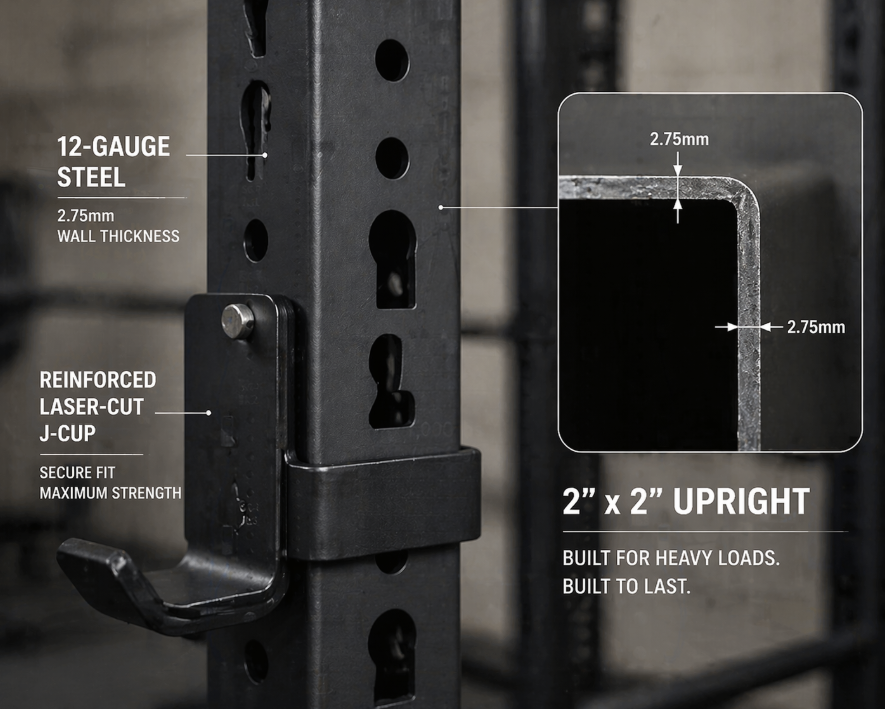
The difference between consumer-grade hardware and heavy duty barbell hooks lies in the steel gauge and the precision of the welding. For professional facilities, a thin-walled hook will eventually bow or lose its shape, creating a safety hazard and increasing maintenance cycles. High-quality commercial squat rack accessories typically utilize heavy-gauge carbon steel with reinforced gussets to maintain structural rigidity during repetitive loading and unloading cycles.
| Specification Metric | Standard Grade (Light Use) | Commercial Grade (High Traffic) |
|---|---|---|
| Steel Gauge | Thin-walled/Light Gauge | Heavy-duty/Thick-walled |
| Structural Profile | Single-layer bend | Reinforced/Double-walled |
| Wear Resistance | Moderate (prone to bowing) | High (maintains shape) |
| Primary Use Case | Home Gyms / Studios | Full-scale Commercial Gyms |
When negotiating barbell j hook specifications with manufacturers, prioritize the thickness of the steel and the quality of the powder coating. A robust coating prevents oxidation and protects the metal from the friction caused by constant barbell movement, effectively lowering the long-term Total Cost of Ownership (TCO) for distributors and gym owners.
Evaluating Coating Durability and Surface Finish
The surface treatment of your hardware dictates both the visual longevity and the operational friction experienced by end-users. For distributors and facility managers, selecting the appropriate finish is a strategic decision to minimize replacement frequency and ensure consistent barbell transitions.
| Finish Type | Steel Thickness (Typical) | Durability Profile | Ideal Commercial Setting |
|---|---|---|---|
| Powder Coating | 11-gauge to 14-gauge | High impact resistance; excellent scratch protection | High-traffic strength & conditioning facilities |
| Chrome Plating | 11-gauge to 14-gauge | Smooth, low-friction surface; high aesthetic appeal | Luxury hotel gyms and boutique studios |
| Standard Paint | 14-gauge or thinner | Moderate; prone to chipping under heavy loads | Residential or low-volume training centers |
From a procurement standpoint, 11-gauge steel paired with a high-micron powder coating offers the most reliable ROI for heavy-duty environments. While chrome provides a premium feel, powder-coated options often provide superior resistance to the mechanical abrasion caused by heavy barbell knurling, making them a safer long-term bet for high-volume commercial accounts.
Dimensional Compatibility and Installation Precision
A frequent logistical oversight in international procurement is neglecting the exact dimensions of the existing rack infrastructure. To avoid shipping errors and unusable inventory, procurement managers must verify that the barbell j hook specifications align perfectly with both the upright dimensions and the barbell diameter. Even a 2mm discrepancy in the upright's interior width or the hook's mounting bracket can lead to significant installation failures or unstable load-bearing performance.
When sourcing for existing systems, prioritize the following compatibility benchmarks:
- Upright Profile Match: Ensure the hook's rear mounting surface matches the specific depth and thickness of your rack's uprights (e.g., 2x3 inch vs. 3x3 inch).
- Barbell Diameter Tolerance: Confirm the hook's cradle width accommodates standard 28mm or 29mm Olympic bars without excessive wobbling or metal-on-metal friction.
- Mounting Hardware Type: Verify if the system requires J-cups with a single bolt or a dual-attachment system for increased stability.
To minimize replacement costs, we recommend requesting a physical sample or a detailed CAD drawing from your distributor before finalizing large-scale orders. Verifying these tolerances upfront ensures that the hardware integrates seamlessly with your current facility layout, preventing the high costs associated with returning incompatible SKU batches or dealing with damaged uprights during installation.
Evaluating Material Thickness and Coating Integrity
In high-traffic commercial gym settings, the relationship between material gauge and long-term operational expenditure is direct. Sourcing squat rack j hooks with insufficient material thickness leads to premature metal fatigue and structural instability under heavy barbell loads. For facility managers and distributors, prioritizing high-gauge steel is a strategic move to minimize replacement frequency and maintain professional standards.
Heavy duty barbell hooks must withstand constant friction and high-impact loading without losing their shape. When the steel thickness is inadequate, the hooks may begin to bend or lose their grip, compromising the structural integrity of the entire rack system. This often results in higher maintenance costs and the need for frequent inventory replenishment, which can disrupt gym operations and increase the total cost of ownership.
Beyond structural gauge, the surface finish determines the longevity of the component in humid or high-use environments. Selecting the correct finish is a critical part of the barbell j hook specifications that dictates the maintenance cycle and resistance to oxidation. A mismatch between the coating type and the facility's environment can lead to rapid cosmetic degradation or functional failure.
| Feature/Method | Powder Coating | Electroplating (Chrome/Zinc) |
|---|---|---|
| Durability | High impact resistance; thick protective layer. | Hard surface; excellent scratch resistance. |
| Corrosion Resistance | Excellent for preventing rust in indoor gyms. | Superior in high-humidity or coastal areas. |
| Maintenance Needs | Low; requires occasional wiping to prevent buildup. | Low; highly resistant to chemical cleaners. |
| Aesthetic Versatility | Wide color range for brand matching. | Standard metallic finishes only. |
For distributors and large-scale procurement, understanding these trade-offs is essential. While powder coating offers a premium look and high durability for standard commercial squat rack accessories, electroplating may be a more robust option for facilities with rigorous cleaning protocols or specialized environmental requirements. Evaluating these technical details upfront ensures the hardware meets the expected lifecycle of the equipment.
Prioritizing Long-Term ROI Through Quality Control
When sourcing at scale, the most significant risk to your total cost of ownership (TCO) is not the initial unit price, but the cost of frequent replacements. In high-traffic environments, even minor deviations in manufacturing consistency can lead to widespread failure across a single rack system. We advise distributors to move beyond simple price-per-unit comparisons and instead vet the factory capability regarding consistent welding and gauge precision.
A robust QC protocol should specifically focus on the tolerance of the mounting interface and the uniformity of the coating thickness. Relying on suppliers with proven manufacturing stability ensures that every batch meets the exact barbell j hook specifications required for professional-grade durability. Investing in high-standard quality control during the initial procurement phase prevents the logistical headaches of managing high return rates and ensures your inventory remains a reliable asset for your end-users.
Optimizing Inventory Selection via Accessory Compatibility
Effective facility layout management requires more than just floor space; it demands precise synchronization between your rack systems and their functional attachments. For distributors and gym operators, ensuring compatibility between squat rack j hooks and existing uprights is critical to preventing dead inventory and mismatched hardware shipments.
The Technical Variables of Storage Efficiency
When sourcing commercial squat rack accessories, procurement teams must look beyond basic aesthetics to the structural barbell j hook specifications. A primary variable is the upright thickness, which dictates whether a hook will seat securely or suffer from lateral instability. If the hook profile does not perfectly match the gauge of the steel upright, it can lead to premature wear or even structural failure under heavy loads. Selecting standardized, high-tolerance components ensures that your facility remains modular and capable of integrating various upgrades without requiring a total system overhaul.
To streamline your procurement process and minimize the risk of mismatched shipments, use the following technical breakdown to categorize your inventory needs. Choosing the correct configuration based on upright dimensions and intended load intensity is essential for maintaining long-term operational reliability.
| Upright Dimension | Typical Hook Depth | Standard Use Case | Load Profile |
|---|---|---|---|
| 2x2 (Small/Compact) | Short/Medium | Home Studios & Boutique Gyms | Light to Moderate |
| 3x3 (Standard Commercial) | Medium/Long | Performance Training & CrossFit | High/Heavy Duty |
| Advanced/Oversized | Extended Reach | Specialized Strength Facilities | Extreme/Max Load |
Distributors should note that 3x3 configurations are the industry standard for high-traffic commercial environments. While 2x2 setups offer a lower entry cost for smaller footprints, they lack the structural headroom required for heavy-duty barbell stability. When placing bulk orders, verifying these specifications against your rack's gauge prevents the common logistical headache of receiving hardware that cannot be safely deployed.
Mitigating TCO Through Strategic Sourcing
For procurement managers, the true cost of a component is not the initial invoice price, but the total cost of ownership (TCO) over the equipment's lifecycle. Selecting subpar heavy duty barbell hooks to save on upfront margins often results in shortened maintenance cycles and frequent replacement requests. In high-traffic commercial settings, mismatched or low-grade accessories increase labor costs and operational downtime.
To optimize inventory and reduce long-term expenditures, focus on the following procurement logic:
- Standardization: Prioritize accessories that match your existing upright gauge to avoid purchasing fragmented SKUs.
- Durability vs. Replacement: Higher-grade steel thickness reduces the frequency of replacement, lowering the long-term cost per unit.
- Distributor Sourcing: Partner with suppliers capable of providing consistent manufacturing tolerances to ensure seamless integration across different shipments.
By aligning your squat rack j hooks procurement with your primary rack infrastructure, you stabilize your maintenance schedule and ensure that your inventory remains a high-performing asset rather than a recurring liability.
Mitigating Lifecycle Costs Through Rigorous Inspection
For distributors and facility managers, the total cost of ownership is dictated by how often components must be replaced due to structural deformation. In high-traffic commercial gym settings, even minor deviations in barbell j hook specifications can lead to premature wear or catastrophic failure under heavy loads.
Reliability begins with strict quality control audits during the manufacturing process. We emphasize that material thickness is not just a single metric, but a critical factor in how squat rack j hooks withstand repetitive impact and weight shifts. A failure to verify steel gauge and weld integrity during procurement often results in higher long-term maintenance costs and frequent warranty claims. By prioritizing verified metallurgical standards over lower initial unit prices, buyers ensure their inventory remains functional and safe for years of intensive use.
Tiered Comparison for Procurement Planning
To prevent frequent replacement cycles, buyers must distinguish between entry-level accessories and true heavy duty barbell hooks. Selecting the wrong grade of commercial squat rack accessories can lead to unexpected shipping costs for replacement parts and diminished client trust. Use the following comparison to evaluate potential supplier offerings against your facility's specific load requirements and maintenance budgets.
| Tier Level | Material Grade & Gauge | Coating Durability | Typical Maintenance Frequency |
|---|---|---|---|
| Standard Commercial | Standard Carbon Steel (High Gauge) | Powder Coated (Basic) | Annual inspection for surface wear |
| Premium/Heavy Duty | Reinforced Alloy Steel (Thick Gauge) | High-Impact Polyurethane or Advanced Powder | Bi-annual check for structural alignment |
| Elite/High-Traffic | Industrial Grade Structural Steel | Multi-layer Corrosion Resistant Finish | Annual deep audit of weld points |
When sourcing at scale, always request specific metallurgical data rather than generic descriptions. High-quality heavy duty barbell hooks should demonstrate consistent thickness across the entire curve to prevent structural fatigue during high-intensity training sessions.
Routine Inspection and Logistical Preservation
To maintain long-term operational safety, facility managers should implement a standardized inspection checklist. Beyond visual surface checks, audits must focus on weight-bearing stability and the detection of subtle wear patterns, such as metal fatigue at the weld points or slight bowing in the hook profile. Documenting these findings quarterly allows for predictive rather than reactive procurement, ensuring replacement parts are ordered well before a failure disrupts gym operations.
Furthermore, logistics damage prevention is a critical, often overlooked stage in the procurement lifecycle. When receiving large-scale shipments of commercial squat rack accessories, inspect all packaging for signs of impact that could compromise the structural integrity of the steel. Even minor deformations during transit can lead to uneven weight distribution once installed. Maintaining a detailed receiving log that tracks the condition of every unit upon arrival protects your investment and simplifies any necessary claims with the manufacturer or freight forwarder.
Logistics Strategies for Reducing Landed Cost of Small Accessories
For distributors and gym equipment wholesalers, the total landed cost of small accessories is often dictated by the relationship between weight and volume. While high-quality squat rack j hooks are essential for a heavy-duty setup, their physical dimensions and mass significantly influence freight expenses and container utilization efficiency.
Optimizing procurement requires a deep understanding of barbell j hook specifications, particularly regarding material thickness. A thicker steel gauge increases durability and strength, but it also raises the unit weight and affects the shipping density of the entire shipment. When sourcing at scale, buyers must balance the desire for heavy-duty construction against the volumetric weight of the packaging. If the product is too bulky relative to its actual weight, shipping carriers may charge based on volume rather than mass, driving up the cost per unit. Strategically selecting a product profile that maximizes container space while maintaining structural integrity allows for a more efficient replenishment cycle and lower overhead per SKU.
Procurement managers must decide between high-frequency small orders and high-volume bulk shipments to balance inventory turnover against shipping overhead. Choosing the right sourcing mode for commercial squat rack accessories depends heavily on your facility's replenishment speed and available warehouse capacity.
| Sourcing Mode | Typical MOQ | Logistics Impact | Cost Efficiency |
|---|---|---|---|
| Small Batch / Sample Sourcing | Low (10–50 units) | High per-unit air or LCL freight costs | Ideal for testing quality/fit |
| Wholesale Distribution | Medium (100–500 units) | Optimized pallet/LCL shipping | Balanced ROI for boutique studios |
| Bulk Factory Direct | High (1,000+ units) | Maximum container (FCL) utilization | Lowest unit cost for large-scale distributors |
When ordering heavy duty barbell hooks, moving from LCL (Less than Container Load) to FCL (Full Container Load) can drastically reduce the landed cost per unit. While bulk orders require more upfront capital and storage space, the reduction in freight-to-weight ratios ensures that the cost of shipping does not erode the margins gained from factory-direct pricing.
Mitigating TCO Through Quality Control and Standardization
Reducing the long-term Total Cost of Ownership (TCO) requires looking beyond the initial purchase price to the frequency of replacement. In high-traffic commercial settings, inferior squat rack j hooks often fail due to bending or surface wear, leading to unexpected replacement costs and labor-intensive maintenance cycles.
To ensure long-term reliability, procurement teams should prioritize standardizing dimensions across their inventory. When different suppliers provide varying profiles, even slight deviations in the mounting interface can lead to compatibility issues with existing rack uprights. Rigorous quality control during the sourcing phase—specifically verifying steel gauge consistency and weld integrity—prevents the premature failure of heavy duty barbell hooks. By investing in higher-grade material thickness and standardized mounting specs upfront, distributors can minimize the need for emergency reorders and protect their profit margins against the rising costs of frequent, small-scale replenishment.