Best Power Cage for Home Gym: Wholesale Sourcing Guide
Calculating Total Cost of Ownership: Power Cage Longevity vs. Budget Alternatives
A boutique fitness studio owner often faces a deceptive dilemma: selecting a low-cost rack to preserve immediate capital versus investing in equipment that survives high-frequency usage. While consumer-grade models appear attractive on a balance sheet, they frequently fail under the stress of daily commercial turnover. To secure the best power cage for home gym setups or professional facilities, procurement officers must look beyond the initial invoice to the long-term utility of the asset.
True value is found in structural engineering. Commercial strength training cages are engineered with superior steel gauge thickness and reinforced weld integrity to prevent structural bowing. Unlike budget alternatives that suffer from rapid metal fatigue, high-spec heavy duty gym racks offer high fatigue resistance, ensuring the frame remains rigid through years of heavy barbell loading. Choosing premium wholesale fitness equipment sourcing reduces the frequency of replacement cycles and minimizes operational downtime.
| Procurement Factor | Consumer-Grade Models | Commercial-Grade Racks |
|---|---|---|
| Steel Gauge | Thin-wall tubing | Heavy-duty thick-wall steel |
| Weld Quality | Basic spot welds | Full-penetration reinforced welds |
| Lifecycle | High replacement rate | Extended multi-year utility |
| ROI Profile | Low initial/High long-term cost | Higher initial/Superior TCO |
When evaluating wholesale fitness equipment sourcing, professional buyers must account for the hidden costs of rapid depreciation and frequent replacement cycles. A budget rack may save upfront capital, but the inevitable cost of shipping new units and the loss of operational uptime creates a negative ROI. To ensure you secure the best power cage for home gym use or professional environments, analyze the following lifecycle data.
| Metric | Budget/Consumer Models | Commercial-Grade Racks |
|---|---|---|
| Initial Unit Cost | Low | Moderate to High |
| Expected Lifespan | 1–3 Years | 8–12+ Years |
| Maintenance Frequency | High (Part replacement) | Low (Routine inspection) |
| Long-Term ROI | Low (Frequent reinvestment) | High (Asset longevity) |
Selecting heavy duty gym racks through a reliable commercial strength training cages manufacturer ensures your capital is tied to durable assets rather than recurring replacement expenses.
Mitigating risk during the procurement process requires more than just comparing price lists; it requires verifying technical compliance. A primary concern for distributors is the lack of transparency in manufacturing, which often leads to compromised structural stability. To avoid the high costs of defective shipments, professional buyers must demand comprehensive QC documentation and evidence of a rigorous factory inspection process. These documents serve as a safeguard, ensuring every unit meets precise tolerances before leaving the production line.
Furthermore, logistics-related damage is a significant hidden expense in international trade. High-quality heavy duty gym racks require specialized packaging protocols to prevent deformation during sea or air freight. When negotiating wholesale fitness equipment sourcing, it is also vital to understand how MOQ impact on unit cost influences the final landing price. While higher Minimum Order Quantities can drive down individual unit prices, the true optimization occurs when you balance volume discounts with strict quality controls and robust shipping protection to ensure your inventory arrives in showroom condition.
Structural Integrity Standards for Commercial Strength Training Cages
When sourcing the best power cage for home gym applications, distributors must look beyond aesthetics to the fundamental metallurgy of the unit. The primary differentiator between consumer-grade models and professional heavy duty gym racks lies in the steel gauge. For high-performance environments, we mandate a minimum of 11-gauge steel construction. While 14-gauge steel is common in budget tiers, it lacks the structural rigidity required for high-velocity movements and heavy loading cycles. Our factory-direct specifications ensure that every frame maintains its geometric integrity under extreme stress.
Durability also depends on advanced manufacturing techniques. We prioritize high-standard weld strength, utilizing precision robotic welding to eliminate structural weak points. Furthermore, to protect the investment of your end-users, our commercial strength training cages feature high-micron powder coating. This finish prevents oxidation and resists chipping during repetitive equipment contact, ensuring long-term reliability for clients focused on wholesale fitness equipment sourcing for premium home gym builds.
To facilitate professional procurement, buyers should utilize a technical checklist to differentiate between low-tier retail models and professional-grade inventory. Evaluating these specifications is critical during the wholesale fitness equipment sourcing process to ensure long-term product viability and minimize warranty claims. The following comparison highlights the material disparities between standard consumer units and our high-spec heavy duty gym racks.
| Technical Specification | Standard Home Rack | Commercial Grade Power Cage |
|---|---|---|
| Steel Thickness | 14-gauge (Thin) | 11-gauge (Heavy-Duty) |
| Weight Capacity | Low/Moderate | Ultra-High/Industrial |
| Coating Type | Electrostatic Paint | High-Micron Powder Coating |
Choosing the best power cage for home gym distribution requires a strict adherence to these metallurgical benchmarks. Relying on electrostatic finishes or thinner steel often leads to premature oxidation and structural fatigue, undermining your reputation as a reliable commercial strength training cages supplier.
Maintenance Reliability and Global Logistics Integrity
Beyond initial construction, long-term operational viability depends on mechanical stability and rigorous quality documentation. For distributors engaged in wholesale fitness equipment sourcing, the risk of product failure often stems from poor assembly tolerances. Our manufacturing protocols emphasize bolt-tightening durability, ensuring that high-torque connections remain stable under repetitive load cycles without loosening. To mitigate the risk of oxidation in diverse climates, we implement advanced rust resistance treatments, protecting the integrity of the steel throughout its lifecycle.
Global logistics present a unique challenge for maintaining structural precision. To prevent the common issue of structural warping during long-haul maritime transit, we utilize reinforced, shipping-safe packaging designed for high-density stacking. Furthermore, we provide comprehensive QC inspection reports for every batch, offering full transparency regarding material strength and dimensional accuracy. This level of documentation ensures that the best power cage for home gym units arrive at your warehouse in perfect geometric alignment, ready for immediate deployment without the need for recalibration or structural adjustment.
Optimizing Footprint and Installation for High-Density Home Gym Layouts
Residential gym layouts often face the challenge of limited square footage. When sourcing the best power cage for home gym applications, buyers must prioritize footprint optimization to ensure the equipment integrates seamlessly into smaller environments without sacrificing performance. High-quality heavy duty gym racks from professional manufacturers are engineered with a multi-functional design, allowing them to serve as a centralized strength station while minimizing the floor area required.
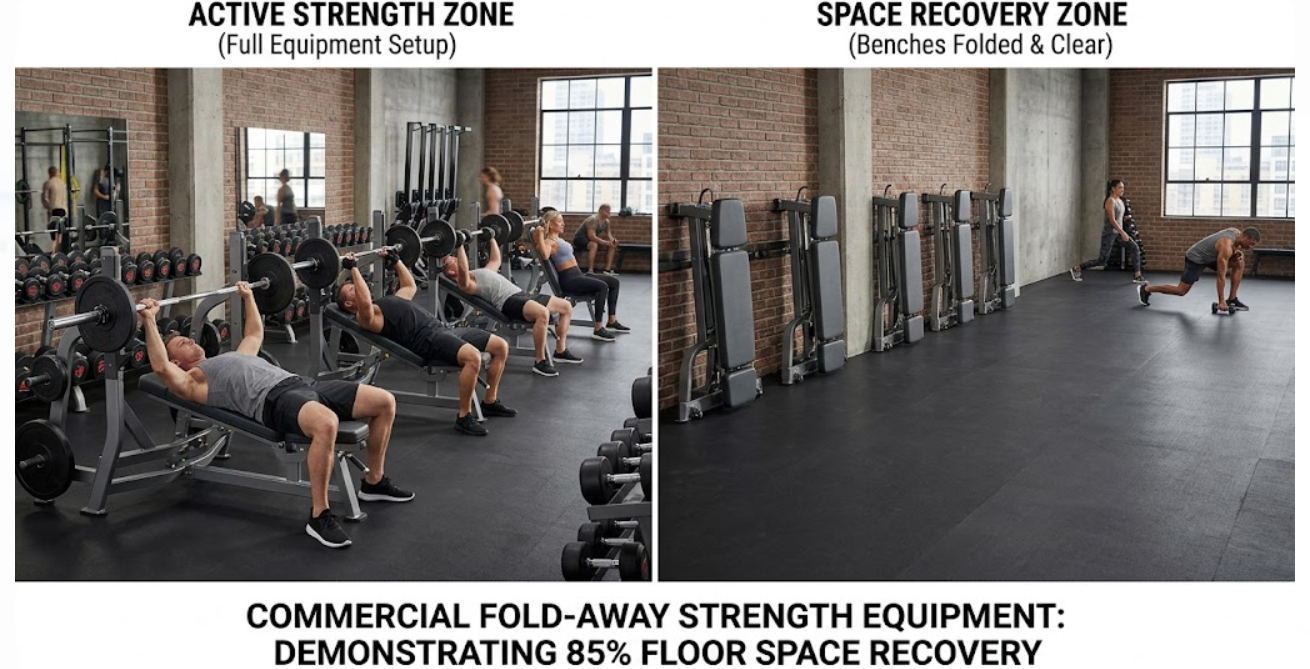
For distributors and bulk buyers, selecting units that offer vertical storage capabilities is a strategic advantage. Modern commercial strength training cages are designed to accommodate various attachments—such as weight horns and pull-up bars—vertically, keeping the surrounding floor space clear. By focusing on equipment that maximizes height rather than width, you provide end-users with a professional-grade experience that fits within the spatial constraints of a standard home garage or basement.
Beyond verticality, technical procurement specifications must address installation clearance and structural stability. When evaluating wholesale fitness equipment sourcing options, buyers should differentiate between floor mounting vs. bolt-down requirements. While bolt-down models offer maximum stability for high-impact training, many premium commercial strength training cages are now engineered for high weight-to-space ratios, allowing for freestanding use on rubberized flooring without permanent structural alterations. This flexibility is a significant selling point for the residential market.
From a logistics and installation standpoint, we recommend reviewing the technical specifications regarding the footprint of the base frame. High-density designs often feature slim-profile uprights that maintain structural integrity while reducing the total installation clearance needed for barbell movement. For distributors, prioritizing models with modular attachment points ensures that the best power cage for home gym end-users can scale their setups without requiring additional square footage, effectively maximizing the utility of every inch of available space.
Efficiency in wholesale fitness equipment sourcing extends beyond the initial footprint to the long-term operational viability of the unit. For B2B buyers, durability is non-negotiable; equipment must withstand high-frequency use without surface degradation. We prioritize manufacturing processes that utilize maintenance-free coatings, such as advanced electrostatic powder coating, which prevents oxidation and wear in diverse residential climates. This ensures the equipment retains its professional aesthetic and structural durability over years of service.
Furthermore, global distributors must consider assembly efficiency to reduce overhead costs and end-user frustration. High-tier heavy duty gym racks are engineered with precision-drilled holes and standardized components to ensure rapid, seamless setup. To mitigate risk during the import process, our factory provides comprehensive QC documentation for structural integrity, including material strength certifications and weld-quality reports. This rigorous transparency ensures that every best power cage for home gym shipment meets strict international standards, reducing the likelihood of returns and enhancing your reputation as a reliable supplier of commercial strength training cages.
Wholesale Fitness Equipment Sourcing: Navigating OEM and ODM Customization
When sourcing the best power cage for home gym setups, professional distributors must distinguish between basic white-labeling and true structural engineering. Understanding the depth of customization capabilities is critical for maintaining high margins and brand authority.
OEM (Original Equipment Manufacturing) allows you to apply custom branding—such as logos and specific color schemes—to our existing, proven blueprints of commercial strength training cages. This is the most efficient route for rapid market entry with low MOQs. Conversely, ODM (Original Design Manufacturing) offers deeper integration. With ODM, you can dictate exact structural specifications, such as steel gauge thickness, specialized upright dimensions, or proprietary J-cup attachment designs. For buyers targeting the premium segment, choosing an ODM approach ensures your inventory stands out as a unique, high-durability solution rather than a generic commodity, providing a significant competitive edge in the global fitness market.
Optimizing the Cost-to-Durability Ratio
For high-volume buyers, the primary challenge in wholesale fitness equipment sourcing is balancing upfront procurement costs against long-term product reliability. To secure the best power cage for home gym markets, technical scrutiny must focus on structural integrity. We prioritize 11-gauge or 7-gauge steel construction to ensure these heavy duty gym racks can withstand high-impact loading without deformation.
Beyond raw steel, material quality control extends to surface protection. A premium electrostatic powder coating is non-negotiable; it prevents oxidation and resists chipping during heavy use, significantly extending the product lifecycle. While lower-tier manufacturers may offer cheaper alternatives, these often result in higher return rates and brand damage. By investing in high-spec commercial strength training cages, distributors achieve superior cost-efficiency through reduced warranty claims and increased customer lifetime value. Our factory-direct QC protocols ensure that every unit meets rigorous international standards, providing the structural assurance your B2B clients demand.
Tiered Customization and Procurement Framework
To streamline your wholesale fitness equipment sourcing, we have categorized our manufacturing capabilities into three distinct tiers. This framework allows you to align your procurement budget with your specific market positioning, whether you are targeting budget-friendly home setups or premium, professional-grade installations.
| Customization Tier | Typical MOQ | Lead Time | Branding & Structural Impact |
|---|---|---|---|
| Standard White Label | 50 - 100 Units | 30-45 Days | Logo decals/color options; standard 11-gauge steel. |
| Enhanced OEM | 200 - 500 Units | 60-75 Days | Custom paint finishes; branded J-cups/attachments. |
| Full ODM (Custom Build) | 500+ Units | 90+ Days | Proprietary steel gauge; custom upright dimensions. |
When evaluating the best power cage for home gym inventory, remember that higher customization tiers generally involve higher upfront cost impacts due to specialized tooling. However, the ability to specify the exact structural integrity and component dimensions via ODM allows for a more robust, high-end product line that justifies premium pricing in competitive markets.
Rigorous Quality Control and Material Verification Protocols
For B2B distributors and large-scale gym developers, selecting the best power cage for home gym applications requires looking beyond aesthetics to deep structural integrity. When sourcing commercial strength training cages at volume, the primary risk is material fatigue. Relying on unverified suppliers can lead to catastrophic failure under heavy loads. To mitigate this, procurement specialists must mandate strict steel grade certification (ASTM/ISO) to ensure the alloy composition meets international safety standards. Furthermore, the longevity of the unit depends on the powder coating thickness and the precision of the welding process, which prevents oxidation and surface degradation in high-traffic or humid environments.
To ensure your inventory holds its value and meets high-end consumer expectations, verify that every batch undergoes rigorous load-bearing capacity testing. This technical due diligence distinguishes premium heavy duty gym racks from low-tier alternatives.
| Procurement Metric | Standard Grade (Retail) | Premium Commercial Grade |
|---|---|---|
| Steel Certification | Generic/Unverified | ASTM/ISO Certified |
| Coating Durability | Thin/Basic Paint | High-Micron Powder Coating |
| Structural Testing | Visual Inspection Only | Certified Load-Bearing Test |
Successful wholesale fitness equipment sourcing requires a deep dive into the factory's technical validation workflows. To guarantee the structural lifespan of heavy duty gym racks, we mandate a multi-layered inspection approach. This begins with comprehensive welding inspection (ultrasonic/visual) to detect subsurface defects or micro-cracks that could compromise the frame under peak kinetic stress. Beyond surface-level checks, strict tolerance testing is performed on all critical dimensions to ensure hole alignment and component compatibility, preventing uneven load distribution.
For distributors managing high-volume shipments, transparency is non-negotiable. We require manufacturers to provide comprehensive batch testing reports for every production run, documenting the performance of the specific steel lot used. Additionally, to support end-user longevity and reduce warranty claims, our suppliers must include detailed preventative maintenance documentation. This proactive technical support ensures that the best power cage for home gym configurations remains a durable, long-term asset for the end consumer, reinforcing your brand's reputation for reliability.
To streamline your wholesale fitness equipment sourcing workflow, we recommend utilizing a standardized technical checklist. High-tier heavy duty gym racks are defined by their ability to withstand repetitive kinetic impact without structural deformation. Relying on generic specifications often leads to high return rates and damaged brand reputation. To avoid these pitfalls, procurement managers should demand a detailed Material Specification vs. Quality Standard breakdown before finalizing any purchase order or MOQ agreement.
| Feature | Standard Requirement | Verification Method |
|---|---|---|
| Steel Gauge | Minimum 11-gauge (3mm) structural steel | Digital Micrometer/Thickness Gauge |
| Weld Strength | Full-penetration continuous welds | Ultrasonic/Visual Inspection (NDT) |
| Coating Durability | High-micron electrostatic powder coating | Adhesion/Cross-Hatch Test |
Implementing these commercial strength training cages verification protocols ensures that the best power cage for home gym units you distribute meet the rigorous durability demands of the North American market. By auditing these specific technical metrics, you mitigate the risk of structural failure and ensure long-term product viability.
Logistics and Bulk Freight Optimization for Heavy Duty Gym Racks
Sourcing the best power cage for home gym setups involves more than just selecting steel gauges; it requires a sophisticated understanding of international freight economics. For distributors and B2B buyers, the primary challenge lies in the high dimensional weight associated with heavy duty gym racks. Because these structures are bulky yet heavy, inefficient packing can lead to astronomical shipping costs that erode your margins.
To maintain profitability, professional manufacturers must prioritize shipping volume optimization through advanced engineering. This means designing components that nest effectively and utilizing high-density palletization techniques to minimize empty space within a container. When you source through a factory capable of optimizing load configurations, you reduce the volumetric footprint of each unit. This strategic approach ensures that your wholesale fitness equipment sourcing remains cost-effective, transforming a complex logistical hurdle into a streamlined, high-margin supply chain advantage.
Optimizing Freight Methods: Speed vs. Cost Efficiency
Choosing the right transit method is critical when importing commercial strength training cages. For high-volume distributors, the decision between sea freight vs air freight dictates the final landed cost. While air freight offers rapid delivery, the extreme volumetric weight of heavy duty gym racks makes it prohibitively expensive for bulk orders. For most B2B procurement cycles, sea freight remains the gold standard for maintaining competitive retail pricing.
Understanding container utilization is vital for wholesale fitness equipment sourcing. We recommend evaluating FCL (Full Container Load) versus LTL (Less Than Truckload) based on your specific inventory needs. While LTL provides flexibility for smaller, frequent restocks, FCL significantly lowers the per-unit shipping cost by maximizing container density. Furthermore, your MOQ impact on shipping cannot be overstated; higher minimum order quantities allow for better consolidation, reducing the relative impact of freight expenses. By aligning your order volume with optimal container capacity, you ensure that sourcing the best power cage for home gym environments remains a highly profitable venture.
Ensuring Structural Integrity Through Rigorous Loading Protocols
The final stage of your wholesale fitness equipment sourcing workflow is the most critical for protecting your bottom line: the transition from factory floor to ocean container. Even the highest-grade commercial strength training cages can suffer micro-fractures or aesthetic defects if the loading process is unmanaged. To mitigate these risks, we implement strict container loading supervision to oversee every stage of the packing sequence.
Our protocol focuses heavily on damage prevention through strategic bracing and high-density protective layering. We ensure that every component of your heavy duty gym racks is positioned to maintain its structural integrity despite the heavy vibrations and shifting typical of long-haul maritime transit. To provide full transparency and peace of mind, we provide comprehensive QC documentation, including photographic evidence of the final load configuration. This rigorous oversight ensures that when your shipment arrives, the best power cage for home gym units are ready for immediate assembly without costly returns or structural compromises.
Selecting High-Volume Suppliers via MOQ and Compliance Documentation
When sourcing the best power cage for home gym setups at scale, procurement professionals must look beyond the initial unit price to the underlying bulk pricing structures. For distributors, the relationship between MOQ tiers and total landed cost is the primary driver of profitability. High-performance heavy duty gym racks involve significant steel weight and complex welding requirements, meaning small-batch orders often carry disproportionately high manufacturing overhead.
Strategic wholesale fitness equipment sourcing relies on leveraging economies of scale to mitigate these costs. By negotiating higher volume commitments, buyers can access lower per-unit rates and more favorable shipping volume optimization. Rather than ordering fragmented SKUs, successful importers consolidate orders to maximize container utilization. This approach not only reduces the freight-to-value ratio but also ensures that commercial strength training cages are produced under consistent, high-volume quality control protocols. Optimizing your order quantity relative to container capacity is the most effective way to balance capital expenditure with long-term margin protection.
Beyond volume optimization, the most critical component of risk management is the verification of technical compliance. To secure the best power cage for home gym inventory, importers must demand rigorous documentation that proves structural reliability. Relying on unverified manufacturers can lead to catastrophic failures and significant liability mitigation issues in the North American market. High-tier suppliers must provide evidence of ISO certification to guarantee standardized manufacturing processes and consistent output quality.
For commercial strength training cages, meeting ASTM standards is non-negotiable. Procurement teams should mandate the submission of detailed QC inspection reports that include material thickness verification for all steel tubing and structural integrity testing for weld points. These documents ensure the heavy duty gym racks can withstand extreme load capacities without deformation. By enforcing these stringent wholesale fitness equipment sourcing protocols, distributors protect their brand reputation and ensure that every unit shipped meets the highest safety benchmarks required for professional-grade strength training environments.
To mitigate procurement risks, professional buyers must implement a standardized verification framework. Relying on verbal assurances is insufficient when importing high-mass items like the best power cage for home gym setups. A robust wholesale fitness equipment sourcing strategy requires a systematic audit of a manufacturer's operational capacity and technical documentation to ensure a high cost-to-quality ratio. This involves assessing not just the product, but the logistics capability and lead time reliability of the production facility.
Use the following checklist to evaluate the technical and operational maturity of your prospective manufacturing partners:
| Document Type | Purpose in Procurement |
|---|---|
| Factory Audit Reports | Verifies production capacity and manufacturing standards |
| Material Test Reports (MTR) | Confirms steel grade and structural integrity for heavy duty gym racks |
| QC Inspection Logs | Provides evidence of consistent commercial strength training cages quality |
| Logistics & Shipping Manifests | Validates shipping volume optimization and transit reliability |
| Compliance Certifications | Ensures adherence to North American safety and legal standards |
By prioritizing suppliers who offer comprehensive QC documentation and transparent lead time reliability, importers can avoid the hidden costs of defective inventory and shipping delays. This rigorous vetting process is the cornerstone of successful wholesale fitness equipment sourcing for high-demand strength equipment.
Implementation checklist for buyers
When sourcing the best power cage for home gym applications, procurement specialists often make the mistake of prioritizing low upfront costs over structural integrity. However, from a professional distributor standpoint, the durability vs. initial investment debate is won by analyzing the total cost of ownership (TCO). Cheap, thin-gauge steel structures frequently require replacement or intensive maintenance within 24 months, leading to higher long-term expenditures and logistical headaches.
Investing in commercial strength training cages ensures that the equipment can withstand high-frequency use and heavy barbell loads without structural fatigue. For wholesalers and large-scale distributors, sourcing high-spec units from a reliable factory reduces the frequency of warranty claims and replacement orders. By selecting high-grade steel and precision welding during the initial wholesale fitness equipment sourcing phase, you secure a more profitable asset that maintains its value and reliability throughout its entire lifecycle.
To maximize your ROI and mitigate the risk of costly returns, you must move beyond visual inspections and implement a rigorous technical verification process. When procuring heavy duty gym racks at scale, superficial aesthetics are secondary to structural metallurgy. A single failure in a structural joint can lead to catastrophic liability and brand damage. Therefore, your QC documentation requirements must include specific metallurgical certificates and high-resolution inspection reports from the factory floor.
The most critical step in your wholesale fitness equipment sourcing strategy is verifying the material thickness (steel gauge) verification. Do not rely on verbal assurances; demand precise micron measurements to ensure the steel meets the 11-gauge or 7-gauge standards required for high-end home gym installations. Furthermore, you must validate welding integrity standards through ultrasonic or visual weld penetration tests to ensure the frame can handle maximum barbell capacity without deformation.
Essential QC Parameters for Wholesale Orders
| Parameter | Standard | Verification Method |
|---|---|---|
| Steel Gauge | Minimum 11-gauge (3mm) for uprights | Digital Caliper Measurement |
| Weld Quality | Full penetration, no porosity | Visual Inspection & Dye Penetrant |
| Powder Coating | ASTM B117 Salt Spray Compliance | Adhesion & Thickness Test |
| Structural Alignment | ±1mm tolerance per 1000mm | Laser Level / Precision Template |
Scaling Logistics and Procurement Optimization
Beyond technical specifications, long-term profitability depends on mastering the logistical variables of wholesale fitness equipment sourcing. To protect margins, buyers must prioritize MOQ (Minimum Order Quantity) optimization. Ordering quantities that balance low unit costs against warehouse storage overhead ensures you aren't tying up capital in excess inventory. Simultaneously, optimizing shipping volume/CBM efficiency is non-negotiable; high-quality heavy duty gym racks are bulky, so working with a factory that offers nested packaging or modular frame designs can significantly reduce your landed cost per unit.
Finally, professional procurement requires strict factory lead time management. Disruptions in the supply chain can lead to missed seasonal peaks or unfulfilled distributor contracts. Always verify the manufacturer’s production capacity and raw material availability before finalizing purchase orders. A disciplined approach to these logistical pillars ensures that your transition from sourcing the best power cage for home gym setups to full-scale market distribution remains both scalable and highly profitable.