Half Rack vs Full Rack: Optimizing Gym Floor Layout
Economic Drivers in Strength Equipment Distribution
When calculating the total cost of ownership, procurement managers must evaluate three critical checkpoints: the upfront capital risk of over-specifying, the technical compatibility of attachments, and the long-term logistical footprint of the equipment. Deciding between a half rack vs full rack configuration requires a nuanced understanding of how initial CAPEX influences long-term facility utility and member satisfaction.
From a wholesale perspective, the decision often hinges on the tension between equipment density and revenue potential. While a full rack offers a more robust, all-in-one station that can justify premium membership tiers, it demands a larger commercial strength equipment footprint. Conversely, a half rack allows for higher strength training station density, enabling distributors and facility owners to scale their inventory across smaller, more diverse floor plans without sacrificing essential functionality.
Financial Trade-Offs: Footprint vs. Investment
| Metric | Half Rack Configuration | Full Rack Configuration |
|---|---|---|
| Initial CAPEX | Lower per unit cost | Higher per unit investment |
| Space Utility | Optimized for small/boutique layouts | Requires dedicated large-scale zones |
| ROI Potential | Faster turnover via high density | Higher value via multi-functionality |
| Shipping Volume | Lower freight and logistics complexity | Increased shipping weight and dimensions |
Effective gym space optimization is not merely about saving square footage; it is about maximizing the yield per square foot. For distributors, sourcing a mix of both types allows for a more agile inventory strategy that meets the diverse needs of both high-end commercial clubs and compact functional training studios.
Procurement specialists should view these equipment choices through the lens of revenue density. A higher density of stations often translates to more usable training zones, yet the decision must balance the lower entry price of smaller units against the long-term durability and versatility of larger-scale stations. When ordering in bulk, consider how the dimensional variance affects your container load optimization and landed costs.
Operational Expenditure and Logistics Strategy
Beyond the initial purchase order, the long-term total cost of ownership (TCO) is heavily influenced by maintenance requirements and component durability. Full racks, while more robust, often feature more complex moving parts and attachment points that require periodic inspection and lubrication. From a distributor perspective, managing a diverse inventory of specialized accessories for full racks can increase the complexity of SKU management and after-sales support.
Logistics and shipping volume represent another significant variable in the procurement equation. Because full racks generally possess larger dimensions and higher weight profiles, they demand more complex freight planning and higher container utilization costs. When negotiating MOQ (Minimum Order Quantity) with manufacturers, procurement managers should calculate whether the savings from bulk shipping a uniform fleet of half racks outweigh the premium value and versatility of a more comprehensive rack system. Ultimately, the most profitable procurement strategy balances the ease of rapid deployment and lower shipping overhead of smaller units against the long-term asset value of high-spec, multi-functional stations.
Analyzing the Commercial Strength Equipment Footprint
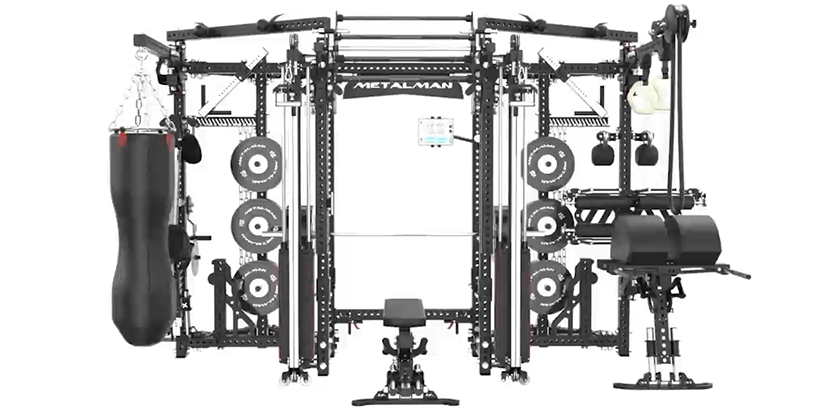
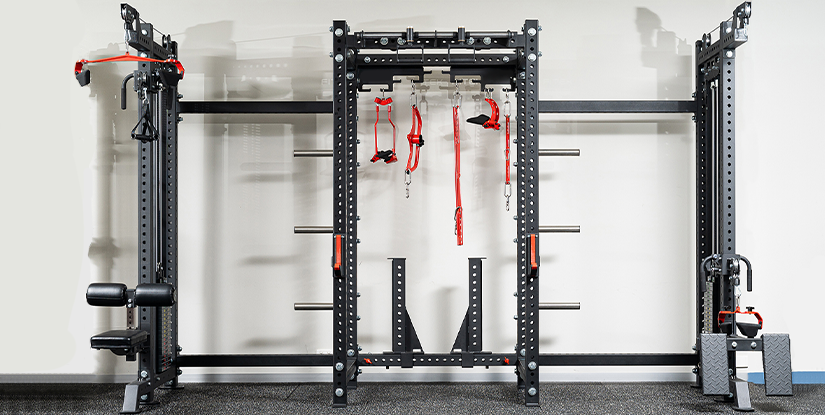
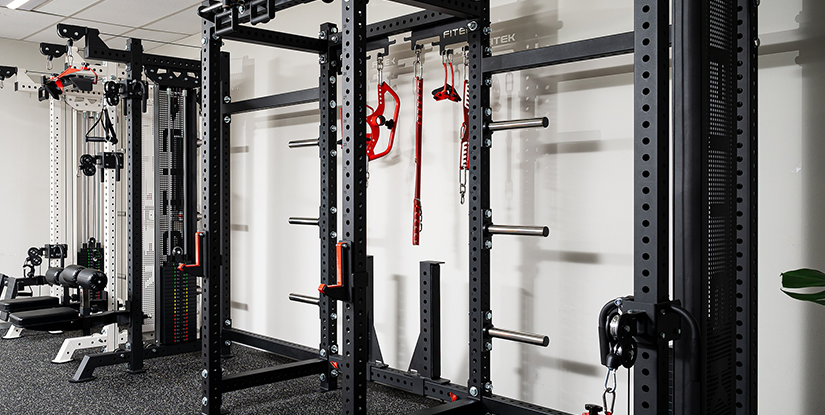
When planning a facility layout, the primary distinction between a half rack vs full rack lies in the total footprint and the resulting density of the training area. A half rack offers a more compact profile, whereas a full rack provides a more robust, enclosed structure that requires additional clearance for safety and movement.
Spatial Requirements and Dimensions
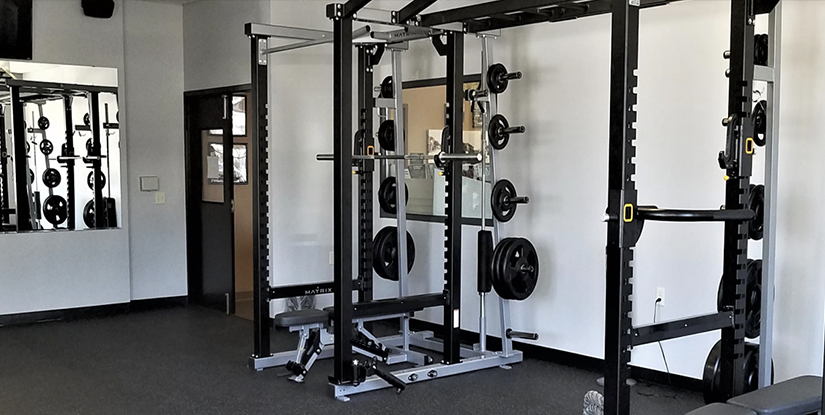
Procurement managers must evaluate both depth vs width considerations to ensure optimal member throughput. While a half rack minimizes the commercial strength equipment footprint, it often requires more peripheral space for barbell movement. Conversely, a full rack centralizes the training station, but its larger structural volume can restrict traffic flow if not strategically positioned within the floor plan.
| Configuration Type | Typical Depth Profile | Footprint Impact | Procurement ROI Focus |
|---|---|---|---|
| Half Rack | Lower/Moderate | High space efficiency | Lower initial unit cost |
| Full Rack | Higher/Substantial | Requires larger buffer zones | Higher durability/utility per unit |
| Power Cage | Maximum | Significant floor area usage | Maximum safety/station density |
Understanding these square footage requirements is essential for distributors and gym owners aiming to maximize their usable area without compromising the quality of the strength training experience.
Effective gym space optimization depends on calculating the total operational area, not just the base dimensions of the metal frame. When sourcing for high-traffic facilities, procurement specialists should account for "buffer zones"—the clearance required for barbell oscillations, plate loading, and user movement. Neglecting these variables can lead to congestion and reduced strength training station density, ultimately lowering the facility's ROI per square foot.
Dimension Comparison and Clearance Standards
| Metric | Half Rack (Standard) | Full Rack (Standard) | Operational Impact |
|---|---|---|---|
| Width (Base) | ~120–140 cm | ~120–150 cm | Larger frames may limit adjacent equipment placement. |
| Depth (Base) | ~100–120 cm | ~130–160 cm | Full racks require more longitudinal floor space. |
| Required Clearance | Min. 1.5m (Front/Sides) | Min. 2m+ (Full Perimeter) | Essential for safe barbell rotation and user flow. |
| Station Density | High (Compact/Flexible) | Moderate (Stationary/Fixed) | Half racks allow for tighter, modular layouts. |
For distributors managing large-scale shipments, selecting the right configuration is a balance between commercial strength equipment footprint and the versatility of the installation. A half rack setup allows for more units per container and higher density in boutique settings, while a full rack provides a permanent, high-utility anchor for heavy-duty training zones.
A successful facility layout strategy hinges on the relationship between equipment density and movement accessibility. In high-density training environments, such as boutique studios or urban commercial gyms, the decision between a half rack and a full rack directly influences how effectively you can scale your inventory and member capacity. If the goal is to maximize the number of training stations within a fixed square footage, the half rack offers a distinct advantage in modularity and ease of installation.
Optimizing Throughput and Traffic Flow
Effective gym space optimization requires looking beyond the static footprint of the steel frame. Procurement specialists must account for the "active zone"—the dynamic space occupied by a lifter during a set. While a full rack provides a sense of permanence and extreme safety, its larger structural volume can create bottlenecks in traffic flow if placed in central thoroughfares. For distributors catering to high-turnover facilities, sourcing half racks can facilitate a more fluid floor plan, allowing for wider aisles and better movement between stations, which is critical for maintaining a high-quality member experience during peak hours.
Maximizing Strength Training Station Density
When calculating the long-term value of your inventory, the half rack vs full rack debate shifts from simple functionality to a matter of revenue optimization. For distributors and facility owners, the goal is to balance high-quality equipment with a footprint that maximizes member throughput without sacrificing the premium feel of the training environment.
The ROI of Footprint and Throughput
Strategic gym space optimization directly impacts your revenue per square foot. While a full rack offers a more robust, all-in-one solution, its larger commercial strength equipment footprint may limit the total number of stations you can deploy in a constrained layout. Conversely, a half rack setup allows for higher strength training station density, enabling you to fit more functional zones into a single floor plan. This density can increase total throughput during peak hours, allowing more members to train simultaneously and maximizing the utility of your leased square footage.
| Metric | Half Rack Configuration | Full Rack Configuration |
|---|---|---|
| Space Efficiency | High density; ideal for boutique or high-traffic gyms | Lower density; requires more dedicated floor area |
| Revenue Potential | Higher revenue per sq. ft. via increased station count | Higher premium per station for specialized facilities |
| Layout Flexibility | Easier to scale and rearrange for diverse programming | Fixed, heavy-duty footprint for permanent zones |
Procurement managers must weigh these technical variables against total cost of ownership (TCO) and shipping logistics. While a full rack configuration provides a centralized, heavy-duty anchor for a facility, the half rack often offers a more agile solution for distributors managing diverse client needs, from high-end boutique studios to expansive commercial warehouses.
Technical Comparison for Procurement Planning
| Evaluation Metric | Half Rack Profile | Full Rack Profile |
|---|---|---|
| Standard Footprint | Compact; optimized for high density | Expanded; requires significant clearance |
| Utility Versatility | High; easily paired with external benches | Integrated; all-in-one strength station |
| Shipping/Logistics | Lower volume; easier for distributed shipping | Higher weight/bulk; complex freight logistics |
| Installation Complexity | Streamlined; faster setup for rapid deployment | Intensive; often requires permanent anchoring |
For wholesalers, the choice between these two models often depends on the target market's density requirements. A half rack allows for more units per container, potentially improving your shipping efficiency and reducing the landed cost per unit when fulfilling large-scale commercial orders.
Ultimately, the decision-making process should be driven by your specific business model and long-term scalability goals. Boutique studios often prioritize the agility and lower initial capital expenditure of half rack configurations to maintain a high-end, specialized atmosphere without the massive footprint of heavy power cages. In contrast, large-scale commercial clubs may opt for the full rack to provide a sense of permanence and high-end durability that justifies premium membership tiers.
From a procurement standpoint, consider the total cost of ownership beyond the initial purchase price. While full racks offer high durability, they also demand more intensive maintenance and permanent anchoring, which can increase long-term facility labor costs. For distributors and wholesalers, offering a versatile half rack solution can be a strategic advantage, as it facilitates easier shipping, lower MOQ thresholds for smaller clients, and a more adaptable inventory that meets the diverse needs of rapidly evolving fitness markets.
Traffic Flow and Member Movement Optimization
Strategic gym space optimization requires a precise understanding of how equipment dimensions dictate circulation paths. When evaluating the half rack vs full rack debate, procurement managers must look beyond the unit price to the long-term impact of the commercial strength equipment footprint on the facility's operational efficiency.
Managing Density and Circulation
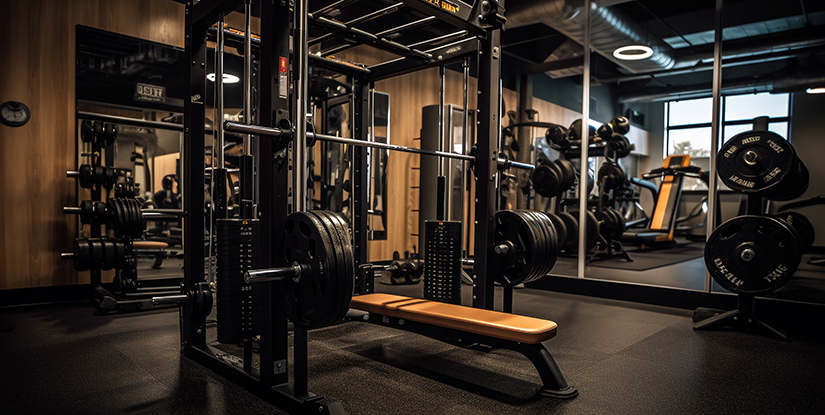
A full rack offers a high-density training station but occupies a larger, fixed perimeter. While this provides structural stability and integrated features, it can create movement bottlenecks in high-traffic zones if not placed correctly. Conversely, selecting half racks allows for more modularity, enabling distributors and facility owners to create wider circulation paths. This flexibility is essential for maintaining smooth throughput during peak hours, ensuring that members can navigate between lifting stations without obstructing the flow of the gym floor.
Spatial Density and Layout Efficiency Comparison
To assist in procurement planning, the following data outlines the typical spatial requirements and throughput implications for both configurations. Choosing the correct model depends on whether your facility prioritizes specialized, heavy-duty lifting zones or high-volume, modular training areas.
| Metric | Half Rack Configuration | Full Rack Configuration |
|---|---|---|
| Average Footprint | Compact / Modular | Large / Fixed |
| Clearance Requirements | Lower (Flexible placement) | Higher (Requires perimeter buffer) |
| Strength Training Station Density | High (Optimized for many users) | Moderate (Focus on single-user utility) |
| Throughput Potential | High (Easier to scale/add units) | Specialized (Lower turnover rate) |
| Commercial Gym Setting | Boutique / High-traffic studios | Performance / Heavy-duty strength rooms |
When sourcing for large-scale distributors, consider that while full racks offer superior structural integration, half racks provide a better ROI for facilities seeking to maximize total usable square footage. A modular approach allows for easier reconfiguration during future expansions or renovations.
Strategic Density and Scalability Decisions
From a procurement standpoint, the decision between these two architectures is a calculation of strength training station density versus long-term scalability. For boutique studios or high-turnover commercial centers, prioritizing half racks often yields a higher return on investment by maximizing usable square footage and allowing for rapid facility evolution. This modularity prevents the "dead space" often associated with the larger footprints of full racks in constrained environments.
For distributors and large-scale facility owners, the procurement decision should hinge on the intended lifecycle of the gym. If the goal is a high-density, multi-functional training floor with high throughput, a fleet of half racks offers greater flexibility to adjust high-traffic zones as membership grows. While full racks serve as anchor points for specialized strength zones, an over-reliance on them can limit your ability to reconfigure the floor plan, potentially stifling the agility required in modern fitness management.
Structural Integrity and Load-Bearing Capacity
When evaluating the half rack vs full rack debate from a procurement standpoint, the primary differentiator is the level of structural integrity required for high-volume training. While both configurations utilize heavy-duty steel gauge construction to ensure longevity, the way they distribute stress under load varies significantly based on the footprint and bracing design.
Full racks typically offer a more rigid, enclosed skeletal structure, which provides superior stability under load during heavy compound movements. This makes them the preferred choice for facilities specializing in powerlifting or high-intensity strength programming. In contrast, the half rack offers a more open commercial strength equipment footprint, which may be more susceptible to lateral movement if the steel gauge is not sufficiently thick or if the base is not properly weighted. For distributors and gym owners, choosing the right configuration involves balancing the need for maximum durability against the specific density requirements of the training floor.
| Feature | Half Rack Configuration | Full Rack Configuration |
|---|---|---|
| Primary Benefit | Space-saving versatility | Maximum structural rigidity |
| Stability Profile | Dependent on floor anchoring | Inherently stable via enclosed frame |
| Maintenance Focus | Bolt tension and base stability | Bearing and upright alignment |
| Ideal Use Case | Boutique studios & functional zones | High-traffic strength training zones |
Technical Comparison of Maintenance and Component Lifecycle
From a total cost of ownership (TCO) perspective, procurement managers must account for the frequency of part replacement and the complexity of mechanical upkeep. A full rack, while more durable, often involves more complex moving parts such as integrated cable systems or adjustable pulley mechanisms that require periodic calibration. Conversely, a half rack configuration typically presents a more streamlined profile with fewer mechanical failure points, making it easier for facility staff to maintain without specialized technical training.
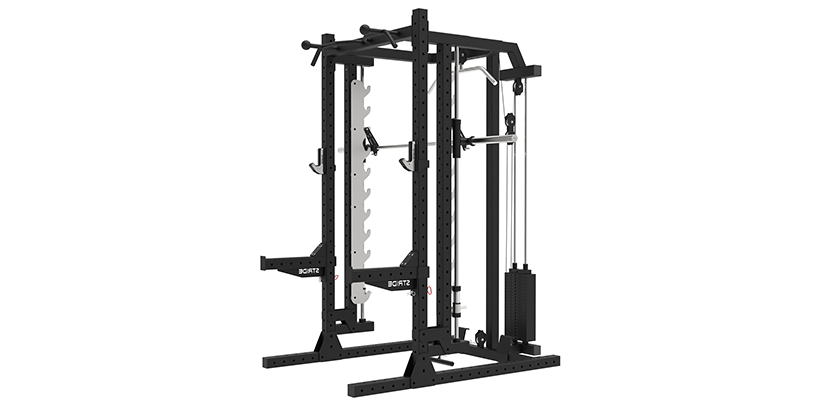
| Technical Factor | Half Rack Profile | Full Rack Profile |
|---|---|---|
| Structural Components | Open frame, minimal bracing | Enclosed cage, multi-point bracing |
| Maintenance Frequency | Low (annual bolt inspections) | Moderate (cable/pulley calibration) |
| Common Replacement Parts | J-cups, spotter arms | Cables, pulleys, weight stacks |
| Structural Complexity | Low (Static load focus) | High (Dynamic/Integrated systems) |
When sourcing for large-scale distribution, consider that the simpler mechanics of the half rack can reduce long-term service calls, whereas the full rack offers a higher value proposition for premium facilities where high-end functionality justifies the increased maintenance overhead.
Effective procurement decision-making requires looking beyond the initial purchase price to the long-term ROI of each station. While the half rack offers lower upfront costs and simpler maintenance cycles, the full rack provides a higher strength training station density for premium facilities that prioritize multi-functional utility. However, the increased complexity of full racks often leads to more frequent wear and tear on moving parts, such as pulley systems and adjustable uprights, which can impact the total cost of ownership if not factored into the annual service budget.
For distributors managing inventory and shipping logistics, the choice also impacts the complexity of after-sales support. A half rack's static nature minimizes technical troubleshooting, whereas the integrated components of a full rack require a more robust service infrastructure. Ultimately, optimizing your facility's layout depends on whether you prioritize the low-maintenance simplicity of a smaller footprint or the high-value, high-density capabilities of a more complex, integrated strength station.
Capex and Procurement Logic
When evaluating the half rack vs full rack decision, procurement managers must balance immediate capital expenditure against long-term utility. A half rack typically offers a lower unit price, making it an attractive option for boutique studios or facilities looking to scale density without a massive initial investment. However, this lower entry cost often comes at the expense of integrated features found in more robust systems.
In contrast, a full rack demands a higher upfront budget but provides superior versatility by consolidating multiple training functions into a single commercial strength equipment footprint. For distributors and large-scale facility planners, the choice is rarely just about the sticker price; it is a strategic trade-off between the cost-per-station and the long-term value of a multi-functional station that reduces the need for additional standalone equipment.
| Procurement Metric | Half Rack Profile | Full Rack Profile |
|---|---|---|
| Initial Investment | Lower / Budget-friendly | Higher / Premium |
| Functional Versatility | Standardized/Limited | High/Multi-purpose |
| Footprint Efficiency | Compact/Minimalist | Integrated/All-in-one |
Beyond the unit price, professional buyers must account for the total cost of ownership (TCO), which includes logistics, assembly, and long-term maintenance cycles. The complexity of the shipping volume and the technical requirements for on-site installation can significantly shift the final landed cost, especially when sourcing in bulk for large-scale facility rollouts.
| Cost Factor | Half Rack Configuration | Full Rack Configuration |
|---|---|---|
| Shipping Volume | Lower (Easier container packing) | Higher (Increased CBM/Weight) |
| Assembly Complexity | Low (Faster onsite setup) | Moderate to High (Requires precision) |
| Long-term ROI | Faster (Lower entry/depreciation) | Higher (Multiple revenue-generating uses) |
| Maintenance Needs | Minimal (Basic structural checks) | Routine (Moving parts/attachments) |
For distributors managing inventory, the half rack offers a more predictable shipping profile and faster turnover. Conversely, a full rack serves as a high-value asset that maximizes gym space optimization by replacing several standalone pieces of equipment, ultimately driving a higher return on investment through increased member throughput and station utility.
Optimizing Logistics and Bulk Procurement
Scaling a facility requires a sophisticated procurement strategy that extends beyond unit counts to include logistics optimization. When choosing between a half rack and full rack, buyers must evaluate how product dimensions affect container utilization. Full racks, while high-value, often possess complex geometries that increase cubic meter (CBM) costs and may require specialized packing to prevent structural damage during transit.
To maximize scaling density, professional buyers should coordinate with manufacturers regarding bulk ordering minimums and assembly-ready configurations. For large-scale rollouts, selecting models with modular components can streamline the shipping process and lower the landed cost per station. A disciplined approach to MOQ (Minimum Order Quantity) and freight planning ensures that your facility expansion remains both cost-effective and operationally efficient.