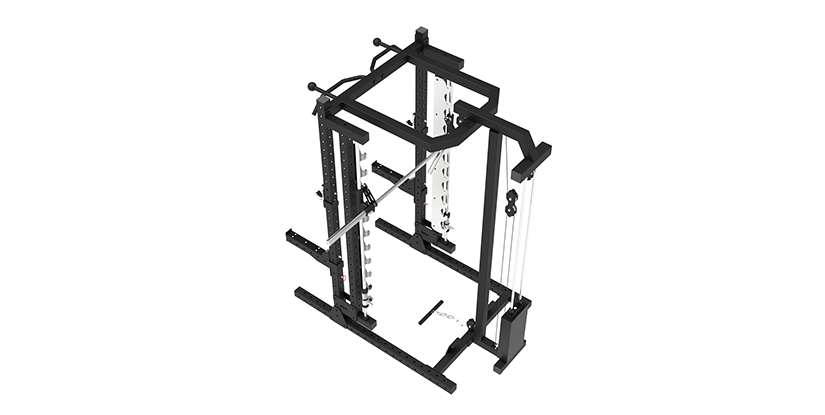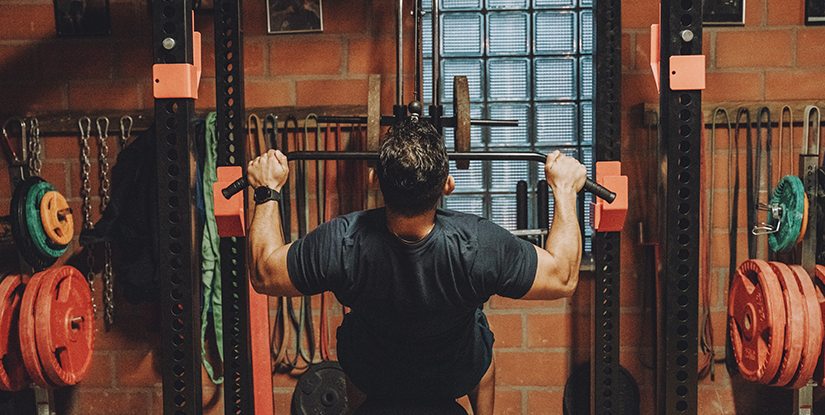
Wholesale 72 Inch Squat Rack Supply: Heavy-Duty 6ft Power Racks for Low-Ceiling Commercial Facilities
For gym owners and distributors, vertical space is often the most overlooked constraint in commercial real estate. When high-value urban locations or basement facilities present low-clearance obstacles like HVAC ducts and fire pipes, a standard 84-inch rack becomes a liability rather than an asset. Finding a 72 inch squat rack that doesn't compromise on structural integrity is the key to transforming restricted zones into high-revenue strength training stations.
Defining the Commercial Value of a 72 Inch Squat Rack
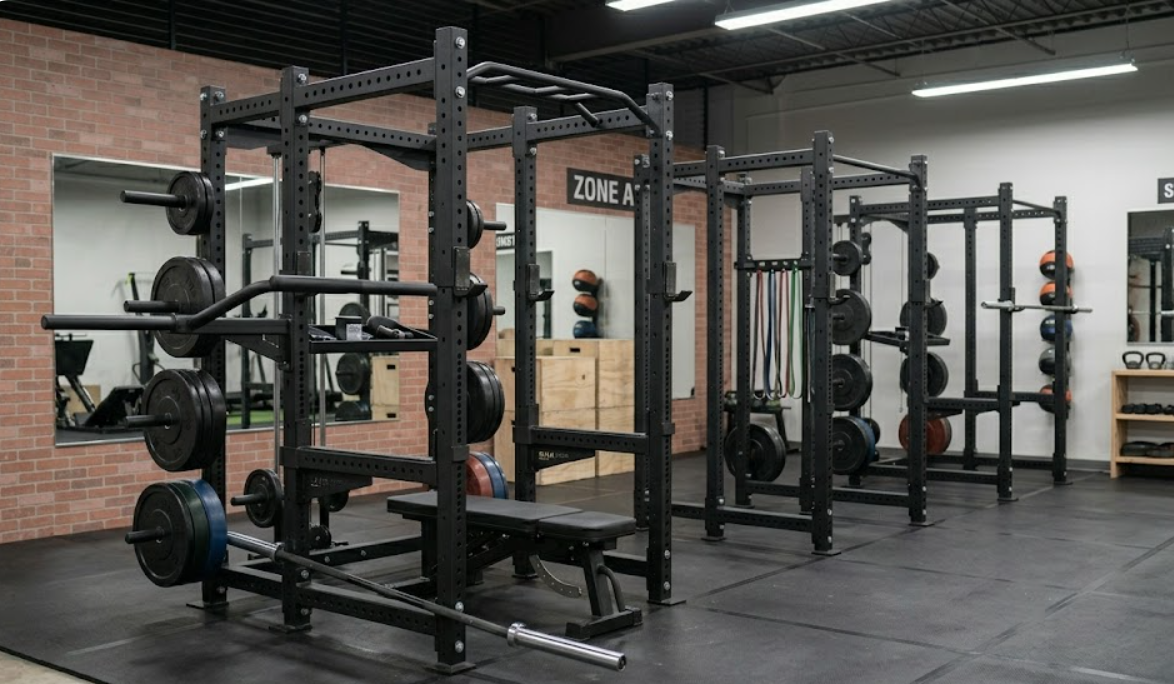
A 72 inch squat rack is a specialized commercial-grade power frame engineered for height-restricted environments such as basements or urban studios. Unlike flimsy residential units, these 6-foot racks utilize heavy-duty 11-gauge steel, offering full-scale weight capacities and 3x3" attachment compatibility within a compact, space-efficient vertical footprint.
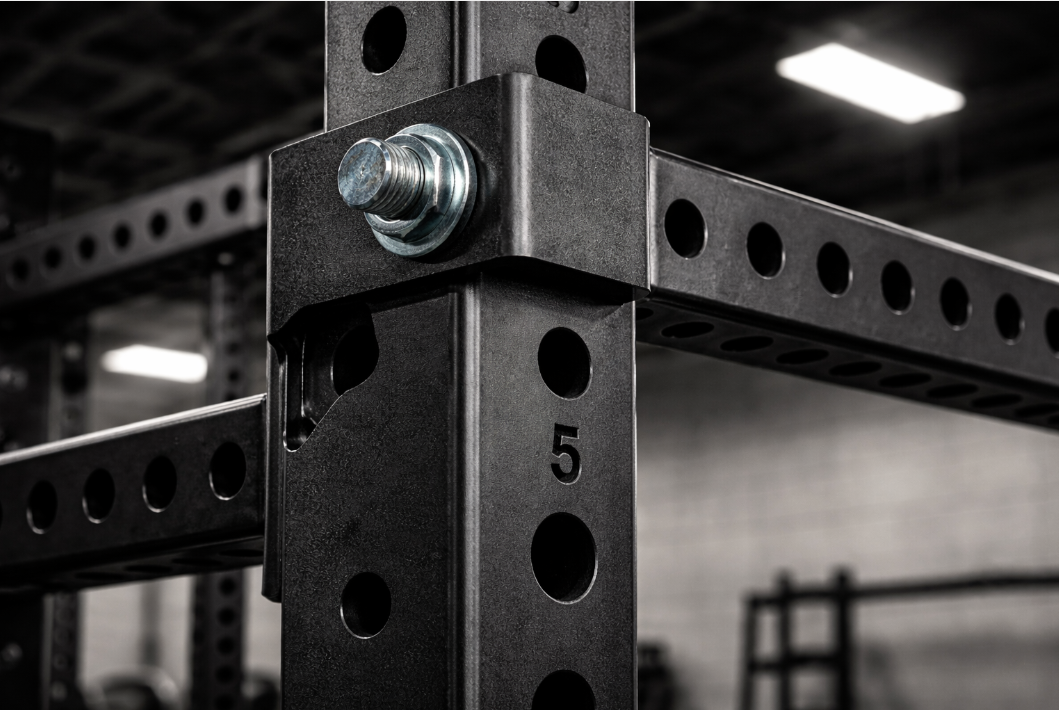
In the world of commercial procurement, height should never dictate quality. Most squat rack 72 inches models found in retail are built with thin 14-gauge steel meant for light home use. However, for a professional facility, we prioritize "overbuilt" engineering. By utilizing the same 3" x 3" 11-gauge tubing found in our flagship rigs, we ensure that a shorter 72 inch power rack commercial unit maintains the same safety ratings and zero-wobble performance your clients expect during 500lb+ squats.
The Low-Ceiling Dilemma: Why Standard Racks Fail in Urban Commercial Real Estate
Facility managers often secure premium locations in historic buildings or basement levels only to realize that the effective ceiling height is below 90 inches. Standard 7-foot or 8-foot racks simply cannot be assembled in these spaces, or they leave zero room for overhead pull-ups and barbell clearance. This lack of vertical space often forces owners to settle for inferior, lightweight equipment that fails under the rigors of high-frequency commercial use. This leads to increased maintenance costs, potential safety hazards, and a "cheap" aesthetic that drives away serious members.
Selecting a low-quality rack just to fit a height requirement is a high-risk gamble. When a rack wobbles during a heavy re-rack, it isn't just a nuisance; it is a liability. In my experience consulting for boutique PT studios, the cost of replacing damaged "home-grade" racks after just 12 months often exceeds the initial investment of a premium 72 inch squat rack. Furthermore, standardizing your equipment with a 6-foot heavy-duty frame allows you to monetize "dead zones" in your gym that were previously only suitable for stretching mats or light dumbbells.
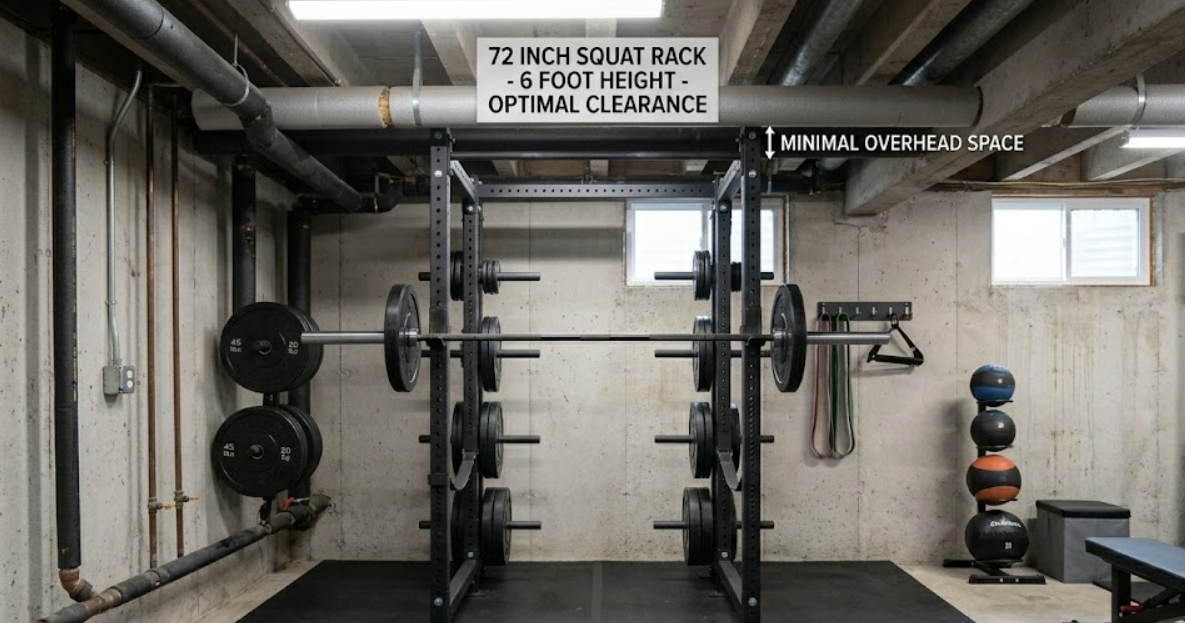
Our solution bridges the gap between spatial limitations and commercial durability. By integrating a 72 inch power rack commercial frame into your floor plan, you maximize your revenue per square foot without sacrificing the safety of your trainers or members. These units are designed to withstand the daily abuse of a high-traffic facility while fitting comfortably under a 7.5-foot ceiling, ensuring your equipment fits your building—not the other way around.
Engineering Integrity: Why Our 6ft Power Rack Outperforms Residential Alternatives
In the commercial equipment sector, the phrase "heavy-duty" is often overused, but the physics of a 72 inch squat rack demand strict material standards. While residential racks typically use 14-gauge or 12-gauge steel, a true 72 inch power rack commercial unit must be constructed from 11-gauge industrial steel. This thickness provides the structural rigidity required to prevent frame torsion when a 400lb+ barbell is dropped on the safety spotters. In a professional setting, frame flex isn't just an annoyance; it accelerates bolt fatigue and compromises the long-term stability of the unit.
Our engineering focus extends to the upright dimensions. By utilizing a 3" x 3" post design with 1-inch hardware, we maintain a lower center of gravity. This is critical for a squat rack 72 inches tall. Shorter racks often suffer from a "top-heavy" feel when pull-up bars are used, but our oversized base plates and gusseted corners ensure the rack remains anchored to the floor, even without permanent bolting. For facility managers, this means a lower Total Cost of Ownership (TCO) as the equipment withstands years of high-volume use without requiring structural maintenance or replacement.
Comparative Analysis: 72 Inch Squat Rack vs. Standard Models
When planning a facility layout, procurement officers must weigh the trade-offs between vertical height and equipment versatility. The following data highlights how a professional 72 inch squat rack stacks up against standard 7-foot commercial models and typical retail-grade alternatives. This comparison focuses on the metrics that impact ROI and operational safety.
| Feature/Specification | Commercial 72" Power Rack | Standard 84" Commercial Rack | Residential 72" Rack |
|---|---|---|---|
| Steel Gauge | 11-Gauge (3.0mm) | 11-Gauge (3.0mm) | 14-Gauge (2.0mm) |
| Post Dimensions | 3" x 3" Industrial | 3" x 3" Industrial | 2" x 2" or 2.35" x 2.35" |
| Static Load Rating | 1,000 lbs+ | 1,000 lbs+ | 300 - 500 lbs |
| Hole Spacing | Standard 2" (Westside Optional) | Standard 2" | Variable / Non-Standard |
| Attachment Ecosystem | Full 3x3 Compatibility | Full 3x3 Compatibility | Proprietary / Limited |
| Ceiling Clearance Required | 74 - 76 Inches | 86 - 90 Inches | 74 Inches |
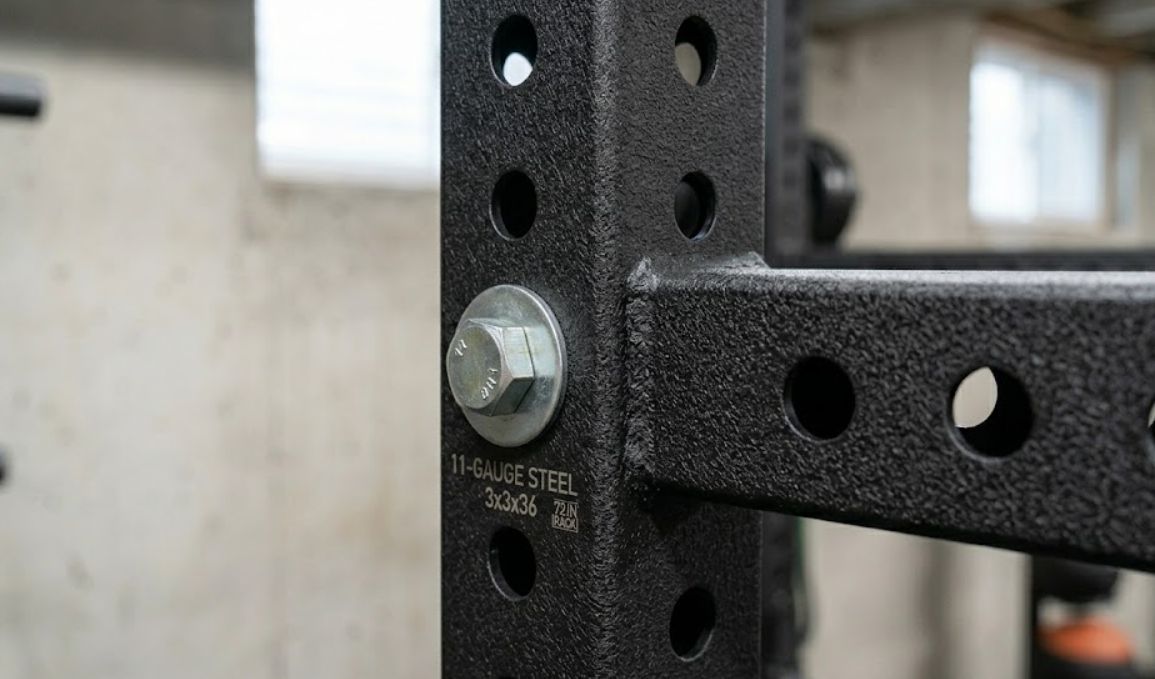
As the data demonstrates, a squat rack 72 inches in height does not have to be a "downgrade." By maintaining the 3x3" 11-gauge standard, we provide distributors and gym owners with a product that fits low-clearance spaces while remaining fully compatible with high-end attachments like jammer arms, dip stations, and lat puldown additions. This modularity ensures that your 72 inch power rack commercial investment can evolve with training trends, providing a much higher ROI than disposable, non-standard residential racks.
Maximizing Revenue per Square Foot in Boutique PT Studios
For a boutique personal training studio, every square foot of floor space must justify its lease cost. When a facility has "dead zones" due to low-hanging HVAC units or structural beams, it effectively reduces the billable training area. By strategically deploying a 72 inch squat rack in these height-restricted corners, owners can convert underutilized space into fully functional strength stations. In a 2,000-square-foot facility, reclaiming just two such zones can increase the number of concurrent semi-private sessions, directly impacting the monthly top-line revenue.
Our experience with urban gym layouts shows that a squat rack 72 inches tall allows for a complete barbell training program—including squats, bench presses, and floor-based movements—in areas where a standard rack would physically not fit. From an ROI perspective, the cost of a 72 inch power rack commercial unit is typically recovered within the first three months of increased session capacity. Instead of paying for empty square footage, you are investing in an asset that facilitates high-ticket personal training services in a compact footprint.
Versatility and Compatibility: The 3x3" Attachment Ecosystem
One of the biggest mistakes in B2B procurement is purchasing "short" racks that use proprietary or non-standard tubing sizes. This creates a "vendor lock-in" trap where you cannot upgrade or replace attachments easily. Our 72 inch squat rack is engineered with the industry-standard 3" x 3" 11-gauge steel profile and 1-inch laser-cut holes. This ensures that even though the rack is shorter, it remains fully compatible with a massive ecosystem of commercial attachments, including spotter arms, dip stations, and landmines.
For distributors and gym chains, this standardization is a critical procurement advantage. It means your inventory of J-hooks and safety bars is interchangeable across your entire equipment fleet, regardless of rack height. A 72 inch power rack commercial unit should not be an outlier in your facility; it should function as a modular component of your strength floor. This compatibility ensures that as training trends evolve—such as the increased demand for belt squats or functional trainer attachments—your 72 inch squat rack remains a versatile and profitable piece of equipment rather than an obsolete frame.
Durability Factors: Commercial Powder Coating and Weight Capacity
In high-traffic commercial environments, the durability of a 72 inch squat rack is measured by more than just its steel thickness. Surface finish and weight capacity are the primary drivers of long-term maintenance costs. We utilize a multi-stage industrial powder coating process that includes sandblasting and an electrostatic application. This creates a high-friction, wear-resistant surface that protects the squat rack 72 inches from the corrosive effects of sweat and the constant impact of steel barbells. For a facility manager, this translates to an equipment fleet that maintains its professional appearance for years, preserving the premium "look and feel" of the studio without requiring frequent touch-ups.
Weight capacity is where most "short" racks fail to meet professional standards. While a home-user may only need 300 lbs of support, a commercial-grade 72 inch power rack commercial unit must be rated for a minimum of 1,000 lbs static load. This provides a necessary safety buffer for advanced lifters and high-impact drops. By maintaining the same internal bracing and oversized hardware found in our full-sized rigs, our 6-foot frames offer the peace of mind that your facility is equipped to handle professional-level training safely. Investing in higher durability upfront significantly lowers the lifecycle cost by extending the replacement interval of the equipment.
Strategic Sourcing for Distributors: Shipping Efficiency and Bulk Packaging
For fitness equipment distributors, the profitability of a 72 inch squat rack is often determined in the warehouse and during transit. Shorter uprights provide a distinct logistical advantage. The reduced package length of a squat rack 72 inches allows for more efficient palletization and reduces "dead air" in shipping containers. From a B2B perspective, this improves the dimensional weight (DIM weight) ratio, effectively lowering the landed cost per unit compared to standard 84-inch racks that require specialized oversized shipping handling.
We have optimized our wholesale packaging to ensure that a 72 inch power rack commercial order arrives retail-ready and damage-resistant. For distributors, this means lower warehouse storage costs per unit and easier local delivery logistics. Because the 72-inch uprights fit into standard freight elevators and can be transported in smaller delivery vehicles, you can service a wider range of urban gym clients who may have difficult delivery access. This logistics-first approach ensures that your margins remain protected while you offer a solution that solves a genuine spatial problem for your customers.
Installation and Safety Protocols for Short-Stature Racks
Proper installation of a 72 inch squat rack in a commercial setting requires specific attention to floor leveling and spatial orientation. Because these racks are often used in "non-traditional" gym spaces like basements or retrofitted industrial units, floor surfaces are frequently uneven. We recommend using heavy-duty rubber stall mats or a dedicated lifting platform to create a level base. This prevents the squat rack 72 inches from shifting under load and ensures that the safety spotters are perfectly aligned. For maximum security in high-traffic facilities, our frames include pre-drilled footplates, allowing for permanent floor anchoring—a non-negotiable safety step for any 72 inch power rack commercial unit used for heavy eccentric training or suspension trainer attachment.
Safety clearance is the final critical factor. While the 72 inch squat rack solves the vertical height issue, procurement managers must still ensure a minimum 24-inch "buffer zone" around the perimeter of the rack for barbell loading and emergency egress. In low-ceiling environments, pay close attention to the pull-up bar height. We have designed our pull-up bars to be adjustable, allowing you to set the height low enough to prevent users from hitting the ceiling during high-rep sets, while still providing enough clearance for standard strength movements. Following these protocols ensures that your space-saving solution remains a safe, high-performing asset for your facility.
Long-Term Maintenance and Total Cost of Ownership (TCO)
For any commercial facility, the initial purchase price of a 72 inch squat rack is only one part of the financial equation. The true cost is measured over a 5-to-10-year lifecycle. Low-quality, lightweight racks often require frequent hardware tightening and eventual replacement due to frame warping or finish degradation. In contrast, a 72 inch power rack commercial unit built with 11-gauge steel and premium hardware significantly reduces the maintenance man-hours required. We recommend a simple quarterly inspection: checking the torque on the 1-inch bolts and wiping down the uprights to remove chalk and sweat. This minimal upkeep preserves the structural integrity and aesthetic value of the asset.
When calculating TCO, consider the resale and "brand" value of your equipment. A fleet of robust squat rack 72 inches tall frames maintains a high residual value in the secondary market, unlike budget equipment that is often scrapped. By investing in heavy-duty specifications, you are protecting your capital. Furthermore, the reduced downtime associated with industrial-grade equipment means your training sessions are never interrupted by equipment failure. In the B2B world, reliability is the ultimate cost-saver, ensuring that your 72 inch squat rack remains a profit-generating tool rather than a maintenance liability.
Customization and Private Labeling for Commercial Distributors
As a manufacturer, we understand that distributors and large-scale gym chains often require more than just a standard "out-of-the-box" solution. Our 72 inch squat rack production line is set up for high-volume customization and OEM / Private Labeling. Whether you need custom powder coat colors to match a specific brand identity or laser-cut logo plates integrated into the cross-members, we provide the engineering flexibility to differentiate your product in a crowded market. This allows distributors to offer a 72 inch power rack commercial line that is unique to their brand, enhancing market positioning and customer loyalty.
For bulk procurement, we offer scalable manufacturing that respects Minimum Order Quantities (MOQs) while maintaining strict quality control protocols. We provide comprehensive documentation, including weight tolerance testing reports and material certifications, which are essential for B2B contracts and insurance compliance. By partnering with us for your squat rack 72 inches supply, you gain access to a factory-direct relationship that prioritizes engineering precision and logistical transparency. This strategic partnership enables you to supply height-restricted facilities with a product that is not only functional but also perfectly aligned with your commercial branding and quality standards.
Real-World Implementation: The "Basement Studio" Success Story
In high-density urban markets like New York or London, boutique fitness brands often secure leases in historic industrial buildings or basement levels where ceiling heights are notoriously restrictive. We recently consulted for a boutique PT studio in Brooklyn that faced a critical challenge: their 2,500-square-foot facility had a net ceiling height of 90 inches, but significant HVAC ducting and century-old plumbing reduced the clearance to just 76 inches in the primary training zones. A standard 84-inch rack would have been impossible to install, potentially leaving 30% of their floor space unusable for heavy strength training.
The solution was the strategic deployment of six 72 inch squat rack units constructed from 11-gauge 3x3 steel. By opting for a 6-foot frame, the studio was able to place full-service power stations directly under the low-hanging obstructions. This allowed them to maximize their "revenue per square foot" by maintaining a high density of training stations. Within 18 months, the studio reported a 26% increase in billable hours compared to their previous location, primarily because they didn't have to sacrifice strength equipment for smaller, less profitable "cardio zones" due to height constraints. This case proves that a 72 inch power rack commercial isn't just a piece of equipment; it is a spatial optimization tool that directly impacts the bottom line.
Future-Proofing Your Facility: Why the 3x3 Standard is a Non-Negotiable Investment
In the B2B fitness market, "obsolescence" is a significant hidden cost. Many facility managers make the mistake of purchasing a "short" squat rack 72 inches tall from a supplier that uses non-standard 2.35" x 2.35" or 2" x 2" tubing. While these might fit the space, they isolate the facility from the broader market of commercial attachments. As training methodologies evolve—shifting toward more integrated cable systems, jammer arms, and specialized storage—those non-standard racks become a liability, requiring a total replacement of the frame to accommodate new technology.
By standardizing on a 72 inch squat rack with 3x3" uprights and 1-inch holes, you are future-proofing your investment. Our racks are designed to be part of an open ecosystem. Whether you want to add a proprietary lat pulldown attachment next year or integrate third-party weight storage, the 3x3 footprint remains the industry gold standard. This compatibility ensures that your 72 inch power rack commercial fleet can be upgraded and modularly expanded over a decade of use, rather than being discarded when training trends shift. For a distributor or a multi-location gym owner, this standardization simplifies inventory management and ensures a consistent training experience across all sites, regardless of architectural limitations.