Fringe Sport Squat Rack Comparison for Multi Site Rollouts
Optimizing SKU Breadth and Replenishment for Multi-Site Distribution
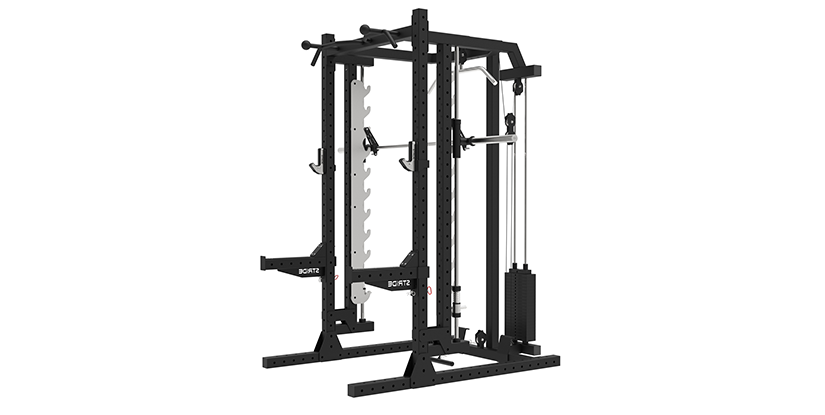
A fringe sport squat rack serves as a specialized strength training unit designed for high-performance lifting environments. B2B buyers select these configurations to meet specific programming needs, though managing high SKU counts across multiple locations requires a strategic balance between specialized features and standardized commercial strength equipment sourcing.
The Financial Impact of Specialization vs. Standardization
When executing a multi-site rollout, procurement managers must weigh the performance benefits of a niche fringe sport squat rack against the logistical advantages of a standardized unit. While specialized models offer unique dimensions or advanced accessory compatibility, they often introduce high SKU complexity. This complexity can inflate costs through increased minimum order quantities (MOQ) and fragmented shipping logistics. For distributors and franchise operators, excessive variation complicates inventory replenishment and increases the risk of localized stockouts during facility expansions.
| Metric | Standardized Commercial Unit | Specialized Fringe Sport Model |
|---|---|---|
| SKU Management | Low; high uniformity | High; varied configurations |
| Procurement Efficiency | Optimized for bulk/volume | Requires precision sourcing |
| Maintenance & Parts | Universal/Interchangeable | Model-specific components |
| Cost-Efficiency | High economies of scale | Premium specialized pricing |
Prioritizing standardization across a franchise network ensures long-term cost-efficiency. By limiting the variety of hardware, buyers can leverage better factory capability for custom branding while maintaining a streamlined supply chain. Effective SKU management prevents the technical debt associated with maintaining disparate parts inventories across geographically dispersed gym locations.
Total Cost of Ownership and Long-Term Procurement Metrics
Beyond the initial purchase price, the total cost of ownership (TCO) for a fringe sport squat rack is heavily influenced by the frequency of component replacement and the complexity of the supply chain. Specialized configurations often require more frequent technical oversight and specific replacement cycles due to their high-intensity use cases. For large-scale rollouts, the following comparison highlights the long-term financial implications of different hardware strategies.
| Cost Factor | Standardized Strength Equipment | Specialized/Niche Configurations |
|---|---|---|
| Logistics & Shipping | Lower; optimized for container loading | Higher; irregular dimensions/weight |
| Maintenance Frequency | Periodic/Routine | Frequent/Technical |
| Replacement Cycle | Long-term (8–10+ years) | Variable (Dependent on usage intensity) |
| Inventory Overhead | Minimal; common parts used | Significant; specialized spare parts |
When evaluating professional weightlifting rack specifications, procurement teams should account for the "hidden" costs of specialized units, such as increased freight volatility and the need for specialized onsite technicians. While high-performance models may justify a higher upfront investment, a standardized approach typically offers a more predictable ROI for franchise operators managing hundreds of units across diverse regions.
To maintain profitability during rapid expansion, procurement managers must master the tension between high-end performance and scaling costs. Relying on a single, high-spec model may improve gym franchise hardware standards, but it can also create bottlenecks if the manufacturer’s lead times or MOQ requirements are not aligned with your growth velocity. A successful rollout strategy requires building an inventory buffer of critical components to mitigate shipping delays and sudden demand spikes.
Effective sourcing involves negotiating terms that account for both volume and replenishment stability. When ordering a fringe sport squat rack at scale, ensure your contract specifies clear lead times for both initial shipments and subsequent replenishment orders. By balancing a core set of professional weightlifting rack specifications with a few modular accessories, you can achieve a high-performance aesthetic without the logistical nightmare of managing dozens of unique SKUs during a nationwide rollout.
Standardizing Professional Weightlifting Rack Specifications Across Franchises
Maintaining uniform structural integrity is a critical requirement when managing multi-site gym rollouts. For franchises, the goal is to ensure that every fringe sport squat rack performs identically, regardless of geographic location, to prevent localized equipment failure and uneven maintenance cycles.
Mitigating Uneven Wear in High-Traffic Environments
When sourcing for large-scale deployments, procurement managers must look beyond basic aesthetics to focus on professional weightlifting rack specifications that withstand high-traffic usage. Inconsistent hardware quality leads to a fragmented brand experience, where one facility may require frequent part replacements while another remains pristine. By establishing strict commercial strength equipment sourcing protocols, distributors can ensure that steel gauge consistency and powder coating durability are uniform across all branches.
Standardizing these components reduces the logistical burden on central management. Instead of managing a diverse catalog of spare parts, a unified specification allows for streamlined inventory control and predictable maintenance schedules. This level of precision in commercial strength equipment sourcing protects the long-term ROI of the initial capital expenditure by extending the lifecycle of the fringe sport squat rack across the entire franchise network.
Technical Material Specifications and Durability Comparison
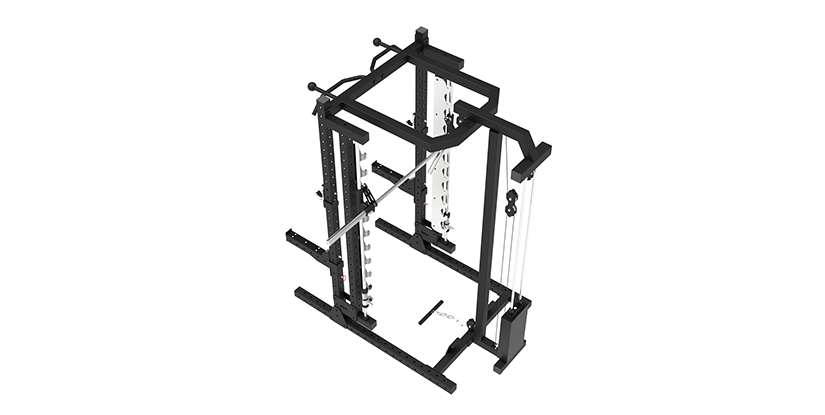
To maintain brand consistency, procurement teams should standardize specific material benchmarks. Discrepancies in steel thickness or coating quality can lead to premature oxidation or structural fatigue, complicating centralized maintenance. A standardized specification ensures that every unit deployed meets the same rigorous threshold for heavy-duty commercial use.
| Specification Metric | Standard Commercial Grade | Premium/High-Traffic Grade |
|---|---|---|
| Steel Gauge (Thickness) | 11-gauge (approx. 3mm) | 7-gauge (approx. 4.5mm) |
| Coating Type | Electrostatic Powder Coating | High-Durability Polyurethane Finish |
| Weight Capacity | 800 – 1,000 lbs | 1,200+ lbs |
| Maintenance Frequency | Bi-annual inspection | Annual inspection |
When evaluating a fringe sport squat rack for multi-site distribution, the 7-gauge steel option provides a higher safety margin for heavy lifting environments. While the initial capital expenditure is higher, the increased resistance to impact and superior powder coating quality significantly reduces the long-term cost of ownership by lowering the frequency of required hardware replacements and surface refinishing.
Logistics and Assembly Uniformity in Global Rollouts
A major hidden cost in multi-site expansion is the lack of assembly uniformity. When sourcing a fringe sport squat rack for different regions, procurement managers must ensure that hardware components, such as bolts, upright connectors, and adjustment pins, are identical across all shipments. Discrepancies in part dimensions can stall on-site installation, leading to expensive labor delays and inconsistent gym franchise hardware standards.
To optimize logistics and minimize downtime, distributors should prioritize manufacturers that offer standardized component kits. Relying on a single, high-quality replacement parts catalog simplifies regional warehousing and ensures that a technician in one city uses the exact same specifications as a technician in another. This consistency is vital for maintaining long-term durability and preventing the "patchwork" maintenance cycles that often plague expanding fitness networks.
Configuration Comparison for Diverse Facility Footprints
Optimizing the facility footprint is a critical variable when managing multi-site expansion. A mismatch between the fringe sport squat rack dimensions and the available floor area can lead to inefficient traffic flow or underutilized square footage. For procurement managers, ensuring standardized hardware across diverse locations is essential for maintaining brand consistency and operational scalability.
Spatial Impact and Sourcing Strategy
When engaging in commercial strength equipment sourcing, buyers must weigh the depth of the rack against the intended user movement zones. A more compact footprint allows for higher density in boutique settings, whereas a larger, heavy-duty configuration might be required for flagship high-traffic branches. Standardizing these dimensions helps streamline logistics and reduces the complexity of facility design during rapid rollouts.
| Configuration Type | Footprint Profile | Ideal Use Case | Procurement Focus |
|---|---|---|---|
| Compact/Wall-Mounted | Minimal/Low Depth | Boutique Studios | Space Efficiency |
| Standard Power Rack | Moderate/Medium | Franchise Gyms | Versatility & ROI |
| Full Modular System | Large/High Depth | Performance Centers | Durability & Scale |
Selecting the appropriate model depends on whether the priority is maximizing member capacity or providing a premium, high-clearance lifting experience. Consistency in these specifications ensures that training protocols remain uniform, regardless of the specific branch location.
Technical Dimensions and Layout Optimization
Effective space optimization requires a granular understanding of professional weightlifting rack specifications. While a standard power rack provides the baseline for most franchise branches, the total depth—including the footprint of the uprights and the required safety clearance for barbell whip—must be factored into the floor plan. For distributors and procurement specialists, calculating the "operational zone" around each unit is as vital as the unit's physical dimensions to avoid bottlenecking during peak hours.
When planning multi-site layouts, consider the following technical dimensions to ensure seamless integration with existing facility infrastructure:
| Specification Metric | Compact Configuration | Standard Configuration | Full-Scale Configuration |
|---|---|---|---|
| Typical Depth Range | < 48 inches | 48–60 inches | 60+ inches |
| Primary Footprint | Wall-anchored/Slim | Floor-standing/Freestanding | Modular/Integrated System |
| Capacity Density | High (Small Footprint) | Moderate (Balanced) | Low (High Volume/Specialized) |
For high-density urban locations, sourcing compact models minimizes wasted square footage. Conversely, flagship locations benefit from the stability of full-scale modular systems, which support higher weight loads and more complex attachment configurations. Matching these specifications to the site's specific architectural constraints prevents costly retrofitting during the installation phase of a rollout.
Logistics and Installation Complexity
Beyond physical dimensions, procurement decision-making must account for the logistical weight of each configuration. A modular fringe sport squat rack system offers high versatility but introduces significant assembly complexity and higher shipping volumes. For multi-site rollouts, these variables directly impact the total cost of ownership and the speed of facility launches. Large-scale systems often require specialized freight handling and longer on-site installation windows, which can delay opening dates if not strictly managed within the project timeline.
To maintain strict gym franchise hardware standards, buyers should evaluate the following logistical trade-offs before finalizing a purchase order:
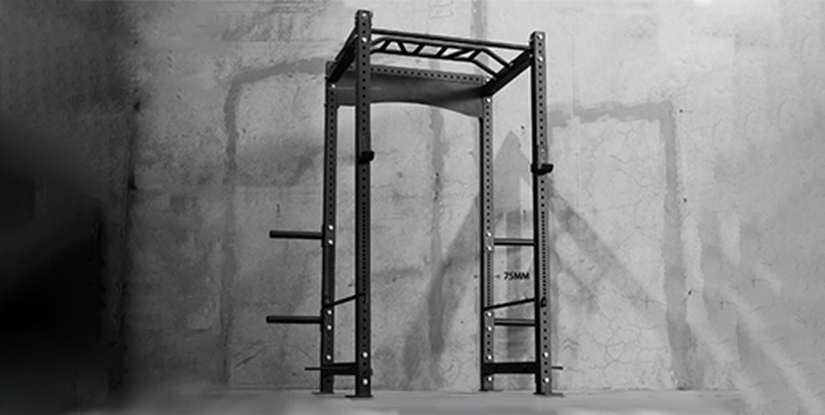
- Shipping Efficiency: Compact or wall-mounted units typically offer better container utilization and lower freight costs per unit compared to heavy-duty, freestanding modular systems.
- Assembly Requirements: Standard configurations often allow for faster onsite assembly with general maintenance staff, whereas advanced modular setups may require specialized technicians to ensure structural integrity.
- Site-Specific Constraints: Always verify ceiling heights and floor load capacities. A high-performance rack may be physically compatible with the floor plan but incompatible with the facility's structural or vertical clearance limits.
Effective procurement involves balancing the desire for premium features against the reality of site-specific constraints. By standardizing on configurations that offer predictable shipping profiles and manageable assembly steps, distributors can ensure a more consistent and cost-effective global rollout.
Scaling Financial Complexity in Multi-Site Procurement
Transitioning from single-unit orders to regional deployments introduces significant procurement complexity. When sourcing a fringe sport squat rack for a single facility, shipping is a linear expense; however, managing a multi-site rollout requires a shift toward strategic volume-based logistics to protect margins.
The primary financial challenge lies in balancing economies of scale against localized shipping overhead. While bulk purchasing directly from a factory or master distributor reduces the per-unit cost of the fringe sport squat rack, the logistical burden of distributing heavy, oversized steel components to disparate geographic locations can erode those savings. Effective commercial strength equipment sourcing requires a nuanced understanding of how container load optimization and regional warehousing can mitigate the rising costs of last-mile delivery to individual gym branches.
| Procurement Model | Primary Cost Driver | Logistical Complexity | Ideal For |
|---|---|---|---|
| Single-Unit Direct | High per-unit shipping | Low | Boutique studios |
| Regional Hub Distribution | Warehousing fees | Moderate | Mid-sized franchises |
| Direct Container Import | Port and customs handling | High | National gym chains |
Comparing Sourcing Models for Large-Scale Deployments
Selecting the right supply chain path for a fringe sport squat rack depends heavily on your organization's ability to manage inventory and quality oversight. For regional rollouts, the choice between direct factory procurement and utilizing a regional distributor involves a trade-off between upfront unit savings and long-term operational control.
Direct factory sourcing offers the lowest base price but requires significant expertise in international freight and customs. Conversely, working with a distributor provides localized support and faster replenishment, though it introduces a markup on the hardware. The following comparison outlines how these models impact your total cost of ownership and lead time management.
| Metric | Direct Factory Sourcing | Regional Distributor |
|---|---|---|
| Minimum Order Quantity (MOQ) | High (Full Container Loads) | Low to Moderate |
| Shipping Costs | Lower per-unit (Bulk Freight) | Higher (LTL or Parcel) |
| Quality Inspection | On-site/Third-party required | Pre-vetted by distributor |
| Lead Time | Long (Production + Sea Freight) | Short (Local Stock Availability) |
| Total Cost of Ownership | Lowest (Scale-driven) | Moderate (Service-driven) |
When establishing gym franchise hardware standards, procurement managers must decide if the time savings of a distributor outweigh the margin gains of direct importing. For high-frequency rollouts, a hybrid approach—importing core components via direct containers while using local distributors for rapid accessory replenishment—often yields the most resilient supply chain.
Mitigating Hidden Operational Costs and TCO
Beyond the initial purchase price, the true cost of a rollout is dictated by long-term operational variables. Procurement teams often overlook the impact of assembly labor and the frequency of maintenance cycles on their bottom line. To protect your return on investment, you must evaluate the fringe sport squat rack not just as a single line item, but as a long-term asset within your facility's lifecycle.
A common pitfall in multi-site expansion is selecting hardware that meets basic strength requirements but fails to meet rigorous professional weightlifting rack specifications for ease of upkeep. Complex, multi-part configurations may offer a lower initial price point, yet they drive up assembly labor costs and require specialized technician visits. Standardizing on streamlined, modular designs helps ensure that your gym franchise hardware standards remain consistent across all locations, reducing the need for specialized onsite training or expensive third-party maintenance. When calculating the TCO, always factor in the durability of coatings and the ease of bolt-tightening protocols to minimize downtime during routine inspections.
Quality Control Benchmarks for High-Volume Commercial Strength Equipment Sourcing
When scaling a gym franchise, the durability of your hardware dictates long-term maintenance costs and brand reputation. A standard fringe sport squat rack must withstand rigorous, repetitive use without structural fatigue or aesthetic degradation.
Structural Integrity and Material Specifications
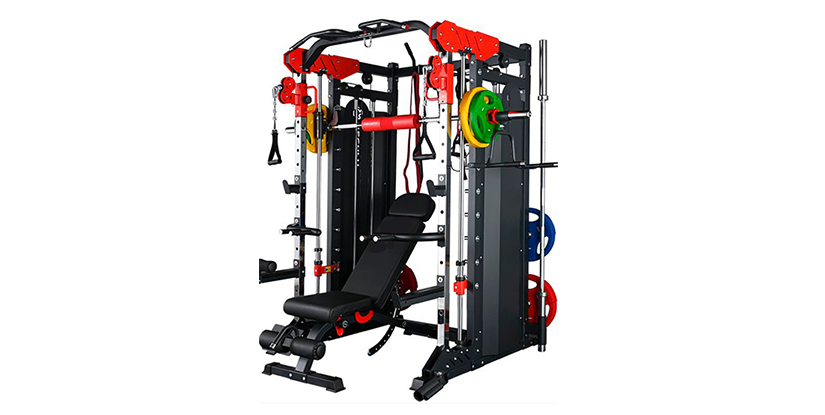
For multi-site rollouts, procurement managers must prioritize the structural gauge of the steel to ensure long-term load-bearing stability. In high-traffic commercial settings, thin-walled tubing is prone to vibration and micro-fractures under heavy barbell loads. We recommend sourcing units constructed from heavy-duty 11-gauge or 7-gauge steel to maintain rigidity during high-intensity training sessions.
Beyond the steel thickness, the quality of the powder coating and weld points serves as a critical benchmark. High-quality commercial strength equipment sourcing involves verifying that the finish can resist chipping from frequent barbell contact, which prevents oxidation and maintains a consistent professional appearance across all your facility locations.
Material Configuration and TCO Comparison
Selecting the correct specification is a trade-off between initial capital expenditure and long-term operational costs. A lower-gauge rack may reduce upfront shipping and manufacturing costs, but the increased frequency of maintenance cycles often results in a higher Total Cost of Ownership (TCO) over a five-year period.
| Specification Level | Steel Gauge (Typical) | Coating Type | Maintenance Cycle | Ideal Use Case |
|---|---|---|---|---|
| Standard Commercial | 11-Gauge | Standard Powder Coat | Annual Inspection | Boutique Studios / Low-Mid Traffic |
| Heavy-Duty Pro | 7-Gauge to 9-Gauge | High-Impact Polyurethane | Bi-Annual Inspection | High-Volume Training Facilities |
| Elite Performance | 7-Gauge (Reinforced) | Textured Industrial Finish | Annual Deep Clean/Check | Professional Strength Gyms |
When evaluating professional weightlifting rack specifications, procurement teams should prioritize the powder coating durability. A premium, high-micron coating protects the steel from oxidation and surface abrasions, which is essential for maintaining a uniform aesthetic across diverse geographic regions during a multi-site rollout.
Ensuring Batch Consistency and Manufacturing Uniformity
For distributors and franchise owners, the greatest risk in a multi-site deployment is hardware variance. Even with high-quality specifications, a lack of strict QC protocols can lead to discrepancies in hole spacing, weld depth, or finish texture between different production runs. This lack of batch consistency complicates facility management, as technicians cannot rely on a single standard for installation or part replacement across various locations.
To maintain strict gym franchise hardware standards, procurement specialists must verify that the manufacturer employs standardized jig-based assembly. This ensures that every fringe sport squat rack in a large-scale shipment adheres to identical dimensional tolerances. When sourcing for high-volume rollouts, always request documentation regarding their quality control workflows to ensure that the tenth shipment matches the first in both structural precision and aesthetic uniformity.
Operational Impact of Hardware Standardization
Maintaining a consistent fringe sport squat rack configuration across multiple locations significantly reduces long-term facility management overhead. When procurement teams prioritize standardization, they simplify the training of on-site technicians and streamline the inventory of replacement parts, such as J-cups or safety spotter arms.
Effective commercial strength equipment sourcing must account for how different structural designs react to high-frequency use. A non-standardized fleet leads to unpredictable wear and tear patterns, forcing maintenance teams to manage a fragmented catalog of specialized tools and components. By selecting a unified model, distributors and franchise owners can implement predictable 12-to-24-month inspection cycles, ensuring that structural integrity remains constant across the entire network without the need for site-specific technical expertise.
Maintenance Requirements by Configuration Type
The complexity of routine upkeep varies depending on the mechanical components integrated into the rack. While a basic structure requires minimal intervention, configurations involving moving parts or integrated cable systems demand a more rigorous inspection schedule to prevent downtime and ensure safety standards are met across all branches.
| Rack Configuration | Primary Maintenance Focus | Lubrication Needs | Bolt & Hardware Integrity | Coating & Surface Care |
|---|---|---|---|---|
| Basic Squat Stand | Structural stability | Minimal (Static) | Annual tightening | Visual inspection only |
| Full Power Rack | Safety bar/Pin alignment | Periodic (Slide rails) | Bi-annual tightening | Check for impact scuffs |
| Integrated Cable/Functional Rack | Pulley & Cable tension | Monthly (Moving parts) | Quarterly tightening | High-frequency monitoring |
When evaluating professional weightlifting rack specifications, procurement managers should account for the total cost of ownership. High-traffic facilities often benefit from premium powder coating to maintain coating integrity against heavy barbell impact. Additionally, implementing a scheduled lubrication protocol for adjustable components prevents friction-related wear, preserving the smooth operation required for high-performance commercial environments.
Optimizing Spare Parts Logistics and TCO
To safeguard long-term operational consistency, procurement strategies must extend beyond the initial purchase to address the logistics of component replacement. Relying on a single, highly standardized model ensures that specialized parts—such as proprietary upright connectors or specific pin-and-collar systems—remain interchangeable across your entire fleet. This high level of component compatibility prevents the common pitfall of site-specific downtime caused by mismatched hardware.
When negotiating with manufacturers, clarify the Minimum Order Quantity (MOQ) for essential replacement parts. Rather than ordering single units as failures occur, smart distributors secure a baseline inventory of high-wear items during the primary shipment. Managing these logistics upfront mitigates the risk of international shipping delays and ensures that your facility meets strict gym franchise hardware standards for safety and uptime. By factoring these replacement costs and shipping efficiencies into your initial budget, you achieve a much lower and more predictable Total Cost of Ownership (TCO) across all locations.