Compact Squat Rack | Sourcing Compact Squat Racks For
Optimizing Footprint in High-Traffic Boutique and Hotel Gyms
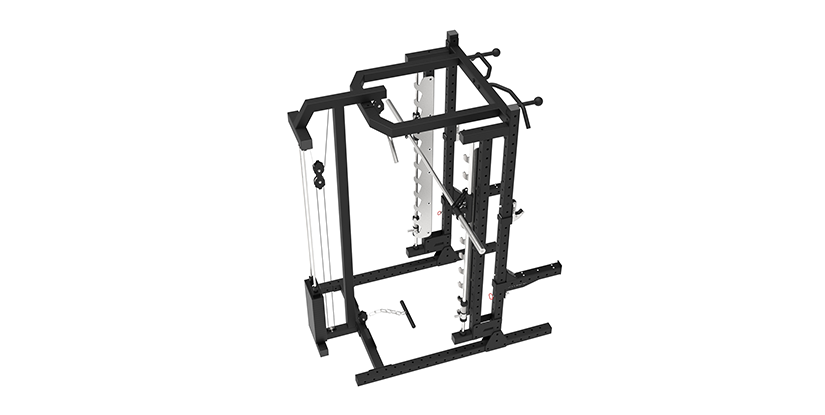
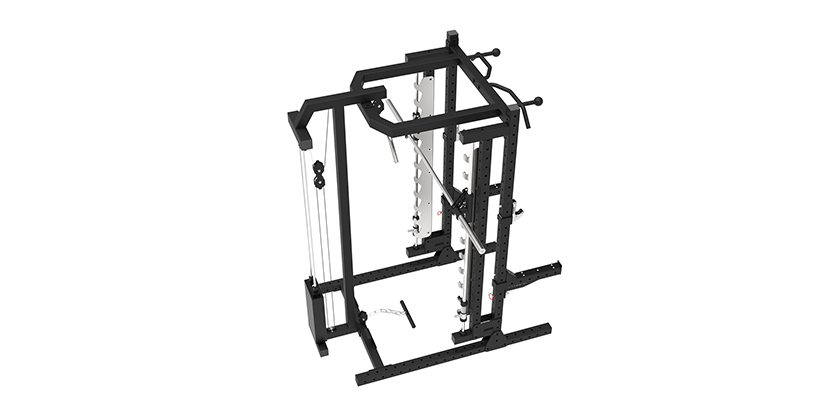
Many procurement managers mistakenly prioritize absolute unit cost, only to find that oversized equipment disrupts facility flow and violates safety clearances. A more strategic approach involves selecting a compact squat rack designed specifically for footprint optimization, ensuring high-density layouts remain functional without compromising user safety.
In high-traffic environments like a boutique fitness studio or a luxury hotel gym, every square foot impacts the premium user experience. Relying on standard full-size racks often leads to cramped training zones and restricted movement. To prevent these bottlenecks, distributors and facility owners must strictly evaluate commercial compact squat rack specs, focusing on depth, width, and the total clearance required for barbell rotation and safe weight loading.
Configuration Selection: Fixed vs. Modular Setups
When sourcing space-saving strength equipment, the decision between fixed and modular configurations dictates both your initial investment and the long-term versatility of the facility. While fixed units offer maximum structural rigidity, modular or wall-mounted solutions allow for higher density in boutique settings where floor space is at a premium.
For distributors specializing in small gym equipment wholesale, understanding the trade-off between installation complexity and footprint reduction is vital for client satisfaction. Below is a technical comparison of common configurations to assist in your facility layout planning.
| Configuration Type | Typical Floor Space Requirement | Installation Complexity | Primary Use Case |
|---|---|---|---|
| Wall-Mounted (Fixed) | Minimal (Zero Floor Footprint) | High (Requires Structural Anchoring) | Boutique Studios & Small Home Gyms |
| Freestanding (Slim Profile) | Moderate (Requires Safety Clearance) | Low (Standalone Unit) | Hotel Gyms & Multi-Use Training Zones |
| Modular/Collapsible | Variable (Adjustable Depth) | Medium (Requires Regular Maintenance) | High-Density Commercial Facilities |
When evaluating these options, consider that wall-mounted units provide the most efficient use of area but require strict adherence to load-bearing wall specifications. Conversely, freestanding compact models offer easier shipping and lower installation hurdles, making them a safer bet for distributors managing diverse client installation capabilities.
Inventory Density and Logistics Management
For distributors, the procurement decision extends beyond the physical dimensions of a single unit to the broader impact on shipping logistics and warehouse management. Sourcing a compact squat rack often allows for higher inventory density within standard shipping containers, as smaller footprints typically translate to more efficient volumetric weight ratios. However, buyers must balance these savings against the potential for increased SKU complexity if a product line includes many specialized modular attachments.
When negotiating with manufacturers, clarify the Minimum Order Quantity (MOQ) for both the core rack structures and their compatible accessories. High-density training environments require a versatile training ecosystem; if your inventory lacks the specific small-form-factor attachments that match the rack, the utility of the space-saving equipment is diminished. A smart procurement strategy prioritizes a cohesive set of compact components that can be shipped together, optimizing both freight costs and the end-user's facility layout efficiency.
Technical Benchmarks for Commercial Compact Squat Rack Specs
When sourcing space-saving strength equipment, the reduction in footprint must not result in a reduction in structural integrity. For distributors and boutique studio owners, verifying the steel gauge and welding quality is the primary defense against premature product failure and liability claims in high-traffic environments.
A high-quality compact squat rack must maintain absolute structural stability in small footprints, even under heavy eccentric loading. Relying on thin-walled tubing leads to frame oscillation, which diminishes the user experience and shortens the equipment's lifecycle. We recommend prioritizing heavy-duty steel profiles to ensure the unit remains a long-term asset rather than a recurring replacement cost.
| Feature Specification | Standard Residential Grade | Professional Compact Commercial |
|---|---|---|
| Steel Gauge Thickness | 11–14 Gauge | 7–10 Gauge (Heavy-duty) |
| Load-Bearing Capacity | Lower/Variable | High/Consistent Static Load |
| Structural Stability | Moderate oscillation | Rigid/Minimal vibration |
| Weld Integrity | Standard/Basic | Full-penetration/Reinforced |
For B2B buyers, evaluating these commercial compact squat rack specs during the factory audit stage is critical. High-gauge steel not only increases the weight capacity but also provides the necessary rigidity to prevent the frame from bowing or shifting during heavy lifts, ensuring the product meets the durability standards expected by professional fitness facilities.
Material and Dimensional Benchmarks
A closer inspection of the raw materials reveals the true distinction between high-turnover retail items and durable commercial assets. For procurement managers, the difference between 14ga and 11ga steel is often the difference between a product that lasts two years and one that lasts ten.
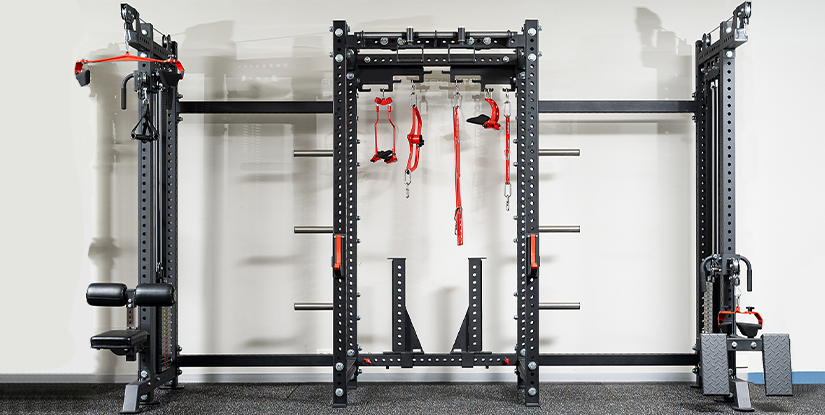
Beyond the gauge, the finish quality directly impacts long-term maintenance costs. A superior electrostatic powder coating protects the steel from oxidation and scratches caused by frequent barbell contact, which is vital for maintaining a premium aesthetic in boutique environments. Use the following technical comparison to guide your quality control checklists during the sampling phase.
| Technical Metric | Standard/Lightweight Grade | Commercial-Grade Compact Spec |
|---|---|---|
| Steel Gauge | 14ga (Thinner profile) | 11ga or 7ga (High-rigidity) |
| Upright Dimensions | Standard 2" x 2" | 3" x 3" or Heavy-duty 2" x 3" |
| Powder Coating | Basic Paint/Spray | Electrostatic/High-durability Finish |
| Typical Weight Capacity | 300–500 lbs | 600–1,000+ lbs (Static) |
When negotiating MOQs or reviewing factory capabilities, ensure the supplier can provide detailed technical drawings of the upright dimensions and welding points. This level of transparency ensures that your space-saving strength equipment can handle the high-intensity training typical of professional strength facilities without structural fatigue.
Optimizing Long-Term ROI Through Durability and Maintenance
For distributors and studio owners, the total cost of ownership (TCO) is a more critical metric than the initial purchase price. Investing in high-grade space-saving strength equipment reduces the frequency of replacement cycles and protects your profit margins against warranty claims and customer dissatisfaction.
High-traffic durability depends heavily on wear resistance at critical contact points. When sourcing, verify that the j-cups and barbell rests feature reinforced bushings or high-density polymer liners. These components prevent metal-on-metal friction, which can otherwise lead to structural fatigue and unsightly scoring on the uprights. A robust finish and high-grade hardware ensure the equipment maintains its aesthetic and functional integrity through years of heavy usage.
Effective maintenance cycles for a compact squat rack in a commercial setting typically involve quarterly inspections of bolt tension, lubrication of adjustable parts, and surface cleaning to prevent oxidation. By selecting models with high-grade electrostatic finishes and standardized hardware, buyers can extend the service life of their inventory and ensure a more predictable maintenance schedule for their clients.
Evaluating Modular Versatility for Small Gym Equipment Wholesale
Distributors must weigh the immediate cost of a compact squat rack against its long-term utility within a client's facility. While fixed structures often present a lower entry price, modular designs provide a strategic advantage for boutique studios and high-density training environments.
Modularity vs. Fixed Structures: the ROI Perspective
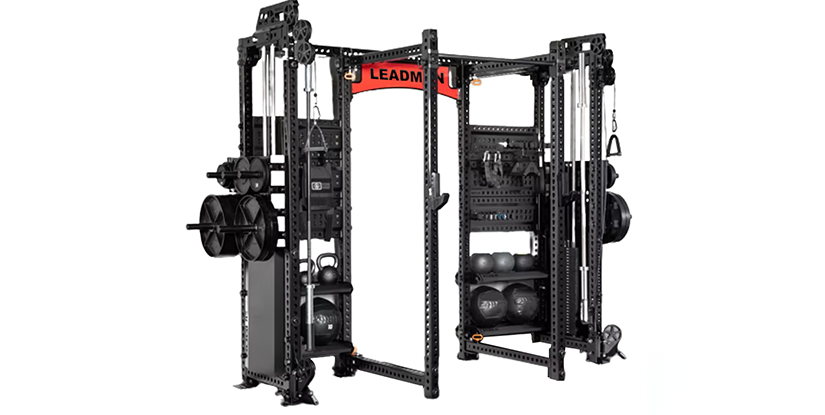
When sourcing space-saving strength equipment, the primary tension lies between initial CAPEX and long-term versatility. A fixed-dimension rack is cost-effective for a single-use setup, but it limits the end-user's ability to adapt to changing programming or floor layouts. Conversely, modular systems allow for the seamless addition of attachments—such as dip stations, pull-up bars, or weight storage—transforming a basic unit into a multi-functional station.
For B2B buyers, investing in modularity often yields a better total cost of ownership (TCO). Although the upfront procurement cost per unit may be slightly higher, the ability to upsell compatible accessories and provide scalable solutions to clients creates a more sustainable revenue stream and higher customer retention.
| Feature Metric | Fixed Structure (Standard) | Modular Compact System |
|---|---|---|
| Initial CAPEX | Lower / Budget-friendly | Moderate to Higher |
| Adaptability | Limited to base frame | High (Attachment-ready) |
| Long-term Utility | Static functionality | Scalable for diverse training |
| Inventory Strategy | Single SKU focus | SKU expansion via accessories |
Configuration Comparison for Strategic Sourcing
To optimize inventory selection, procurement managers should evaluate how different build types align with specific client needs. Choosing between a standard fixed build and a highly customizable setup depends on whether the target market prioritizes low-cost entry or long-term equipment lifespan. The following comparison outlines the structural trade-offs between three common procurement tiers.
| Configuration Type | Cost Implication | Versatility Level | Best Use Case |
|---|---|---|---|
| Fixed Configuration | Lowest unit price | Low (Static) | Basic home gyms or budget studios |
| Modular System | Mid-range | High (Expandable) | Boutique studios and commercial hubs |
| Fully Customizable | Premium/Highest | Maximum (Bespoke) | Specialized training facilities |
From a distributor standpoint, the modular configuration often provides the most balanced ROI. It allows for a tiered pricing strategy where the base unit is sold at a competitive entry point, while subsequent accessory orders—such as specialized J-cups or landmines—drive recurring revenue and increase the total value of the account.
Managing Procurement Costs and Logistics Efficiency
Effective sourcing for small gym equipment wholesale requires a deep understanding of how product dimensions impact the bottom line. Beyond the base unit price, procurement managers must account for the hidden variables of international freight and container utilization. A compact squat rack that is designed for easy disassembly or nested shipping provides a significant advantage in reducing landed costs.
MOQ impact on unit price is another critical lever in margin planning. While higher Minimum Order Quantities (MOQ) typically drive down the individual unit cost through economies of scale, buyers must balance this against the increased holding costs of inventory. To maximize logistics efficiency, prioritize suppliers who offer high shipping volume optimization. This involves selecting equipment with standardized packaging dimensions that maximize the cubic capacity of a 40ft HC container, ensuring you are not paying to ship excessive air. By aligning SKU dimensions with container density, distributors can effectively lower the per-unit shipping expense and improve overall profitability.
Inventory Planning and MOQ Strategies for Distributors
Distributors supplying boutique fitness studios face a unique logistical paradox: the demand for space-saving strength equipment is rising, yet the physical footprint required to house bulky inventory remains a constant cost driver. Managing a compact squat rack inventory requires a precise balance between maintaining high stock availability and optimizing your warehouse footprint.
The primary challenge lies in the relationship between inventory turnover and shipping costs. While smaller units are easier to store, the high frequency of small-batch orders can erode margins through increased handling and logistics overhead. To maintain profitability, procurement managers must decide whether to hold larger volumes of high-demand, entry-level models or operate a leaner, just-in-time replenishment model for premium configurations.
Choosing between a factory-direct model and a local distributor model depends heavily on your scale of operations and your ability to manage complex shipping logistics. For large-scale distributors, the direct model offers significant cost advantages, whereas local procurement provides agility for smaller boutique studio suppliers.
Sourcing Model Comparison: Scaling Your Inventory
| Feature | Factory-Direct Sourcing | Local Distributor Model |
|---|---|---|
| Cost-per-unit | Lowest; optimized for high volume | Higher; includes markup and local overhead |
| Typical MOQ | High (Container or LCL requirements) | Low (Small batch or single-unit orders) |
| Lead Time | Extended (Production + Sea Freight) | Short (Immediate or weekly replenishment) |
| Commercial Specs | Full customization of steel gauge and finish | Standardized, pre-set configurations |
| Shipping Logistics | Complex; requires customs and port management | Simplified; domestic freight or last-mile delivery |
When evaluating commercial compact squat rack specs, remember that direct sourcing allows you to dictate specific dimensions to meet niche market demands. However, if your business model prioritizes rapid response times for small boutique studios, the local distributor route mitigates the risks associated with long-distance shipping and unpredictable international freight fluctuations.
Mitigating Risk in Small-Batch Procurement
Navigating small gym equipment wholesale requires a proactive approach to risk management, particularly when dealing with lower volume orders. To protect your margins, implement a rigorous quality control (QC) protocol that extends beyond the factory floor. For small-batch orders, it is common for manufacturers to prioritize larger production runs; therefore, requesting pre-shipment inspections or photographic verification of welding integrity and powder coating consistency is essential to avoid receiving substandard units.
Furthermore, optimize your stock levels by maintaining a strategic buffer stock of high-turnover specialized attachments, such as J-cups or spotter arms. While the main rack structures are heavy and subject to strict shipping logistics, these smaller components are easier to stockpile and can be used to fulfill urgent client requests without waiting for a full container shipment. This tiered inventory strategy ensures you can offer complete, ready-to-use solutions while minimizing the impact of global supply chain volatility.
Logistics and Shipping Optimization for Heavy Strength Equipment
Optimizing the landed cost of a compact squat rack requires a strategic understanding of how dimensions and weight influence international freight. For distributors managing small gym equipment wholesale orders, the primary challenge lies in balancing the physical footprint of the unit against shipping container utilization.
Managing the Weight vs. Volume Trade-Off
Shipping logistics for heavy strength equipment are often dictated by the interplay between actual weight and volumetric weight. While a compact squat rack is designed to save floor space in a studio, its high-density steel construction can lead to significant freight costs if not palletized efficiently. Buyers must decide between sea freight for high-volume, cost-effective restocking and air freight for urgent, smaller-scale replenishment. When sourcing, consider that optimizing the packaging density can reduce the "dead space" in a shipping container, effectively lowering your per-unit shipping expense and improving your overall inventory margin.
Freight Configuration Comparison
Selecting the appropriate shipping method depends on your current inventory turnover and the urgency of your studio's replenishment needs. For B2B buyers, the choice between sea and air freight significantly impacts the landed cost of space-saving strength equipment. The following table outlines common logistics configurations used when importing commercial-grade units.
| Shipping Method | Typical Lead Time | Cost Profile | Best Use Case |
|---|---|---|---|
| FCL (Full Container Load) | 30–45 Days | Lowest per-unit cost | Bulk wholesale orders and large-scale distributor restocking |
| LCL (Less than Container Load) | 25–40 Days | Moderate | Mid-sized orders or testing new compact models |
| Air Freight | 7–12 Days | Highest | Urgent, small-scale replenishment for boutique studios |
When evaluating these options, remember that high-density steel components are heavy but relatively low-volume. For maximized ROI, most distributors prioritize FCL or LCL to mitigate the high costs associated with air freight, ensuring that the premium price of the equipment remains competitive in the local market.
Optimizing MOQ and Packaging for Margin Protection
To protect your margins, you must look beyond the unit price and scrutinize the MOQ (Minimum Order Quantity) alongside packaging optimization. While a lower MOQ offers flexibility for boutique fitness distributors, it often comes with higher per-unit costs due to inefficient container loading. For high-density items, the goal is to minimize volumetric weight penalties by ensuring the commercial compact squat rack specs allow for modular or nested assembly.
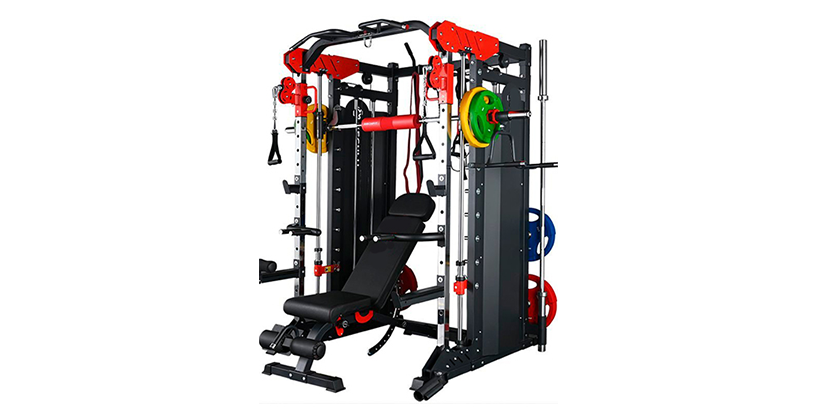
Negotiating with manufacturers to refine the box dimensions or utilizing nested shipping configurations can drastically reduce the landed cost. A well-engineered packaging plan ensures that the heavy steel uprights and crossmembers do not create excessive "dead air" in a container. By aligning your procurement volume with optimized pallet layouts, you can increase the number of units per shipment, effectively lowering the freight overhead for every piece of space-saving strength equipment you stock.
Long-Term ROI and Maintenance Cycles in Compact Strength Solutions
For boutique fitness operators, the profitability of a studio often hinges on the ability to maximize revenue per square foot. While a compact squat rack offers an immediate solution for limited floor plans, the true Return on Investment (ROI) is dictated by the relationship between initial procurement costs and the long-term Total Cost of Ownership (TCO).
Durability vs. Initial Cost: the Boutique Studio Context
In high-traffic boutique environments, choosing space-saving strength equipment based solely on the lowest entry price often leads to higher operational expenses. Low-grade steel or inferior powder coating may reduce upfront capital expenditure, but these factors increase the frequency of part replacements and maintenance downtime. When evaluating commercial compact squat rack specs, procurement managers must look beyond the footprint to assess gauge thickness and weld integrity.
A higher-quality unit typically justifies its premium through extended service life and minimal maintenance requirements. Investing in robust, high-spec equipment ensures that the studio avoids the "replacement trap," where the cost of frequent upgrades and assembly labor eventually exceeds the cost of a single, high-quality initial purchase.
| Evaluation Metric | Budget-Tier Options | Commercial-Grade Compact Racks |
|---|---|---|
| Steel Gauge/Thickness | Lower gauge; higher risk of deformation | Thicker gauge; maintains structural integrity |
| Maintenance Frequency | Higher due to wear and component fatigue | Lower; designed for heavy daily use |
| Long-term TCO | Higher due to replacement cycles | Lower via extended equipment lifespan |
| Resale/Residual Value | Minimal value after heavy use | Stronger secondary market value |
Material Grade and Lifecycle Expectations
To accurately forecast the lifecycle of your inventory, you must differentiate between residential-style builds and true commercial-grade hardware. A significant variable in the total cost of ownership is the quality of the finish and the metal density. For example, a thin powder coating may appear acceptable during initial unboxing, but in a high-frequency boutique setting, it often fails under the friction of barbell movement, leading to rust or unsightly chipping that diminishes the facility's premium aesthetic.
When sourcing small gym equipment wholesale, we recommend auditing the specific material grades to ensure they meet the demands of your target market. The following comparison highlights how material selection directly impacts the maintenance schedule and the expected operational life of the unit.
| Material/Spec Detail | Maintenance Frequency | Expected Lifespan |
|---|---|---|
| Lightweight Steel (Residential Grade) | High (Frequent bolt tightening/surface touch-ups) | 1–3 Years (High wear and tear) |
| Standard Powder Coating (Basic Commercial) | Moderate (Periodic cleaning and inspection) | 3–5 Years (Standard studio usage) |
| High-Density Steel & Premium Electrostatic Coating | Low (Routine lubrication/inspection only) | 7+ Years (High-traffic commercial environments) |
Distributors should prioritize units with a higher steel gauge and superior coating thickness to minimize the risk of structural fatigue. While the initial MOQ or unit cost may be higher, the reduction in warranty claims and replacement requests provides a more stable margin for long-term distribution partnerships.
Optimizing Inventory Turnover and Logistics Strategy
Maximizing profitability for distributors requires a sophisticated approach to small gym equipment wholesale procurement. A common pitfall is over-investing in high-volume SKUs that suffer from slow inventory turnover. Instead, focus on high-demand, space-efficient models that allow for faster shipping and more efficient warehouse management.
When negotiating MOQ considerations, do not simply look for the lowest number; look for the best balance of volume and component reliability. A lower MOQ might seem attractive for testing a market, but sourcing a single, high-quality model with standardized parts often yields better long-term margins. Ensure your supplier maintains high replacement parts availability for common wear items like J-cups or barbell collars. Relying on a manufacturer that provides readily available, modular components reduces the logistical burden of handling individual warranty claims and keeps your inventory moving without the friction of long-term backorders.
Effective shipping logistics also play a critical role in protecting your margins. Because compact strength equipment is often heavy and dense, optimizing container loadability is essential. Partner with manufacturers who provide precise volumetric data and flat-pack-friendly designs to reduce the landed cost per unit. By streamlining both the physical dimensions of the product and the ease of part replacement, distributors can maintain a lean, high-turnover inventory that responds quickly to the shifting demands of the boutique fitness market.