Small Squat Rack | Optimizing Gym Floor Plans with Small
The Economic Logic of High-Density Strength SKU Management
Boutique studio owners often face a strict ceiling on usable square footage, where every foot of floor space directly dictates the potential for new memberships. Utilizing a small squat rack allows operators to transition from expansive, underutilized areas to high-performance zones that support more intensive programming without increasing the facility footprint.
Maximizing Revenue per Square Foot
In high-density commercial settings, the primary procurement goal is increasing the revenue per square foot. Traditional heavy-duty power racks may offer longevity, but they often consume excessive floor real estate that could otherwise house multiple training stations. By sourcing space-saving gym gear, distributors and studio managers can optimize a boutique gym layout to accommodate more clients per session. This strategic shift in equipment selection transforms dead space into profitable training real estate, ensuring that the initial capital expenditure on a small squat rack delivers a higher long-term return through increased capacity and improved client throughput.
When evaluating the financial impact of equipment selection, procurement managers must look beyond the initial unit price. A strategic comparison between full-sized stations and compact strength equipment reveals how footprint and utility affect the Total Cost of Ownership (TCO) and long-term operational scalability.
Cost-Benefit Comparison: Compact vs. Full-Size Units
| Evaluation Metric | Full-Size Power Rack | Compact Strength Equipment |
|---|---|---|
| Initial Capital Expenditure | Higher per unit cost | Lower entry price point |
| Footprint Requirement | Extensive/Fixed | Minimal/Modular |
| Versatility & Utility | High (Multi-function) | Specialized/Optimized |
| Long-term ROI Driver | Durability/Lifespan | Capacity/Revenue Density |
| Shipping & Logistics | Complex/Higher Freight | Efficient/Easier Sourcing |
The final procurement decision often hinges on whether the facility's growth strategy relies on heavy barbell volume or high-frequency client turnover. While full-size racks offer unmatched specialized functions, compact alternatives allow for a denser, more agile layout. For distributors, sourcing high-quality, compact units provides a competitive edge in markets where facility real estate is at a premium, ensuring high durability without the excessive spatial tax of traditional heavy equipment.
Prioritizing Durability and Maintenance Cycles
A common misconception in B2B procurement is that smaller dimensions imply lower durability. To protect your long-term investment, ensure that every high-density strength SKU meets commercial-grade standards for steel gauge and powder coating. While compact equipment reduces initial shipping costs, selecting units with high-quality components minimizes the maintenance cycle frequency. High-traffic boutique studios require gear that resists wear from constant adjustment. Sourcing robust, compact solutions ensures that your facility avoids the hidden costs of frequent repairs or premature replacement, maintaining a high-performance environment even under heavy daily usage.
Optimizing Boutique Studio Footprints with Compact Strength Equipment
Modern boutique studio operators face a recurring challenge: balancing high-density equipment offerings with the need for open, navigable floor space. Traditional power racks often consume excessive square footage, creating bottlenecks that disrupt client traffic flow and limit the number of usable training zones in smaller facilities.
The Strategic Value of the Small Squat Rack
Integrating a small squat rack into a boutique gym layout is more than just a space-saving tactic; it is a strategic investment in footprint optimization. For distributors and facility managers, selecting compact strength equipment allows for a higher density of functional zones without compromising the premium feel of the studio. By reducing the physical footprint of heavy lifting stations, operators can maintain wide transit paths, ensuring clients move safely between stations even during peak hours, ultimately maximizing the ROI of every square meter in the facility.
Selecting the correct configuration depends heavily on the ratio of available square footage to the intended utility. While all space-saving gym gear aims to reduce density, the structural depth and mounting requirements vary significantly between models. For procurement professionals, evaluating these trade-offs is essential to ensure long-term commercial durability and ease of installation.
Configuration Comparison: Footprint vs. Utility
The following table compares common compact strength equipment configurations to assist in your procurement planning and facility layout design.
| Configuration Type | Typical Footprint | Primary Benefit | Best Use Case |
|---|---|---|---|
| Wall-Mounted Folding Rack | Minimal (Folded) | Maximum floor recovery | Multi-purpose studios and HIIT spaces |
| Compact Half Rack | Moderate | High stability/Durability | Small boutique weight rooms |
| Slim Profile Squat Station | Low | Consistent traffic flow | Personal training studios with high turnover |
When sourcing, prioritize models that maintain high weight-bearing capacities despite their reduced dimensions. A high-quality, compact station should not sacrifice structural integrity for size; ensure your manufacturer provides load-testing specifications to guarantee the equipment meets the rigorous demands of commercial-grade training environments.
Balancing Compact Design with Long-Term Versatility
A critical procurement decision involves weighing immediate space savings against long-term facility longevity. While ultra-compact models offer the highest ROI for floor space, buyers must ensure that a reduced footprint does not limit future versatility or increase maintenance cycles. Over-optimizing for size can sometimes lead to specialized parts that are harder to service or replace. For distributors, selecting robust, standardized compact components ensures the equipment remains functional and adaptable as the studio's training programming evolves.
Evaluating Footprint-to-Functionality Ratios for Commercial Settings
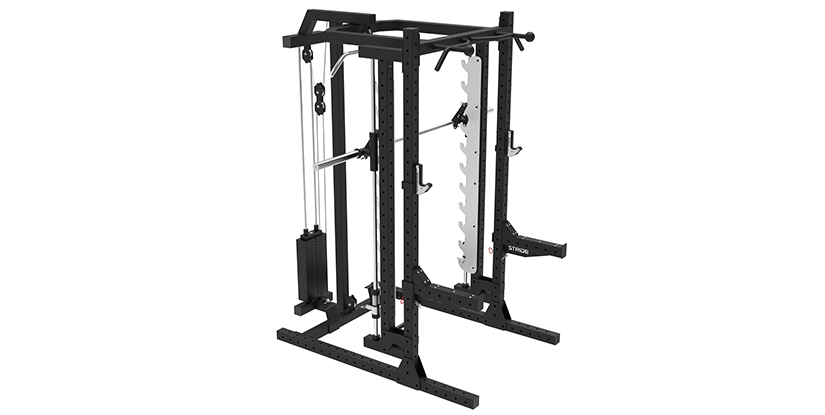
In boutique fitness environments, every square foot represents potential revenue. Optimizing a boutique gym layout requires balancing high-density training zones with unobstructed traffic flow. A strategically selected small squat rack allows operators to offer heavy compound movements without the massive footprint of traditional power cages, directly increasing the revenue per square foot.
When sourcing space-saving gym gear, procurement managers must look beyond initial unit costs. The true ROI is found in the intersection of commercial durability and spatial efficiency. High-quality, compact steel structures reduce the long-term cost of ownership by minimizing replacement cycles while maximizing the number of functional training stations available to paying members.
| Configuration Type | Spatial Efficiency | Durability Expectation | Long-Term ROI Profile |
|---|---|---|---|
| Standard Full Power Rack | Low | Very High | Stable, but high footprint cost |
| Compact Small Squat Rack | High | High | Optimal for high-traffic boutique studios |
| Wall-Mounted Folding Unit | Maximum | Moderate | Best for multi-use, low-frequency zones |
Selecting the appropriate model depends heavily on your specific facility constraints and the expected frequency of heavy loading. While a standard full cage offers maximum safety, its massive footprint often creates dead zones in smaller facilities. Conversely, specialized compact strength equipment provides the necessary structural integrity for heavy compound lifts while maintaining a lean profile that preserves client circulation space.
Configuration Comparison for Procurement Decisions
| Equipment Configuration | Footprint vs. Functionality | Maintenance Requirements | Investment Level |
|---|---|---|---|
| Semi-Compact Squat Rack | Balanced; high utility for heavy lifting | Standard; periodic bolt tightening | Moderate (Mid-range) |
| Wall-Mounted Folding Rack | Minimal; maximizes floor availability | Higher; requires regular hinge inspection | Low to Moderate |
| Modular Multi-Station Rack | Variable; high density of features | Complex; more moving parts/attachments | High (Premium) |
For distributors and gym owners, the goal is to minimize the Total Cost of Ownership (TCO). A small squat rack with a robust steel gauge and high-quality powder coating will demand less frequent part replacements and lower labor costs for upkeep. When evaluating wholesale options, prioritize configurations that offer modular attachment points; this allows for future upgrades without the need to replace the entire structural frame, ensuring a longer lifecycle for your capital investment.
Total Cost of Ownership and Global Sourcing Strategy
A smart procurement decision extends far beyond the initial invoice. To ensure long-term value, distributors must scrutinize factory-level quality control and the structural integrity of the steel gauge used. While cheaper alternatives may offer a lower entry price, they often fail under high-frequency commercial use, leading to increased maintenance and premature replacement.
Prioritizing long-term durability through high-grade welding and precision-engineered components minimizes the frequency of service calls. Furthermore, optimizing logistics by selecting modular designs can significantly reduce shipping volumes and container costs. For businesses scaling their inventory, selecting a small squat rack with standardized attachment points ensures capacity optimization, allowing you to expand functionality without the high cost of full equipment turnover.
Structural Integrity and Load Capacity in Space Saving Gym Gear
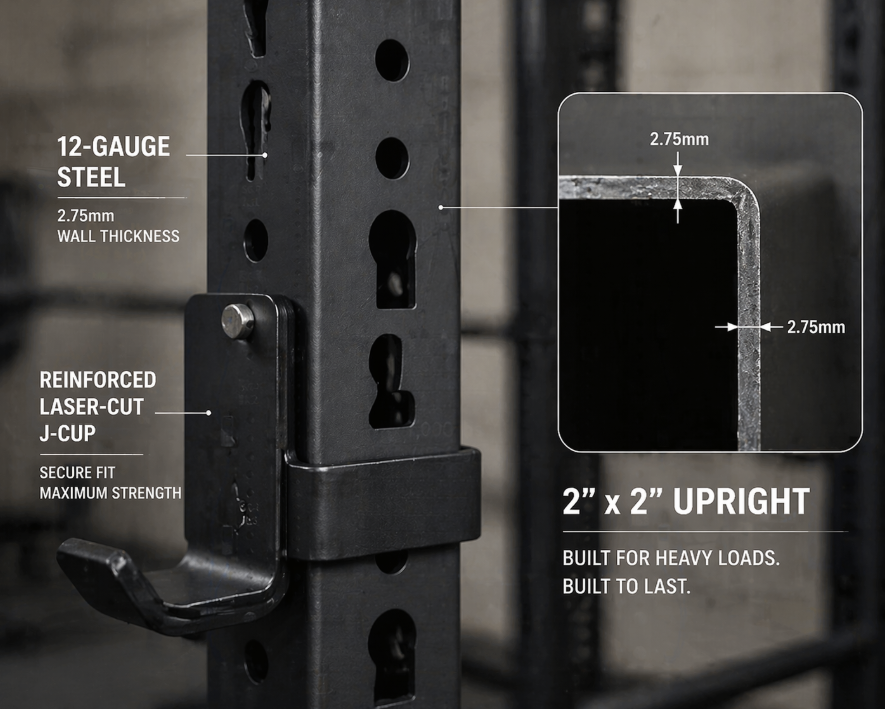
When sourcing a small squat rack for high-traffic environments, procurement managers often worry that reduced dimensions equate to reduced strength. However, in a professional boutique gym layout, stability is a product of engineering rather than sheer footprint. High-quality units prioritize high-gauge commercial-grade steel to ensure that a compact profile does not compromise user safety or equipment longevity.
The critical metric for distributors to evaluate is the footprint vs. stability ratio. A well-engineered rack utilizes reinforced base plates and heavy-duty uprights to maintain a rigid center of gravity, even when the total surface area is minimized. Choosing equipment with superior structural integrity ensures a higher return on investment, as these units can withstand the rigorous, repetitive loading typical of boutique studios without structural fatigue or wobbling.
Distinguishing between consumer-grade models and professional-grade equipment is essential for long-term durability. While residential units may offer a smaller footprint, they often lack the thickness required to handle the high-frequency use and heavy barbell impacts found in commercial settings. For distributors and facility managers, verifying the steel gauge and powder coating specifications is the most reliable way to prevent premature wear and structural failure.
| Specification | Residential/Home Grade | Boutique/Commercial Grade |
|---|---|---|
| Steel Gauge | 11–14 Gauge | 7–9 Gauge (High-Density) |
| Powder Coating | Basic Electrostatic | Anti-Scratch / High-Durability Industrial |
| Weight Capacity | 300–500 lbs | 600–1,000+ lbs |
| Typical Use Case | Personal Use / Low Frequency | Studio Classes / High-Traffic Training |
Investing in higher-gauge steel provides a significant advantage in total cost of ownership. Even though the initial procurement cost per unit is higher, the increased weight capacity and resistance to oxidation ensure the equipment remains a stable asset in a compact space saving gym gear setup for many years.
Quality Control and Logistics for Global Sourcing
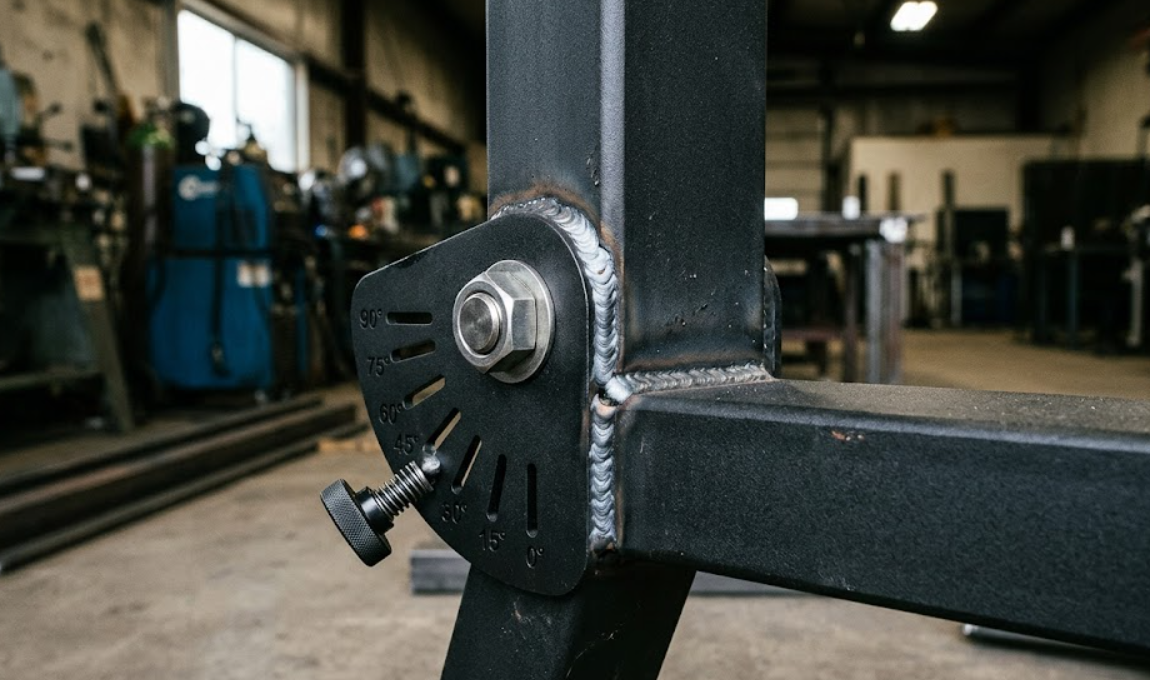
Ensuring long-term durability requires moving beyond basic weight capacity to inspect manufacturing precision. For distributors sourcing space saving gym gear, technical scrutiny of the welding quality is non-negotiable. High-quality commercial units should feature seamless, full-penetration welds rather than spot welds to prevent stress fractures under heavy barbell impact. Additionally, verify the powder coating thickness; a multi-layered industrial finish is vital to prevent chipping and oxidation in high-moisture boutique environments.
Logistical planning is equally critical for maintaining a high ROI. When negotiating MOQ considerations, demand clear documentation regarding shipping stability and packaging standards. Compact equipment can be prone to dimensional shifting during long-haul maritime transit. Ensure the factory utilizes reinforced, high-density foam corner protection and heavy-duty corrugated boxing to mitigate transit vibration. Proper palletization protocols prevent the structural misalignment that often plagues lower-tier imports, ensuring your inventory arrives ready for immediate installation.
Balancing Unit Price with Total Cost of Ownership
When sourcing a small squat rack for a boutique gym layout, procurement managers often face a deceptive pricing trap. While lightweight, residential-grade models offer a lower initial invoice, they frequently fail under the high-frequency usage typical of commercial studios. This discrepancy significantly impacts the total cost of ownership (TCO) through premature wear and replacement cycles.
| Feature Metric | Residential-Grade Sourcing | Commercial-Grade Sourcing |
|---|---|---|
| Initial Unit Cost | Low / Budget-friendly | Moderate / Premium |
| Steel Gauge & Coating | Thinner gauge; basic powder coat | Heavy-duty gauge; high-abrasion resistance |
| Maintenance Cycle | High frequency (part replacement) | Low frequency (periodic inspection) |
| Long-term ROI | Lower (due to depreciation) | Higher (extended asset lifespan) |
Investing in commercial-grade durability ensures that your compact strength equipment remains a stable asset rather than a recurring expense. For distributors and facility owners, prioritizing structural integrity over the lowest possible MOQ or unit price mitigates the risk of downtime and maintains professional standards in high-end boutique settings.
Evaluating Sourcing Models: Factory Direct vs. Local Distribution
Decision-makers must weigh the immediate savings of direct manufacturing against the logistical ease of regional distribution. While importing compact strength equipment directly can significantly lower the per-unit cost, it requires a higher degree of internal resource allocation for inventory management and customs clearance.
| Procurement Factor | Direct Factory Sourcing | Local Distributor Model |
|---|---|---|
| Typical MOQ | High (Bulk containers) | Low (Single units or small batches) |
| Shipping Costs | Lower per unit (LCL/FCL) | Higher (Domestic freight/last mile) |
| Lead Times | Long (Production + Ocean freight) | Short (Immediate local dispatch) |
| QC Oversight | Requires 3rd-party inspection | Managed by distributor/local standards |
For boutique studios requiring immediate inventory for a new launch, the local distributor model offers agility. However, for expanding franchises or large-scale gym operators, direct factory procurement offers the best economies of scale for space-saving gym gear lineups.
Selecting high-quality, space-saving gym gear is not merely a footprint decision; it is a capital allocation strategy. By investing in versatile, multi-functional units, studio owners can maximize the utility of every square foot while reducing the frequency of maintenance cycles. This approach stabilizes the ROI for studio owners by preventing the rapid depreciation common in low-end equipment. Opting for premium compact strength equipment ensures that your initial procurement costs translate into long-term operational stability, rather than constant hardware upgrades and technical downtime.
Optimizing Client Traffic Flow Through Intelligent Rack Placement
Efficient floor plan management in boutique environments requires a strategic approach to equipment footprint. Selecting a small squat rack is not merely about reducing square footage; it is about optimizing the relationship between heavy strength stations and the surrounding client movement zones to ensure a seamless training experience.
In a high-end boutique gym layout, the density of equipment must never compromise the perceived luxury of the space. While compact strength equipment allows for more specialized zones, distributors and facility managers must account for safety clearance. A rack that fits the dimensions but restricts the ability of clients to walk safely around the loading area can create bottlenecks, negatively impacting the facility's operational flow and user satisfaction.
When sourcing space saving gym gear for high-density facilities, procurement managers must decide between perimeter-focused or centralized distribution. The choice dictates how effectively your clients move through the facility and how much "dead space" remains in your inventory footprint.
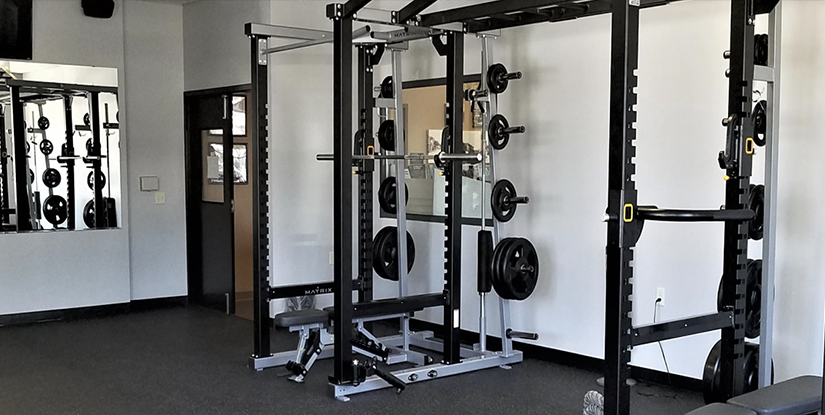
Placement Strategy Comparison
The following comparison highlights how different configurations impact both the immediate floor area and long-term facility utility. Choosing the right layout depends on whether your goal is to maximize open floor space for group classes or to create dedicated strength zones.
| Placement Strategy | Primary Advantage | Traffic Flow Impact | Ideal For |
|---|---|---|---|
| Perimeter (Wall-Facing) | Maximizes central floor area | Clear, unobstructed walkways | Multi-use boutique studios |
| Centralized (Island) | Creates distinct training zones | Higher density; potential bottlenecks | Specialized strength training gyms |
| Modular (Flexible) | Highest adaptability | Controlled, intentional movement | High-turnover training facilities |
For distributors supplying high-end studios, recommending perimeter-based compact strength equipment often yields better client satisfaction by preventing the "cluttered" look. However, centralized layouts may offer higher ROI in pure strength-focused environments where equipment density is the primary draw.
Mandatory Dimensions and Safety Zone Standards
Before finalizing any purchase order, verify that your selected small squat rack adheres to strict commercial gym standards regarding clearance zones. It is insufficient to only measure the equipment's physical footprint; you must account for the total functional area. A standard procurement checklist should include a minimum 36-inch buffer zone around the loading area to prevent collisions with passing clients or nearby amenities.
To achieve true footprint optimization, assess the height clearance for overhead movements and the depth required for barbell rotation. For international distributors and facility managers, ensuring these safety margins are integrated into the initial floor plan prevents costly logistical errors during the installation phase and maintains high operational safety standards.
Preventative Care for High-Density Layouts
In a compact boutique gym layout, equipment density often leads to accelerated wear patterns. Because a small squat rack in these environments typically serves a higher volume of clients per square foot, the structural integrity of adjustment pins, uprights, and load-bearing components must be monitored more frequently than in standard commercial settings.
High-traffic wear is a predictable variable in specialized studios. When floor space is optimized, the frequency of barbell contact and weight plate transitions increases, making commercial-grade durability a non-negotiable procurement standard. Distributors should prioritize units with high-quality powder coatings and reinforced steel to mitigate the long-term maintenance costs associated with constant use in tight, high-output environments.
Technical Maintenance Comparison: Folding vs. Fixed Units
Choosing between a folding rack and a fixed compact rack involves a trade-off between space-saving utility and long-term upkeep. While folding mechanisms offer maximum floor ROI, they introduce additional mechanical moving parts that require a more rigorous inspection schedule to ensure safety and operational longevity.
| Maintenance Factor | Folding Small Squat Rack | Fixed Compact Rack |
|---|---|---|
| Primary Focus | Pivot points & hinge tension | Bolt torque & upright stability |
| Lubrication Needs | High (Monthly for wall brackets/hinges) | Low (Annual for weight pin movement) |
| Structural Checks | Wall mounting bracket integrity | Base plate & upright bolt tension |
| Surface Integrity | High scrutiny on hinge contact areas | Standard powder coating inspection |
For distributors and facility managers, understanding these requirements is essential for calculating the Total Cost of Ownership (TCO). Fixed units generally offer a lower maintenance overhead, whereas folding systems, while superior for space-saving gym gear requirements, demand consistent attention to lubrication and mounting hardware to prevent mechanical fatigue.
Optimizing TCO Through Structured Inspection Cycles
To secure a high long-term ROI, facility managers must implement a rigorous preventative maintenance schedule tailored to their specific volume. While space saving gym gear optimizes your footprint, it does not reduce the mechanical load. We recommend establishing quarterly inspection cycles to check bolt torque, upright alignment, and pin friction. For high-output boutique studios, scheduling professional servicing annually can mitigate the risk of structural fatigue, ensuring that your compact strength equipment remains a durable asset rather than a recurring replacement cost.