Foldable Gym Rack | Maximizing Small Gym Floor Space With
Optimizing Inventory Turnover and SKU Breadth for Distributors
Distributors supplying boutique studios or urban fitness centers often struggle with high carrying costs due to the bulky dimensions of traditional strength equipment. Integrating a foldable gym rack into your catalog offers a strategic advantage by addressing the demand for high-density, space-saving strength equipment without expanding your physical footprint.
Reducing Warehousing and Logistics Overhead
The primary economic benefit lies in the reduction of the warehouse footprint. Unlike static heavy-duty racks that occupy permanent floor slots, collapsible units can be nested or stacked during transit and storage. This capability significantly improves SKU density, allowing distributors to stock a wider variety of specialized training stations within the same square footage. By optimizing the volume-to-value ratio, you can increase inventory turnover and reduce the capital tied up in stagnant, oversized freight, ultimately improving your overall logistics ROI.
TCO Analysis: Standard vs. Collapsible Weight Training Stations
When evaluating long-term profitability, distributors must look beyond the initial unit price. A total cost of ownership (TCO) model reveals that the true value of a foldable gym rack is found in its impact on indirect costs. While static racks may have lower upfront manufacturing complexity, the logistical friction they create can erode margins during transit and final-mile delivery.
| Metric for Evaluation | Standard Weight Training Stations | Collapsible Weight Training Stations |
|---|---|---|
| Shipping Volume (CBM) | High (Fixed Dimensions) | Low (Compact/Nested) |
| Storage Costs | Substantial Floor Space Required | Minimalized via Vertical/Stackable Storage |
| Assembly Time | Standard/Predictable | Variable (Depends on Hinge/Latch Design) |
| Logistics Efficiency | Lower SKU Density per Container | High SKU Density per Container |
| Long-term ROI | Stable for Permanent Facilities | High for High-Traffic & Multi-Use Layouts |
For B2B buyers, selecting collapsible weight training stations allows for a more agile facility layout. This agility translates directly into higher revenue per square foot, as the equipment can be retracted to accommodate different training modalities or high-traffic throughput during peak hours.
Balancing MOQ with Mechanical Durability
When sourcing a foldable gym rack, procurement managers must balance a low MOQ against the risk of mechanical failure. While smaller orders reduce initial capital exposure, the complexity of folding mechanisms requires rigorous quality control. Rapid-turnover products in a compact commercial gym layout face higher wear on pivot points and latches. To prevent high return rates, ensure your factory provides stress-test documentation for all moving parts. Prioritizing mechanical durability over the lowest unit price safeguards your reputation and ensures long-term logistics efficiency throughout the product lifecycle.
Maximizing Square Footage ROI in Boutique Studio Layouts
In high-rent urban markets, every square foot must generate revenue. For boutique studio owners, the primary challenge is balancing equipment density with client movement. Integrating a foldable gym rack transforms fixed footprints into versatile zones, allowing facilities to pivot between heavy lifting sessions and open-floor functional training without permanent structural constraints.
Rather than viewing a foldable gym rack as a mere hardware expense, savvy procurement managers treat it as a high-yield asset. By utilizing space-saving strength equipment, studios can increase daily throughput by hosting multiple specialized classes in the same footprint. This optimization of the boutique studio layout ensures that square footage ROI remains high, even when the facility footprint is intentionally small or restricted.
Footprint Comparison: Fixed vs. Collapsible Configurations
When planning a compact commercial gym layout, the decision between stationary and mobile assets determines long-term capacity. Traditional power racks provide maximum stability but demand a permanent, non-negotiable floor area. In contrast, collapsible weight training stations allow for rapid reconfiguration, effectively reclaiming the central floor space during non-peak hours or for diverse programming.
| Configuration Type | Typical Footprint Impact | Operational Versatility | Ideal Use Case |
|---|---|---|---|
| Traditional Fixed Rack | High (Static) | Low (Fixed Zone) | Large-scale strength facilities |
| Foldable Gym Rack | Low (Variable) | High (Dynamic) | Boutique studios & high-traffic zones |
For distributors and facility planners, prioritizing collapsible weight training stations can bridge the gap between specialized training and multi-functional movement. This adaptability directly impacts facility throughput, enabling a single area to serve as a heavy lifting station in the morning and a yoga or HIIT space in the afternoon.
Durability Standards and Maintenance Realities
A common procurement concern involves whether a foldable gym rack can maintain commercial durability under heavy use. Unlike residential models, professional-grade collapsible units must utilize reinforced steel gauges and high-tolerance locking mechanisms to ensure structural integrity. High-traffic facilities require hardware that survives thousands of deployment cycles without mechanical fatigue.
From a TCO (Total Cost of Ownership) perspective, buyers should evaluate the maintenance cycle of moving parts. Reliable space-saving strength equipment utilizes heavy-duty pins and streamlined pivot points to minimize technical downtime. Selecting models with simplified, robust assembly ensures maximum deployment flexibility while reducing the long-term labor costs associated with frequent inspections or part replacements.
Structural Integrity and Load-Bearing Standards for Collapsible Systems
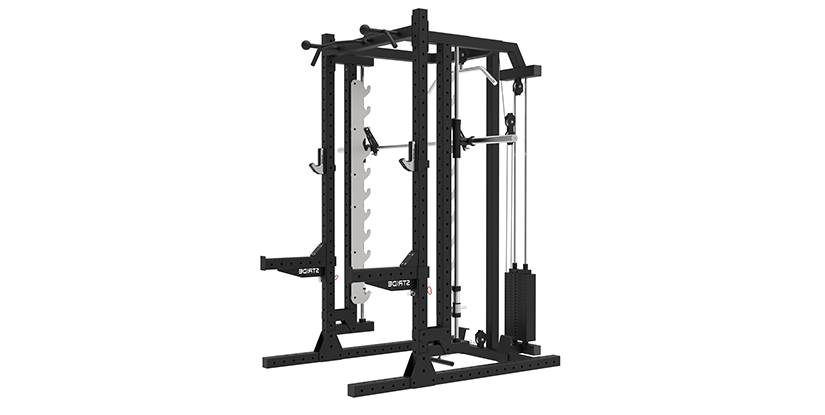
When sourcing a foldable gym rack for high-traffic environments, the primary procurement concern shifts from mere footprint reduction to long-term structural integrity. Unlike static racks, collapsible models introduce mechanical complexities that must withstand repetitive deployment and heavy load cycles without compromising safety or stability.
Reliable manufacturers prioritize heavy-gauge, commercial-grade steel and reinforced pivot points to ensure the unit remains rigid during peak usage. For distributors and facility managers, the durability of these moving parts determines the total cost of ownership and the frequency of maintenance interventions.
| Feature Factor | Standard Folding Models | Commercial-Grade Collapsible Systems |
|---|---|---|
| Steel Gauge | 11–14 Gauge | 7–10 Gauge Heavy-Duty Steel |
| Pivot Point Design | Single-pin hinge | Reinforced multi-axial locking mechanisms |
| Weight-Bearing Capacity | Moderate/Residential | High-capacity/Professional standard |
| Maintenance Interval | Frequent adjustments | Low-frequency/High-durability |
Successful procurement requires verifying that the foldable gym rack utilizes precision-engineered joints to prevent lateral sway. A high-quality unit must maintain its rated weight-bearing capacity even after hundreds of folding cycles, ensuring the equipment remains a safe asset for boutique studios and commercial training centers alike.
Evaluating Mechanical Deployment Systems
The choice between different folding mechanisms significantly impacts both daily operational speed and long-term maintenance costs. For high-volume facilities, selecting the right mechanism is a trade-off between ease of use and structural rigidity. Procurement managers should evaluate these options based on the specific traffic patterns of their facility.
| Mechanism Type | Deployment Speed | Load Stability | Maintenance Needs | Best Use Case |
|---|---|---|---|---|
| Pin-Lock | Moderate | Highest | Low (Annual Inspection) | Heavy Strength Training |
| Hydraulic | Fast/Smooth | Moderate | Medium (Fluid/Seal Check) | Boutique Studio Flow |
| Manual Fold | Slow | High | Minimal | Low-Traffic/Small Gyms |
When sourcing space-saving strength equipment, prioritize pin-lock systems if your client base focuses on heavy compound movements. While hydraulic systems offer smoother transitions for better throughput, they require more rigorous quality control during the manufacturing stage to prevent seal failure. Ultimately, the mechanical design dictates how effectively the rack supports your square footage ROI over a multi-year lifecycle.
Quality Control Protocols for Global Distributors
Distributors sourcing collapsible weight training stations must implement rigorous inspection protocols that go beyond aesthetic checks. A single failure in a moving joint can lead to significant liability and high return rates. When negotiating with factories, demand transparency regarding welding quality; ensure all load-bearing seams are fully penetrated and free of porosity. Inspecting the hinge durability through repetitive stress testing is non-negotiable to verify that the mechanism remains smooth and secure after hundreds of cycles.
Surface protection is equally critical for long-term durability. Verify the powder coating thickness using a micron gauge to ensure the finish can withstand heavy barbell impact and moisture without chipping. Furthermore, logistics-friendly packaging is a vital consideration for B2B buyers. High-density foam inserts and reinforced corrugated boxes are necessary to protect delicate pivot points and hinge mechanisms during ocean freight. When managing MOQ considerations, ensure that the manufacturer’s ability to maintain these strict QC standards remains consistent across smaller production runs to avoid high defect rates in high-density shipments.
Mechanical Complexity vs. Operational Downtime
When integrating a foldable gym rack into a high-traffic commercial gym layout, procurement managers must weigh deployment speed against long-term operational costs. While rapid transitions optimize floor utility, increased mechanical complexity often leads to more frequent maintenance cycles. Every hinge, locking pin, and pivot point represents a potential failure point that can cause equipment downtime.
For distributors and facility owners, the goal is to find a balance where the ability to quickly collapse the station does not compromise the structural integrity or the ease of routine inspections. High-quality mechanical components are essential to ensure that the speed of deployment does not result in increased labor costs or frequent replacement needs across your inventory.
Deployment Mechanism Comparison
Selecting the right mechanism is critical for calculating the Total Cost of Ownership (TCO). While manual systems offer simplicity, automated or assisted options may reduce user error in busy boutique studios. Evaluating these deployment types helps procurement specialists choose space-saving strength equipment that aligns with their specific labor availability and budget constraints.
| Mechanism Type | Maintenance Frequency | Primary Replacement Parts | Reliability Profile |
|---|---|---|---|
| Manual (Pins/Latches) | Low | Locking pins, pivot bolts | High; minimal moving parts |
| Hydraulic/Gas Spring | Moderate | Seals, hydraulic fluid/cylinders | Medium; sensitive to heavy usage |
| Electric/Motorized | High | Control boards, motor, wiring | Variable; requires electrical stability |
From a sourcing perspective, manual collapsible weight training stations typically offer the highest ROI for distributors due to lower warranty claim risks. In contrast, hydraulic or electric systems require more specialized technical support, which may increase long-term overhead for facility managers.
QC Standards and Long-Term Maintenance Protocols
To mitigate warranty risks, distributors must enforce strict QC inspection protocols on all moving parts before shipping. High-performance collapsible weight training stations require precise bolt tightening tolerances and regular lubrication of lubrication points to prevent friction-induced wear and tear. During bulk procurement, verify that logistics/shipping durability is sufficient to prevent misalignment of hinges during transit, as even minor shifts can compromise the folding mechanism's safety and smooth operation.
Evaluating Capital Expenditure vs. Long-Term Square Footage ROI
Procurement managers must weigh the initial capital expenditure (CAPEX) of premium space-saving strength equipment against the long-term revenue potential of the facility. While a standard stationary rack may have a lower upfront unit cost, a high-quality foldable gym rack offers a superior square footage ROI by reclaiming usable floor area during off-peak hours or multi-use programming.
In high-rent urban markets or boutique studio environments, the ability to transition a commercial gym layout from a heavy lifting zone to a functional training space is a critical competitive advantage. Choosing collapsible technology allows distributors and facility owners to increase member throughput without expanding their physical footprint.
Sourcing Models: Direct Factory vs. Local Distribution
Decision-makers must choose a procurement model that balances immediate availability with long-term margin optimization. While sourcing directly from a manufacturer maximizes unit-level savings, local distributors offer logistical advantages that can mitigate the complexities of international freight and storage.
| Sourcing Variable | Direct Factory Procurement | Local Distributor Model |
|---|---|---|
| Unit Cost | Lowest; maximizes margins | Higher; includes markup |
| MOQ | High; requires bulk orders | Low; suitable for small studios |
| Lead Time | Extended; includes ocean freight | Immediate; local stock availability |
| Logistics | Complex; buyer manages customs | Simplified; door-to-door delivery |
| Shipping Costs | High per-unit volume weight | Lower; optimized for small shipments |
For large-scale facility expansions or established retailers, direct factory sourcing provides the best economies of scale for high-density equipment orders. Conversely, boutique studios or single-location gyms often find greater value in the reliability and reduced administrative burden of a local distributor.
Managing Total Cost of Ownership and Quality Control
When sourcing a foldable gym rack, the lowest quote often masks high Total Cost of Ownership (TCO). In high-traffic environments, moving parts and folding mechanisms are subject to constant wear and tear. If the quality control during manufacturing is lax, the cost of maintenance and premature replacement will quickly outpace any initial savings.
To ensure a long-term investment, verify that the unit is strictly commercial grade. Inspect the hinge strength, locking pins, and powder coating durability. A robust collapsible weight training station must withstand heavy daily use without losing structural integrity or requiring frequent technician visits, protecting your facility's operational uptime.
Logistics and Cost Efficiency of Modular Designs
For international distributors, the true value of a foldable gym rack extends beyond the gym floor to the container manifest. Strategic modular design allows components to be nested or stacked more effectively, directly impacting the landed cost of a shipment by reducing the overall shipping volume per unit.
When sourcing space-saving strength equipment, procurement managers must evaluate the relationship between product dimensions and dimensional weight. A well-engineered collapsible unit reduces the volumetric footprint during transit, allowing for higher SKU density per container. This optimization minimizes freight expenses and mitigates the risk of high sea freight surcharges, ensuring a more predictable margin for B2B buyers and large-scale facility developers.
Evaluating Shipping Configurations: Pre-Assembled vs. Knockdown (Kd)
Choosing between pre-assembled units and modular kits depends on whether your priority is immediate deployment or minimizing long-term logistics overhead. While pre-assembled shipping reduces on-site labor, it significantly increases the volumetric footprint, often leading to higher freight costs and lower container density.
| Configuration Type | Freight Savings | Assembly Time | Warehouse Footprint | MOQ Considerations |
|---|---|---|---|---|
| Pre-Assembled Shipping | Low (High Volumetric Weight) | Minimal (Plug-and-Play) | High (Requires Large Area) | Lower (Ideal for Small Orders) |
| Knockdown (KD) Modular Kits | High (Optimized Nesting) | Moderate (Requires Tooling) | Low (Stackable/Compact) | Higher (Best for Bulk/Distributors) |
For distributors managing high-volume inventory, Knockdown (KD) modular kits offer superior ROI through improved container utilization and reduced warehouse storage needs. Conversely, for boutique studio projects with limited on-site technical staff, pre-assembled units may justify the higher freight premium by ensuring faster installation and reduced labor dependencies.
Mitigating Transit Damage and Ensuring Structural Integrity
The compact nature of collapsible weight training stations creates unique logistics challenges. High-density loading can lead to structural deformation if the shipment lacks rigorous QC inspection protocols. To prevent transit damage, procurement specialists must verify that the manufacturer employs reinforced protective packaging designed for heavy-gauge steel. Relying on distributor reliability and factory-level quality control ensures that critical pivot points and folding mechanisms remain intact upon arrival. This attention to detail prevents the high cost of returns and guarantees the structural integrity of the equipment for long-term commercial use.
Long-Term Lifecycle and Maintenance of Folding Mechanisms
To accurately calculate the Total Cost of Ownership (TCO), procurement managers must account for the specialized upkeep required by a foldable gym rack. Unlike static frames, these units feature high-wear mechanical pivot points that demand consistent oversight to ensure operational longevity.
Depending on the commercial usage frequency of your facility, establishing a standardized lubrication cycle is essential. Neglecting these intervals can lead to friction-induced wear, potentially compromising the structural integrity of the folding arms. For high-traffic boutique studios, we recommend a quarterly inspection of all hinges and locking pins to prevent mechanical fatigue and ensure the unit remains a reliable asset rather than a maintenance liability.
Evaluating Hinge Durability and Mechanical Specifications
Selecting the right mechanical interface is a critical decision for distributors and facility owners. The choice between different hinge configurations directly dictates the maintenance intensity and the expected service life of the equipment. While lightweight options may reduce initial shipping costs, they often lack the structural resilience required for intensive commercial cycles.
The following table compares common mechanical configurations to assist in your procurement planning and technical evaluation:
| Hinge/Mechanism Type | Maintenance Frequency | Wear Resistance | Ideal Use Case |
|---|---|---|---|
| Heavy-Duty Pin & Bolt | Bi-annually | High | High-traffic commercial gyms |
| Spring-Loaded Lever | Quarterly | Moderate | Boutique studios / HIIT centers |
| Manual Locking Pin | Monthly (Visual) | Very High | Strength-focused training facilities |
| Standard Friction Hinge | Monthly | Low | Light-duty residential/retail use |
For high-volume environments, prioritizing heavy-duty pin systems minimizes the risk of sudden mechanical failure. While these components may require a higher upfront investment, the reduction in long-term labor costs and replacement frequency provides a superior return on square footage ROI.
Quality Control Standards for Moving Components
When sourcing space-saving strength equipment, the most significant risk lies in the degradation of mechanical tolerances. To minimize operational downtime, procurement teams must enforce strict QC inspection of joints and pivot points during the factory audit phase. Specifically, verify the bolt torque stability across all folding arms to ensure that vibration from heavy lifting does not loosen critical fasteners over time.
From a distributor perspective, managing stock involves more than just unit volume; it requires ensuring that wear-and-tear prevention components, such as high-grade bushings and reinforced pins, are consistently used in every batch. Rigorous inspection protocols during shipment arrival will prevent the high replacement costs associated with premature mechanical fatigue in compact commercial gym layout configurations.