Selecting a Home Gym Rack for Diverse Training Programs
Vetting Manufacturers for High-Standard Home Gym Racks
For distributors supplying boutique fitness studios or high-end residential projects, the distinction between consumer-grade gear and professional-grade equipment lies in the engineering specifications. A reliable gym rack for home use must bridge the gap between compact footprint and commercial-grade structural stability to ensure long-term utility and user safety.
Prioritizing Material Grade and Structural Integrity
When vetting factory capabilities, procurement managers should prioritize the gauge of the steel used in the frame construction. High-quality units typically utilize a high-grade steel gauge (often 11-gauge or thicker) to prevent structural deformation under heavy loads. This thickness is essential for maintaining weight capacity consistency during high-intensity functional training or heavy compound lifts. Beyond the skeleton, the longevity of the investment depends on the finish; look for industrial-grade powder coating durability to resist scratches, oxidation, and the wear of constant attachment swaps.
| Specification Metric | Standard Home Grade | High-End/Commercial Standard |
|---|---|---|
| Steel Construction | Lightweight/Thin Gauge | Heavy-Duty High-Grade Steel |
| Coating Type | Basic Paint/Spray | Industrial Powder Coating |
| Load Stability | Variable/Low Capacity | Consistent Weight Capacity |
| B2B Compliance | Minimal Certification | Strict Manufacturing Standards |
To assist in your technical audit, the following table compares specific manufacturing standards. Distinguishing between these specifications is critical when determining whether a supplier's output is suitable for high-intensity programming or strictly entry-level residential use. Evaluating the welding method and steel thickness directly impacts the total cost of ownership (TCO) by reducing maintenance frequency and replacement needs.
| Technical Specification | Entry-Level/Home Setup | Premium/Commercial Standard |
|---|---|---|
| Steel Gauge | 14-gauge (Thinner) | 11-gauge (Thicker/Heavy-Duty) |
| Coating Type | Standard Spray Paint | Electrostatic Powder Coating |
| Welding Quality | Spot Welding | Full-Seam Continuous Welding |
| Typical Use Case | Light Strength Training | Diverse Functional Fitness |
When negotiating MOQs or reviewing factory quality control reports, ensure that the manufacturer can provide documentation regarding the welding techniques used on load-bearing joints. A transition from spot welding to full-seam welding significantly enhances the structural integrity required for diverse training programs.
Validating Quality Control and Long-Term Reliability
Beyond static material specs, a distributor’s long-term ROI depends on the manufacturer's rigorous QC protocols. Vetting a factory should involve more than just reviewing a catalog; you must confirm they perform regular stress testing on load-bearing uprights and adjustment mechanisms. This ensures the gym rack for home use maintains compatibility with various attachments—such as dip stations or pull-up bars—without compromising structural alignment over time.
A sophisticated supply chain partner will also provide data on maintenance cycles and component durability. For high-volume distributors, logistics reliability is just as critical as product toughness. Ensure the supplier has a proven track record of consistent shipping timelines and robust packaging standards to prevent transit damage. By verifying that a factory utilizes standardized testing for both structural fatigue and coating adhesion, you mitigate the risk of high return rates and protect your brand's reputation for quality in the competitive residential fitness market.
Assessing Structural Integrity and Load Capacity Standards
For distributors and high-end residential suppliers, the baseline for a premium gym rack for home depends entirely on the metallurgical specifications and welding quality. Unlike light-duty consumer models, professional-grade units must prioritize structural stability to handle dynamic loading during high-intensity movements. When evaluating factory capabilities, the primary indicator of long-term utility is the steel gauge used in the uprights and crossmembers.
A reliable gym rack for home typically utilizes 11-gauge steel (approximately 3mm) to ensure the frame remains rigid under heavy barbell loads. Lower-grade 14-gauge or 16-gauge steel may suffice for light calisthenics, but it lacks the necessary weight capacity for serious strength training or heavy barbell work. For procurement managers, verifying these specifications is essential to prevent frame deflection and ensure the equipment meets the rigorous demands of diverse training programs.
To optimize your inventory selection, you must differentiate between static load capacity and the dynamic stability required for functional movements. A rack designed solely for heavy lifting may lack the attachment points needed for varied programming, whereas a highly versatile rack must maintain structural rigidity despite multiple accessories being attached.
| Steel Gauge (Thickness) | Typical Load Capacity | Primary Training Type | Equipment Compatibility |
|---|---|---|---|
| 11-Gauge (~3mm) | 350kg - 450kg+ | Heavy Bodybuilding / Powerlifting | High (Heavy Barbells, Dip Stations) |
| 14-Gauge (~2mm) | 200kg - 300kg | Functional Fitness / Cross-Training | Moderate (Pull-up Bars, Rings, Bands) |
| 16-Gauge (~1.5mm) | < 150kg | Light Calisthenics / Aerobics | Low (Basic Pull-up Bars) |
When sourcing for a premium home gym setup versatility, prioritize 11-gauge steel for any model intended for heavy barbell work. For distributors catering to the burgeoning functional fitness market, 14-gauge steel often provides a more cost-effective balance, allowing for a wide range of strength training equipment compatibility without the excessive weight of full commercial power racks.
Durability Indicators and Surface Protection
Beyond steel thickness, the longevity of a premium gym rack for home is defined by its manufacturing precision and surface treatment. High-quality welding quality is a non-negotiable standard for distributors; look for smooth, continuous fillet welds rather than irregular, porous beads. Poor welding not only compromises structural integrity during dynamic loading but also increases the risk of metal fatigue over time, which is a significant liability for high-turnover residential or boutique studio settings.
Furthermore, the durability of the finish determines the long-term maintenance requirements. A high-grade electrostatic powder coating is essential to prevent oxidation and scratches from barbell impact. This coating protects the metal from moisture and sweat, ensuring the frame remains a stable asset for years. For clients prioritizing functional fitness rack features—such as attachment points for rings or heavy resistance bands—the coating must be resilient enough to withstand constant friction and hardware adjustments without peeling or chipping.
Optimizing Program Versatility Through Attachment Compatibility
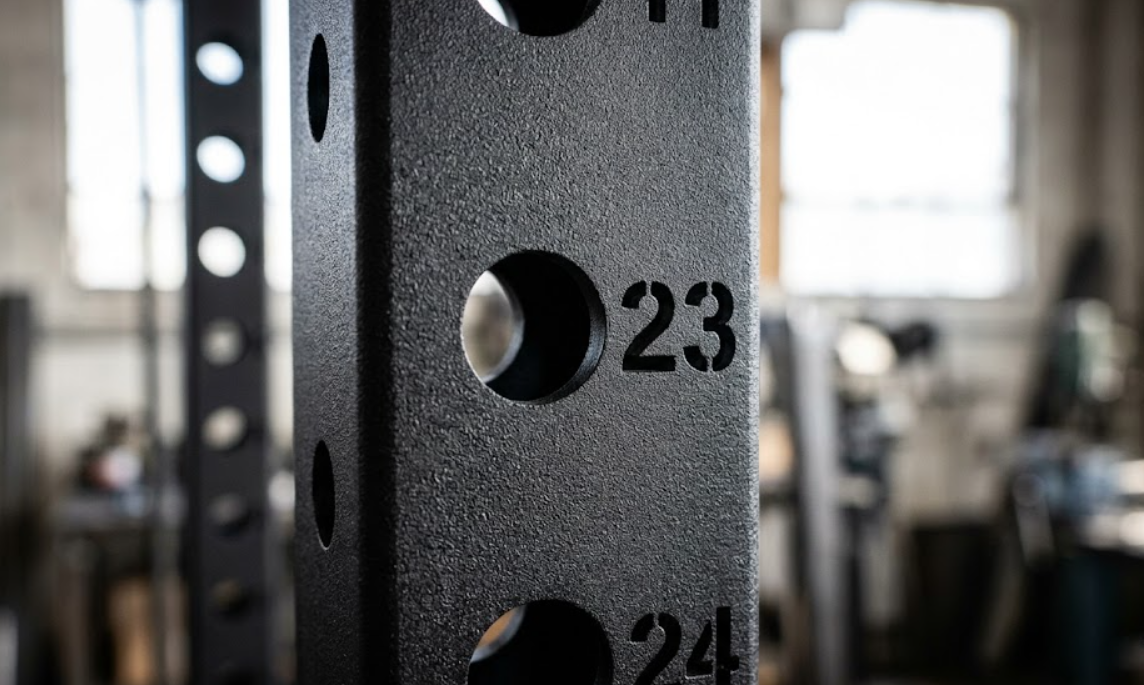
For distributors and facility managers, the value of a gym rack for home or boutique studio environments is determined by its capacity to evolve with user demand. High-quality functional fitness rack features, such as standardized hole spacing and robust mounting points, ensure the unit remains a center of activity rather than a static piece of steel.
Maximizing Long-Term Utility and Investment Protection
Prioritizing strength training equipment compatibility is a strategic move for investment protection. A rack that supports a wide array of pull-up bars, dip stations, and cable attachments offers superior versatility, allowing clients to transition from heavy lifting to metabolic conditioning without replacing the core structure. This adaptability increases the long-term utility of the asset, making it a more attractive SKU for retailers targeting high-end residential or small-scale commercial clients.
| Configuration Type | Attachment Options | Maintenance Needs | Procurement ROI Potential |
|---|---|---|---|
| Fixed Single-Function | Limited/Proprietary | Low | Short-term/Low |
| Modular Multi-Functional | Extensive/Standardized | Moderate | High (Long-term) |
| Advanced Hybrid System | Universal/High-End | Moderate/High | Highest (Premium Market) |
Evaluating the specific attachment interfaces is essential for determining the total cost of ownership. When sourcing a gym rack for home use, buyers must distinguish between basic structural support and integrated training systems that allow for rapid programming changes.
Technical Comparison of Attachment Modalities
The following comparison highlights how different attachment types influence the utility of the setup. For distributors, prioritizing racks with standardized 2-inch or 1-inch hole patterns ensures that end-users can easily source third-party accessories, increasing the product's market appeal.
| Attachment Type | Compatibility Requirements | Programming Versatility | Typical Use Case |
|---|---|---|---|
| Dip Bars & Pull-Up | Standardized upright mounting | Calisthenics & Bodyweight | Basic Strength/Home Studio |
| Landmine Systems | Heavy-duty base/pivot point | Rotational & Dynamic Loading | Functional Fitness/Athletic |
| Cable/Pulley Systems | Integrated weight stack/cable path | Isolation & Constant Tension | Complete Full-Body Training |
From a procurement standpoint, a modular system offering high compatibility provides a safer hedge against shifting fitness trends. While a cable-integrated system requires higher initial capital and more intensive quality control during shipping, it offers the highest value for clients seeking a single-station solution for diverse training modalities.
A critical procurement decision involves verifying the standardized hole spacing of the uprights. Relying on proprietary or non-standard spacing often leads to a dead-end investment where the user cannot expand their accessory ecosystem without purchasing expensive, brand-specific parts. For B2B buyers and distributors, sourcing units with industry-standard 1-inch or 2-inch spacing ensures scalability and long-term marketability.
B2B Sourcing Tip: Before finalizing a large-scale order, request a technical specification sheet that explicitly confirms the distance between hole centers. A rack that accommodates universal attachments reduces maintenance complexity and increases the perceived value of the home gym setup versatility. This foresight prevents the common issue of "obsolete hardware" when users attempt to upgrade their training programs.
Matching Rack Dimensions to Diverse Training Modalities
Successful procurement requires balancing the physical footprint of a gym rack for home against the intended utility of the space. Buyers must account for more than just the equipment's base dimensions; true spatial planning involves calculating the total clearance requirements for safe movement and accessory deployment.
Optimizing Footprint for Program Versatility
The relationship between a rack's size and its training capacity is a critical trade-off for distributors and facility managers. While a compact footprint maximizes available square footage, it can limit the scope of high-intensity functional fitness movements, such as lateral plyometrics or barbell cleans, which require significant lateral clearance. Conversely, a larger, heavy-duty structure optimized for bodybuilding may offer superior stability for heavy compound lifts but can create spatial constraints that hinder multi-user flow in smaller residential or boutique settings.
| Training Focus | Primary Dimension Concern | Required Clearance Type |
|---|---|---|
| Bodybuilding/Strength | Depth & Weight Plate Clearance | Unobstructed rear/side access for loading |
| Functional Fitness | Lateral & Vertical Volume | Wide radius for dynamic, multi-planar movement |
| Compact/Residential | Total Footprint Minimization | Strict adherence to predefined floor boundaries |
When sourcing for clients with limited square footage, understanding the structural differences between rack types is essential for managing expectations regarding strength training equipment compatibility. A mismatch between the desired training modality and the physical footprint can lead to operational inefficiencies or safety risks during high-intensity sessions.
Technical Comparison of Rack Formats
Distributors should evaluate the following specifications to ensure the selected gym rack for home models align with the end-user's specific training volume and spatial constraints. The choice between a full power rack and a more open design directly impacts the ability to integrate additional functional fitness rack features like pull-up bars, dip stations, or landmine attachments.
| Rack Type | Typical Width (in) | Typical Depth (in) | Typical Height (in) | Accessory Versatility |
|---|---|---|---|---|
| Power Rack | 48" – 54" | 48" – 60" | 84" – 96" | High (Internal attachment focus) |
| Half Rack | 42" – 48" | 40" – 50" | 80" – 90" | Medium (External/Front focus) |
| Squat Stand | 36" – 42" | 30" – 40" | 75" – 85" | Low (Minimalist/Base focus) |
From a procurement standpoint, while a power rack offers the highest level of home gym setup versatility through extensive attachment points, it demands the largest volumetric footprint. In contrast, squat stands offer maximum space-saving benefits for boutique distributors but may lack the structural rigidity required for complex, multi-accessory functional programming.
Calculating Total Operational Volume
Effective procurement goes beyond the metal footprint; it requires a precise calculation of the total operational volume to prevent logistics and installation failures. When sourcing a gym rack for home, buyers must account for the safety zone—the buffer required for a user to move freely without striking walls or furniture. This includes calculating the barbell clearance, ensuring the bar can rotate and be loaded without hitting structural obstacles. Furthermore, the diameter of weight plate diameter must be factored into the depth to prevent collisions during plate changes.
To ensure long-term home gym setup versatility, distributors should advise clients to include a 12-to-24-inch installation buffer around the entire unit. This space accommodates not only the physical movement of the lifter but also the installation of functional fitness rack features like wall-mounted pull-up bars or side-mounted storage racks. Failing to account for these dynamic dimensions often leads to costly returns or site-specific installation issues for the end-user.
Streamlining Logistics and Landed Cost Calculations
When sourcing a gym rack for home use at scale, procurement professionals must look beyond the unit price to calculate the true TCO. A low factory price can quickly become a liability if the shipping volume is inefficient or if unexpected assembly requirements inflate labor costs during local distribution.
Evaluating the Landed Cost
For distributors and large-scale importers, the landed cost represents the most critical metric for maintaining healthy margins. This calculation must account for the dimensional weight of the packaging, as heavy steel structures often incur high freight charges regardless of actual weight. High-density packing configurations reduce the total shipping volume per container, effectively lowering the cost per unit. Furthermore, consider the complexity of the assembly requirements; a rack that necessitates extensive onsite technical labor will increase the total cost of ownership for the end-user and increase your support overhead. Prioritize modular designs that balance structural integrity with streamlined, intuitive assembly to optimize both logistics and long-term value.
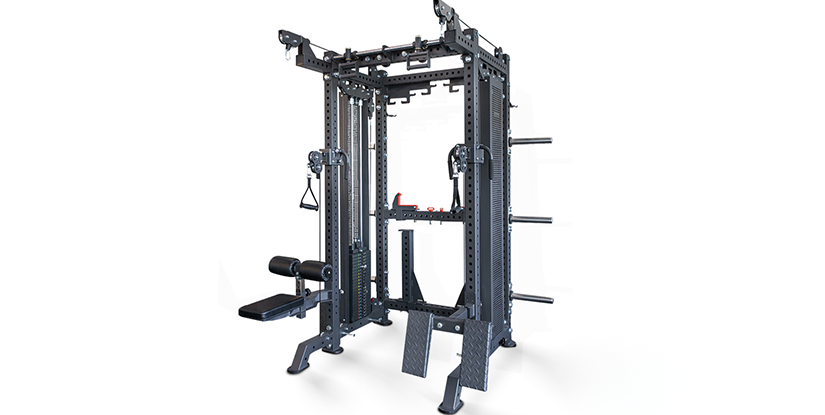
The choice between integrated power cages and modular systems directly influences your inventory turnover and customer satisfaction. While integrated units offer maximum stability, modular configurations provide superior home gym setup versatility, allowing end-users to expand their training capabilities as their budgets grow. From a procurement standpoint, understanding the trade-off between strength training equipment compatibility and shipping efficiency is essential for optimizing your SKU performance.
Configuration vs. Value Comparison
The following table outlines how different rack structures impact logistical overhead and long-term utility. When selecting a gym rack for home use, consider whether your target market prioritizes immediate out-of-the-box functionality or the ability to add specialized functional fitness rack features later.
| Configuration Type | Shipping Weight Class | Assembly Complexity | Long-term Utility |
|---|---|---|---|
| Integrated Power Cage | High (Heavy/Bulky) | Moderate | High (Specialized) |
| Modular Half Rack | Medium | Low to Moderate | Very High (Expandable) |
| Minimalist Squat Stand | Low (Compact) | Very Low | Moderate (Limited) |
For distributors managing high-volume orders, modular systems often present a more scalable business model. These systems allow for easier container loading and provide a pathway for recurring revenue through the sale of compatible attachments and accessories, ensuring the equipment remains relevant to evolving training programs.
Protecting Structural Integrity and ROI
A high-quality gym rack for home represents a significant capital investment for distributors and premium residential clients. To protect this investment, buyers must prioritize structural integrity through a disciplined preventative maintenance schedule. Neglecting basic upkeep can lead to premature wear and tear, potentially voiding warranties and compromising user safety.
Routine inspections should focus on two critical areas: mechanical stability and component fluidity. We recommend a quarterly protocol involving bolt tightening to ensure all load-bearing joints remain secure under heavy stress. Additionally, applying specialized lubrication to adjustable pulleys or sliding mechanisms prevents friction-induced damage. For distributors managing high-end residential installs, documenting these maintenance cycles helps justify the long-term value and durability of the equipment provided.
Technical Comparison of Rack Configurations and Lifecycle Costs
When sourcing for diverse training programs, the choice between a permanent structure and a space-saving model significantly impacts the total cost of ownership. While folding models offer high home gym setup versatility, they introduce more moving parts that require frequent oversight compared to static power racks.
| Feature/Requirement | Folding Wall-Mount Racks | Standard Power Racks |
|---|---|---|
| Maintenance Frequency | High (Monthly hinge/bracket checks) | Low (Quarterly bolt inspection) |
| Functional Fitness Rack Features | Limited attachment compatibility | High (Supports pull-up bars, dip stations) |
| Typical Warranty Scope | Focus on mounting hardware/hinges | Focus on frame and structural welds |
| Hardware Inspection Focus | Wall anchors and pivot points | Weight pin fit and J-cup stability |
From a procurement standpoint, distributors should verify if the manufacturer provides a comprehensive warranty that covers both the steel frame and the specialized functional fitness rack features. High-performance training environments often demand more robust hardware inspection protocols to ensure that high-use components, such as adjustable uprights, maintain precision and safety over time.
Standardizing Inspection Logs and Professional Oversight
To mitigate liability and ensure long-term asset management, professional distributors should implement standardized inspection logs. These documents serve as a vital record of quality control, tracking the condition of load-bearing uprights and attachment points. Regular documentation allows for the early identification of structural fatigue or metal stress, which is often invisible to the untrained eye but critical for maintaining high-end home gym setup versatility.
Beyond simple visual checks, a rigorous maintenance program must include scheduled hardware replacement. Over time, even premium steel components experience wear from repetitive loading. Proactively replacing worn weight pins, bushings, or tension cables prevents catastrophic failure and maintains the strength training equipment compatibility required for diverse training styles. Implementing these professional oversight standards ensures that the gym rack for home remains a reliable, long-lasting asset rather than a depreciating liability.