Evaluating Squat Rack Pull Up Bar Integration for Gyms
Long-Term Lifecycle and TCO of Integrated Pull Up Systems
For a high-volume commercial training facility or a regional gym franchise, the decision to source a high-grade squat rack pull up bar is rarely about the initial unit price. Instead, procurement managers must evaluate how a commercial pull up bar attachment functions as a long-term asset. A low-cost, poorly integrated component often leads to premature wear, increasing the frequency of maintenance cycles and disrupting facility uptime.
Prioritizing structural integrity during the initial purchase phase mitigates the risk of mechanical failure under heavy usage. When a pull-up system is engineered to match the load-bearing capacity of the primary rack, it transitions from a minor accessory to a durable capital investment. This approach ensures a higher long-term ROI by reducing the need for frequent replacements or specialized technician visits to address loose connections or structural fatigue.
| Procurement Factor | Standard Accessory Grade | Integrated Commercial Grade |
|---|---|---|
| Primary Cost Driver | Low initial CAPEX | Higher upfront investment |
| Maintenance Frequency | High (Frequent bolt tightening) | Low (Standard inspection) |
| Lifecycle Expectancy | 1–3 years in heavy use | 5+ years in heavy use |
| TCO Impact | High due to replacement labor | Low due to durability |
Analyzing Attachment Methods for Total Cost of Ownership
When calculating the total cost of ownership (TCO), buyers must distinguish between the upfront price of a single unit and the cumulative expense of replacement cycles. Different mounting configurations offer varying levels of squat rack accessory compatibility, which directly impacts both installation labor and long-term reliability. For distributors and large-scale gym operators, selecting the wrong mounting style can lead to hidden costs in the form of frequent shipping of replacement parts or high labor expenses for onsite adjustments.
The following comparison outlines how various mounting styles affect your annual budget and operational efficiency:
| Attachment Type | Initial Cost Profile | Durability Rating | Replacement Frequency | Est. Cost-Per-Year |
|---|---|---|---|---|
| Integrated (Built-in) | Premium | Highest | Very Low | Lowest |
| Bolt-On (Fixed) | Moderate | High | Low | Low-Mid |
| Modular (J-Cup/Pin) | Budget-Friendly | Moderate | Medium | Variable |
While modular systems offer maximum versatility for changing facility layouts, they often require more frequent inspection of the connection points to maintain gym equipment structural integrity. Conversely, integrated designs provide the most stable long-term solution for high-traffic strength zones, justifying the higher initial procurement outlay through significantly lower maintenance overhead.
Optimizing Logistics and Procurement Volume
Strategic sourcing extends beyond the technical specifications of the attachment to the efficiency of the supply chain. For distributors, managing squat rack accessory compatibility requires a keen understanding of how individual unit dimensions influence shipping weight and volume. Heavy, oversized pull-up components can significantly inflate landed costs if not optimized within the master carton configuration. To protect margins, procurement teams should prioritize suppliers who offer standardized packaging that maximizes container utilization.
Furthermore, evaluating MOQ considerations against your facility layout optimization goals is critical. While bulk ordering may lower the unit price, it also increases warehousing overhead and complicates inventory turnover. We recommend a tiered procurement strategy: secure high-volume, integrated units for core strength zones to minimize long-term maintenance, while maintaining a leaner stock of modular attachments for versatile training areas. Always verify that the manufacturer’s QC standards include rigorous testing for both component weight capacity and dimensional precision to ensure seamless integration during onsite assembly.
Verifying Squat Rack Accessory Compatibility for Commercial Loading
When sourcing for high-traffic gym environments, the connection between the main frame and a commercial pull up bar attachment determines the long-term utility of the unit. A mismatch in compatibility can lead to excessive vibration or localized metal fatigue, compromising the overall structural integrity of the rack during intensive use.
Load-Bearing Stability and Material Stress
A high-quality squat rack pull up bar must be engineered to handle not just static weight, but the dynamic, oscillating forces generated by athletes during kipping or muscle-up movements. For distributors and facility managers, verifying the gauge of the steel and the thickness of the attachment mounting points is critical. In professional settings, the weight capacity of the attachment should be clearly rated to ensure it aligns with the primary rack's load limits, preventing structural failure under heavy repetitive stress.
Evaluating Attachment Methods for Longevity
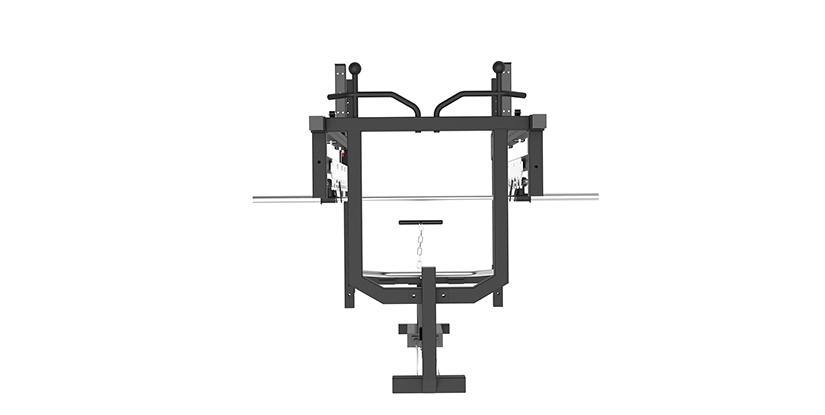
Procurement professionals must distinguish between attachment styles to balance installation speed with long-term durability. While slide-on options offer rapid deployment, bolt-on systems typically provide superior rigidity for high-intensity training. Selecting the wrong method can lead to increased maintenance costs or premature replacement cycles in a commercial setting.
| Attachment Type | Durability Rating | Installation Complexity | Stability Level | Typical Commercial Use Case |
|---|---|---|---|---|
| Bolt-on | High | Moderate | Excellent | Premium Strength & Conditioning Facilities |
| Slide-on | Moderate | Low | Good | Standard Commercial Gyms / Boutique Studios |
| Integrated | Maximum | High (Permanent) | Superior | Fixed Multi-Rack Systems / Specialized Training Centers |
For distributors managing large-scale rollouts, integrated or bolt-on configurations are often preferred to minimize the risk of loose connections. Although these require more technical oversight during the initial setup, they significantly reduce the frequency of onsite adjustments and ensure consistent performance under heavy loading.
Prioritizing Manufacturing Standards and Sourcing Rigor
To prevent systemic failures in a commercial rollout, buyers must look beyond basic specifications and audit the factory-level manufacturing quality. Precise squat rack accessory compatibility is not just about the fit, but the precision of the upright dimensions. Even a millimeter of deviation in the steel tubing or the mounting bracket can result in uneven weight distribution and premature wear on the powder coating.
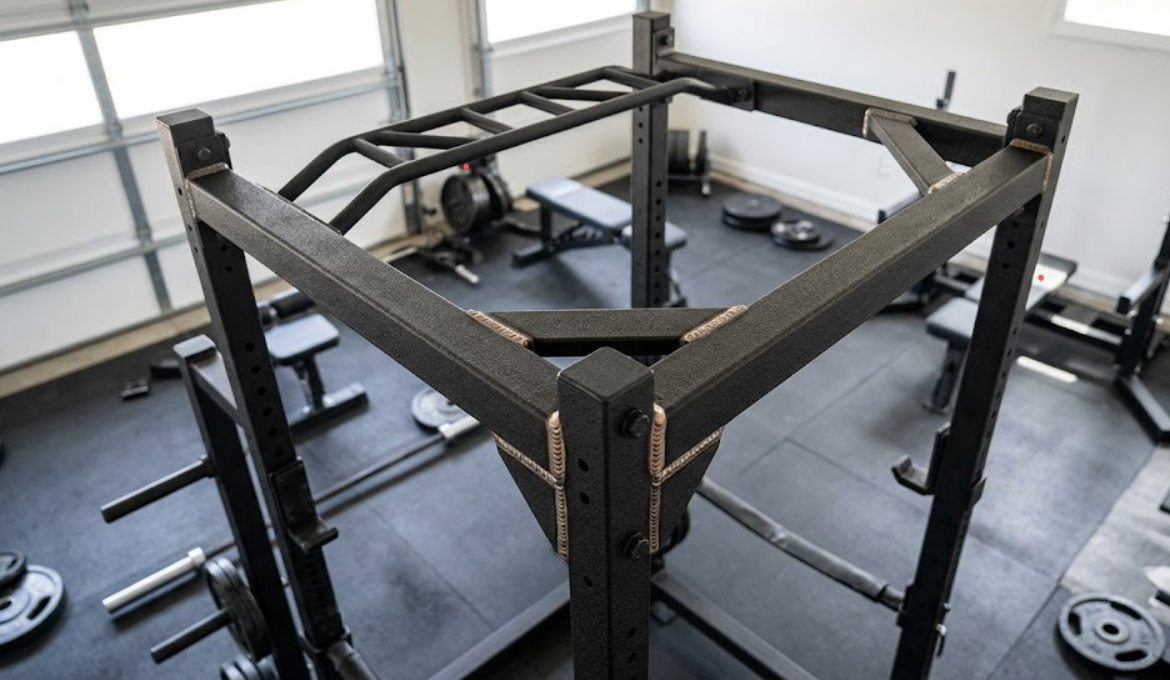
When negotiating with a distributor or overseas manufacturer, prioritize suppliers that demonstrate rigorous quality control regarding welding quality and finish consistency. Ensure the attachment points are fully welded or reinforced to prevent hairline fractures under high-frequency use. Additionally, consider the MOQ considerations when sourcing specialized attachments; while custom-engineered bars may require higher minimum orders, the reduction in long-term maintenance and the prevention of structural instability often justify the initial procurement investment for large-scale facility projects.
Structural Integrity Standards for Commercial Pull Up Bar Attachments
When sourcing for high-traffic gym settings, the durability of a squat rack pull up bar depends entirely on its ability to withstand dynamic loading. Unlike static weight placement, pull-up movements involve repetitive, oscillating forces that can compromise the structural stability of inferior components over time.
For distributors and facility managers, verifying the load-bearing capacity of a commercial pull up bar attachment is a critical step in mitigating liability and reducing long-term maintenance costs. A mismatch between the attachment's mounting system and the rack's frame can lead to metal fatigue or bolt shearing during peak usage hours. Quality control protocols must ensure that all welding points and connection interfaces are engineered specifically for the high-impact stresses common in commercial strength training environments.
Evaluating Attachment Methods for Long-Term Durability
Procurement decisions often hinge on the trade-off between versatility and rigidity. While adjustable models offer greater utility for diverse client programming, fixed configurations generally provide superior load distribution and higher resistance to structural sway. Understanding the technical distinctions between mounting styles is essential for managing total cost of ownership and minimizing onsite maintenance requirements.
When evaluating squat rack accessory compatibility, manufacturers typically utilize either permanent welding or precision bolt-on systems. Welded attachments offer maximum stability for high-intensity training but lack customization. Conversely, bolt-on systems allow for height adjustments and easier shipping, though they require periodic torque inspections to ensure gym equipment structural integrity remains intact under heavy dynamic use.
| Attachment Type | Primary Benefit | Maintenance Profile | Best Use Case |
|---|---|---|---|
| Fully Welded | Maximum rigidity/stability | Minimal; inspection only | Standardized commercial gyms |
| Bolt-On (Fixed) | High load capacity | Periodic bolt tightening | Mid-tier strength facilities |
| Adjustable/Modular | High versatility | Frequent hardware checks | Boutique or multi-purpose studios |
For bulk orders, we recommend prioritizing high-grade steel thickness and standardized bolt patterns. This ensures that the attachment can be seamlessly integrated into existing rack inventories without specialized tooling, simplifying the logistics of future facility expansions.
Material Standards and QC Benchmarks
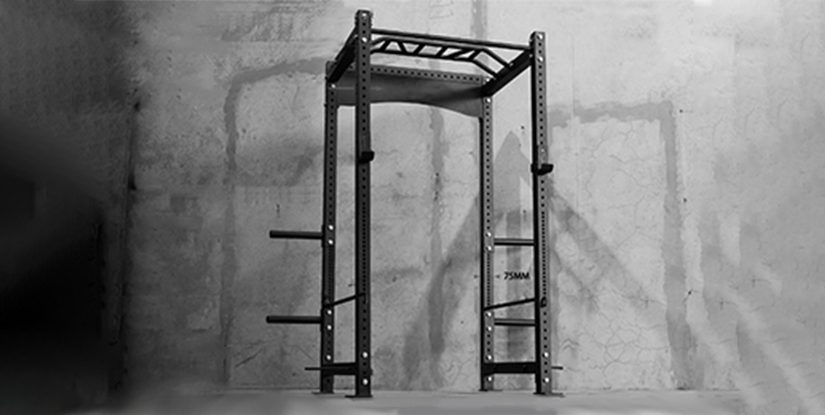
To safeguard your investment, move beyond surface-level aesthetics and demand specific technical documentation from your manufacturer. A high-quality squat rack pull up bar must be constructed from heavy-gauge steel to prevent bending under eccentric loading. We advise B2B buyers to verify the steel gauge—typically 11-gauge (approx. 3mm) or thicker for premium commercial applications—as thinner materials often fail during rigorous weight capacity testing.
Beyond the core metal, the surface finish dictates the long-term replacement frequency. High-grade powder coating durability is non-negotiable; it prevents oxidation and protects the steel from sweat-induced corrosion, which is common in high-humidity gym environments. When negotiating with a distributor or factory, request details on the coating process to ensure the finish can withstand the constant friction of grip changes and chalk usage.
A robust quality control checklist should include verification of the following:
- Steel Gauge Consistency: Ensuring uniform thickness across the entire length of the bar to prevent weak points.
- Weight Capacity Testing: Verifying the bar can handle both static hanging weight and the dynamic force of kipping movements.
- Coating Resilience: Confirming the powder coating resists chipping and maintains its grip properties under heavy use.
- Interface Strength: Checking that the attachment points match the rack’s upright dimensions for a seamless, rigid fit.
Standardizing Compatibility Verification for Bulk Orders
When managing high-volume shipments for distributors or large-scale facility rollouts, the procurement scope must extend beyond simple SKU counts to include rigorous compatibility verification. Ensuring that every squat rack pull up bar ordered matches the specific gauge and profile of your existing uprights is critical to preventing long-term structural fatigue and liability issues.
A common mistake in large-scale sourcing is failing to account for the slight variations in upright dimensions between different manufacturing batches. A commercial pull up bar attachment that fits one rack model may fail to secure properly on another, leading to microscopic wobbles that eventually compromise the structural integrity of the entire station. For distributors, specifying exact compatibility requirements in the purchase order—such as bolt diameter and flange thickness—is a mandatory quality control step to ensure long-term durability and safety in high-traffic commercial environments.
Evaluating Sourcing Models for Long-Term Maintenance
Distributors must weigh the trade-offs between direct-from-factory sourcing and utilizing local wholesalers when building a reliable inventory of rack accessories. The choice dictates not only your initial margins but also your ability to manage long-term maintenance oversight and technical support for end-users.
| Sourcing Model | Typical MOQ | QC Protocols | Logistics Stability | Maintenance Oversight |
|---|---|---|---|---|
| Direct Factory | High (Container-based) | Strict, batch-specific inspections | Longer lead times; higher shipping risk | Limited; relies on manufacturer documentation |
| Local Wholesaler | Low to Moderate | Pre-vetted by distributor | Rapid replenishment; local buffer stock | High; easier access to replacement parts |
While direct factory sourcing offers the best scale for high-demand squat rack accessory compatibility components, it requires a robust internal team to manage quality control and potential shipping delays. Conversely, local wholesalers provide a strategic advantage for distributors who prioritize rapid response times for replacement bolts, bushings, or specialized hardware, ensuring that a single faulty attachment does not halt a gym's entire training program.
Quality Assurance and Receiving Protocols
Maintaining gym equipment structural integrity requires more than just a reliable manufacturer; it demands a rigorous inspection protocol during the receiving stage. Even high-grade steel components can suffer from micro-fractures or warping during transoceanic transit if shipping damage prevention protocols are insufficient. Distributors should mandate that factories perform batch testing on a percentage of every production run to verify that weld strength and mounting bracket tolerances remain consistent across the entire shipment.
Upon arrival at the warehouse, implement a standardized distributor inspection checklist to mitigate the risk of stocking defective units. This process should include a physical audit of the attachment points for any signs of impact or oxidation, alongside a manual check of all hardware sets. Verifying that the bolt threads are pristine and that the mounting surfaces are perfectly flat ensures that the installation process remains seamless, preventing the structural instability that often results from improperly handled or damaged commercial attachments.
Common Procurement Pitfalls in Modular Attachment Selection
Distributors and facility managers often overlook the long-term operational costs associated with non-standardized components. Selecting a commercial pull up bar attachment that lacks precise fitment with your existing inventory can lead to significant downstream maintenance liabilities and increased total cost of ownership.
Structural Integrity and Fatigue Risks
The primary risk in high-traffic commercial settings involves the degradation of structural integrity due to suboptimal mounting points. When a squat rack pull up bar is not engineered for the specific gauge of the uprights, it creates uneven load distribution. This mismatch frequently results in loose connections that cannot be easily tightened without compromising the hardware. Over time, the constant kinetic energy from heavy users causes micro-shifts in the mounting position, leading to accelerated wear and tear on both the bolts and the rack's frame. For wholesale buyers, sourcing attachments that do not meet strict squat rack accessory compatibility standards often results in high return rates and damaged brand reputation among gym owners.
To mitigate these risks, procurement professionals should evaluate the trade-offs between different attachment architectures. The choice between fixed, adjustable, or modular systems dictates your long-term service intervals and the overall versatility of the equipment offered to your clients.
Attachment Type Comparison for Long-Term ROI
| Attachment Configuration | Maintenance Frequency | Durability Rating | Cost-Effectiveness |
|---|---|---|---|
| Fixed Mount | Low (Annual Check) | High | Highest (Low Unit Cost) |
| Adjustable Height | Moderate (Quarterly) | Medium | Moderate (High Versatility) |
| Modular/Multi-Use | High (Monthly) | Variable | Low (Higher Initial Investment) |
Fixed mounts offer the most stable profile for heavy-duty strength training, making them ideal for high-volume commercial facilities where reliability is paramount. Conversely, while modular systems provide greater utility for diverse training programs, they require more frequent inspections to ensure mounting hardware remains secure under repetitive load cycles. When sourcing for large-scale rollouts, prioritize fixed or high-grade adjustable options to minimize on-site technical support requests.
Standardized Inspection Protocols and Upkeep
To protect your long-term ROI, procurement teams must implement rigorous inspection protocols that go beyond visual checks. A routine maintenance schedule should prioritize bolt tightening on all load-bearing joints, as the kinetic vibration of heavy training sessions can naturally loosen hardware over time. During these audits, inspectors must also evaluate the coating integrity of the attachment. Scratched or chipped powder coating often signals the beginning of oxidation risks, particularly in high-humidity environments, which can eventually weaken the metal surface.
Ensuring constant squat rack accessory compatibility requires more than just checking the fit; it involves verifying that the mounting hardware has not suffered from material fatigue or thread stripping. For distributors managing large-scale inventory, providing clients with a clear maintenance checklist—focusing on bolt torque and surface finish—reduces the frequency of warranty claims and extends the functional lifespan of the equipment in the field.
Logistics and Quality Control for International Freight Orders
Managing the procurement of a high-volume squat rack pull up bar order requires a strict focus on the relationship between product weight and dimensional volume. For distributors, the primary challenge lies in balancing the heavy steel construction required for commercial durability with the logistical costs of international shipping.
Optimizing Shipping Density and Freight Costs
When sourcing a commercial pull up bar attachment in bulk, buyers must account for the discrepancy between actual weight and volumetric weight. Because these accessories are often heavy yet occupy significant non-stackable space, inefficient packaging can lead to inflated freight bills. To maintain healthy margins, work with manufacturers who prioritize freight optimization through nested packaging or compact modular designs. High shipping density is achievable only when the squat rack pull up bar dimensions are aligned with standard container loading patterns, reducing the cost per unit during long-haul transit.
Selecting the appropriate shipping method depends heavily on your total order volume and the specific weight of the accessories. For distributors managing inventory for large-scale gym rollouts, understanding the trade-offs between LCL and FCL is critical for maintaining a predictable Total Cost of Ownership (TCO).
Freight Method Comparison for Bulk Procurement
| Metric | LCL (Less than Container Load) | FCL (Full Container Load) |
|---|---|---|
| Typical Order Volume | Small to medium accessory batches | High-volume rack and bar shipments |
| Freight Cost Impact | Higher per-unit cost due to shared space | Lower per-unit cost via optimized density |
| Lead Time | Variable; dependent on consolidation schedules | Predictable; direct transit from factory |
| MOQ Considerations | Flexible for smaller boutique orders | Strict; requires full container utilization |
| Risk Management | Higher risk of handling damage in shared loads | Reduced risk; dedicated space for structural parts |
While LCL serves well for testing squat rack accessory compatibility within a smaller product line, FCL remains the standard for large-scale facility installations. When shipping heavy components like a commercial pull up bar attachment, FCL minimizes the physical handling of the steel, protecting the structural integrity and surface finish before it reaches your warehouse.
Prioritizing Structural Integrity via Pre-Shipment Inspection
To mitigate the risk of transit-induced defects, procurement managers must mandate rigorous packaging standards. Even a high-quality squat rack pull up bar can suffer from surface abrasions or structural misalignment if not secured against heavy vibration during sea freight. Implementing a formal pre-shipment inspection is a non-negotiable step in wholesale procurement to ensure that every component meets the specified tolerance levels before leaving the factory.
Effective damage prevention strategies involve more than just heavy-duty cardboard. For high-density steel accessories, specialized reinforced crates and edge protectors are essential to maintain gym equipment structural integrity. Verify that the manufacturer utilizes multi-layer protection—such as foam padding and moisture-resistant wraps—to prevent oxidation and impact damage. By enforcing these strict quality control protocols, distributors can significantly reduce the rate of returns and ensure that the equipment arrives ready for immediate commercial installation.