How to Choose the Best Flat Bench for Your Power Rack
Optimizing High-Traffic Training Zones and Floor Layouts
A high-quality flat bench is a foundational piece of home gym equipment designed to provide a stable, level surface for heavy compound lifts. Professional buyers prioritize these units because they offer the durability required for high-frequency training while maintaining a standardized profile that integrates seamlessly with structural racks.
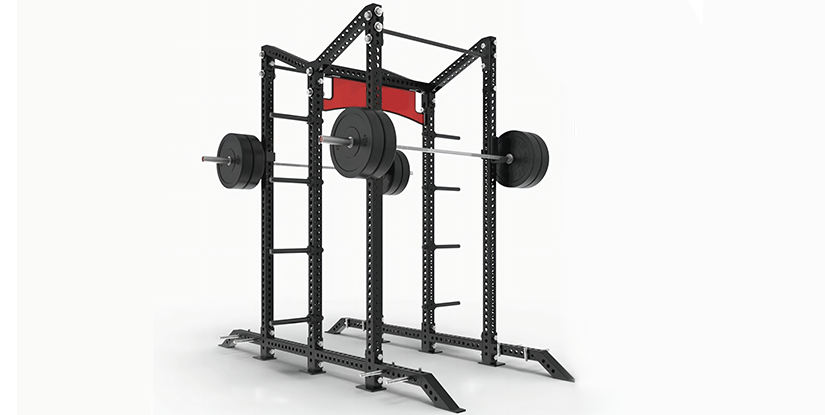
When sourcing the best flat bench for power rack integration, you must look beyond the upholstery and evaluate the total footprint. A common mistake in facility planning is overlooking the necessary clearance required for safe barbell paths. If the bench is too long or the frame is too wide, it may collide with the rack uprights during a heavy press, creating a dangerous bottleneck.
We recommend calculating the full movement range of the barbell before finalizing your order. A well-sized bench ensures that even when using an adjustable weight bench configuration, there is sufficient room for the lifter to transition without hitting the rack's structural components. This spatial awareness prevents training interruptions and ensures your layout remains efficient and professional.
Maximizing your square footage requires a strategic approach to equipment selection. Depending on your facility's layout, you may need to choose between a fixed-position bench for maximum stability or a more versatile model that offers higher mobility. For compact setups, selecting an adjustable weight bench can significantly increase the utility of your home gym equipment, allowing the same footprint to serve multiple training functions.
When evaluating your space requirements, consider how the bench interacts with your existing barbell training accessories, such as weight trees or landmines. A bench that can be easily moved or repositioned offers greater long-term value for multi-purpose training zones.
| Bench Type | Footprint Impact | Versatility Level | Ideal Use Case |
|---|---|---|---|
| Fixed Flat Bench | Consistent/Moderate | Standard | Dedicated power lifting stations |
| Adjustable Weight Bench | Variable/Larger | High | Multi-functional training zones |
| Compact/Mobile Bench | Minimal | Moderate | Small-scale or high-traffic layouts |
Ultimately, the best flat bench for power rack compatibility is the one that balances your available floor area with the necessary safety clearance for heavy barbell oscillations.
Beyond the immediate footprint, professional facility planners must prioritize safety zones to ensure long-term accessibility. A crowded floor layout can lead to tripping hazards or restricted movement during high-intensity sessions. We advise maintaining a buffer zone of at least 36 inches around your rack and bench to accommodate both the lifter and various barbell training accessories, such as plate trees or spotter arms.
Optimizing ergonomic spacing is not just about movement; it is about the flow of traffic within a training zone. When sourcing equipment, consider how the best flat bench for power rack setups interacts with nearby users. A layout that allows for easy passage around the training station ensures that high-traffic areas remain functional and safe, preventing bottlenecks during peak hours and maintaining a professional standard of operation.
Structural Compatibility and Safety Standards for Power Rack Integration
When integrating new gear into a high-performance setup, the most critical factor is the integrity of the build. A flimsy bench is a liability, especially when performing heavy compound movements. To identify the best flat bench for power rack use, you must look beyond the aesthetics and focus on the underlying heavy-duty steel construction. In a professional or high-end garage setting, the bench must act as a rigid foundation that does not flex or wobble under load.
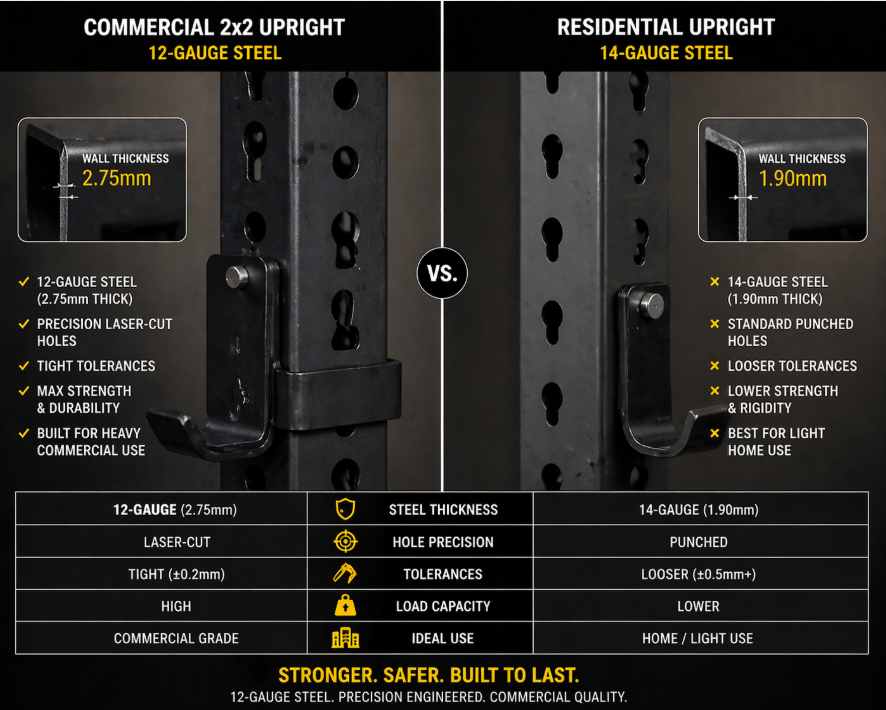
We recommend prioritizing a high steel gauge—typically 11-gauge or 7-gauge steel—to ensure maximum frame stability. This thickness is essential for maintaining structural integrity during intense sessions where weight increments are high. When sourcing barbell training accessories, always verify that the frame geometry is designed to sit securely within the rack footprint. A robust, thick-walled steel frame ensures that the bench remains a reliable partner for your heaviest lifts, providing the safety and durability required for long-term training.
Selecting the right configuration depends heavily on your specific training goals and the footprint of your existing setup. While a fixed bench offers unmatched stability, an adjustable weight bench provides much-needed versatility for diverse training programs. To help you decide which home gym equipment investment aligns with your needs, we have outlined the primary differences in the comparison below.
| Feature | Fixed Flat Bench | Adjustable Weight Bench |
|---|---|---|
| Stability | Maximum; ideal for heavy compound lifts | High; varies based on incline mechanism |
| Weight Capacity | Generally higher and more consistent | High, but limited by adjustment pins |
| Compatibility Dimensions | Fixed footprint; easier to fit in tight racks | Variable; requires clearance for movement |
| User Profile | Powerlifters focusing on heavy flat bench | General strength athletes and bodybuilders |
When sourcing the best flat bench for power rack integration, consider whether your space allows for the wider clearance often required by adjustable models. For those prioritizing pure, unyielding strength, a fixed bench remains the gold standard for durability.
Prioritizing Safety Standards and Surface Stability
Beyond the steel frame, true quality is found in the contact points. High-quality home gym equipment must adhere to strict safety standards to mitigate the risk of injury during heavy eccentric loading. A single point of failure in the surface can compromise an entire training session. For instance, thin or low-grade padding will quickly compress and lose its shape, leading to uneven weight distribution and potential spinal misalignment.
To ensure long-term reliability, look for benches utilizing high-density foam. This material maintains its resilience even under repeated heavy barbell use, providing a consistent lifting platform that won't bottom out. Furthermore, the structural integrity of the bench is only as effective as its grip on the floor. A premium non-slip base is non-negotiable; it prevents the bench from shifting or sliding during explosive movements or heavy sets. When evaluating your next purchase, ensure the footpads are engineered to lock into place, providing the unwavering stability required for elite-level strength training.
Evaluating Bench Stability for Heavy Barbell Training Accessories
When you are performing heavy compound movements, the slightest wobble can compromise your entire lift. To find the best flat bench for power rack integration, you must look beyond aesthetics and focus on the structural integrity of the frame. High-performance heavy barbell training accessories are only as reliable as the steel supporting them. A flimsy base creates a dangerous pivot point under load, which is why professional-grade equipment relies on high-gauge steel construction to maintain a zero-movement profile during maximum effort sets.
For distributors and gym owners, sourcing benches with a high weight capacity is a non-negotiable quality control standard. A bench that utilizes thin-walled tubing will inevitably fail under the stress of progressive overload. We recommend prioritizing a heavy steel gauge to ensure the bench remains a stable foundation within the rack footprint.
| Construction Feature | Standard Home Grade | Professional/Commercial Grade |
|---|---|---|
| Steel Gauge Thickness | Lower (Thin-walled) | Higher (Heavy-duty/Thick-walled) |
| Frame Stability | Moderate Wobble Potential | High Structural Integrity |
| Max Weight Capacity | Limited/Light Loads | Heavy Barbell Training Ready |
| Longevity Expectation | Short-term/Casual Use | Long-term/High-frequency Use |
Choosing between a fixed bench and an adjustable weight bench often comes down to a trade-off between stability vs. versatility. While a fixed flat bench offers a streamlined footprint and maximum rigidity for pure powerlifting, an adjustable model provides a wider range of movement for varied hypertrophy training. However, as you scale up your home gym equipment, you must ensure that the adjustment mechanisms do not become a structural weak point.
When selecting your setup, consider the following practical comparison to match your specific training intensity:
- Fixed Flat Benches: Ideal for heavy bench press specialization. These offer the highest load-bearing capacity and zero mechanical movement, making them the most stable option for high-intensity barbell work.
- Adjustable Weight Benches: Best for multi-purpose users. While they offer greater utility, ensure the pivot points are reinforced to prevent shifting during heavy eccentric phases.
Ultimately, the best flat bench for power rack compatibility depends on whether you prioritize a compact, indestructible base or a dynamic tool that evolves with your training program.
Beyond the steel gauge, long-term durability is determined by the fine manufacturing details that often go unnoticed during a quick inspection. To ensure your home gym equipment can withstand years of heavy use, we suggest scrutinizing the mechanical assembly. High-quality welding quality is the first line of defense; look for seamless, consistent beads rather than jagged or uneven joints, as these are the primary points of failure under high-tension loads. Even the most robust frame can become a liability if the connection points are weak.
Furthermore, the contact points between the bench and the floor are critical for vibration resistance. A premium setup should feature high-density non-slip feet to prevent micro-shifts during explosive movements. Finally, do not overlook the comfort and longevity of the padding. A high-grade adjustable weight bench should feature high-density foam with significant upholstery thickness. This prevents the "bottoming out" effect, protecting the user's spine and ensuring the internal structure remains shielded from moisture and sweat, which is essential for maintaining the lifespan of your barbell training accessories.
Versatility vs. Fixed Footprints in Commercial Home Gym Equipment
When designing a high-performance training area, the most significant constraint is often the physical footprint of your setup. Within the confined dimensions of a standard power rack, every inch counts. Buyers must decide between the rock-solid stability of a fixed-position bench and the multi-functional utility of an adjustable weight bench. While a fixed bench offers unparalleled structural integrity for heavy barbell work, it occupies a permanent space efficiency penalty because it cannot be repositioned or stored easily when not in use.
For many distributors and premium home gym equipment providers, the trend is shifting toward modularity. Choosing the best flat bench for power rack integration often means finding a middle ground where versatility meets durability. An adjustable model allows users to transition from flat presses to incline variations without needing additional barbell training accessories or extra floor space. If your facility or client has limited square footage, prioritizing a bench that offers high utility within a compact footprint is the most strategic way to maximize the value of the power rack setup.
To help you determine which configuration aligns with your specific floor plan and operational goals, we have summarized the primary differences below. Whether you are optimizing a garage setup or a professional studio, consider these variables before finalizing your procurement.
| Feature Factor | Fixed Flat Bench | Adjustable Weight Bench |
|---|---|---|
| Space Requirements | Permanent footprint; constant position. | Higher utility; can be repositioned. |
| Stability | Maximum; ideal for heavy barbell work. | High; slightly lower due to pivot points. |
| Mobility | Low; strictly fixed within the rack. | Moderate; easier to move for floor work. |
| Budget Range | Generally more cost-effective. | Higher initial investment. |
| Primary Use | Heavy, singular movements. | Diverse, multi-angle training. |
When sourcing barbell training accessories, remember that the best flat bench for power rack compatibility depends on your long-term training vision. If your priority is raw, unyielding stability for maximum loads, a fixed model is a reliable choice. However, if you aim to provide a comprehensive workout experience within a limited area, an adjustable option offers superior mobility and functional variety.
Prioritize Clearance and Movement Range
Beyond the footprint, the most critical factor in your power rack setup is the functional clearance. Even the most high-quality adjustable weight bench can become a liability if it interferes with the rack's structural components. Before finalizing your procurement, we highly recommend measuring the internal dimensions of your uprights and the specific movement range of the barbell during a lift.
A common oversight is failing to account for the "swing path" of the bar. If the bench is too long or the user's positioning is too close to the uprights, the barbell may strike the rack during heavy presses, compromising both safety and compatibility. To ensure the best flat bench for power rack integration, verify that there is ample room for the bar to travel freely without hitting the frame. This proactive measurement ensures a seamless training experience and prevents long-term wear on your home gym equipment.
Long-Term Maintenance and Upholstery Longevity
When sourcing the best flat bench for power rack integration, many buyers overlook the long-term impact of material degradation. In a high-use environment, the integrity of the padding is just as critical as the steel frame. Low-quality options often suffer from "bottoming out," where the internal padding loses its shape, or surface cracking due to poor upholstery durability. To ensure your investment survives years of heavy lifting, prioritize benches engineered with high-density foam. This specialized padding maintains its structural memory and support even under maximum load, preventing the discomfort associated with inferior home gym equipment.
Furthermore, the exterior must withstand the rigors of intense training sessions. We recommend selecting a bench wrapped in premium heavy-duty vinyl. This material provides essential sweat resistance, preventing moisture from seeping into the foam—a common cause of internal mold and structural decay. For distributors and gym owners, verifying these material specifications during the procurement process is the most effective way to minimize replacement costs and ensure long-term reliability for the end user.
Maintaining your adjustable weight bench involves more than just visual inspections; it requires consistent cleaning protocols to preserve the material integrity. For professional-grade setups, we suggest using a pH-neutral, non-abrasive cleanser to wipe down the surface after every session. Avoid harsh chemicals that can strip the protective coating, as this accelerates the wear on barbell training accessories and the bench itself. Regular checks for loose bolts or frame oxidation will also significantly extend your home gym equipment longevity, ensuring the unit remains a stable foundation for heavy compound lifts.
To help you decide on the right surface for your specific operational needs, consider the following comparison of common upholstery types:
| Surface Type | Usage Frequency | Maintenance Difficulty | Budget Tier | Ideal For |
|---|---|---|---|---|
| Standard Vinyl | Moderate | Low | Entry-Level | Residential Users |
| Heavy-Duty PU Leather | High | Medium | Mid-Range | Commercial Studios |
| Premium Synthetic Leather | Extreme | Low/Moderate | Premium/Pro | High-Traffic Gyms |
Choosing the best flat bench for power rack compatibility means balancing upfront costs with long-term upkeep. While premium surfaces demand a higher initial investment, their resistance to sweat and friction often results in a lower total cost of ownership over time.
Beyond the upholstery, protecting the steel foundation is essential for maintaining structural integrity. A high-quality bench is a long-term investment, but its lifespan depends heavily on how the metal components are treated. To prevent the common issue of preventing rust, we advise keeping the frame in a controlled environment with low humidity. If the bench is stored in a garage or a high-moisture area, even the best powder coating can eventually succumb to oxidation, compromising the stability of your barbell training accessories setup.
Regular frame lubrication is another critical step often missed by buyers. Periodically applying a light, non-abrasive lubricant to moving parts and pivot points ensures smooth operation and prevents mechanical seizing. For those sourcing home gym equipment for professional or resale purposes, emphasizing these maintenance habits can significantly increase customer satisfaction. By ensuring the steel remains pristine and the mechanical components are well-oiled, you guarantee that the bench remains a rock-solid, dependable partner for heavy lifting for years to come.
Maximizing ROI Through High-Quality Adjustable Weight Bench Selection
When building a professional-grade training environment, the temptation to cut costs with entry-level models can be high. However, from a procurement standpoint, the best flat bench for power rack integration is defined by its lifecycle value rather than its initial price tag. Opting for budget-grade alternatives often leads to premature wear, wobbling under load, and the eventual need for complete replacement, which disrupts training consistency and inflates long-term capital expenditure.
To ensure true long-term cost-effectiveness, focus on structural integrity. A premium adjustable weight bench utilizes heavy-duty steel construction designed to withstand high-frequency use and significant weight increments without deformation. By investing in equipment that prioritizes durability and precision engineering, you minimize maintenance downtime and avoid the hidden costs of frequent equipment turnover. High-quality barbell training accessories act as a foundational asset for your home gym equipment collection, providing a stable, safe platform that remains functional for years of rigorous barbell training.
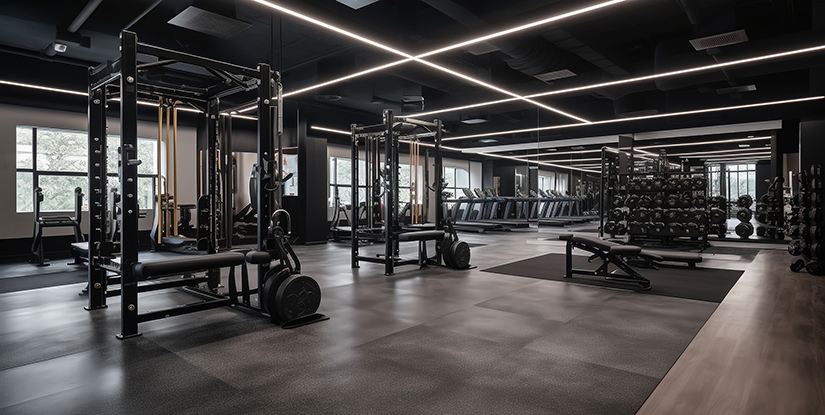
To visualize the long-term impact on your budget, consider the structural differences between consumer-grade and commercial-grade units. While an entry-level model may seem attractive for a low-cost setup, it often lacks the stability required for heavy compound movements. A professional-grade adjustable weight bench provides superior upholstery quality—utilizing high-density foam and reinforced stitching that resists tearing and sweat absorption—ensuring the piece remains a centerpiece of your home gym equipment for years.
The following comparison highlights why selecting the best flat bench for power rack compatibility is a strategic investment rather than a mere expense:
| Feature Dimension | Entry-Level Models | Professional-Grade Bench |
|---|---|---|
| Dimensions | Standard/Compact | Oversized/Reinforced |
| Weight Capacity | Limited/Moderate | High-Capacity/Industrial |
| Longevity | 1–3 Years (High Wear) | 5–10+ Years (Heavy Use) |
| Ideal User | Casual Fitness Enthusiast | Serious Lifters & Commercial Gyms |
When sourcing barbell training accessories, prioritizing these specifications ensures your equipment remains a reliable asset, preventing the "buy cheap, buy twice" cycle that plagues many growing training facilities.
Beyond material density, true ROI is found in the precision of the footprint and dimensional compatibility. A common mistake in procurement is selecting a bench that lacks a streamlined profile, leading to awkward gaps or interference with the uprights of your rack. This lack of seamless integration creates more than just a nuisance; it limits your movement range and can compromise safety during heavy lifts. By ensuring your home gym equipment is architecturally aligned with your rack from the start, you avoid the frustration of mismatched components that force a total reconfiguration later.
Investing in the best flat bench for power rack setups is essentially future-proofing your setup. As your training intensity increases or your facility expands, a high-specification bench remains a versatile asset that scales with you. Whether you are transitioning from basic strength training to advanced powerlifting, a well-chosen, high-capacity unit eliminates the need for frequent replacements. This strategic foresight ensures that your capital is directed toward upgrading your training programs rather than constantly replacing outdated or incompatible barbell training accessories.
Lifecycle maintenance planning for busy facilities
Investing in the best flat bench for power rack setups requires a shift in perspective from simple acquisition to long-term asset management. For high-traffic commercial environments, the durability of your home gym equipment is directly tied to your preventative maintenance protocols. A premium bench is a heavy-duty tool designed to withstand thousands of repetitions, but even the highest-grade steel requires routine oversight to maintain its structural integrity.
To protect your investment, we recommend a dual-focus maintenance strategy: mechanical inspection and surface care. Regularly check the welding points and bolt tightness to ensure the frame remains rigid under heavy loads. Simultaneously, prioritize upholstery care by using non-abrasive, pH-neutral cleaners to prevent sweat and oils from degrading the synthetic leather. By implementing these simple checks, distributors and facility managers can extend the operational lifespan of their barbell training accessories, ensuring the equipment remains a safe, reliable centerpiece for years to come.
To streamline your operations, we have developed a standardized maintenance frequency guide. This helps you determine how often your staff or facility managers should inspect your adjustable weight bench and related barbell training accessories based on the intensity of use. A proactive approach prevents small mechanical issues from becoming costly replacements.
| Usage Intensity | Typical Environment | Inspection Frequency | Primary Inspection Points |
|---|---|---|---|
| Low (Occasional) | Private Home Gyms | Quarterly | Padding integrity and bolt tightness |
| Moderate (Daily) | Boutique Studios | Monthly | Frame stability and pivot points |
| High (Constant) | Commercial Training Centers | Weekly | Bolts, welding, and upholstery wear |
When performing these checks, focus on three critical areas: the bolts that secure the bench to the frame, the padding for any signs of cracking or moisture ingress, and the frame for any structural deformation. Maintaining these standards ensures that your home gym equipment remains a high-performing asset rather than a liability.
Beyond mechanical checks, environmental control is a vital component of preventative care. The longevity of your best flat bench for power rack configurations often depends on where the unit is stationed. For facilities in coastal or high-humidity regions, strict humidity control is non-negotiable. Excess moisture in the air can accelerate oxidation on exposed metal surfaces and compromise the internal foam density of your adjustable weight bench, leading to premature degradation.
Furthermore, smart weight distribution during storage and daily use prevents uneven wear. When not in active use, ensure the bench is positioned in a climate-controlled area away from direct sunlight or extreme temperature fluctuations, which can cause the upholstery to crack. Treating your barbell training accessories as a long-term investment rather than a disposable commodity allows you to maximize your ROI. By managing the surrounding environment and following a disciplined storage routine, you ensure that your high-quality home gym equipment maintains its professional aesthetic and functional reliability for its entire intended lifecycle.