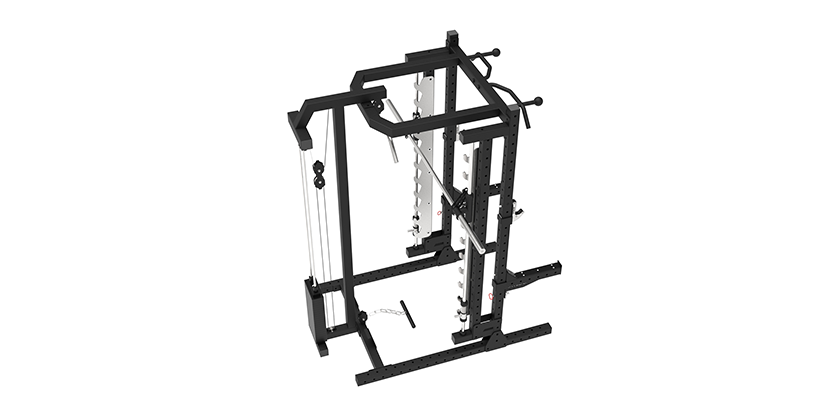
How to Choose the Best Power Rack for Bench Press Success
Defining Your Bench Press Standards: A Procurement Checklist
When sourcing high-performance training gear, professional buyers must navigate the delicate balance between upfront expenditure and long-term operational reliability. Before committing to a vendor, evaluate the potential risks of structural failure, the precision of technical specifications, and the efficiency of international logistics to ensure your investment remains viable. Selecting the best power rack for bench press training requires moving beyond the surface-level price tag to understand how material gauge and weld quality influence the total cost of ownership. A low-cost unit might seem attractive initially, but without high-grade steel and precision engineering, you risk frequent replacements and increased maintenance downtime.
Prioritizing durability vs. initial cost is the most critical decision a facility manager or serious enthusiast can make. A budget-friendly model often sacrifices the structural integrity required to handle heavy eccentric loads, which can lead to dangerous instability during a lift. Investing in a heavy duty squat rack with reinforced uprights and high-tensile steel ensures that the equipment can withstand years of high-volume use without bending or wobbling. While the initial procurement cost may be higher, the long-term value of a premium, stable station far outweighs the recurring expense of replacing substandard, lightweight alternatives.
To streamline your decision-making process, we recommend categorizing your procurement into three distinct budget tiers. This framework helps you align your financial resources with the specific stability requirements of your training environment, whether you are outfitting a private studio or a high-traffic commercial facility.
| Tier Level | Primary Focus | Typical Specifications |
|---|---|---|
| Entry-Level | Basic Functionality | Standard steel gauge, essential bench press safety features, suitable for light residential use. |
| Mid-Range | Reliable Performance | Increased material thickness (typically 11-gauge steel), improved footprint, and enhanced stability. |
| Professional | Maximum Durability | High-tensile heavy duty squat rack construction, premium J-cups, and advanced safety mechanisms for heavy loads. |
As part of a comprehensive home gym equipment guide, always verify that the chosen tier offers sufficient material thickness to prevent frame oscillation. A higher initial investment in a robust steel gauge is a strategic move to mitigate the long-term costs of equipment fatigue and replacement.
Beyond the base unit price, savvy buyers must account for the "hidden" variables that impact the total cost of ownership. One often overlooked factor is accessory compatibility; a rack that lacks standardized hole spacing or compatible attachments will eventually require costly secondary purchases to maintain training versatility. When searching for the best power rack for bench press performance, ensure the frame is compatible with high-quality dip stations, landmines, or specialized barbell holders to maximize your long-term ROI.
Furthermore, international procurement requires a deep understanding of shipping considerations. Because a heavy duty squat rack is a high-density, high-weight shipment, freight costs and volumetric weight can significantly alter your landed cost. We recommend verifying the manufacturer's packaging standards to prevent transit damage, which can lead to expensive returns. Finally, always demand strict quality assurance protocols from your supplier. Verifying that the factory utilizes precision welding and rigorous load-testing ensures that your investment provides reliable bench press safety features for years, rather than becoming a liability due to structural fatigue.
Structural Integrity and the Heavy Duty Squat Rack Standard
When sourcing high-end strength equipment, the most critical factor in long-term ROI is the fundamental build quality of the frame. A subpar unit may look imposing, but without the correct steel gauge, it will eventually succumb to structural fatigue under repetitive heavy loading. For professional distributors and gym owners, identifying the best power rack for bench press performance means looking beyond aesthetics to the actual thickness of the steel tubing.
A true heavy duty squat rack must utilize high-grade, thick-walled steel to ensure absolute structural stability during maximum effort lifts. When a lifter is under a heavy barbell, even microscopic frame flex can compromise safety. We recommend prioritizing 11-gauge or 7-gauge steel construction to guarantee a high weight capacity and prevent any lateral shifting. Investing in superior steel density ensures that the equipment remains a reliable centerpiece of a training facility for years, rather than a liability that requires frequent replacement.
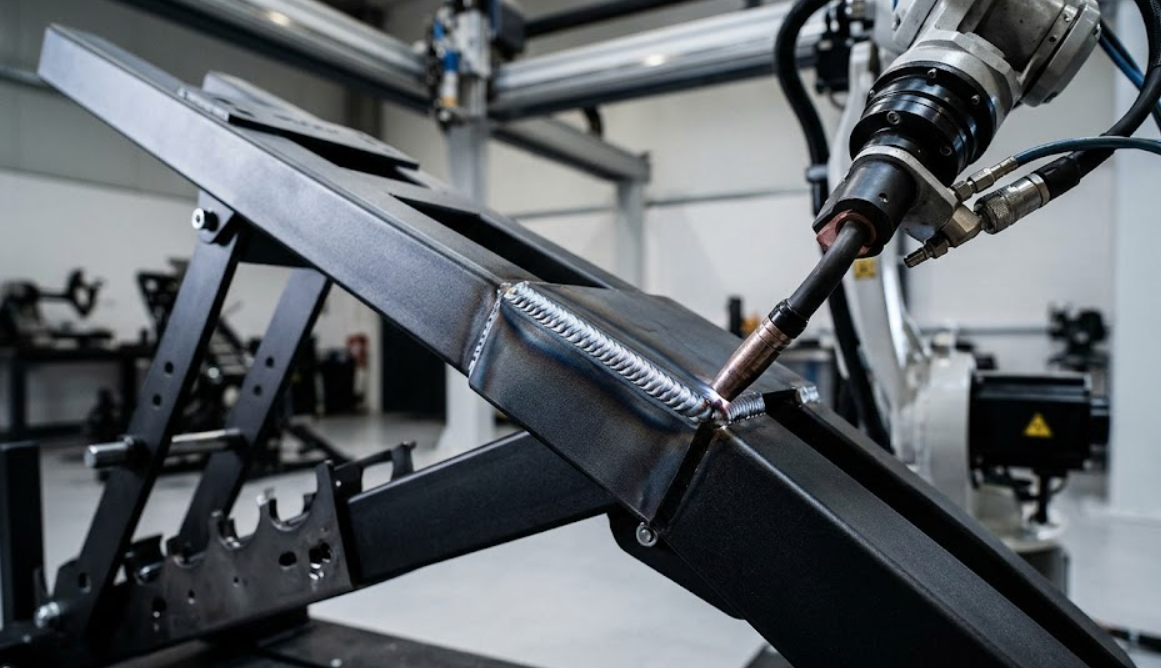
Beyond the steel thickness itself, the engineering of the connection points dictates the long-term reliability of the unit. High-quality manufacturing must feature precision welding and reinforced joints to eliminate the risk of wobbling under load. When evaluating potential suppliers, look for evidence of full-penetration welding rather than superficial beads; this is essential for maintaining frame rigidity during high-intensity sessions. A lack of structural cohesion can lead to microscopic shifts that eventually compromise the bench press safety features, such as the alignment of the J-cups or safety spotting arms.
Furthermore, a superior build minimizes vibration reduction issues when heavy weights are racked or dropped. A well-engineered, heavy-duty construction ensures that the energy from a heavy lift is absorbed by the frame rather than causing the entire structure to oscillate. For those building out a professional facility, this level of long-term durability is non-negotiable. Ensuring that every joint is reinforced prevents the gradual loosening of bolts and structural fatigue, making the equipment a stable, safe environment for heavy pressing.
To simplify your procurement process, we have synthesized a quick reference guide to assist in your home gym equipment guide research. When evaluating a unit, use these stability indicators to differentiate between consumer-grade models and professional-grade hardware.
| Steel Specification | Typical Use Case | Weight-Bearing Reliability |
|---|---|---|
| 12-Gauge (approx. 3.5mm) | Light Commercial / High-End Home | Moderate to High |
| 11-Gauge (approx. 4mm) | Professional Training / Heavy Duty | Maximum Stability |
| 7-Gauge (approx. 5mm) | Competition / Industrial Strength | Extreme / Unyielding |
Understanding this steel thickness comparison is vital for long-term asset management. A thicker gauge directly correlates to the best power rack for bench press utility, as it provides the necessary resistance against the lateral forces generated during heavy eccentric movements. Always verify that the manufacturer's weight-bearing reliability claims are backed by high-density steel rather than hollow-core alternatives to ensure your investment remains a permanent fixture of your facility.
Critical Bench Press Safety Features for High-Volume Training
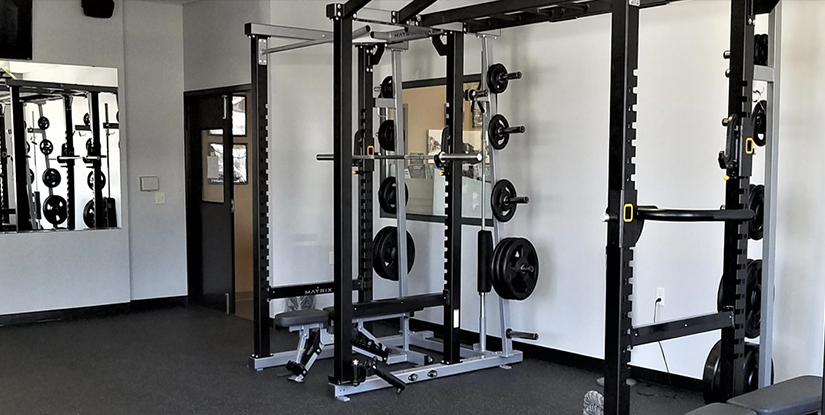
When managing high-volume training cycles, the margin for error shrinks. Relying on a subpar setup can lead to catastrophic equipment failure under heavy loads. For professional facilities and serious home gym owners, the best power rack for bench press performance is defined by its ability to remain stable during extreme eccentric loading. This is why a heavy duty squat rack must prioritize reinforced spotter arms and high-grade pin strength over aesthetic flourishes. If your safety mechanisms are not regularly inspected, you risk compromising the entire structural integrity of your training station.
To ensure long-term reliability, we recommend a rigorous inspection routine. Check for any hairline fractures around the pin holes and ensure that the bench press safety features, such as adjustable catch arms, are perfectly level and securely bolted. Even a slight misalignment can cause uneven weight distribution, leading to premature wear or bending.
| Safety Component | Standard Grade | Professional/Commercial Grade | Durability Focus |
|---|---|---|---|
| Spotter Arms | Single-bolt attachment | Multi-point reinforced bracing | High impact absorption |
| Pin Strength | Standard steel pins | Hardened alloy steel | Minimal deformation under load |
| Frame Stability | Lightweight tubing | Heavy-gauge steel construction | Zero wobble during heavy sets |
Prioritizing these high-spec components during your procurement process ensures that your equipment can withstand the rigors of daily, heavy-duty use without requiring frequent replacement or costly repairs.
Consistent maintenance is the final pillar of a long-lasting training environment. Even the best power rack for bench press performance will degrade if neglected. To prevent mechanical friction and preserve the finish, regular lubrication of the J-cups and adjustable pins is essential. Furthermore, implementing a strict rust prevention protocol—such as wiping down steel surfaces in high-humidity environments—protects your investment from oxidation and structural weakening.
When selecting your setup, consider how much maintenance your specific training style allows. Use the comparison below to decide between a fixed-safety configuration and a more versatile, mobile-friendly system:
| Configuration Type | Primary Advantage | Maintenance Level | Best For |
|---|---|---|---|
| Fixed Safety Arms | Maximum Stability | Low (Periodic bolt checks) | Heavy Strength Cycles |
| Adjustable/Mobile Systems | High Versatility | Moderate (Frequent lubrication) | Multi-purpose Training |
By balancing these bench press safety features with a proactive upkeep schedule, you ensure your home gym equipment guide standards are met for years to come.
Beyond structural checks, maintaining the moving parts of your station is vital for long-term safety. A high-performance setup requires more than just a strong frame; it demands precision in every mechanical interaction. For instance, routine bolt tightening is a non-negotiable step in your upkeep schedule. Over time, the vibrations from heavy lifting can loosen fasteners, which directly impacts the weight bearing stability of the entire unit. We advise a monthly inspection of all connection points to ensure the rack remains a rigid, unyielding platform for heavy sets.
Additionally, do not overlook the components that interact with your barbell. Proper barbell sleeve maintenance—ensuring the bearings or bushings are clean and lightly lubricated—prevents friction that can lead to uneven loading. As part of a comprehensive home gym equipment guide, we suggest checking the smoothness of J-cups and safety pins regularly. By addressing these small mechanical details, you preserve the reliability of your heavy duty squat rack and ensure that your best power rack for bench press remains a safe, professional-grade asset for your facility.
Optimizing Footprint and Dimensions for Versatile Gym Layouts
Before finalizing your procurement, you must look beyond the basic dimensions of the unit itself. Selecting the best power rack for bench press performance requires a strategic calculation of the total floor space required for safe operation. It is a common mistake to only measure the frame, neglecting the essential clearance needed for the barbell's path of travel.
When loading heavy plates, you must account for barbell whip and the lateral movement of weight plates during a lift. A high-quality, heavy duty squat rack demands extra room to ensure that the bar does not strike walls or nearby equipment during high-intensity sets. We recommend leaving at least 2–3 feet of unobstructed space around the perimeter. This buffer ensures that even during maximum effort or accidental bar oscillations, your athletes remain safe and the structural integrity of your facility's layout remains uncompromised.
Choosing the right configuration is a critical step in any home gym equipment guide, as the footprint of your equipment dictates the long-term utility of your training space. Depending on your available square footage and desired versatility, you should evaluate three primary structural styles:
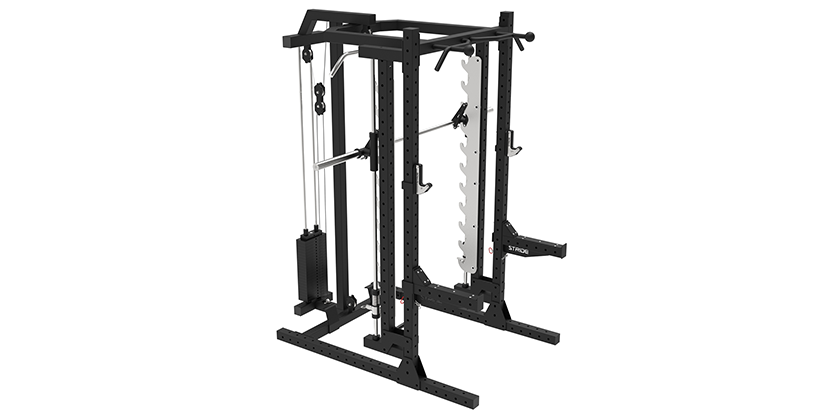
- Full Power Racks: These offer the largest footprint and highest level of bench press safety features, including four uprights and integrated spotter arms. They provide maximum stability for heavy lifting but require a dedicated, spacious area.
- Half Racks: A middle-ground solution that balances a smaller footprint with high performance. These are excellent for multi-purpose zones where you need both a heavy duty squat rack and a functional training station.
- Slim or Wall-Mounted Racks: Ideal for compact environments, these minimize dimensions to save space. While they offer great efficiency, ensure they are anchored to a structural wall to maintain the stability required for heavy benching.
When sourcing these units, always confirm the total dimensions including the depth of the weight plate storage to avoid unexpected obstructions in your facility layout.
Beyond the floor footprint, your most critical oversight during installation is often the vertical dimension. To find the best power rack for bench press training, you must calculate the total vertical clearance required for more than just the bench itself. High-level programming frequently transitions from horizontal presses to vertical movements like the overhead press. If your ceiling height is insufficient, athletes may strike low-hanging lights, fans, or structural beams during a lift, creating a major safety hazard.
We advise distributors and facility managers to measure from the highest point of the rack to the ceiling, then add at least 12 to 18 inches of clearance. This buffer accounts for the athlete's height, the barbell's arc, and the upward momentum of a heavy lift. Verifying these dimensions during the initial sourcing phase prevents costly logistical errors and ensures your facility remains compliant with standard safety protocols for high-performance training environments.
Material Specifications and Load-Bearing Reliability
When sourcing high-performance equipment, the most common oversight is ignoring the fundamental metallurgy of the frame. A subpar build may look impressive in photos, but it will fail under the stress of progressive overload. To secure the best power rack for bench press performance, you must prioritize the steel gauge and the thickness of the uprights. In professional settings, we typically recommend a gauge of 11-gauge steel or higher to ensure maximum structural integrity during heavy eccentric movements.
A truly heavy duty squat rack is defined by its ability to remain motionless under extreme tension. If the steel is too thin, the frame may experience micro-oscillations or even permanent deformation over time, compromising user safety. When evaluating a supplier, always verify the weight capacity specifications; a robust steel construction ensures that the rack can handle not just the static load, but the dynamic forces generated during a heavy press or a failed lift attempt.
To help you differentiate between consumer-grade models and professional-grade equipment, we have outlined the standard material variations below. Understanding these specifications is vital when conducting a home gym equipment guide review or scaling up to a commercial facility. While thinner steel may lower the initial unit cost, it often leads to long-term replacement expenses due to structural fatigue.
| Material Specification | 14-Gauge Steel (Entry-Level) | 11-Gauge Steel (Professional-Grade) |
|---|---|---|
| Typical Weight Capacity | 300 – 600 lbs | 800 – 1,200+ lbs |
| Primary Usage Scenario | Light residential training | High-intensity lifting & commercial use |
| Durability Profile | Subject to frame flex | Maximum stability for bench press safety features |
Choosing the best power rack for bench press stability requires recognizing that higher-gauge steel provides the necessary rigidity for heavy-duty training. For distributors and gym owners, investing in 11-gauge steel ensures the equipment meets the rigorous demands of high-traffic environments.
Critical Components for Safety and Precision
Beyond the raw strength of the steel frame, the reliability of your training session depends on the precision of the modular attachments. When searching for the best power rack for bench press, the quality of the hardware dictates how effectively the system manages failed repetitions. High-tier bench press safety features are not optional; they are essential components that protect the lifter during heavy sets.
For instance, the J-cups should be engineered with high-tensile steel and a secure locking mechanism to prevent any sliding or tilting when the barbell is loaded. A slight misalignment in the J-cup can lead to uneven weight distribution, which compromises the overall stability of the lift. Furthermore, the inclusion of adjustable spotter arms is a non-negotiable standard for serious lifters. These arms act as a secondary fail-safe, catching the bar if the lifter cannot complete a rep, thereby preventing catastrophic injury.
As part of a comprehensive home gym equipment guide, we advise buyers to inspect the welding points and the thickness of the attachment pins. In professional-grade setups, these components must withstand repetitive impact without bending or shearing, ensuring long-term utility and peace of mind.
Navigating Customization and OEM Options for Specialized Builds
When sourcing the best power rack for bench press performance, professional buyers often face a critical decision: selecting a standard off-the-shelf model or investing in a custom OEM build. Standard models are cost-effective and offer rapid deployment, making them ideal for general fitness centers or smaller studios. However, these ready-made units often come with fixed dimensions and pre-set bench press safety features that may not perfectly align with specific training styles or unique facility footprints.
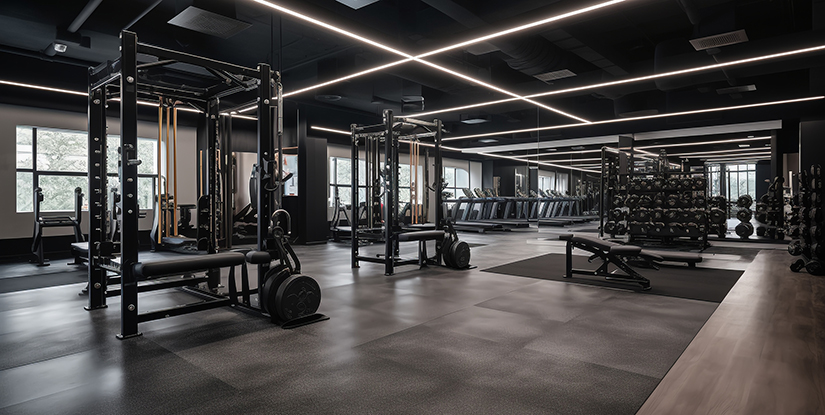
For high-performance training environments, a heavy duty squat rack designed via OEM manufacturing provides a significant competitive edge. While budget considerations are always a factor, the long-term value of customization vs. standard models becomes clear when you require specific steel gauges, unique upright spacing, or specialized accessory attachments. Custom builds allow you to dictate the exact structural integrity and footprint of the equipment, ensuring your investment serves as a durable centerpiece for serious lifters rather than just another piece of generic home gym equipment guide compliant hardware.
To help you visualize how these investment tiers translate into physical attributes and functional capabilities, we have outlined the typical market variations. Understanding these tiers is essential when determining the best power rack for bench press utility relative to your specific budget and facility requirements.
| Customization Level | Typical Build Type | Core Features & Dimensions | Investment Profile |
|---|---|---|---|
| Standard/Entry | Pre-fabricated Unit | Fixed dimensions; basic J-cups; standard bench press safety features. | Low - High ROI for light use. |
| Mid-Tier | Modular Upgrade | Adjustable upright spacing; reinforced steel; compatible with various accessories. | Moderate - Balanced for growth. |
| Premium/OEM | Full Custom Build | Variable dimensions; specialized heavy duty squat rack steel gauges; bespoke attachments. | High - Optimized for professional longevity. |
While a standard unit serves as a functional entry point for a basic home gym equipment guide compliant setup, professional distributors and gym owners often find that the premium tier offers a superior long-term value. Investing in custom dimensions ensures that the rack integrates seamlessly into your floor plan while providing the exact structural stability required for heavy-load benching.
Managing your procurement budget requires a strategic balance between upfront costs and long-term durability. When searching for the best power rack for bench press training, many buyers fall into the trap of overspending on high-end aesthetics rather than structural integrity. To optimize your capital, focus on cost-effective upgrades—such as adding premium bench press safety features or specialized barbell holders to a high-quality standard frame—rather than commissioning a completely specialized builds from scratch if your requirements are only slightly outside the norm.
A common challenge in any home gym equipment guide is the stability vs. price dilemma. While a cheaper, lighter frame may lower initial shipping and manufacturing costs, it often fails to provide the rigidity needed for heavy benching. We recommend prioritizing the gauge of the steel and the footprint of the base over decorative finishes. By selecting a robust, heavy duty squat rack foundation and adding modular accessories later, you can achieve a professional-grade setup that scales with your facility's needs without the premium price tag of a fully bespoke manufacturing run.
Long-term Value and Maintenance in Commercial Settings
When sourcing equipment for a high-traffic facility, the initial price tag is often a deceptive metric. Many buyers fall into the trap of purchasing entry-level models to save on upfront capital, only to face premature wear or structural fatigue. However, finding the best power rack for bench press performance involves looking far beyond the checkout price. The real value lies in the durability of the steel gauge and the precision of the welding, which dictate how many years the unit remains a reliable asset.
Investing in a heavy duty squat rack engineered for commercial use significantly lowers your long-term cost-per-use. While budget alternatives may appear cost-effective, they often lack the structural integrity required to handle heavy eccentric loads over time, leading to frequent replacements and increased downtime. By prioritizing high-grade materials and rigorous quality control during your procurement process, you ensure the equipment maintains its stability and safety standards for years, ultimately protecting both your investment and your clients.
To help you differentiate between a short-term solution and a long-term asset, we have outlined the primary distinctions in construction and utility. Selecting the right tier depends heavily on whether your priority is a single-user setup or a high-volume training environment. Understanding these variables is essential to ensure that your bench press safety features remain effective under constant stress.
| Feature Category | Residential-Grade Setup | Commercial-Grade Setup |
|---|---|---|
| Usage Frequency | Low to Moderate (Home use) | High (Daily gym/Facility use) |
| Steel Gauge | 11-gauge to 14-gauge | Standard 7-gauge or 11-gauge heavy-duty |
| Maintenance Requirements | Minimal; occasional bolt tightening | Regular inspection of welds and hardware |
| Budget Tier | Entry-level to Mid-range | Premium/Professional Investment |
| Safety Focus | Basic upright stability | Advanced bench press safety features |
Choosing the best power rack for bench press training in a professional setting requires a focus on structural longevity. While residential models serve a purpose, a true heavy duty squat rack designed for commercial turnover offers much higher ROI through reduced replacement cycles and superior reliability under heavy loads.
Maximizing your ROI requires more than just an initial high-quality purchase; it demands a disciplined approach to equipment care. Even the most robust equipment can suffer from structural instability if neglected. As part of a professional <strong class="home gym equipment guide, we recommend implementing a strict maintenance schedule to mitigate the effects of constant heavy loading. For high-traffic facilities, regular safety inspections are non-negotiable to identify potential failures before they become liabilities.
Routine care should focus on three critical areas: hardware, movement, and surface integrity. Periodically performing bolt tightening across all connection points ensures the frame remains rigid and prevents the rattling or wobbling that often precedes structural failure. Additionally, applying specialized lubrication to moving parts or adjustable components prevents friction-based wear and tear, ensuring smooth operation during intense training sessions. By proactively managing these small details, you extend the operational lifespan of your assets and ensure that your bench press safety features remain fully functional, protecting both your facility's reputation and your bottom line.