Sourcing Best Home Gym Squat Racks for Retail Distribution
Evaluating Total Cost of Ownership for Residential Strength Hardware
A boutique fitness distributor stocking inventory for high-end home gyms must look beyond the initial quote to protect long-term margins. While a low unit price might seem attractive for a best home gym squat rack selection, neglecting the secondary cost layers can quickly erode profitability during the fulfillment stage.
When sourcing from a residential gym supplier, the true cost is a calculation of the initial purchase price versus long-term value. This includes the impact of shipping volume and weight on landed costs, the complexity of assembly instructions for end-users, and the durability of coatings under frequent residential use. A cheaper, lighter frame may reduce freight expenses initially, but high return rates due to structural instability or poor finish quality will ultimately increase your TCO.
| Cost Factor | Economy Tier Model | Premium Tier Model |
|---|---|---|
| Landed Freight | Lower (Lighter gauge steel) | Higher (Heavy-duty construction) |
| Assembly Complexity | Variable (Often high) | Streamlined (Standardized parts) |
| Durability/Longevity | Moderate (Higher wear risk) | High (Longer lifecycle) |
| Return/Support Rate | Potential for high volume | Minimalized via quality control |
Sourcing Models: Direct Factory vs. Local Distributor
Deciding between direct overseas sourcing and utilizing a regional distributor involves a trade-off between unit margins and operational control. For distributors scaling their strength training hardware distribution, the choice often hinges on whether the organization has the logistical infrastructure to manage the inherent risks of direct imports.
Direct sourcing offers the highest potential for margin expansion but requires significant upfront capital and management expertise. Conversely, working with a local distributor reduces immediate logistical friction but introduces a markup that affects your final retail competitiveness. Consider the following breakdown to determine which model aligns with your current inventory capacity and risk tolerance.
| Evaluation Metric | Direct Factory Sourcing | Local/Regional Distributor |
|---|---|---|
| MOQ Requirements | High (Container-load driven) | Low to Moderate (Case-pack driven) |
| Freight & Logistics | Complex (Ocean freight + Customs) | Simple (LTL or Parcel delivery) |
| Quality Control (QC) | High Overhead (Requires 3rd party inspection) | Low (Pre-vetted by distributor) |
| Lead Time Risks | Extended (Weeks to months) | Minimal (Days to weeks) |
| Unit Cost Margin | Maximum (Direct from source) | Compressed (Markup included) |
For retailers focused on rapid turnover of a single high-demand SKU, the local distributor model minimizes the threat of dead stock. However, if you are building a specialized brand around a specific heavy-duty design, direct factory engagement provides the control over customization and volume pricing necessary for long-term market dominance.
Prioritizing Build Integrity to Mitigate Replacement Cycles
To optimize the total cost of ownership, procurement specialists must prioritize structural specifications that minimize post-sale friction. In the realm of strength training hardware distribution, the difference between a profitable SKU and a logistical liability often lies in the technical nuances of the frame construction. Low-quality builds frequently result in high customer return rates, which can quickly negate the benefits of a lower initial unit price.
A critical metric for evaluating the best home gym squat rack is the steel gauge. Thinner-walled tubing may reduce shipping weight, but it significantly increases the risk of structural deflection under heavy loads. Furthermore, the powder coating durability determines how well the equipment withstands the mechanical friction of barbell movement. A resilient finish prevents rust and chipping, extending the product's aesthetic and functional lifespan in residential environments.
Beyond the primary frame, the availability of replacement parts is a vital consideration for long-term serviceability. Reliable suppliers ensure that modular components—such as uprights, safety bars, or specialized hardware—can be sourced independently. This capability prevents a minor component failure from turning into a complete product replacement, thereby protecting your brand reputation and reducing the overhead associated with managing defective inventory claims.
Structural Integrity and Material Standards for High-Volume Retail
For distributors and residential gym suppliers, the long-term profitability of a product line depends heavily on structural reliability. A single instance of frame deformation or weld failure can lead to high return rates and damage a retailer's reputation. When sourcing the best home gym squat rack for your inventory, material thickness is the primary indicator of build quality and safety.
Steel Gauge and Load-Bearing Specifications
The distinction between 11-gauge and 14-gauge steel is critical for high-demand strength training hardware distribution. While 14-gauge steel is common in entry-level consumer models, 11-gauge steel provides the thickness necessary for heavy barbell loading and long-term structural stability. Thicker steel gauge reduces the risk of lateral swaying and ensures the uprights can withstand repetitive impact without fatigue. For retailers, prioritizing 11-gauge specifications minimizes the likelihood of warranty claims related to bent frames or unstable uprights.
Coating Durability and Surface Protection
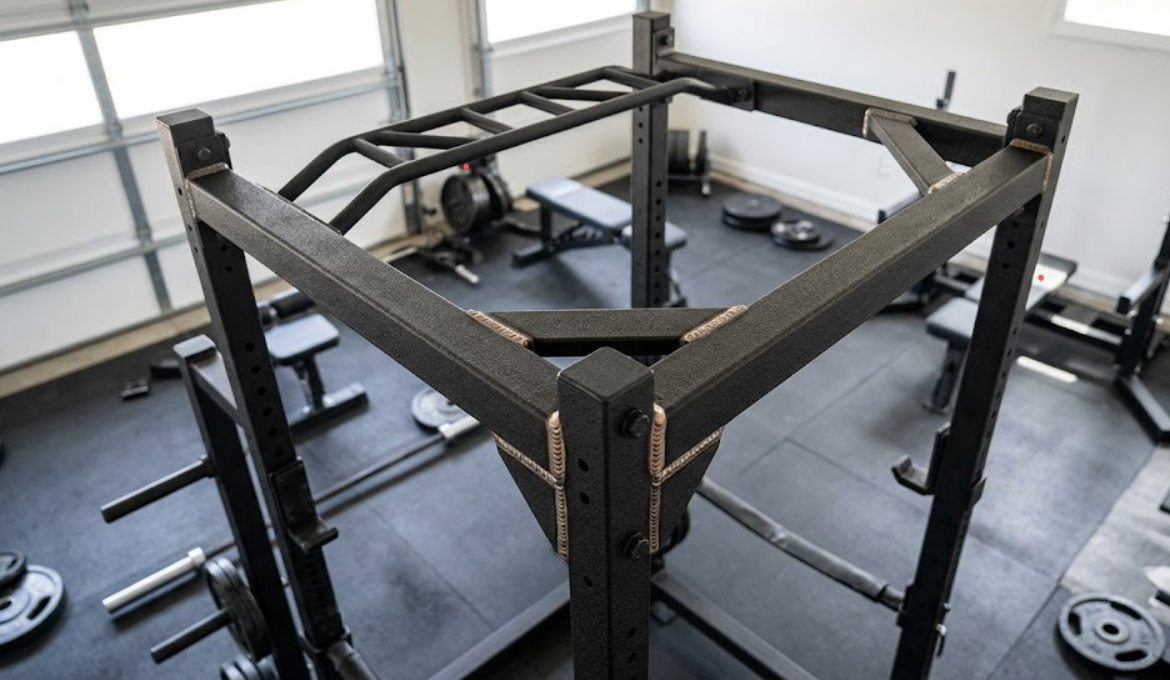
Beyond the core steel, the quality of the powder coating determines the product's lifespan in residential environments. High-grade electrostatic powder coating provides a resilient barrier against moisture, oxidation, and scratches from weight plates. For distributors, sourcing racks with superior coating finishes reduces the incidence of aesthetic defects upon arrival and ensures the equipment maintains a professional appearance throughout its service life, directly impacting customer satisfaction and reducing the overhead associated with damaged-on-arrival returns.

To effectively differentiate between high-margin premium units and budget-friendly consumer options, procurement managers must evaluate the technical nuances of construction. Relying on visual inspection alone is insufficient; a standardized comparison of material specifications provides a clearer picture of the long-term durability and value proposition of each SKU.
Technical Comparison: Residential vs. Semi-Commercial Specifications
The following table outlines the typical divergence in manufacturing standards between mass-market residential models and high-performance units intended for heavy-use environments. This comparison is a vital tool for assessing whether a product meets the durability requirements of your specific target market.
| Feature Specification | Standard Residential Grade | Premium/Semi-Commercial Grade |
|---|---|---|
| Steel Thickness | 14-gauge (approx. 2.0mm) | 11-gauge (approx. 3.0mm) |
| Weld Type | Standard MIG (Manual) | Full-penetration/Robotized MIG |
| Surface Finish | Basic Powder Coating | High-Resilience Electrostatic Coating |
| Structural Rigidity | Moderate (Subject to lateral sway) | High (Optimized for heavy loading) |
| Hardware Tolerance | Standard Threading | Precision-machined/Reinforced |
When negotiating with factories, insist on clarity regarding weld consistency and steel gauge verification. For distributors focused on high-volume sales, stocking a mix of these grades allows for broader market penetration while ensuring that the premium tier maintains the high structural integrity expected by serious strength enthusiasts.
Rigorous Quality Control and Factory-Level Verification
To mitigate the risk of shipping damaged or substandard hardware, procurement specialists must move beyond basic aesthetic checks and implement strict factory-level verification protocols. Relying on a supplier's word is insufficient; professional distributors should demand documented proof of structural testing. A critical component of this process involves the meticulous inspection of weld points to ensure full penetration and zero porosity, which prevents fracture under heavy load. Furthermore, verifying structural alignment is essential to ensure that uprights and crossmembers are perfectly square, preventing the lateral instability that often triggers high return rates in residential gym setups.
Before authorizing bulk shipment, it is mandatory to verify that the equipment meets standardized load-bearing capacity protocols. This includes testing the rack's ability to handle static and dynamic loads that exceed the advertised maximum weight. For those managing high-volume fitness equipment wholesale, requesting a third-party test report or a factory-certified load test certificate provides a necessary layer of protection against liability and ensures that the best home gym squat rack you offer meets the rigorous safety expectations of the North American market.
Optimizing Footprint and Versatility for Home Gym Product Lines
For a reliable residential gym supplier, understanding the spatial constraints of the end-user is critical for inventory selection. Unlike commercial facilities with expansive floor plans, the home market demands the best home gym squat rack configurations that balance high-performance stability with a minimal footprint to fit into garages, basements, or spare rooms.
The Trade-Off Between Stability and Space Efficiency
Distributors must navigate the technical tension between structural rigidity and spatial economy. While heavy-duty, wide-base racks offer maximum stability for heavy lifting, they require significantly more square footage. Conversely, space-saving designs—such as foldable racks or slim-profile half racks—appeal to the residential consumer but may present different shipping and assembly profiles for the importer. When sourcing, evaluate whether the product's footprint matches the specific density of your target market's typical home layouts.
Selecting the right product mix depends on whether your target customer prioritizes a permanent training station or a versatile, multi-purpose room. The following comparison helps distributors categorize inventory based on typical residential floor area and structural demands.
| Configuration Type | Typical Footprint | Stability Level | Primary Market Use Case |
|---|---|---|---|
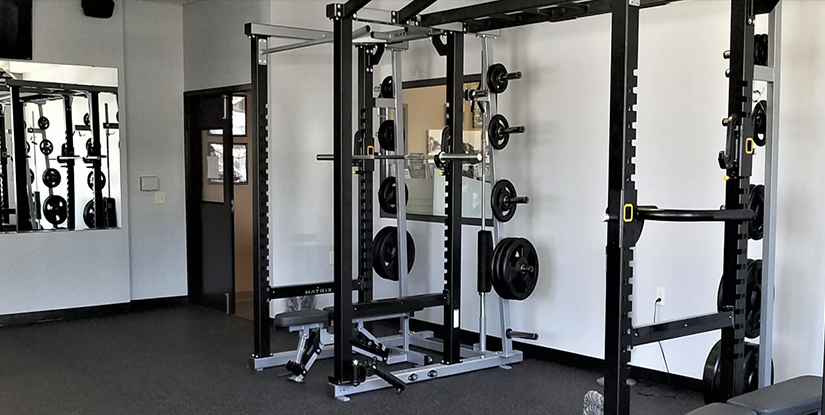
| Half Rack | Moderate | High | Dedicated garage or basement setups |
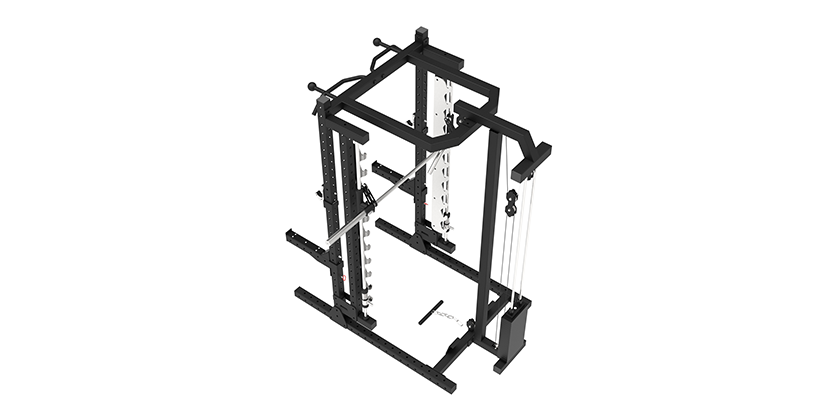
| Full Power Rack | Large | Maximum | High-end, permanent home training rooms |
| Wall-Mounted Folding Rack | Minimal (Folded) | Variable | Small apartments or multi-use living spaces |
When planning your strength training hardware distribution, consider that folding models often require specialized wall-mounting hardware to ensure safety. While these units offer the highest space-saving ROI, they may also increase your quality control responsibilities regarding mounting stability and installation clarity for the end-user.
Maximizing Revenue Through Modularity and Accessory Integration
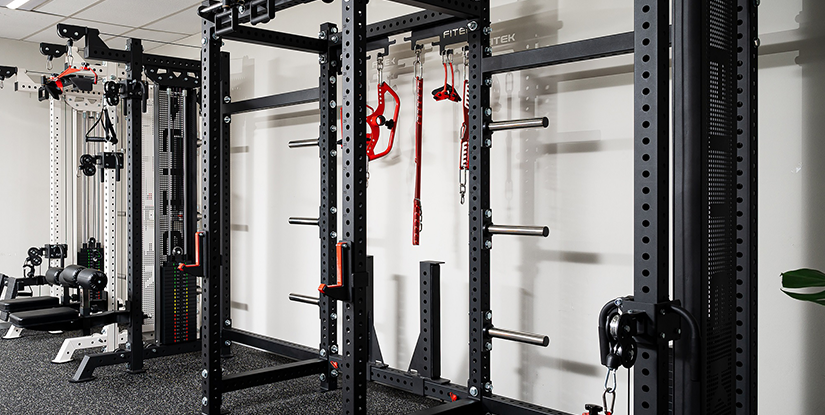
To increase the lifetime value of a single SKU, prioritize sourcing models that emphasize modularity. A high-performing product line should not just be a standalone rack, but a foundation for a complete ecosystem. When negotiating with factories, verify attachment compatibility for essential add-ons such as dip stations, landmines, and weight storage pegs. This accessory integration capability allows you to offer a tiered pricing structure, moving customers from a basic entry-level setup to a premium, fully-equipped station.
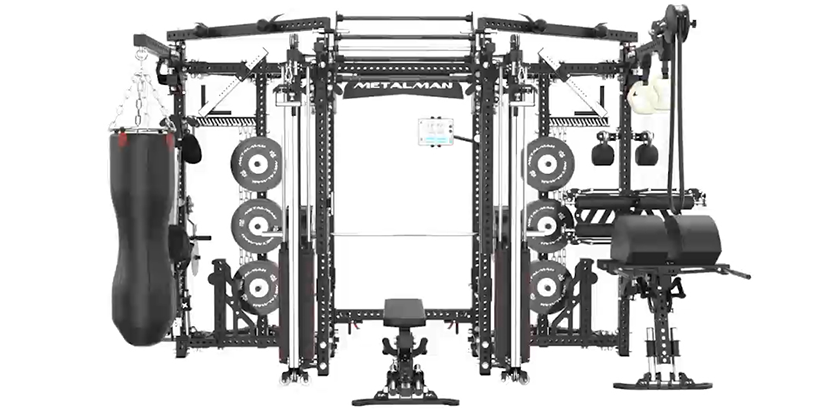
From a strength training hardware distribution perspective, stocking modular systems provides significant upsell potential. Instead of a one-time transaction, you can drive repeat orders as customers seek to expand their functional training capabilities. Ensure the rack's upright dimensions and hole spacing are standardized to support a wide variety of third-party or proprietary attachments, as this versatility is a primary driver for consumer retention and brand loyalty in the residential market.
Sourcing Strategies for Managing MOQ and Inventory Turnover
Successful distribution of residential strength equipment requires a calculated approach to capital allocation. For a professional residential gym supplier, the primary challenge lies in balancing the high shipping costs of heavy steel structures against the need for rapid inventory turnover to maintain liquidity.
Optimizing the MOQ and Throughput Balance
When sourcing the best home gym squat rack models, distributors often face a trade-off between volume discounts and warehousing costs. High-demand, heavy-gauge steel racks are bulky; over-ordering to meet low MOQ management thresholds can lead to excessive storage fees and stagnant capital. Conversely, under-ordering risks stockouts during peak seasonal demand for high-demand fitness equipment.
To mitigate these risks, procurement specialists should prioritize suppliers capable of offering tiered pricing structures. By selecting versatile, modular designs, you can often fulfill a wider variety of consumer needs with fewer unique SKUs, effectively increasing your turnover rate without inflating your initial investment in specialized hardware.
Evaluating Sourcing Models: Direct Factory vs. Local Wholesaler
Deciding between direct manufacturing and local distribution depends heavily on your current scale and logistics infrastructure. While direct sourcing offers the highest margins, it demands significant operational maturity to manage the complexities of international freight and long-term storage.
| Metric | Direct Factory Sourcing | Local Wholesale/Distributor |
|---|---|---|
| Capital Requirements | High (Bulk orders/High MOQ) | Lower (Flexible order sizes) |
| Shipping Lead Times | Long (Sea freight/Customs) | Short (Regional transit) |
| Storage Footprint | Large (Requires dedicated warehouse) | Minimal (Just-in-time replenishment) |
| Risk Mitigation | High (Quality control/Transit risks) | Low (Local returns/Easier recourse) |
For distributors specializing in strength training hardware distribution, the choice is often a matter of growth stage. Direct sourcing is ideal for established players looking to maximize margins on high-volume, standard models. However, if your goal is to test new market segments or maintain a lean inventory, working with a fitness equipment wholesale partner provides the agility needed to react to rapid shifts in consumer demand without heavy upfront capital exposure.
Logistics Optimization and Seasonal Planning
Effective strength training hardware distribution requires more than just warehouse space; it demands precise logistics optimization to handle the unique challenges of heavy, oversized freight. Because squat racks are high-density items, shipping volume and weight-to-dimension ratios can drastically impact your landed cost. A single container can hold a significant number of units, but inefficient packing can lead to wasted space and higher per-unit freight expenses.
Distributors should also account for seasonal demand fluctuations, such as the typical uptick in home fitness sales during the first quarter. To avoid stockouts during these peaks, implement a proactive stock replenishment schedule that accounts for long-lead international transit times. Rather than reactive ordering, use historical sales data to trigger reorders well before current inventory hits critical levels, ensuring your most popular rack configurations remain available for immediate dispatch.
Logistics and Packaging Optimization for Heavy Strength Equipment
Shipping high-density steel structures presents a unique challenge for any residential gym supplier. Because the best home gym squat rack is often composed of heavy-gauge steel tubing, the primary cost driver is rarely the weight itself, but rather the complex relationship between shipping volume and dimensional weight.
Distributors must navigate the trade-off between maximizing container density and maintaining product integrity. While compact packaging reduces freight costs, it can increase the risk of structural deformation during transit. When sourcing, evaluate how manufacturers manage the volumetric footprint of oversized components to ensure that high shipping costs do not erode your retail margins.
Balancing Shipping Costs and Product Integrity
For strength training hardware distribution, the choice of packaging strategy directly impacts your landed cost and return rates. Choosing the wrong method can lead to high volumetric weight charges or, conversely, expensive damage claims due to structural deformation. Most high-volume orders utilize one of two primary methods depending on the destination and volume of the shipment.
| Packaging Strategy | Typical Weight Profile | Protection Level | Cost Impact |
|---|---|---|---|
| Individual Boxed Shipping | Lower per unit; optimized for parcel | High; protects finish and small parts | Higher per unit; better for B2C/Dropshipping |
| Bulk Crating (LTL/FCL) | Higher density; optimized for freight | Maximum; prevents heavy steel impact | Lower per unit; ideal for B2B/Warehouse stocking |
When managing your inventory, consider that while individual boxing facilitates easier last-mile delivery for residential customers, bulk crating offers superior protection for the heavy uprights and crossmembers of a premium rack. Align your packaging requirements with your distribution model to protect your margins.
Optimizing Inventory Turnover and TCO Through MOQ Management
Effective strength training hardware distribution requires a sophisticated approach to the Total Cost of Ownership (TCO). While a lower MOQ (Minimum Order Quantity) may reduce initial capital outlay, it often increases the cost-per-unit optimization due to higher per-unit shipping and production overheads. For distributors, the goal is to find the equilibrium between purchasing volume and inventory turnover rates.
Overstocking heavy steel components leads to excessive warehouse space consumption and increased holding costs, which can stifle cash flow. Conversely, maintaining too lean an inventory risks stockouts during high-demand cycles. To maximize profitability, work with your residential gym supplier to establish a tiered ordering strategy. This allows you to leverage economies of scale for high-velocity SKUs while maintaining the agility to respond to shifting market trends without overextending your storage capacity.
Structural Integrity and Material Standards
When sourcing the best home gym squat rack for residential distribution, procurement managers must look beyond aesthetic appeal to verify core structural stability. High-demand retail units require a rigorous baseline of manufacturing precision to minimize returns and ensure long-term consumer satisfaction in the North American market.
A primary indicator of quality is the steel gauge thickness; distributors should prioritize heavy-duty 11-gauge or 12-gauge steel for uprights to prevent structural deflection under load. Furthermore, the powder coating durability must be tested against chip resistance to withstand the friction of barbell movement. Beyond simple aesthetics, weight capacity consistency is vital—ensure the manufacturer provides verified load ratings that remain stable across all adjustment points. A failure to standardize these technical specifications during the factory audit stage can lead to significant liability issues and increased long-term costs for strength training hardware distribution partners.
Technical Specification Comparison for Procurement Audits
During factory inspections, distributors should utilize a standardized technical matrix to differentiate between budget-tier residential units and high-performance retail models. Evaluating the interplay between steel gauge and surface treatment is essential for calculating the total cost of ownership and long-term durability profiles.
| Specification Metric | Premium Retail Tier | Standard Residential Tier |
|---|---|---|
| Steel Gauge (Uprights) | 11-gauge (approx. 3mm) | 14-gauge (approx. 2mm) |
| Surface Treatment | Electrostatic Powder Coating | Liquid Paint or Standard Spray |
| Load-Bearing Stability | High (Minimal deflection) | Moderate (Potential sway) |
| Wear Resistance | Superior (High chip resistance) | Basic (Prone to scratching) |
Selecting 11-gauge steel ensures the structural rigidity required for high-end fitness equipment wholesale, whereas 14-gauge is often sufficient for entry-level markets. However, the coating method is equally critical; electrostatic powder coating provides a much harder, more resilient finish than liquid paint, significantly reducing the frequency of consumer complaints regarding cosmetic wear and tear.
Mechanical Component Precision and Hardware Reliability
While structural steel provides the foundation, the longevity of a residential unit depends on the precision of its moving parts. For a residential gym supplier, the most frequent cause of product returns is not structural failure, but rather mechanical misalignment or hardware degradation. Procurement teams must verify that adjustment components can withstand repeated daily use without losing their functional integrity.
A critical inspection point is the J-cup tolerance; ensure the fit is snug enough to prevent rattling during heavy lifts, yet smooth enough for easy barbell transitions. Loose or poorly machined J-cups can lead to uneven weight distribution and eventual metal fatigue. Additionally, audit the pin strength and bolt grade used in the assembly. High-quality strength training hardware distribution requires components made from high-tensile steel rather than soft alloys, as low-grade bolts are prone to shearing or stripping under heavy load cycles. Testing the wear and tear resistance of bushings and adjustment pins is a non-negotiable step to ensure that the best home gym squat rack remains a durable asset for the end consumer rather than a recurring maintenance burden.