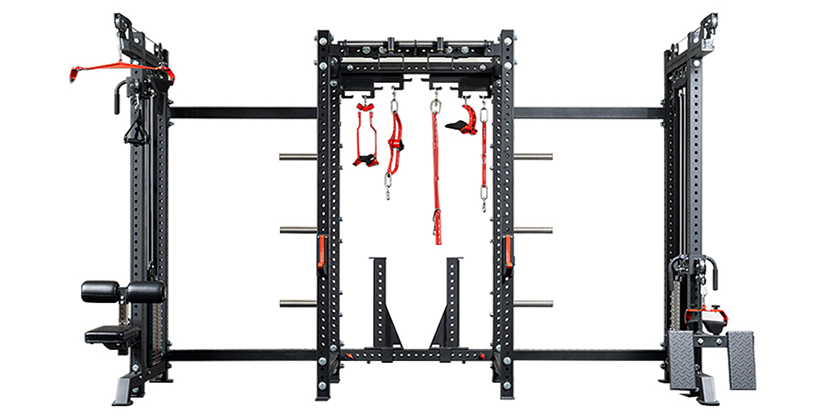
Half Rack Power Rack | Half Rack vs Full Rack: Optimizing
Deployment Scenarios: High-Traffic vs. Boutique Studio Layouts
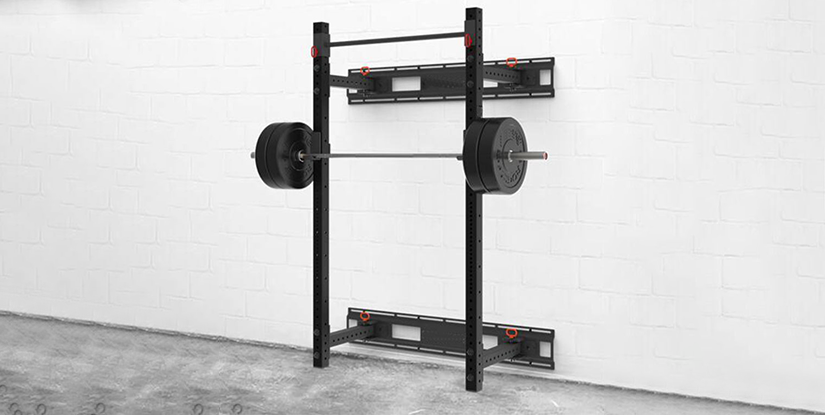
A half rack power rack is a specialized strength training station designed to provide essential bracing and safety features while maintaining a reduced footprint. B2B buyers select this configuration when they need to balance heavy-duty structural integrity with the need for efficient floor space utilization.
Strategic Footprint Comparison
In large-scale commercial strength equipment layout planning, the choice between rack types often dictates the facility's total capacity. For high-traffic big-box gyms, the smaller footprint of a half rack allows for higher density, enabling more stations per square foot. This optimization is critical for maximizing member throughput during peak hours without sacrificing the heavy-duty feel expected in strength zones.
Conversely, in a boutique studio environment, the decision is driven by specialized programming and aesthetic flow. While a full rack offers maximum enclosure, the half rack provides a more open, inviting spatial profile. This makes it an ideal solution for gym space optimization in premium settings where movement visibility and a sense of openness are prioritized over sheer volume of equipment.
Operational Deployment Matrix
Facility managers and distributors must evaluate the specific trade-offs between station density and user safety protocols. The following comparison highlights how different equipment configurations impact the overall commercial strength equipment layout and long-term operational efficiency.
| Metric | Half Rack Configuration | Full Power Rack Configuration |
|---|---|---|
| Typical Footprint | Compact / Open-access | Large / Enclosed |
| Equipment Density | High (Optimized for volume) | Moderate (Optimized for specialized use) |
| Primary Focus | Throughput & Versatility | Maximum Safety & Isolation |
| Space Requirement | Minimal side-clearance | Extended depth & perimeter |
| Ideal Setting | Commercial Gyms / CrossFit Boxes | Strength-focused Training Centers |
When sourcing for multi-site rollouts, consider that a half rack power rack offers a more flexible shipping volume and easier assembly on-site, which can significantly lower logistics costs for international distributors compared to larger, fully enclosed structures.
Procurement Strategy and Logistics Optimization
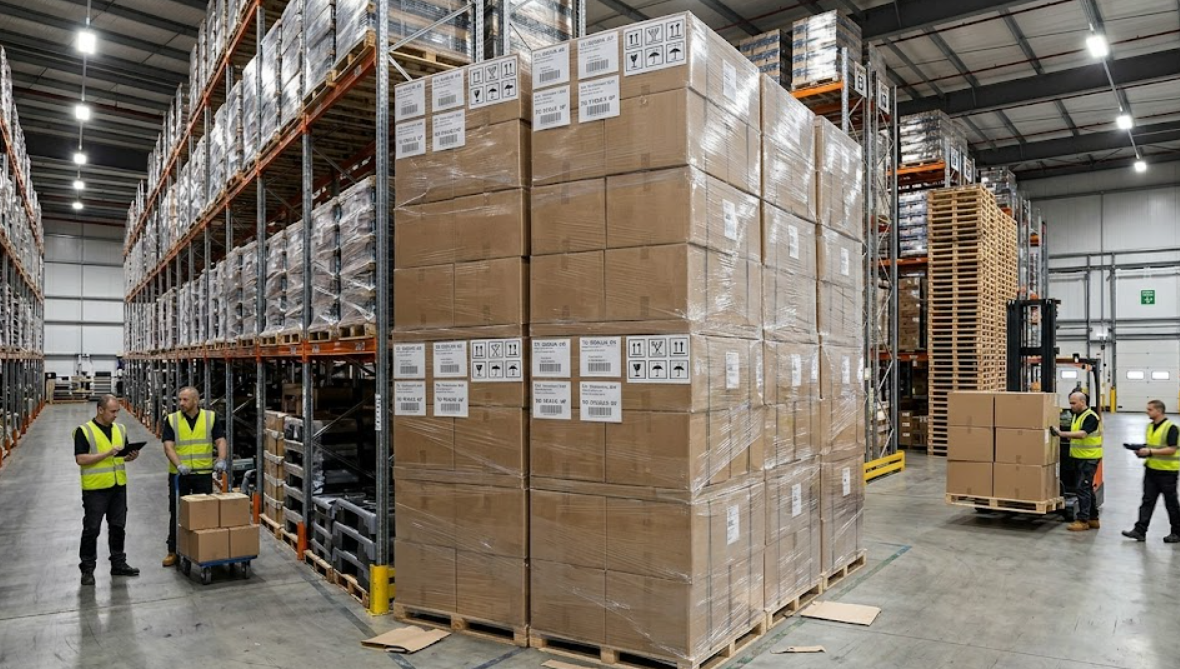
For distributors and facility owners, the decision to stock or deploy a half rack power rack extends beyond floor plan aesthetics; it is a calculation of B2B procurement efficiency. From a logistics standpoint, the reduced dimensions of these units offer a distinct advantage in shipping volume and container utilization. When managing large-scale international orders, the ability to fit more units per shipment directly impacts the landed cost and overall ROI of a product line.
Inventory planning should also account for the modularity inherent in many half rack designs. Unlike full racks, which often require more complex, single-piece structural components, half racks frequently allow for easier disassembly and more streamlined assembly processes. This modularity is a critical factor for facility scaling, as it simplifies the deployment of additional stations in growing commercial environments without requiring heavy machinery or extensive structural modifications.
When evaluating long-term procurement, consider that the lower shipping weight and simplified assembly of these racks can reduce on-site labor costs during multi-site rollouts. For wholesalers, this translates to a more agile supply chain, allowing for faster replenishment and a more responsive approach to market demand fluctuations in the commercial strength sector.
Footprint Comparison: Maximizing Throughput in Limited Square Footage
Effective gym space optimization requires a calculated balance between equipment density and user movement. While a full power rack offers maximum structural enclosure, the half rack power rack provides a strategic advantage for distributors and facility managers looking to increase the number of usable stations within a fixed square footage. By reducing the depth and overall footprint, procurement teams can facilitate higher throughput without sacrificing the core heavy-duty utility required for commercial strength training.
In a high-traffic commercial strength equipment layout, the decision to deploy half racks often hinges on the trade-off between specialized barbell safety and floor-space ROI. A smaller footprint allows for more ancillary attachments or additional training zones, making it a preferred choice for boutique studios and multi-functional training centers.
| Procurement Factor | Half Rack Configuration | Full Power Rack Configuration |
|---|---|---|
| Average Footprint | Compact/Moderate | Large/Expansive |
| Spatial Utility | High (Multi-use potential) | Specialized (Strictly heavy lifting) |
| Throughput Potential | Optimized for high density | Lower density per sq. ft. |
| Shipping/Logistics | Easier assembly/Lower volume | Complex/Higher freight weight |
When planning a multi-site rollout or a new facility design, understanding the precise dimensional requirements is critical for avoiding bottlenecks. A half rack power rack typically requires less longitudinal clearance, allowing for tighter rows in a standard strength training zone. This spatial efficiency is a primary driver for distributors specializing in high-density commercial layouts where every square meter must generate revenue.
Dimensional Benchmarks and Clearance Requirements
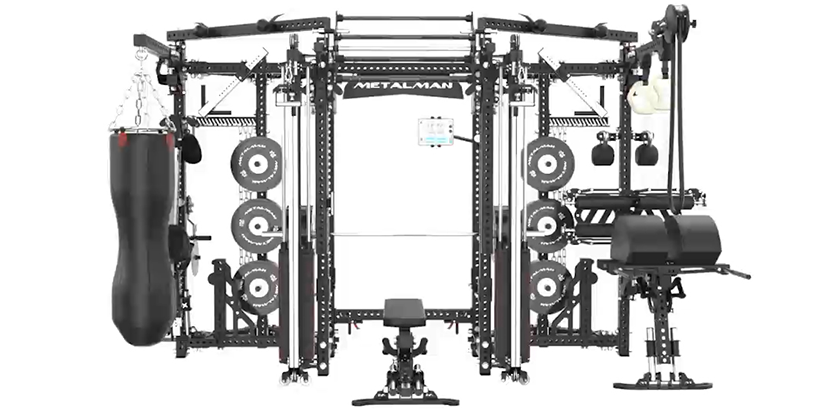
The following comparison highlights the typical spatial impact on a commercial gym floor. While a full rack provides a fully enclosed safety environment, the half rack's open-front design significantly reduces the depth required for user clearance and barbell rotation. For procurement managers, this means a higher ratio of training stations per linear foot of floor space.
| Dimension/Metric | Half Rack Profile | Full Power Rack Profile |
|---|---|---|
| Typical Depth (Frame) | ~120 cm - 150 cm | ~150 cm - 180 cm+ |
| Standard Width | 120 cm - 135 cm | 120 cm - 140 cm |
| Operational Clearance | Moderate (Open front) | High (Requires 360° access) |
| Installation Footprint | Optimized for density | Requires dedicated zone |
From a logistics and procurement standpoint, the smaller footprint of the half rack also translates to lower shipping volumes. This can reduce landed costs per unit when importing large quantities for regional gym chains or franchise-based expansions. When calculating your power rack footprint comparison, factor in the "buffer zone" required for barbell loading to ensure high-traffic areas do not become congested during peak hours.
Strategic ROI: Scalability and High-Density Training Environments
For distributors and boutique studio owners, the selection of a half rack power rack is a decision driven by long-term facility ROI rather than just initial unit cost. In high-density training environments, the ability to maximize equipment density directly correlates to revenue-generating potential per square meter. Choosing a more compact profile allows for a more agile commercial strength equipment layout, enabling businesses to scale their offerings—such as adding functional trainers or kettlebell zones—without requiring a larger physical footprint.
When evaluating scalability for multi-site rollouts, procurement teams should prioritize equipment that balances robust structural integrity with logistical efficiency. The reduced volume of half-rack configurations often results in lower freight costs and simplified assembly, which is a critical factor for distributors managing high-volume orders. Ultimately, optimizing your power rack footprint comparison ensures that your facility remains both high-performing and economically efficient as your membership base grows.
Structural Integrity and Load Capacity for Commercial Strength Equipment Layouts
When designing a high-density facility, the half rack power rack serves as a foundational element that must withstand constant mechanical stress. Unlike residential alternatives, commercial-grade units are engineered to maintain strict structural integrity under the heavy, repetitive loading typical of professional strength training environments.
For distributors and facility managers, assessing the load-bearing capacity is critical for long-term ROI. A high-quality half rack must feature heavy-gauge steel tubing and reinforced uprights to prevent frame deflection during heavy compound lifts. In a professional commercial strength equipment layout, these units are subject to high-traffic durability demands, meaning the welding quality and bolt-tightening stability directly impact the equipment's lifecycle and the safety of the end-user.
Technical Specifications and Structural Comparison
Evaluating the trade-offs between different rack configurations requires a deep dive into material thickness and assembly stability. While a full rack offers maximum enclosure, the half rack provides a versatile alternative that optimizes throughput by reducing the footprint without sacrificing the fundamental load capacity required for heavy barbell work. For procurement specialists, understanding these technical nuances is essential to prevent premature wear and high maintenance costs in multi-site rollouts.
| Technical Dimension | Half Rack Configuration | Full Power Rack Configuration |
|---|---|---|
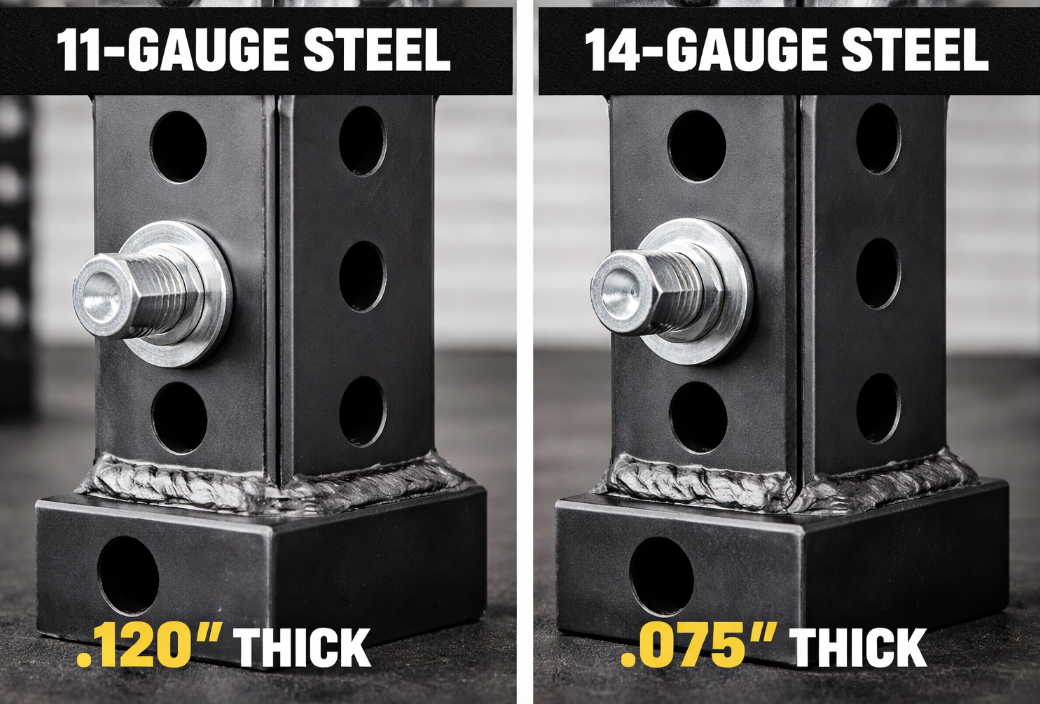
| Typical Steel Gauge | 11-gauge (3mm) heavy-duty steel | 11-gauge or thicker reinforced steel |
| Structural Stability | High (Dependent on floor bolting) | Maximum (Full frame rigidity) |
| Power Rack Footprint Comparison | Compact/Efficient space usage | Larger/Fixed footprint requirement |
| Welding & Joint Quality | Reinforced corner gussets required | Full perimeter structural welding |
| Maintenance Cycle | Low (Focus on bolt-tightening) | Low (Focus on frame alignment) |
When sourcing for large-scale gym space optimization, prioritize units that utilize high-density welding and industrial-grade powder coating. A well-engineered half rack with a robust steel gauge ensures that even with a smaller footprint, the equipment maintains the structural rigidity necessary for high-intensity commercial use, effectively balancing durability with spatial efficiency.
Material Standards and Quality Control for Bulk Procurement
For procurement managers executing multi-site rollouts, the distinction between "commercial-style" and true commercial-grade equipment lies in the metallurgical specifications. To ensure long-term durability, verify that your supplier utilizes 11-gauge steel as the baseline. Thinner gauges may suffice for boutique studios, but high-traffic commercial strength equipment layouts demand this thickness to prevent frame fatigue and structural bowing over years of heavy use.
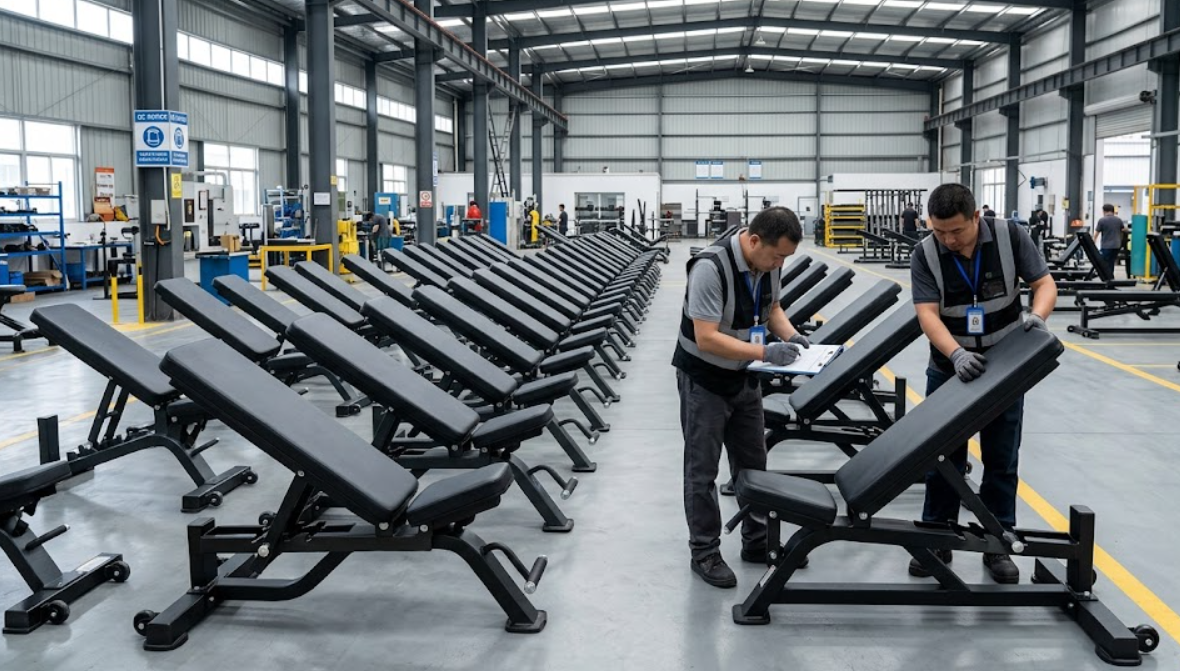
Beyond the steel itself, the finish quality dictates the total cost of ownership. A high-grade, electrostatic powder coating is essential to resist oxidation and the abrasive effects of barbell contact. When managing large-scale orders, we recommend a strict QC inspection protocol that focuses on two specific areas: the consistency of the welding standards—ensuring seamless, high-penetration joints—and the uniformity of the coating thickness. A lack of attention to these details often leads to premature chipping and rust, which can compromise the aesthetic and structural integrity of your facility. B2B sourcing tip: Always request samples or high-resolution macro photography of the weld points and corner gussets to verify that the manufacturing capability meets the rigorous demands of a professional environment.
Operational Versatility and Accessory Compatibility for Multi-Site Rollouts
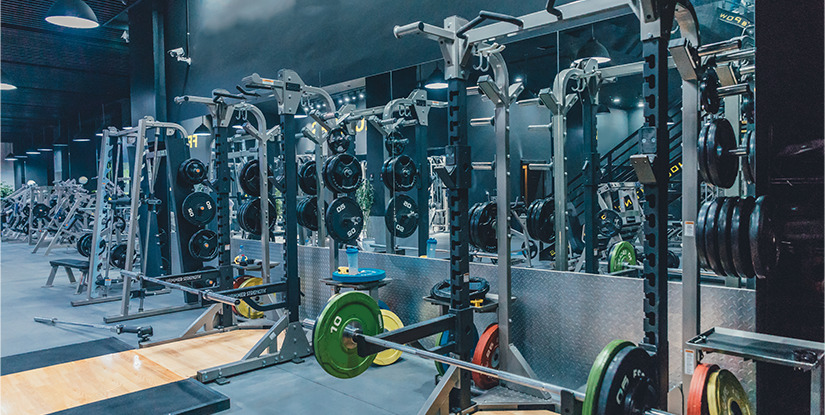
From a procurement standpoint, the half rack power rack offers a strategic advantage in maintaining high equipment uptime. Because these units typically feature an open-front design, they facilitate easier access for facility staff during routine inspections and cleaning, which is critical for high-traffic commercial strength equipment layout planning.
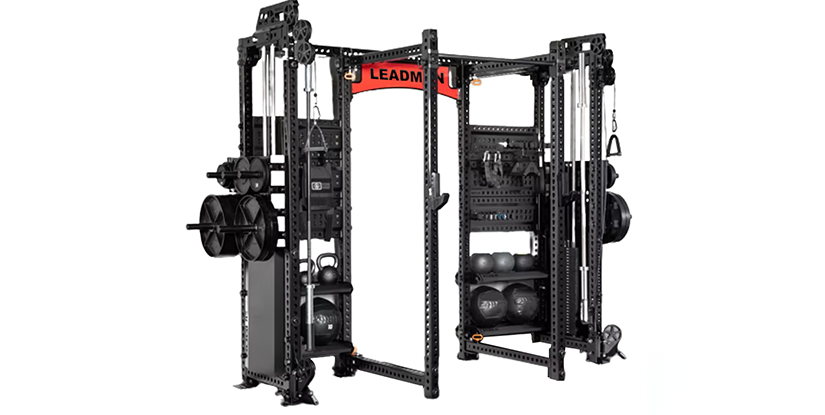
Optimizing gym space optimization involves more than just floor area; it requires selecting hardware with high accessory compatibility. The streamlined structure of a half rack allows distributors to offer modular add-ons—such as dip stations, landmines, or weight storage pegs—without the structural complexity or footprint of a full cage. This modularity simplifies maintenance cycles, as individual components can be serviced or replaced without dismantling an entire heavy-duty enclosure. For multi-site rollouts, this translates to lower long-term technical overhead and more predictable equipment lifespans across diverse facility types.
Evaluating TCO Through Maintenance and Footprint Efficiency
When calculating the Total Cost of Ownership (TCO) for multi-site deployments, procurement managers must weigh the initial unit cost against long-term upkeep and spatial utility. While a full rack provides maximum structural rigidity for extreme loads, the half rack power rack often delivers a more efficient ROI for boutique studios and high-density training zones due to reduced hardware complexity and easier component replacement.
The following comparison outlines the technical trade-offs regarding maintenance requirements and accessory integration to assist in your inventory and facility planning:
| Feature | Half Rack Profile | Full Rack Profile |
|---|---|---|
| Maintenance Frequency | Lower; simplified single-side bolt tensioning | Higher; requires full enclosure structural checks |
| Accessory Attachment Points | Optimized for front-access modularity | High density; multi-angle attachment options |
| Footprint Comparison | Compact; ideal for space-constrained layouts | Extensive; requires larger clearance zones |
| Ease of Cleaning/Inspection | High; open-access design facilitates rapid turnover | Moderate; internal corners can accumulate debris |
For distributors managing large-scale shipments, the half rack's reduced profile often results in lower shipping volumes and easier on-site assembly. This makes it a reliable choice for rapid rollouts where speed of installation and minimal technical overhead are prioritized over the specialized heavy-duty enclosure of a full power cage.
A critical procurement decision for large-scale distributors involves balancing logistics efficiency with long-term durability. When planning a multi-site rollout, the streamlined assembly of a half rack power rack minimizes on-site labor costs and reduces the complexity of shipping specialized parts. Unlike full cages that may require extensive structural synchronization, the modular nature of these racks allows for faster component replacement and easier inventory management of spare parts.
From a logistics perspective, the reduced volume of individual units often leads to better container utilization and lower freight costs per unit. For facility managers, this translates to a more agile maintenance strategy; if a single attachment or upright requires attention, the lack of a full enclosure prevents the need for extensive disassembly. This structural simplicity ensures that high-traffic commercial strength equipment remains operational with minimal downtime, securing a more predictable lifecycle across all managed locations.
Sourcing and Logistics: Managing MOQ and Shipping Volume for Bulk Orders
When scaling a multi-site rollout, the logistical profile of a half rack power rack offers distinct advantages over full-scale alternatives. For procurement managers, the primary variables are not just unit price, but the relationship between product dimensions and total landed cost during international transit.
Optimizing Freight and Dimensional Weight
The compact nature of a half rack power rack typically results in a lower shipping volume per unit compared to full power racks. Because these units often feature more modular, high-density steel components, they can be packed more efficiently into standard containers. This reduction in dimensional weight is critical for B2B buyers looking to minimize air or sea freight surcharges. By selecting models with nested or stackable frame components, distributors can achieve better freight optimization, allowing for more units per 40ft HC container. This efficiency directly improves the margin for distributors managing high-volume inventory or large-scale facility installs.
MOQ and Scalability Considerations
From a sourcing perspective, the MOQ (Minimum Order Quantity) for specialized half rack configurations may vary based on the degree of customization requested for commercial strength equipment. While full racks often require massive, non-modular shipping footprints, the half rack's streamlined profile allows for more flexible ordering increments. This makes it an ideal option for boutique fitness chains or regional distributors who need to balance high-quality commercial builds with more agile, frequent replenishment cycles.
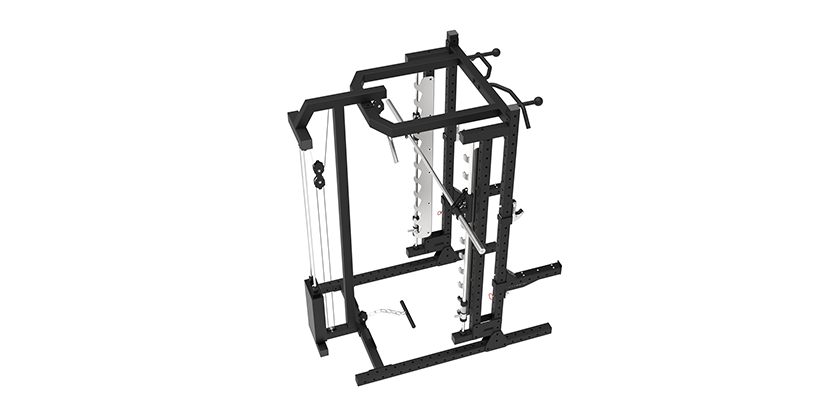
Logistics and Cost-Efficiency Comparison
Evaluating the total cost of ownership requires looking beyond the initial invoice. Procurement teams must analyze how the power rack footprint comparison affects container utilization and landed costs. A half rack configuration generally offers a more favorable ratio of functional utility to shipping volume, which is a decisive factor for high-volume international shipments.
| Metric | Half Rack Configuration | Full Power Rack Configuration |
|---|---|---|
| Shipping Footprint | Compact/Modular | Large/Extended |
| Volumetric Weight Impact | Lower (Reduced Air/Sea Surcharges) | Higher (Increased Freight Costs) |
| Container Density | High (Optimized for 40ft HC) | Moderate (Limited by frame size) |
| Commercial Strength Equipment Layout | High Density / Space-Efficient | Lower Density / High Footprint |
| Typical Sourcing Advantage | Lower MOQ & Freight Per Unit | High Volume / Low Unit Cost |
For distributors managing complex commercial strength equipment layout requirements, the half rack provides a strategic hedge against rising freight rates. By reducing the volumetric weight per unit, buyers can maintain higher profit margins even when shipping costs fluctuate, making it a reliable choice for standardized multi-site deployments.
Successful procurement also hinges on managing the assembly requirements and on-site labor costs. While a half rack power rack is more compact for transit, its modularity means distributors must ensure that all specialized hardware—such as J-cups, spotter arms, and safety pins—is bundled correctly within the SKU to prevent costly secondary shipments. A well-structured procurement strategy should include a verification step for accessory compatibility, ensuring that the streamlined profile does not lead to missing components during the final installation phase.
Furthermore, prioritizing gym space optimization during the design phase allows facility managers to leverage the smaller footprint for higher throughput. By selecting models with standardized bolt patterns and simplified assembly instructions, distributors can reduce the specialized technician hours required for deployment, effectively lowering the total installation overhead across multiple commercial locations.
Long-Term ROI: Evaluating the Trade-Offs Between Half Racks and Full Power Racks
For facility managers and distributors, the decision between equipment types centers on the tension between initial CAPEX and long-term throughput. While a full power rack offers maximum structural versatility, a half rack power rack often provides a superior return on investment in high-traffic commercial settings where floor space is a premium commodity.
Optimizing Footprint Efficiency and Throughput
When designing a commercial strength equipment layout, the goal is to maximize the number of usable stations without compromising safety or movement flow. A half rack offers a smaller footprint, allowing for higher density in your facility. This gym space optimization directly impacts revenue: more stations per square foot can lead to higher peak-hour throughput and increased membership capacity. From a procurement standpoint, the lower CAPEX of half racks allows for larger multi-site rollouts or more diverse equipment mixes within the same budget, effectively lowering the total cost of ownership across a distributed network.
| Metric | Half Rack Configuration | Full Power Rack Configuration |
|---|---|---|
| Initial CAPEX | Lower per unit | Higher per unit |
| Footprint Efficiency | High (Compact) | Moderate (Large) |
| User Throughput | Optimized for rapid transitions | Optimized for specialized lifting |
| Space Utility | Ideal for multi-functional zones | Best for dedicated strength bays |
Quantitative Comparison for Procurement Planning
To assist in high-volume sourcing and facility planning, we have expanded the metric evaluation. This comparison focuses on the operational trade-offs that impact long-term profitability and maintenance cycles for distributors and gym owners.
| Evaluation Metric | Half Rack Power Rack | Full Power Rack |
|---|---|---|
| Average Footprint | Compact / Low | Expanded / High |
| Cost per Square Foot | Optimized (Higher Density) | Lower (Larger Area Required) |
| Functional Versatility | High (Accessory-focused) | Extreme (Structural/Safety-focused) |
| Maintenance Requirements | Standard (Lower complexity) | Moderate (More moving parts/pins) |
| Ideal Use Case | Boutique & High-Traffic Gyms | Performance & Heavy Strength Centers |
When evaluating a power rack footprint comparison, buyers should note that while the full rack offers unmatched structural stability for specialized lifting, the half rack's reduced spatial demand allows for more versatile commercial strength equipment layout options. This flexibility is critical when managing shipping volumes and container optimization for international wholesale orders.
Strategic Inventory and Scaling Insights
From a distributor perspective, prioritizing the half rack power rack can significantly improve inventory turnover. Because these units are more compact, they allow for more efficient container loading and reduced shipping costs per unit, which is a critical factor in high-volume international trade. For wholesalers, this translates to better scalability when fulfilling large-scale orders for multi-site rollouts or franchise expansions.
Furthermore, the reduced mechanical complexity of a half rack often results in shorter maintenance cycles for facility owners. By choosing a configuration with fewer specialized moving parts, procurement managers can reduce long-term service intervals and operational downtime. For distributors managing diverse catalogs, the high facility density provided by these units makes them a reliable, high-demand SKU that balances rapid stock movement with consistent, predictable margins.