Best Compact Power Rack: Commercial Grade Wholesale Sourcing
Lifecycle Economics: Evaluating Total Cost of Ownership for Compact Strength Systems
When sourcing the best compact power rack for a high-traffic facility, procurement officers must look beyond the initial invoice to mitigate three critical risks: structural failure, specification misalignment, and shipping-related damage. A low-cost entry often masks inadequate steel gauge quality or subpar welding, which eventually compromises structural integrity and increases long-term liability. To ensure a successful commercial fitness facility procurement process, buyers must evaluate how initial CAPEX vs. long-term maintenance costs will impact their bottom line over a five-to-ten-year lifecycle.
Partnering with a reputable heavy duty gym rack supplier ensures that your investment in space saving strength training equipment remains a fixed asset rather than a recurring replacement expense. High-grade steel and precision engineering reduce the frequency of part replacements and downtime, providing a superior return on investment for distributors and gym owners alike.
| Procurement Factor | Economy-Grade Sourcing | Premium Commercial Grade |
|---|---|---|
| Steel Gauge Quality | Thin-walled, prone to warping | Heavy-duty, high-tensile steel |
| Maintenance Needs | Frequent bolt/joint tightening | Minimal, high-durability build |
| Lifecycle Value | High depreciation/short life | High ROI/extended longevity |
| TCO Profile | Low upfront/High long-term | Stable upfront/Low long-term |
Calculating the true cost of space saving strength training equipment requires a granular look at the Total Cost of Ownership (TCO). While consumer-grade models offer a lower initial purchase price, they often trigger a cycle of frequent repairs and premature replacement. For professional distributors, this volatility disrupts procurement efficiency and undermines client trust. In contrast, sourcing the best compact power rack from a specialized manufacturer ensures that capital is deployed into assets that withstand rigorous, daily usage cycles without degrading.
Comparative TCO Breakdown: Consumer vs. Commercial Sourcing
| Metric | Consumer-Grade Models | Commercial-Grade Sourcing |
|---|---|---|
| Expected Lifespan | 1–3 Years (High Wear) | 8–12+ Years (High Durability) |
| Maintenance Frequency | High (Frequent Part Replacement) | Low (Minimal Adjustments) |
| Replacement Cost | High (Frequent Re-ordering) | Low (Long-term Asset Stability) |
| ROI Potential | Diminished by Depreciation | Optimized via Asset Longevity |
For high-volume commercial fitness facility procurement, the goal is to minimize the frequency of re-orders and shipping logistics. Investing in high-spec equipment reduces the hidden costs of downtime and customer dissatisfaction, ultimately yielding a much higher margin for global distributors and gym operators.
Optimizing Landed Cost through Strategic Sourcing
To achieve the most competitive landed cost, procurement professionals must look beyond the per-unit price and analyze the logistical variables inherent in international trade. Utilizing factory-direct sourcing advantages allows buyers to bypass middleman markups, but true cost-efficiency is found in shipping volume optimization. Because high-quality space saving strength training equipment often involves heavy steel components, optimizing container loadability is essential to reducing the freight-cost-per-unit ratio.
Furthermore, understanding the MOQ impact on unit price is vital for large-scale commercial fitness facility procurement. Scaling orders through a reliable heavy duty gym rack supplier not only drives down individual component costs but also ensures that rigorous QC standards are applied consistently across the entire batch. By integrating strict inspection protocols at the manufacturing stage, buyers mitigate the risk of expensive returns and damaged freight, ensuring that the best compact power rack arrives ready for immediate deployment without unforeseen logistical overhead.
Structural Integrity Standards for High-Volume Commercial Procurement
When sourcing the best compact power rack for high-traffic environments, procurement officers must look beyond aesthetics to foundational engineering. In a commercial setting, structural failure is not an option. As a professional heavy duty gym rack supplier, we prioritize rigorous material specifications to ensure long-term ROI for distributors and gym owners alike.
The core of a premium unit lies in its steel gauge specifications. We mandate the use of high-grade, 11-gauge or 7-gauge steel to guarantee maximum high-tensile strength under extreme stress. Furthermore, the load-bearing capacity of a professional-grade rack is dictated by its joinery. Our manufacturing process adheres to strict industrial welding standards, utilizing full-penetration welds rather than superficial beads. This ensures that even under repetitive, high-intensity heavy lifting, the frame maintains its geometric integrity. For B2B buyers, these technical benchmarks are the primary indicators of a product's lifespan and reliability in a professional commercial fitness facility procurement workflow.
To facilitate a data-driven decision, we have provided a technical comparison below. This allows procurement specialists to evaluate the structural differentiation between entry-level models and the high-performance best compact power rack configurations we supply. When managing commercial fitness facility procurement, verifying these specific metrics is essential to prevent premature equipment depreciation and ensure user safety.
| Material Grade | Steel Thickness (mm) | Max Load Capacity (kg) | Coating Type (Powder vs. Chrome) | Structural Reinforcement Points |
|---|---|---|---|---|
| High-Tensile Carbon Steel | 3.0mm (11-Gauge) | 350kg - 400kg | Electrostatic Powder Coating | Full-Perimeter Weld & Cross-Brace |
| Industrial Grade Steel | 3.2mm (7-Gauge) | 450kg+ | Premium UV-Resistant Powder | Reinforced Gusset Plates |
As a dedicated heavy duty gym rack supplier, our factory ensures every unit meets these benchmarks through strict QC protocols. This level of space saving strength training equipment engineering is designed to withstand the rigors of high-volume commercial use while maintaining a compact footprint.
Beyond material thickness, long-term reliability is secured through our advanced QC testing protocols. For large-scale wholesale orders, we implement rigorous stress testing to simulate extreme weight loads and ensure fatigue resistance over thousands of cycles. This prevents the structural sagging or weld fractures often seen in lower-tier space saving strength training equipment. Every batch undergoes strict batch consistency audits to ensure that the thousandth unit shipped matches the precision of the first prototype.
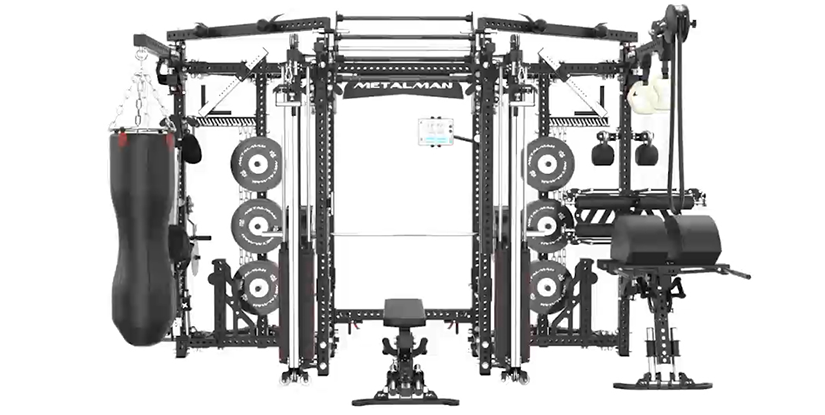
For international distributors, our shipment inspection standards serve as a final safeguard. Before any container is cleared for export, we conduct comprehensive inspections of bolt torque, finish uniformity, and frame alignment. This meticulous oversight is a cornerstone of professional commercial fitness facility procurement, minimizing the risk of DOA (Dead on Arrival) components or assembly discrepancies. By prioritizing these quality control benchmarks, we ensure that your bulk shipments of the best compact power rack arrive ready for immediate, high-intensity commercial deployment without the logistical headaches of faulty hardware.
Optimizing Footprint: Engineering Solutions for Space Saving Strength Training Equipment
In high-density commercial environments, procurement officers face a constant tension between floor area availability and equipment utility. Finding the best compact power rack requires moving beyond mere dimensions; it demands an understanding of the footprint-to-capacity ratio. High-performance facilities cannot sacrifice structural integrity for a smaller profile. To ensure long-term durability under heavy usage, we source only high-gauge steel construction, ensuring that even a reduced-footprint unit can withstand maximum load capacities without bowing or instability.
For distributors and gym owners, the goal is maximizing revenue per square foot. Our engineering standards focus on space saving strength training equipment that utilizes verticality and integrated storage to keep the training floor clear and safe. When sourcing at scale, the ability to integrate multiple functional zones into a single footprint is critical for optimizing facility ROI.
| Configuration Type | Storage Efficiency | Floor Space Utility | Procurement Value |
|---|---|---|---|
| Integrated Plate Pegs | High | Minimal | Best for small studios |
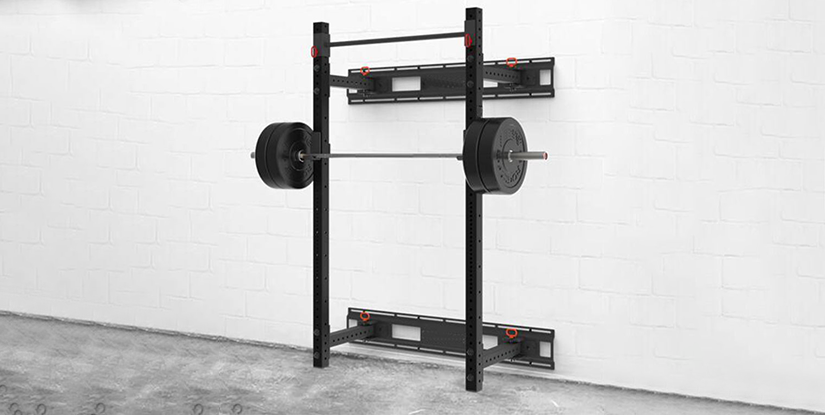
| Wall-Mounted Systems | Medium | Zero Footprint | Best for boutique gyms |
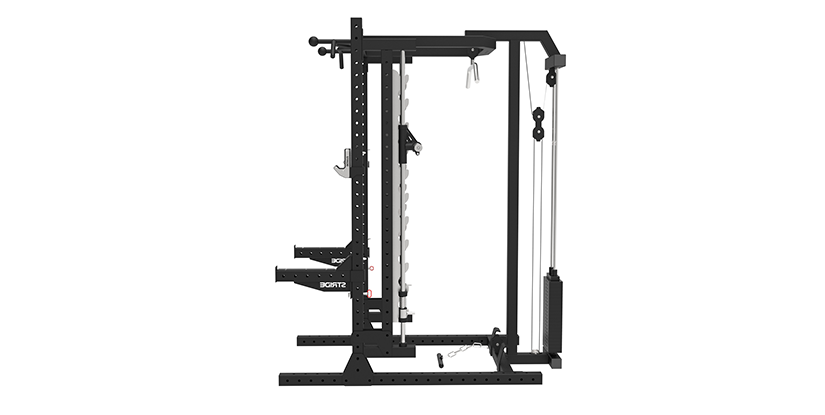
| Multi-Functional Rack | Extreme | Optimized | Best for high-traffic centers |
Technical Comparison: Folding vs. Fixed Compact Configurations
When selecting the best compact power rack for your inventory or facility, the decision between folding and fixed structures depends heavily on your specific turnover rate and installation requirements. While folding models offer unmatched versatility for boutique studios, fixed units remain the gold standard for high-volume, commercial fitness facility procurement due to their inherent stability. A heavy duty gym rack supplier must provide clear technical specifications regarding load-bearing limits to prevent structural fatigue in high-traffic zones.
Below is a technical breakdown to assist your procurement decision-making process based on structural density and operational utility.
| Configuration Type | Avg. Depth (Deployed) | Weight Capacity | High-Traffic Suitability | Best Use Case |
|---|---|---|---|---|
| Folding Wall-Mount | 12" - 24" (Stored) | 400 - 600 lbs | Low (Boutique/Private) | Multi-use studio spaces |
| Fixed Compact Rack | 48" - 60" | 800 - 1,200+ lbs | High (Commercial Gym) | Strength-focused facilities |
| Modular Slim-Profile | 42" - 54" | 600 - 900 lbs | Medium (Hybrid Gym) | Optimized training zones |
For bulk orders, we ensure all space saving strength training equipment undergoes rigorous QC testing to confirm that reduced dimensions do not compromise the maximum load capacity required by professional athletes.
Global Logistics and Sourcing Reliability
Beyond structural specifications, professional commercial fitness facility procurement requires a focus on supply chain efficiency and shipping reliability. A primary concern for international distributors is the hidden cost of volume; therefore, our manufacturing process emphasizes shipping volume optimization. By engineering modular components and utilizing high-density packaging, we reduce the dimensional weight of each unit, significantly lowering your landed cost per piece without risking damage during transit.
As a dedicated heavy duty gym rack supplier, we understand that customization often comes with logistical complexities. To support diverse facility layouts, we offer a flexible MOQ for custom dimensions, allowing you to source the best compact power rack tailored to specific architectural constraints. Every batch undergoes stringent QC standards, including weld-strength verification and powder-coating durability tests, ensuring that your global shipments arrive ready for immediate, high-intensity commercial use.
Global Sourcing Strategies for Heavy Duty Gym Rack Suppliers
For professionals engaged in commercial fitness facility procurement, the acquisition of equipment is only the first step in protecting a long-term capital investment. To maximize the ROI of the best compact power rack, facility managers must implement rigorous preventative maintenance protocols. In high-turnover environments, even the highest-grade steel is subject to mechanical wear that can compromise structural integrity if left unaddressed.
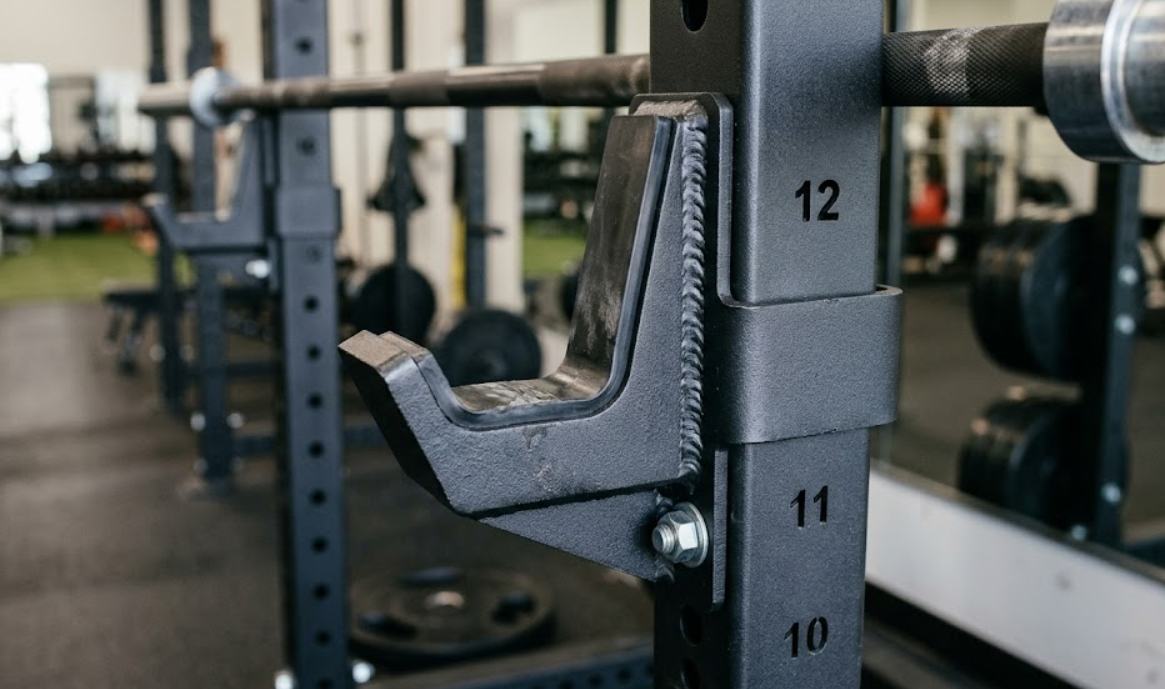
A reliable heavy duty gym rack supplier will often recommend a standardized inspection checklist to mitigate liability and equipment downtime. This includes strict lubrication schedules for moving parts—such as J-cups and safety bars—to prevent friction-induced scoring. Furthermore, regular bolt tightening audits are essential to ensure that vibration from heavy lifting does not loosen critical connections. By prioritizing these maintenance cycles, distributors and gym owners ensure that their space saving strength training equipment remains a durable, high-performance asset rather than a mounting maintenance cost.
To ensure your investment maintains its full weight bearing capacity, facility managers should adopt a systematic audit approach. Neglecting routine checks can lead to accelerated wear and tear, which ultimately diminishes the lifespan of your space saving strength training equipment. We recommend providing your maintenance staff with the following technical checklist to maintain high operational standards across your facility.
| Maintenance Component | Frequency | Action | Inspection Point |
|---|---|---|---|
| Structural Bolts & Fasteners | Monthly | Torque Audit | Check for looseness or vibration-induced displacement. |
| J-Cups & Safety Bars | Quarterly | Lubrication/Alignment | Inspect for scoring, friction, or metal-on-metal grinding. |
| Steel Frame & Powder Coating | Bi-Annually | Visual Inspection | Identify rust, impact damage, or coating degradation. |
| Base Stability & Floor Mounts | Annually | Leveling Check | Ensure no shifting or unevenness under load. |
By adhering to this rigorous schedule, procurement officers can guarantee that the best compact power rack units sourced through our factory remain compliant with safety standards, reducing long-term replacement frequency and optimizing total cost of ownership.
Ultimately, the most effective way to minimize operational disruptions is to select a partner with uncompromising QC standards. Sourcing the best compact power rack from a manufacturer that utilizes high-grade steel and advanced electrostatic powder coating durability significantly reduces the frequency of surface degradation and structural fatigue. When procurement officers prioritize factory-direct quality over low-cost alternatives, they effectively mitigate the risk of premature failure and equipment downtime. This wholesale sourcing advantage ensures that your facility is not merely buying equipment, but investing in long-term reliability. By choosing a heavy duty gym rack supplier that emphasizes precision engineering and premium finishes, you protect your capital expenditure and ensure your space saving strength training equipment remains a high-performing, low-maintenance asset for years to come.
OEM and ODM Customization for Commercial Fitness Facility Procurement
For professional distributors, standard off-the-shelf solutions often fail to meet the rigorous demands of high-traffic environments. When sourcing the best compact power rack, the technical specifications of your order determine long-term ROI. Partnering with a specialized heavy duty gym rack supplier allows for advanced engineering through OEM/ODM services, ensuring the equipment survives constant heavy loading.
Our manufacturing process prioritizes structural integrity by utilizing high-gauge, high-tensile steel gauge construction. This prevents frame deformation under extreme weight. Furthermore, we implement specialized powder coating durability protocols to protect against oxidation and mechanical wear in high-use commercial settings. Beyond structural strength, we offer custom dimensions for space saving strength training equipment, allowing facility managers to optimize floor plans without sacrificing stability. By customizing the footprint and material density, procurement officers can secure a competitive edge, ensuring their inventory remains a premium, long-lasting asset in any global fitness market.
Rigorous QC Protocols and Bespoke Manufacturing Capabilities
Reliability in commercial fitness facility procurement hinges on more than just aesthetics; it requires verified performance. To ensure every unit meets international safety standards, our production line adheres to strict QC testing protocols. Every batch undergoes rigorous stress testing to validate load-bearing capacity certification, ensuring the structural integrity of the frame under maximum dynamic loads. This level of scrutiny minimizes replacement costs and mitigates liability for large-scale distributors.
To support brand differentiation, we offer comprehensive custom branding/logo integration, ranging from laser-etched steel plates to custom-colored powder coating. Whether you are developing a private label or refreshing a franchise line, our factory scales to your specific needs. While we accommodate diverse MOQ requirements for bulk wholesale orders, our engineering team remains available for technical adjustments. By choosing a specialized heavy duty gym rack supplier, you secure a product that is both a high-performance tool and a branded asset for your client's facility.
To streamline your decision-making process, we have categorized our manufacturing tiers. Understanding these levels is essential for efficient commercial fitness facility procurement, as each tier impacts your MOQ, customization depth, and total landed cost. Whether you require a standard unit for immediate distribution or a fully bespoke design for a premium brand, selecting the correct tier ensures your space saving strength training equipment meets both aesthetic and structural expectations.
| Customization Level | Material Specs | Color/Finish Options | Branding Capability | Lead Time Impact |
|---|---|---|---|---|
| Standard (Wholesale) | High-gauge industrial steel | Pre-set industry colors | Small logo decals only | Minimal (Standard shipping) |
| OEM (Private Label) | Standard or upgraded steel | Expanded color palette | Laser-etched or silk-screen | Moderate (Production queue) |
| ODM (Bespoke Design) | Custom dimensions/density | Full custom powder coating | Full brand integration | Extended (R&D + Production) |
Selecting the best compact power rack configuration depends on your market positioning. While standard models offer the fastest turnaround for wholesale distributors, our ODM services allow you to engineer a truly unique product that stands out in a crowded heavy duty gym rack supplier landscape.
Logistics and Quality Control Protocols for International Wholesale Orders
Optimizing your budget for commercial fitness facility procurement requires looking beyond the initial unit price. While finding the best compact power rack is a priority, the true value is determined by the landed cost—the total price of a product once it reaches your facility. High-volume buyers can significantly reduce per-unit expenses through bulk shipping optimization and strategic container loading. By meeting a higher MOQ (Minimum Order Quantity), distributors can leverage economies of scale that lower both freight costs and individual item margins.
Effective commercial fitness facility procurement involves balancing inventory availability with shipping efficiency. Below is a comparison of procurement models to help you decide the most cost-effective way to stock your facility.
| Procurement Model | Shipping Efficiency | Inventory Readiness | Cost Impact |
|---|---|---|---|
| LCL (Less than Container) | Moderate | Low/On-demand | Higher per-unit freight |
| FCL (Full Container Load) | Maximum | High/Stocked | Lowest landed cost |
| Air Freight (Express) | Low | Immediate | Premium pricing |
When sourcing the best compact power rack, we recommend FCL shipments to maximize bulk shipping optimization. This approach ensures that your heavy duty gym rack supplier can pack containers to capacity, reducing the logistical overhead per unit and protecting your bottom line during large-scale facility builds.
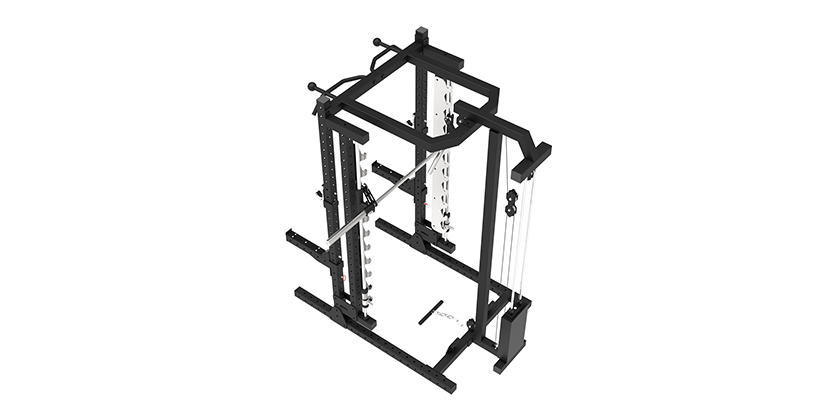
Beyond shipping efficiency, protecting your capital investment requires a heavy duty gym rack supplier that prioritizes uncompromising quality assurance protocols. For high-volume commercial fitness facility procurement, a low initial price is a liability if the equipment fails structural testing upon arrival. To mitigate the risk of costly returns or facility downtime, our manufacturing process integrates rigorous structural integrity testing at every stage of production.
Before any international dispatch, every unit undergoes a comprehensive pre-shipment inspection to ensure it meets global safety standards. This includes verifying material certification for high-tensile steel gauges and ensuring all weld points can withstand extreme load capacities. By enforcing these strict quality assurance protocols, we guarantee that your space saving strength training equipment arrives ready for high-traffic commercial use. This meticulous attention to detail ensures that your pursuit of the best compact power rack results in a durable, long-term asset rather than a logistical headache.
Navigating the complexities of global distribution requires a clear understanding of the trade-offs between speed and expense. For large-scale orders of space saving strength training equipment, the choice between sea freight vs air freight is the most significant variable in your total procurement budget. While air freight offers rapid delivery, it is rarely cost-effective for heavy, high-density steel components. Most professional buyers opt for sea freight to leverage port-to-port logistics, which provides the most economical solution for moving high-volume shipments across oceans.
To ensure a seamless transition through international borders, our logistics team manages all essential customs documentation, including commercial invoices, packing lists, and certificates of origin. This comprehensive approach minimizes the risk of clearance delays at the port. By adhering to strict international shipping standards, we ensure that your best compact power rack inventory is handled with precision, maintaining structural integrity from our factory floor to your commercial facility.
Scalability and MOQ Frameworks for Large-Scale Facility Rollouts
For procurement managers and gym developers, maximizing return on investment (ROI) requires a strategic approach to volume. When sourcing the best compact power rack for multi-location builds or large-scale facility expansions, the relationship between Minimum Order Quantity (MOQ) and unit cost is the most critical lever for budget optimization. By leveraging economies of scale, distributors can significantly lower the landed cost per unit, making high-end space saving strength training equipment more accessible for high-density training environments.
Our manufacturing model utilizes tiered pricing structures designed to reward high-volume procurement. As order volumes increase, the per-unit expenditure decreases, allowing for greater margin protection during large-scale rollouts. Rather than purchasing single units at retail-adjacent rates, commercial buyers benefit from volume discounts applied at specific threshold milestones. This structured approach ensures that as you scale your fitness facility with premium, heavy-duty hardware, your capital expenditure remains efficient without compromising on the structural integrity or the rigorous quality control standards required for professional strength training environments.
To optimize your ROI calculation, you must align your procurement model with your specific square footage and density requirements. Choosing the right heavy duty gym rack supplier depends on whether you are outfitting a boutique studio or a sprawling multi-zone facility. A strategic commercial fitness facility procurement plan avoids the pitfall of over-investing in oversized equipment for small footprints or under-specifying durability for high-traffic zones.
Procurement Model Comparison by Facility Scale
| Facility Type | Primary Procurement Focus | Typical Order Volume (MOQ) | Strategic ROI Driver |
|---|---|---|---|
| Small Boutique Studio | Space saving strength training equipment | Low (1-5 units) | High-margin, premium aesthetics |
| Mid-Size Commercial Gym | Durability & Versatility | Medium (5-20 units) | Balanced unit cost vs. footprint |
| Large-Scale Training Center | Best compact power rack (Bulk) | High (20+ units) | Maximum volume discount & logistics efficiency |
By selecting the best compact power rack configuration that matches your facility's scale, you ensure that your capital is deployed toward equipment that offers both longevity and rapid deployment capabilities. Working directly with a factory-direct supplier allows you to customize these procurement tiers to meet specific shipping and installation timelines.
Protecting Long-Term Asset Value via Rigorous Logistics and QC
True long-term ROI in commercial fitness is not determined by the initial purchase price, but by the total cost of ownership and equipment uptime. To mitigate the risks of downtime, professional buyers must prioritize a heavy duty gym rack supplier that maintains stringent QC standards throughout the manufacturing cycle. Every unit of the best compact power rack must undergo rigorous load-bearing testing and weld-integrity inspections to ensure it meets the demands of high-traffic environments. This commitment to quality prevents the costly replacement cycles that plague low-tier sourcing options.
Furthermore, efficient shipping logistics and substantial factory capacity are essential for maintaining project timelines. A reliable partner offers more than just hardware; they provide a stable supply chain capable of handling large-scale international freight without delays. By optimizing the durability-to-cost ratio, procurement managers can secure high-performance space saving strength training equipment that withstands heavy usage while remaining within budget. This strategic focus on quality and logistical reliability ensures that your commercial fitness facility procurement results in a durable, high-value asset rather than a recurring maintenance liability.