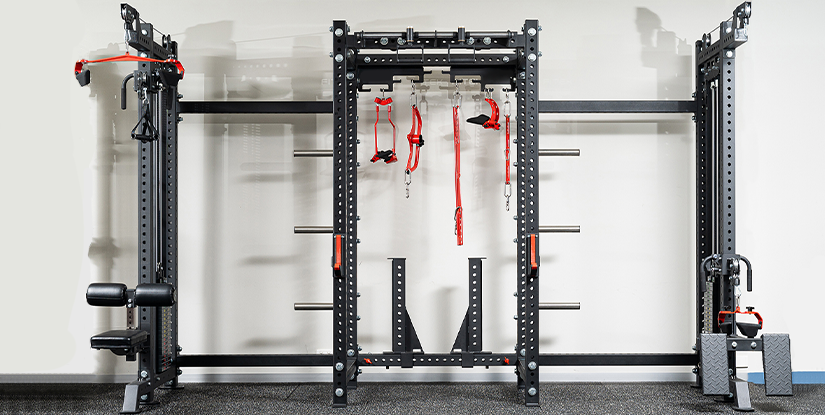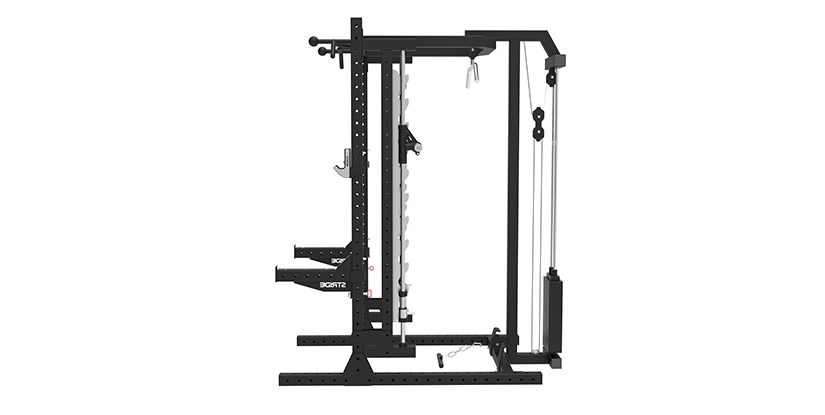
Wall Mounted Squat Rack Installation and Safety Standards
Long-Term Value and Lifecycle Economics of Wall-Mounted Systems
Many distributors mistakenly prioritize low initial CAPEX by sourcing lightweight, non-standardized units, only to face skyrocketing OPEX through frequent structural repairs and compromised safety. A smarter procurement strategy focuses on the total cost of ownership, selecting a wall squat rack with high-grade steel and standardized mounting points that ensure long-term structural integrity and minimal facility downtime.
Analyzing Procurement Expenditures: Capex vs. Opex
When calculating the budget for a new fitness facility, the purchase price is only the baseline. True facility layout optimization depends on how much a system costs to maintain and how much floor space it saves over a five-year cycle. Investing in high-quality commercial weight rack mounting systems reduces the frequency of bolt tightening and wall reinforcement inspections, ultimately protecting your long-term margins.
| Procurement Factor | Budget-Tier Units | Premium Commercial Systems |
|---|---|---|
| Initial CAPEX | Lower upfront cost | Higher initial investment |
| Maintenance Frequency | High (frequent inspections) | Low (standardized stability) |
| Lifespan/Durability | 3–5 years in high-use | 8+ years in commercial settings |
| Facility Impact | High footprint/low stability | Optimized space/high rigidity |
From a distributor's perspective, sourcing equipment that meets rigorous structural standards prevents the reputational damage associated with mounting failures. Prioritize hardware that offers predictable lifecycle costs to ensure your clients see a high return on their initial facility investment.
Mounting Quality and Maintenance Cycles
Understanding the relationship between mounting hardware and replacement frequency is essential for accurate ROI forecasting. A wall squat rack utilizing substandard fasteners or thin-gauge steel often requires aggressive intervention to remain compliant with fitness facility safety maintenance protocols. For high-traffic commercial gyms, the cost of labor for frequent adjustments often exceeds the original procurement savings of cheaper alternatives.
| Mounting Type | Expected Lifespan | Maintenance Frequency | Long-term Cost Impact |
|---|---|---|---|
| Standard Bolt-on | 3–5 Years | Quarterly tightening | High (Labor intensive) |
| Reinforced Steel Bracket | 5–7 Years | Bi-annual inspection | Moderate (Stable) |
| Heavy-Duty Industrial Mount | 8+ Years | Annual check-up | Low (Optimized ROI) |
Distributors should advise clients that while heavy-duty mounting systems require a higher initial outlay, the reduction in technical support calls and structural overhaul costs provides a significantly more stable profit margin over the equipment's lifecycle.
Material Resilience and Inventory Logistics
Beyond the mounting hardware, the long-term viability of a wall-mounted gym equipment installation depends heavily on surface treatment and material fatigue resistance. In high-traffic usage scenarios, such as boutique strength studios or commercial training centers, the constant friction from weight plates and barbell movement can compromise inferior finishes. Sourcing units with high-grade powder coatings or specialized anti-corrosion finishes is critical to prevent rust and aesthetic degradation, which often triggers premature replacement cycles.
From a supply chain management standpoint, distributors must also account for the physical properties of the metal to manage stock efficiency. High-density steel provides superior rigidity but increases shipping weight and freight costs. When planning procurement, balance the need for heavy-duty structural integrity with the logistical realities of your target market. A well-vetted supplier providing standardized, high-durability coatings ensures that the equipment maintains its professional appearance and structural stability despite the heavy mechanical stress of daily commercial operation.
Structural Integrity and Substrate Requirements for Commercial Mounting
The long-term durability of a wall squat rack depends entirely on the synergy between the mounting hardware and the facility's substrate. For distributors and gym owners, understanding the load-bearing capacity of the installation surface is the primary defense against structural fatigue and equipment failure.
Substrate Compatibility and Load Distribution
Professional commercial weight rack mounting requires a precise match between the equipment's weight distribution and the wall's internal composition. While a high-quality wall squat rack is engineered for heavy use, the mounting points are only as strong as the surface they penetrate. In many high-traffic fitness facilities, the choice between concrete and steel stud configurations dictates the entire installation strategy and the eventual lifespan of the unit.
| Substrate Type | Mounting Characteristics | Procurement Consideration |
|---|---|---|
| Solid Concrete | Highest shear strength and stability | Requires heavy-duty wedge anchors; ideal for high-load zones. |
| Steel Studs | Distributed load via framing | Requires precise alignment with structural members; avoids drywall. |
| Wood Blocking | Variable strength based on timber grade | Common in boutique studios; necessitates reinforced backing. |
When sourcing for large-scale rollouts, we advise verifying the substrate type during the site audit phase. Relying on standard drywall or non-reinforced partitions for wall mounted gym equipment installation significantly increases liability and reduces the structural integrity of the training area.
Technical Comparison of Mounting Substrates
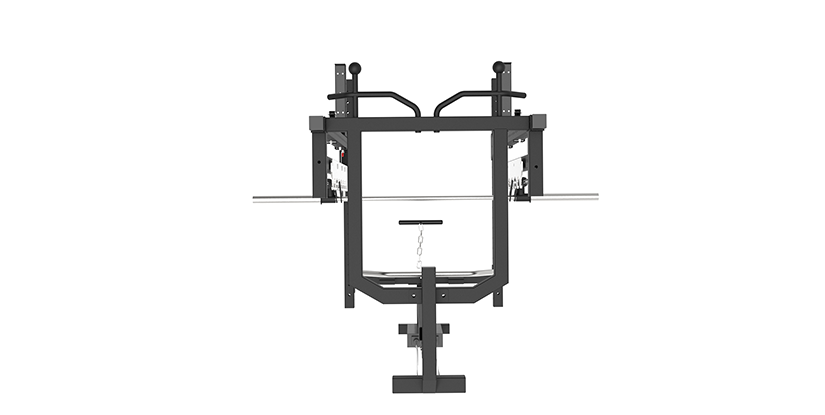
Selecting the correct mounting surface is a critical variable in the total cost of ownership (TCO). For facility designers, the choice between reinforced masonry and lightweight framing impacts not only the initial installation complexity but also the long-term maintenance cycle of the equipment.
| Substrate Type | Load Distribution Method | Installation Complexity | Long-term Durability |
|---|---|---|---|
| Concrete | Direct shear force transfer | High (requires masonry drilling) | Excellent; minimal vibration fatigue |
| Reinforced Masonry | Distributed through brick/block | Moderate (requires specialized anchors) | High; stable for high-impact use |
| Steel Studs | Structural frame load-bearing | Moderate (requires precise alignment) | Moderate; subject to frame deflection |
From a procurement standpoint, specifying concrete or reinforced masonry is the safest route for high-density commercial environments. While steel stud installations offer more flexibility in modern builds, they require rigorous quality control to ensure the structural members can handle the dynamic loads inherent in heavy barbell training.
Long-Term Maintenance and Inspection Protocols
Once the initial wall mounted gym equipment installation is complete, the focus must shift to rigorous fitness facility safety maintenance. Unlike freestanding units, a wall squat rack is subject to constant vibrational stress and dynamic load shifts that can affect the mounting interface over time. To mitigate liability and ensure long-term durability, facility managers should implement standardized inspection cycles.
A critical component of these audits is checking fastener tension. Repeated heavy lifting can lead to subtle shifts in the mounting hardware, potentially causing the rack to pull away from the substrate. During quarterly inspections, technicians should verify that all anchors remain seated and that there are no signs of substrate fatigue, such as cracking in concrete or bowing in metal studs. For distributors managing multi-site rollouts, providing clients with a specific maintenance checklist helps maintain product integrity and reduces the frequency of structural service calls.
Rigorous Maintenance Protocols for Long-Term Durability
Maintaining a wall squat rack in a high-volume gym requires more than occasional visual checks. For distributors and facility managers, establishing a strict high-traffic facility maintenance schedule is essential to mitigate liability and preserve the structural integrity of the equipment over years of heavy use.
Regular inspections should focus on the commercial weight rack mounting points, specifically checking for any loosening of bolts or hairline cracks in the mounting brackets. Because these units rely on a fixed connection to the building's structure, even minor shifts can compromise load-bearing stability. We recommend quarterly deep-inspections of all fasteners and anchor points to ensure the rack remains a reliable asset for your clients.
Scheduled Inspection Framework
To optimize operational budgets and labor allocation, facility managers should categorize inspections based on equipment usage density. A proactive approach prevents the high costs associated with emergency structural repairs or replacement of damaged mounting hardware. Below is a standard frequency framework for managing commercial fitness facility safety maintenance.
| Inspection Frequency | Primary Focus Areas | Action Required |
|---|---|---|
| Weekly | Visual stability and surface wear | Check for loose bolts and obvious bracket deformation. |
| Monthly | Hardware torque and mounting points | Verify tension on all anchor bolts and mounting plates. |
| Quarterly | Structural integrity and wall interface | Inspect for hairline cracks or wall substrate shifting. |
| Annually | Full system audit | Complete overhaul of fasteners and load-bearing assessment. |
When sourcing for large-scale rollouts, we advise distributors to prioritize equipment with high-grade, corrosion-resistant fasteners. This attention to detail in the manufacturing stage significantly reduces the long-term labor burden required to maintain a safe and compliant training environment.
Optimizing Total Cost of Ownership Through Preventive Maintenance
For procurement managers and large-scale distributors, the true value of a wall-mounted gym equipment installation is measured by its lifespan, not just the initial purchase price. Relying on reactive repairs—fixing a rack only after a bolt fails or a bracket bends—creates significant operational downtime and unexpected capital expenditures. By shifting the focus toward a structured preventive maintenance model, facilities can protect their long-term ROI and ensure equipment longevity.
A high-quality wall squat rack should be treated as a permanent structural component rather than a standalone accessory. Neglecting the periodic tightening of fasteners or ignoring subtle signs of wall fatigue leads to accelerated depreciation. Investing in high-spec mounting hardware during the initial sourcing phase minimizes the frequency of these interventions. Ultimately, a disciplined maintenance routine reduces the frequency of equipment removal, keeps training zones functional, and protects the brand reputation of the facility by preventing safety-related service interruptions.
Sourcing High-Grade Fasteners and Mounting Hardware via Wholesale Channels
The structural integrity of a wall squat rack depends less on the steel frame itself and more on the quality of the connection points. For distributors and facility managers, sourcing equipment with substandard hardware creates significant liability risks and long-term maintenance burdens.
The Critical Role of High-Tensile Fasteners
Reliable commercial weight rack mounting requires more than just standard hardware; it demands high-tensile bolts capable of resisting shear forces under heavy dynamic loads. When a facility scales its strength training area, the load-bearing capacity of the installation is determined by the grade of the fasteners used during assembly. High-grade components prevent bolt fatigue and structural shifting, ensuring the equipment remains stable during high-intensity movements.
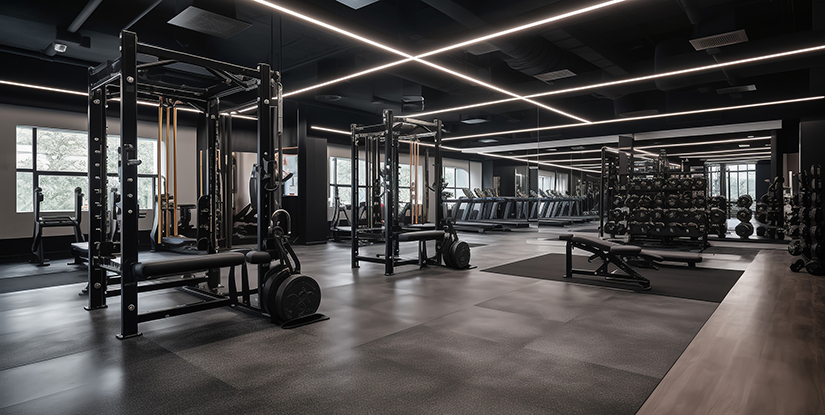
For B2B buyers and wholesalers, verifying the metallurgical specifications of mounting kits is a vital step in quality control. Relying on generic hardware often leads to premature wear, whereas specialized, heavy-duty fasteners provide the necessary safety margin for high-traffic commercial environments.
Selecting the appropriate mounting method is a critical decision for procurement managers, as the choice directly impacts both the initial installation cost and the long-term stability of the facility layout. Depending on whether the installation site uses reinforced concrete, masonry, or steel sub-structures, the fastener requirements will vary significantly.
Technical Comparison of Mounting Hardware Options
To assist in your procurement planning, the following table outlines the standard hardware configurations used in professional fitness facility installations. Choosing the correct solution prevents the need for costly retrofitting or structural repairs later in the equipment lifecycle.
| Fastener Type | Material Grade | Primary Application Scenario | Installation Complexity |
|---|---|---|---|
| Expansion Bolts | High-Tensile Steel | Standard concrete flooring or walls | Low (Mechanical) |
| Chemical Anchors | Stainless/Carbon Steel | Heavy-duty load-bearing or aging masonry | High (Requires Resin) |
| Lag Bolts | Heavy-Duty Zinc/Steel | Timber or wood-framed structures | Moderate (Drill/Drive) |
When negotiating with manufacturers or distributors, we recommend specifying the exact mounting substrate to ensure the provided kit meets the structural demands of the site. While expansion bolts offer the most efficient deployment for rapid rollouts, chemical anchors provide superior vibration resistance for high-traffic training zones where dynamic weight shifts are frequent.
Procurement efficiency for international distributors depends heavily on the manufacturer's ability to manage logistics and quality assurance. When ordering a wall squat rack at scale, the focus must shift from individual unit specifications to the robustness of the entire supply chain and the durability of the components during transit.
Wholesale Logistics and Quality Control Protocols
For high-volume orders, a strict QC protocol is non-negotiable. Beyond the steel frame, buyers should verify the corrosion resistance of all mounting hardware. In many commercial settings, especially those with high humidity or coastal climates, standard zinc plating may fail; specifying stainless steel or specialized powder coatings ensures long-term fitness facility safety maintenance and reduces replacement frequency.
Effective inventory management also requires understanding a factory's MOQ and shipping capabilities. To prevent damage during long-haul freight, ensure the manufacturer employs high-grade shipping durability standards, such as reinforced edge protection and moisture-proof packaging. This prevents the subtle warping or surface oxidation that can compromise wall mounted gym equipment installation upon arrival at your warehouse or client site.
Proactive Maintenance for Long-Term Asset Value
For distributors and facility managers, a structured maintenance protocol is essential to protect the structural integrity of a wall squat rack. Unlike free-standing units, wall-mounted systems are subject to constant vibrational stress and torque, which can compromise the mounting points over time if left unmonitored.
Implementing a routine inspection checklist ensures that commercial weight rack mounting hardware remains secure under heavy loading cycles. Regular checks prevent structural fatigue and maintain the load-bearing stability required for high-traffic environments. From a procurement perspective, consistent upkeep significantly extends the equipment's lifecycle, protecting your initial investment and ensuring a higher long-term ROI for your clients.
| Inspection Focus | Frequency | Key Action Item |
|---|---|---|
| Wall Anchors & Bolts | Quarterly | Check for loosening or any sign of wall substrate shifting. |
| Frame & Welding | Bi-Annually | Inspect joints for hairline fractures or paint chipping. |
| Load-Bearing Stability | Monthly | Verify lateral movement or unexpected play in the rack. |
Usage-Based Maintenance Intervals
Maintenance requirements shift significantly depending on whether the equipment is situated in a high-volume commercial gym or a low-impact boutique studio. High-traffic facilities experience more frequent vibration and heavy impact loads, necessitating tighter control over bolt tension and hardware integrity. In contrast, boutique or hotel settings can often follow a more relaxed maintenance interval schedule due to lower cumulative stress on the mounting points.
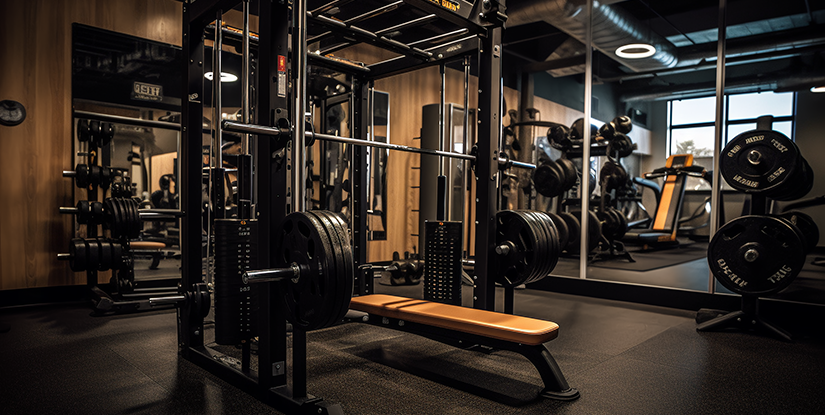
To optimize labor costs and operational efficiency, facility managers should align their inspection frequency with the specific intensity of their client base. A professional-grade wall squat rack requires more vigilant monitoring in environments where heavy barbell drops and high-frequency usage are the standard. Use the following comparison to guide your facility's preventative maintenance planning:
| Facility Type | Typical Usage Level | Primary Maintenance Concern | Recommended Inspection Cycle |
|---|---|---|---|
| High-Traffic Commercial Gym | Continuous / High Volume | Hardware loosening and wear and tear | Monthly |
| Boutique Fitness Studio | Moderate / Scheduled Classes | Surface finish and minor bolt adjustment | Quarterly |
| Hotel or Residential Gym | Low / Occasional Use | Structural stability and mounting security | Bi-Annually |
Prioritizing Component Quality to Reduce Total Cost of Ownership
When sourcing equipment, procurement managers must look beyond the initial unit price and evaluate the long-term Total Cost of Ownership (TCO). High-quality manufacturing processes directly impact how much a facility spends on repairs and replacement parts over a five-year cycle. A lower initial cost often masks hidden expenses related to premature component failure and frequent labor-intensive maintenance.
To ensure durability, verify that your supplier adheres to strict quality control (QC) standards regarding two critical areas: surface protection and structural bonding. First, inspect the powder coating integrity; a resilient, thick-film coating prevents moisture from reaching the steel, which is vital in preventing fastener corrosion and frame oxidation. Second, demand high-standard weld inspection protocols. In a commercial environment, even a minor subsurface flaw in a weld can expand into a structural failure under repetitive heavy loading. By selecting manufacturers that prioritize these high-spec finishes and robust structural joints, distributors can offer more reliable products that minimize the long-term maintenance overhead for their end-users.
Optimizing Facility Layout and Load Distribution Strategies
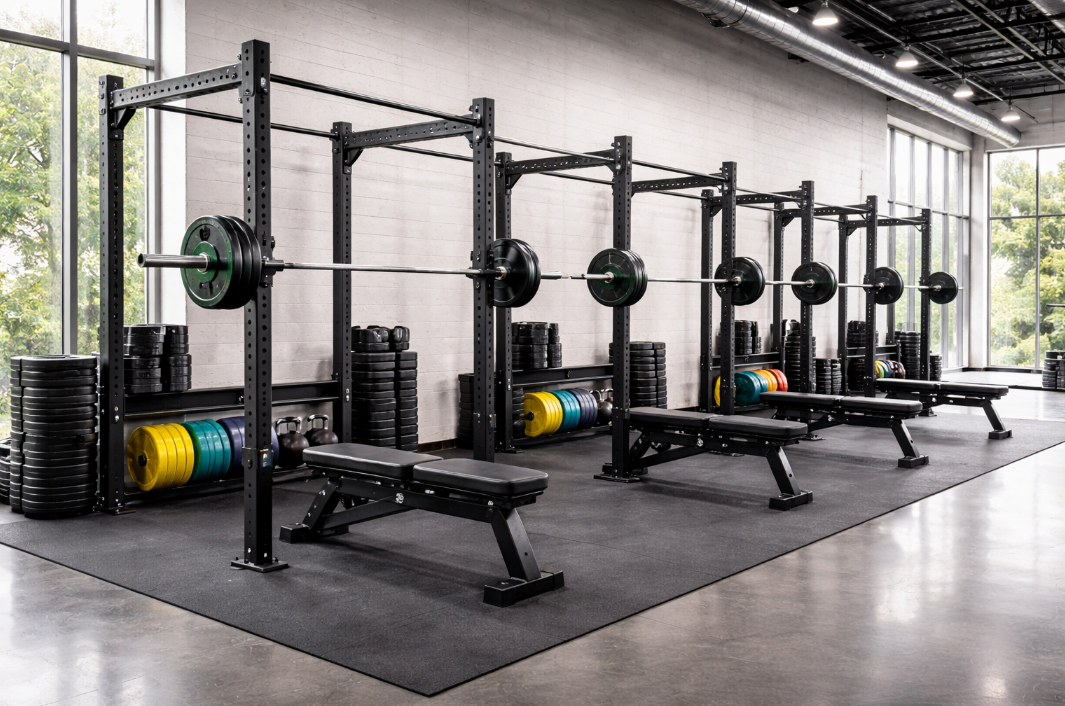
Maximizing usable square footage is a primary objective for high-density training environments. Integrating a wall squat rack into a professional facility layout allows operators to reclaim valuable floor space that would otherwise be consumed by traditional free-standing power cages. This vertical integration is essential for boutique studios or multi-functional commercial gyms where floor real estate dictates the total capacity of the facility.
Footprint Optimization and Spatial Impact
The transition from floor-based systems to wall-mounted configurations fundamentally alters the spatial footprint of a strength training zone. By utilizing vertical planes, distributors and facility managers can achieve a more streamlined layout, reducing the physical obstacles between equipment pieces. This optimization is not merely about saving space; it is about improving the flow of movement within the commercial gym to prevent congestion during peak hours. When sourcing for high-traffic areas, evaluating the depth of the unit against the intended clearance zones is critical to ensure that the installation meets both operational efficiency and safety standards.
Choosing the correct mounting configuration depends heavily on the specific load distribution requirements of your training zone and the existing wall architecture. Procurement managers must differentiate between standard cantilevered designs and heavy-duty reinforced systems to ensure long-term structural integrity under repetitive mechanical stress.
Configuration Comparison for Facility Planning
The following comparison outlines common mounting types encountered during wall mounted gym equipment installation to assist in technical decision-making and inventory planning.
| Configuration Type | Primary Advantage | Space/Clearance Profile | Typical Use Case |
|---|---|---|---|
| Standard Cantilever | Minimal depth profile | High floor clearance | Boutique studios & HIIT zones |
| Braced Support System | Enhanced load stability | Moderate depth requirement | High-volume commercial gyms |
| Reinforced Steel Frame | Maximum weight capacity | Deepest footprint | Strength-focused training centers |
When evaluating these options, consider that a more robust bracing system often requires additional wall-to-ceiling or wall-to-floor connection points. For distributors sourcing high-volume orders, it is vital to verify that the client's facility can support the specific shear force and tension loads inherent to these configurations to prevent structural failure.
Long-Term Maintenance and Structural Integrity
Ensuring the longevity of a wall squat rack requires more than just a one-time installation; it demands a rigorous fitness facility safety maintenance protocol. In high-traffic commercial environments, the constant cycles of loading and unloading heavy plates create significant structural stress on both the steel frame and the mounting hardware. Over time, repetitive kinetic energy can lead to microscopic shifts in the mounting points or even the loosening of anchor bolts.
To mitigate risks, facility managers should implement a quarterly inspection schedule to evaluate weight distribution across the vertical plane. This includes checking for any visible deformation in the mounting brackets and verifying that the commercial weight rack mounting hardware remains torqued to manufacturer specifications. For distributors and wholesale buyers, emphasizing these maintenance cycles to end-users is a key value-add that protects the client's long-term investment and ensures the structural stability of the entire strength training zone.