How to Choose the Best Squat Rack for Apartment Living
Optimizing Inventory for High-Demand Urban Fitness Trends
Many distributors make the mistake of sourcing low-margin, single-purpose racks that fail under heavy use, only to face high return rates and customer dissatisfaction. Instead of chasing the lowest sticker price, professional buyers should focus on a strategic procurement model that prioritizes durability vs. initial cost. By investing in high-grade steel and modular designs, you ensure the equipment remains a staple in a client's home for years, rather than a disposable item that needs frequent replacement.
When selecting the best squat rack for apartment use, the true metric of success is value-per-square-foot. High-quality, compact home gym equipment offers much higher long-term utility because it combines multiple functions—such as pull-up bars and adjustable benches—into a single footprint. While budget alternatives might seem attractive upfront, they often lack the structural integrity required for safe lifting. Choosing premium, multi-functional units minimizes the need for future upgrades, making it a much more cost-efficient solution for the modern, space-constrained athlete.
To assist your clients in making an informed decision, it is helpful to categorize options by their price-to-utility ratio. A successful procurement strategy involves understanding that a higher upfront investment often translates to better long-term satisfaction, especially regarding noise mitigation and structural stability in residential buildings.
Investment Tiers for Urban Strength Training
| Rack Category | Price Tier | Footprint | Key Utility & Noise Features |
|---|---|---|---|
| Folding Wall-Mount | Budget | Minimal | Maximum space saving squat rack potential; basic stability. |
| Compact Half-Rack | Mid-Range | Small | Balanced apartment friendly weightlifting; improved vibration dampening. |
| Modular Full Power Rack | Premium | Moderate | High versatility; advanced noise reduction features and heavy-duty dampening. |
When sourcing, prioritize models that offer integrated floor protection or adjustable components. This ensures that the compact home gym equipment you supply meets the strict environmental demands of high-density living, reducing the likelihood of neighbor complaints or structural vibrations.
The Hidden Costs of Low-Tier Sourcing
While the initial unit price may look attractive on a spreadsheet, procurement specialists must account for the "hidden costs" associated with substandard builds. In high-density residential areas, the lack of integrated noise reduction technology is a significant liability. Low-quality steel and poor joint tolerances often lead to excessive vibration and metal-on-metal clanging, which can trigger noise complaints and strain the relationship between the user and their neighbors.
Furthermore, neglecting floor protection in your product selection can lead to expensive liability issues. Cheaply manufactured racks often lack the necessary stability or base padding, resulting in concentrated pressure points that damage hardwood or laminate flooring. By prioritizing quality assurance and sourcing units with high-density rubber dampening, you provide long-term savings for the end-user. Investing in a more robust, well-engineered space saving squat rack prevents the cycle of frequent replacements and ensures the equipment remains a reliable, quiet, and durable asset in any urban home environment.
The Spatial Constraints of Modern Residential Gyms
Designing a functional training area within a residential unit requires a fundamental shift in how we view equipment dimensions. Unlike commercial facilities with expansive floor plans, apartment-based training is dictated by strict spatial limitations. The primary challenge lies in the footprint; even a standard rack can consume a significant portion of a multi-purpose room, leaving little room for movement or auxiliary storage. When sourcing compact home gym equipment, buyers must prioritize models that offer a high strength-to-size ratio without encroaching on living areas.
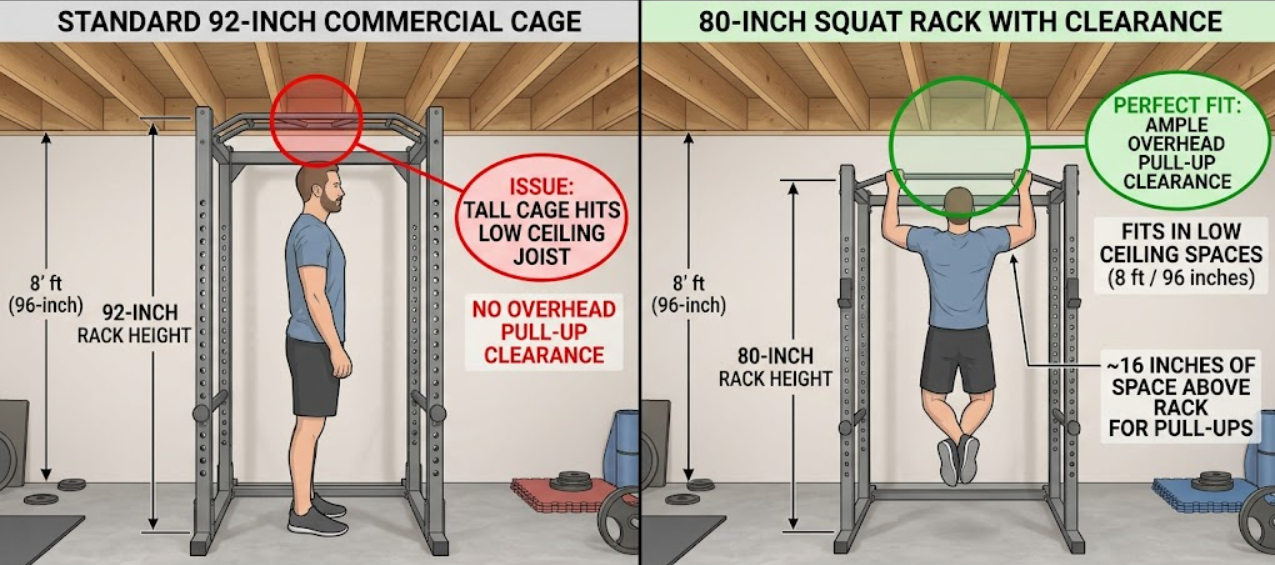
Furthermore, we cannot overlook the importance of vertical space. In many urban dwellings, the ceiling height is often lower than in industrial warehouses, which can create safety risks during overhead presses or even limit the installation of a pull-up bar. Finding the best squat rack for apartment use means balancing these two dimensions—optimizing the ground area while ensuring the height remains well within the structural limits of the room. Successful integration depends on selecting equipment that utilizes verticality efficiently without compromising safety or headroom.
To help you visualize your layout, we have categorized the most common configurations by their spatial impact. Choosing the right model depends on whether your priority is a permanent training station or a space saving squat rack that disappears when the workout is over.
| Rack Type | Typical Footprint | Spatial Impact | Ideal Use Case |
|---|---|---|---|
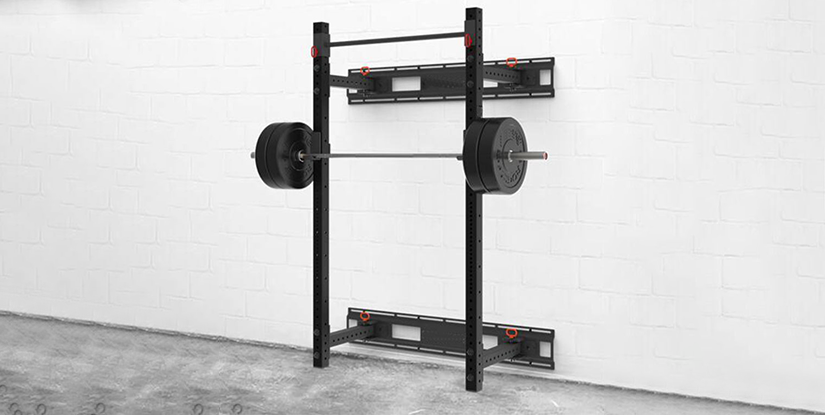
| Folding Racks | Minimal (Wall-mounted) | Highest efficiency; can be folded flat against the wall. | Small studios or multi-purpose living rooms. |
| Half Racks | Moderate | Requires fixed floor space but allows for better lateral movement. | Dedicated spare bedrooms or home offices. |
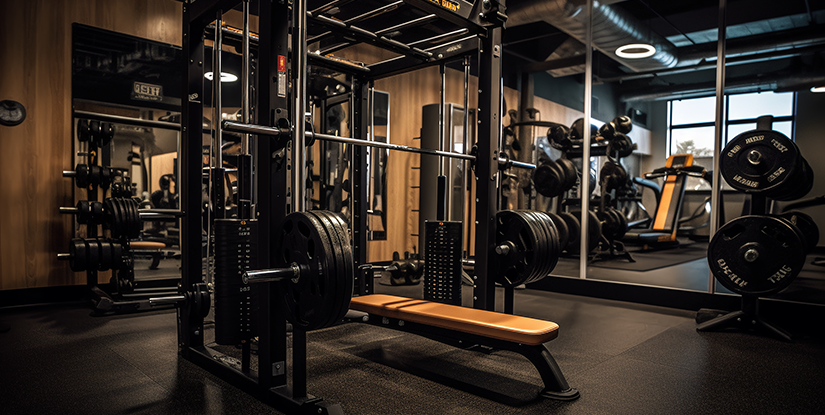
| Power Cages | Substantial | Maximum safety and versatility, but consumes significant floor area. | Larger apartments or basement levels. |
When evaluating these options for apartment friendly weightlifting, always measure your ceiling clearance before finalizing a purchase. A folding rack is the ultimate solution for maximizing square footage, whereas a half rack offers a middle ground for those who need more stability without the massive bulk of a full cage. Always account for the width of the barbell and the space needed for lateral movement to ensure your setup remains safe and functional.
Beyond Dimensions: Managing Sound and Vibration
While physical dimensions are the first hurdle, the "invisible" constraint of residential training is often the impact on neighbors. In multi-unit buildings, the primary concern is not just the visual footprint, but the kinetic energy transferred through the floor. High-impact movements or even the standard dropping of a barbell can create significant vibration, which travels through structural beams and causes noise disturbances in units below. To ensure a sustainable apartment friendly weightlifting setup, effective noise reduction is mandatory.
To mitigate these issues, we recommend investing in high-density rubber mats or specialized flooring tiles. A quality floor protection system does more than just preserve the aesthetic of the apartment; it acts as a shock absorber to manage weight distribution across a wider surface area. By decoupling the equipment from the structural floor, you minimize the transmission of low-frequency vibrations. Whether you are sourcing a space saving squat rack or a full station, always pair your equipment with professional-grade damping solutions to maintain positive relations with your neighbors and ensure your training remains a private, quiet endeavor.
Essential Dimensions for Compact Home Gym Equipment
Before finalizing your order, you must address the physical limitations of your training environment. Selecting the best squat rack for apartment use requires more than just picking a model; it requires precise spatial mapping. A common mistake in small-scale procurement is overlooking the "functional footprint"—the total area needed not just for the rack itself, but for the movement of the barbell and the user's stability.
In multi-unit residential buildings, ceiling height is often the most overlooked constraint. You must ensure sufficient clearance for overhead presses and the vertical travel of the barbell. If the rack is too tall, you risk structural damage or even safety hazards. We recommend measuring from the floor to the lowest ceiling obstruction, such as light fixtures or HVAC vents, to ensure your compact home gym equipment fits seamlessly.
| Storage Configuration | Space Efficiency | Ideal For | Deployment Type |
|---|---|---|---|
| Wall-Mounted Folding | Maximum | Tight corners/Stud walls | Permanent/Static |
| Slim Profile Half Rack | High | Dedicated training zones | Semi-permanent |
| Modular Multi-Rack | Moderate | Expanding home setups | Scalable/Modular |
When sourcing apartment friendly weightlifting solutions, always prioritize models that offer vertical integration. This approach maximizes your space saving squat rack utility by utilizing vertical real estate rather than expanding your horizontal footprint.
To assist in your selection process, we have categorized common configurations based on their physical impact on your living area. Choosing the right model depends on whether your primary constraint is floor area or total volume.
| Rack Type | Footprint & Dimensions | Vertical Space Usage | Stability Profile |
|---|---|---|---|
| Squat Stand | Minimal; low floor space requirement | Low to Moderate | High (if weighted) |
| Half Rack | Moderate; requires lateral clearance | High (tall profile) | Excellent |
| Power Rack | Large; significant dimensions | Maximum (full height) | Superior |
While a full power rack offers the highest level of stability for heavy lifting, it may be overkill for a small studio. For those seeking the best squat rack for apartment living, a space saving squat rack like a squat stand or a slim half rack often provides the perfect balance. These options allow you to maintain a high-quality training standard without compromising the utility of your residence. Always verify that the total dimensions of your chosen compact home gym equipment allow for a safe buffer zone around the barbell to prevent collisions with walls or furniture.
Beyond the rack itself, you must account for the "active zone" to ensure safe apartment friendly weightlifting. A critical oversight in many setups is failing to calculate the full movement range of the athlete. You must establish a strict safety margin around the equipment to prevent collisions with walls, windows, or fragile decor during lateral shifts or failed lifts.
Precision in measurement is non-negotiable. When planning your layout, do not just measure the rack's frame; you must include the total barbell length and the weight plate diameter in your calculations. A standard Olympic barbell requires significantly more width than the rack itself once loaded. If your space saving squat rack is placed too close to a structural pillar or a piece of furniture, the plates may strike these objects during a lift, potentially causing damage or loss of balance. Always ensure there is a minimum 12-to-18-inch buffer on either side of the bar to accommodate the widest possible load for a truly safe, professional-grade training environment.
Noise Reduction and Floor Protection Strategies
When sourcing the best squat rack for apartment use, technical specifications must extend beyond load capacity to include acoustic management. In multi-story residential buildings, the primary concern for distributors and end-users is not just the weight, but the kinetic energy transferred through the floor. Without proper vibration dampening, even a controlled lift can send structural vibrations through the building's frame, leading to neighbor complaints and potential structural fatigue.
To ensure a professional-grade setup, we recommend prioritizing impact absorption through high-density rubber matting or specialized flooring tiles. This floor protection is essential for mitigating the "thud" of heavy plates and protecting the subfloor from indentations. For high-end apartment friendly weightlifting environments, integrating heavy-duty vibration pads under the rack feet provides a critical buffer. This proactive approach to noise control ensures that your compact home gym equipment remains a long-term asset rather than a source of friction in shared living spaces.
Choosing the right surface is a strategic decision that balances durability with space constraints. For those investing in a space saving squat rack, the flooring solution dictates both the longevity of the equipment and the quality of the living environment. We have categorized the most common options to help you decide which fits your specific residential footprint.
| Flooring Type | Best Use Case | Primary Benefit | Maintenance Level |
|---|---|---|---|
| Rubber Mats | Heavy lifting/High impact | Superior shock absorption | Low |
| EVA Foam | Light cardio/Yoga | High comfort/Low cost | Moderate |
| Professional Gym Flooring | Dedicated home gyms | Max durability/Noise reduction | Low |
While EVA foam is budget-friendly and easy to deploy, it often lacks the density required for compact home gym equipment used in heavy strength training. For long-term stability, rubber mats are the gold standard, offering the necessary density to prevent the space saving squat rack from shifting or damaging the subfloor. If you are sourcing for a high-end residential project, professional gym flooring provides the most seamless aesthetic and the highest level of acoustic dampening.
Long-Term Care and Equipment Longevity
Effective maintenance is the final pillar of successful apartment friendly weightlifting. Because residential environments often have limited airflow and varying humidity levels, regular upkeep is vital to prevent oxidation and mechanical failure. We suggest a routine inspection of all connection points and bolts every few months. Over time, the vibrations from heavy lifting can loosen fasteners, which directly impacts the structural stability of your space saving squat rack. Ensuring every bolt is torqued to specification maintains the integrity of the frame and prevents wobbling during high-intensity sets.
Furthermore, consistent cleaning protocols are essential for both hygiene and equipment lifespan. Dust and perspiration can accumulate in the knurling of bars or within the guide rails of your compact home gym equipment. Using a non-abrasive, pH-neutral cleaner on the powder coating prevents premature wear and keeps the aesthetic looking professional. For those managing high-density residential installations, a proactive approach to both hardware upkeep and floor hygiene ensures that the equipment remains a high-performing, reliable asset for years to come.
Safety Features for Apartment Friendly Weightlifting
When training in a confined residential setting, the margin for error is significantly smaller than in a commercial gym. Selecting the best squat rack for apartment use requires looking beyond mere aesthetics; you must prioritize structural stability and uncompromising build quality. In small living spaces, a single wobble or a structural failure doesn't just risk injury—it can cause significant damage to your flooring or surrounding furniture.
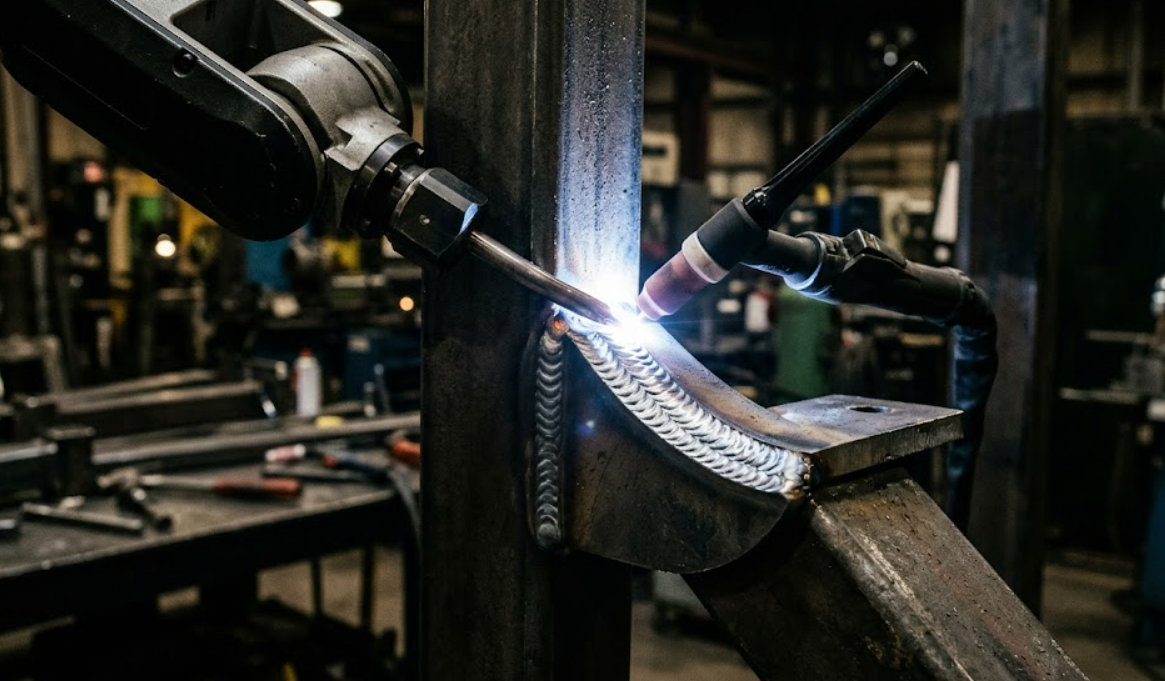
We recommend that buyers and distributors prioritize equipment featuring high-grade steel construction. A heavy-duty steel gauge ensures that the rack maintains its integrity under heavy loads, providing the long-term durability necessary for consistent training sessions. It is also vital to verify the weight capacity of the unit; even if you are lifting lighter loads, a higher rated capacity provides a crucial safety buffer. Choosing apartment friendly weightlifting gear with a robust, reinforced frame ensures that your compact home gym equipment remains a reliable, stationary asset rather than a liability in your living area.
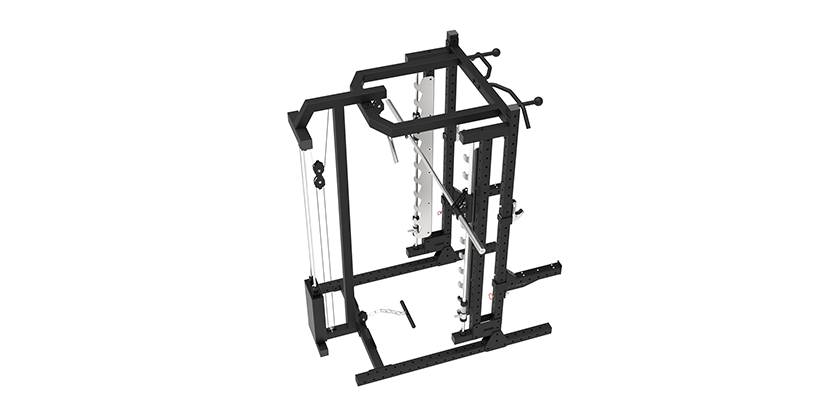
Reliability in a small footprint is defined by the quality of the specialized components. When sourcing a space saving squat rack, the integration of high-quality safety hardware is non-negotiable. For instance, the safety spotter arms should be engineered with thick steel and precision-machined attachment points to ensure they can catch a failing lift without bending or shifting. In a residential setting, these arms act as your primary insurance policy against injury.
Furthermore, the precision of your lifting accessories directly impacts your stability. High-quality J-cups with deep cradles are essential for smooth bar transitions, preventing the barbell from slipping during heavy sets. To round out a professional-grade setup, always ensure your kit includes heavy-duty barbell collars to secure the plates. These stability features work in unison to minimize vibrations and noise, which is a critical concern for apartment friendly weightlifting. By focusing on these durable mechanical elements, you ensure that your compact home gym equipment provides a professional-grade experience while maintaining the structural integrity required for long-term, safe use in a home environment.
Beyond the steel frame itself, the interface between your equipment and the floor is a critical component of a professional setup. Even with high-quality compact home gym equipment, the impact of dropping weights or even heavy footfalls can transmit vibrations through the building's subfloor. This can lead to structural concerns for the property or, more commonly, friction-based noise that disturbs neighbors. To mitigate these risks, investing in high-density rubber matting is an essential secondary safety measure.
A professional-grade floor protection strategy goes beyond a simple thin mat. We advise sourcing heavy-duty, high-impact rubber tiles that provide superior vibration reduction and sound dampening. This layer acts as a shock absorber, protecting the structural integrity of your flooring from dents and scratches while ensuring that your training sessions remain discreet. Whether you are a distributor or a high-end residential buyer, ensuring the kit includes or accommodates these protective elements is key to delivering a truly space saving squat rack solution that is both durable and neighbor-friendly.
Selecting Versatile Models for Limited Footprints
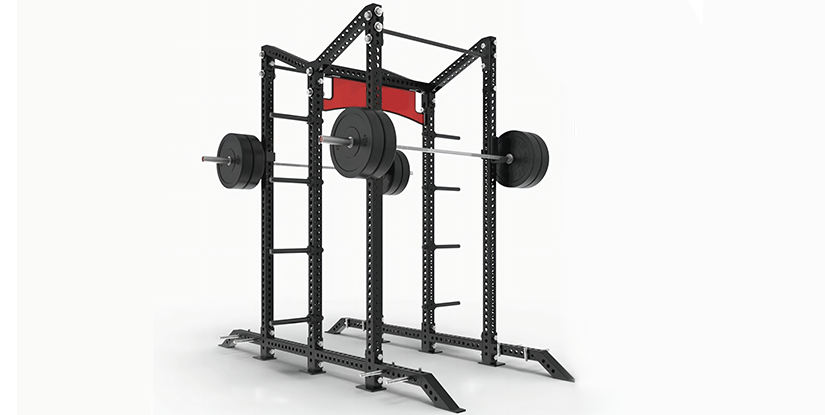
When sourcing compact home gym equipment for residential environments, the primary constraint is rarely strength capacity, but rather the physical footprint. In urban settings, every square foot counts. To find the best squat rack for apartment use, you must distinguish between permanent installations and adaptable designs. A standard, heavy-duty power rack offers maximum stability but occupies a fixed area that cannot be reclaimed once assembled.
Conversely, modern engineering has introduced highly efficient space saving squat rack solutions designed for apartment friendly weightlifting. We generally categorize these into two types: foldable vs. fixed models. While a fixed rack provides a consistent training station, a foldable model allows for vertical storage or wall-mounted retraction. This distinction is vital for buyers who need to balance professional-grade durability with the necessity of maintaining a multi-functional living space.
To assist in your selection process, we have categorized common configurations based on spatial requirements and user needs. Whether you are a distributor looking for high-turnover residential models or an end-user optimizing a studio layout, understanding these dimensions is essential for successful implementation.
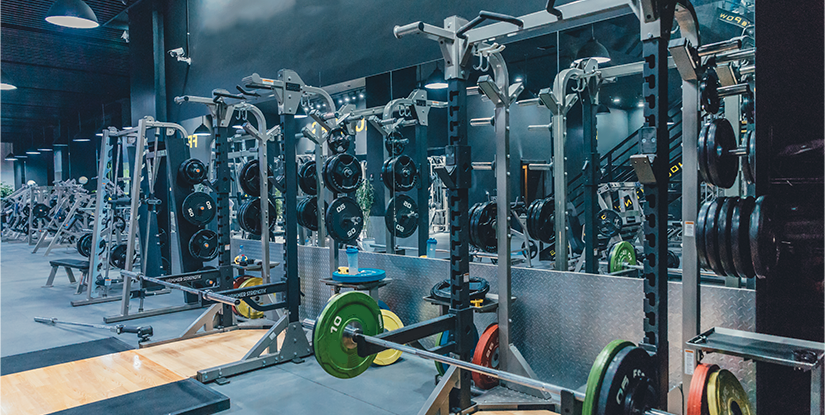
| Model Type | Typical Dimensions | Mobility/Storage | User Profile |
|---|---|---|---|
| Wall-Mounted Folding | Small (Depth: 12-24") | High (Collapses to wall) | Casual fitness enthusiasts in micro-apartments |
| Compact Half Rack | Medium (Footprint: 4x4') | Low (Static installation) | Dedicated lifters with a designated training corner |
| Mobile Squat Stand | Variable (Lightweight) | High (Can be moved/stored) | Multi-functional space users requiring flexibility |
When evaluating a space saving squat rack, do not overlook the "hidden" dimensions, such as the clearance required for barbell whip or the depth needed for plate loading. For true apartment friendly weightlifting, prioritize models that offer high utility-to-size ratios, ensuring your equipment serves as a professional tool without overwhelming your living environment.
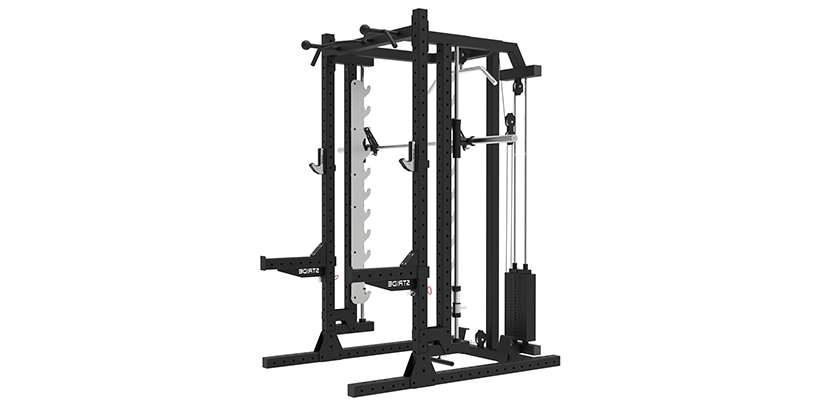
Beyond the basic footprint, true small space optimization is achieved through multi-functional engineering. We recommend looking for versatile models that integrate secondary functions directly into the frame. For instance, a high-quality rack should not just hold a barbell; it should serve as a centralized hub for your entire training setup. This is where the distinction between basic equipment and professional-grade residential gear becomes apparent.
One of the most effective ways to reclaim your living area is to prioritize integrated weight storage. Instead of having loose plates scattered across the floor—which creates both a tripping hazard and visual clutter—select a rack with built-up storage pegs or dedicated barbell hooks. This utilizes vertical space that would otherwise go unused, keeping your training zone organized and professional. By choosing a design that incorporates integrated storage, you effectively consolidate your equipment into a single, streamlined unit, making it much easier to transition your training area back into a living or social space when the workout is complete.
Long-Term Value in Small-Scale Strength Training
When sourcing equipment for residential use, many buyers make the mistake of viewing a rack as a disposable commodity rather than a long-term investment. In a high-density living environment, every square inch carries a premium. Choosing the best squat rack for apartment use requires a shift in perspective: you aren't just buying a piece of steel; you are securing a durable fitness asset that must withstand years of heavy loading without compromising the structural integrity of the building or the floor.
While entry-level models may offer a lower upfront price, the durability vs. initial cost debate becomes critical when dealing with limited space. A low-quality unit often suffers from wobbling or frame fatigue, forcing a premature replacement that wastes both money and valuable real estate. By prioritizing a high-grade space saving squat rack with robust steel gauges and precision engineering, you ensure that your compact home gym equipment remains a reliable staple of your training regimen for years to come, rather than a short-lived solution.
To maximize your return on investment, you must decide whether your needs align with a lightweight, lifestyle-oriented model or a high-performance unit designed for rigorous use. While budget-friendly options are accessible, they often lack the structural density required for consistent, heavy-duty lifting. Conversely, professional-grade apartment friendly weightlifting gear utilizes superior material quality—such as heavy-gauge steel and reinforced weld points—to ensure stability during high-intensity sessions.
The following framework compares the two common tiers of compact home gym equipment to help you determine which direction offers the best value for your specific environment:
| Feature | Entry-Level/Budget Model | Professional-Grade Compact Rack |
|---|---|---|
| Dimensions | Ultra-slim/Foldable | Optimized Footprint/Fixed |
| Weight Capacity | Low to Moderate | High/Heavy-Duty |
| Longevity | 1–3 Years (High Wear) | 5+ Years (High Durability) |
| Noise Level | Higher (Metal-on-Metal) | Lower (Precision Tolerances) |
Investing in a higher-tier space saving squat rack may require more upfront capital, but the reduction in replacement frequency and the increased stability for apartment friendly weightlifting often results in a much lower total cost of ownership over time.
Ultimately, the true value of your purchase is found in its versatility and long-term utility. A premium unit offers more than just a place to lift; it provides a platform for growth. Look for systems that emphasize modularity, allowing you to add attachments like dip stations or pull-up bars as your training evolves. This ability to expand without replacing the entire frame ensures that your equipment grows alongside your strength levels, rather than becoming an obsolete piece of furniture.
Furthermore, high-quality construction directly impacts the resale value of your gear. In the secondary market, well-maintained, professional-grade equipment retains a significant percentage of its original cost, whereas budget models often depreciate to zero almost immediately. By choosing a robust, high-spec best squat rack for apartment living, you are investing in a sustainable fitness lifestyle. You are opting for a piece of equipment that serves your current space constraints while remaining a high-value asset for your future training needs.